
Adult therapy
Cardiopulmonary Rehabilitation
Expert-reviewed guidance on cardiac and pulmonary rehabilitation — what the programs involve, who qualifies, and how to ask for a referral.
- Expert Reviewed
- Evidence Based
- Patient Focused
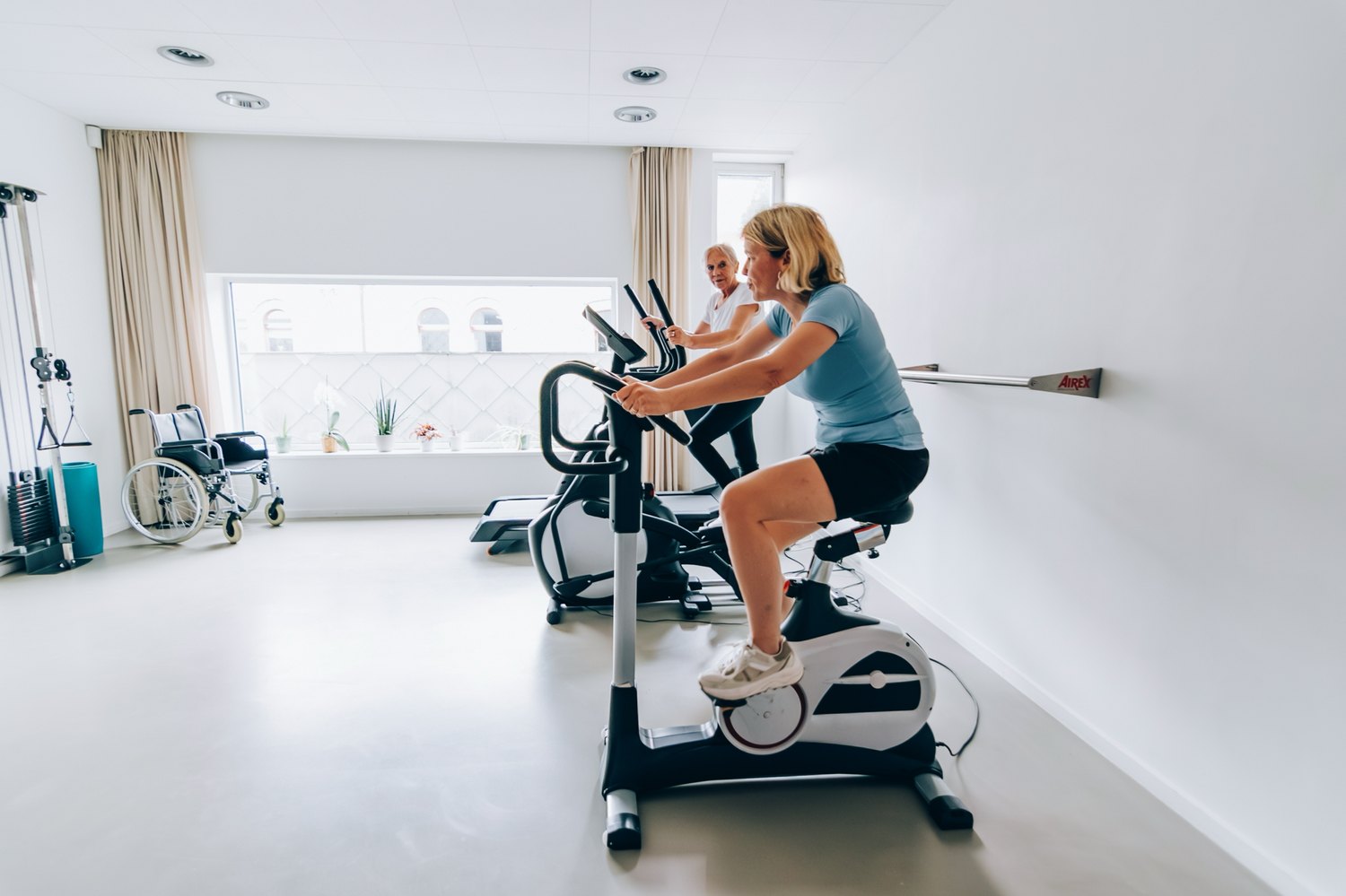
Cardiac and pulmonary rehabilitation are structured, supervised exercise and education programs for people with heart and lung conditions, and both have strong evidence behind them. Cardiac rehab after a heart attack, cardiac surgery, or a diagnosis of heart failure reduces cardiovascular mortality and hospital admissions and improves quality of life. Pulmonary rehab for COPD produces improvements in breathlessness, fatigue and quality of life that are moderately large and clinically significant. Both are also badly under-used: many people who qualify are never referred, and of those who are, many never start. If you have had a cardiac event or live with a chronic lung condition, asking directly whether you qualify is one of the more useful things you can do.
Conditions
Two conditions have their own full guide. The sections below cover the rest.
COPD and pulmonary rehabilitation
Why breathlessness builds, what a program involves, and how to ask for a referral.
Learn more →Rehabilitation after COVID-19
The two recovery paths, and how to tell which one applies to you before starting.
Learn more →When to stop and seek help
Stop exercising and seek medical attention if you have:
- Chest pain, pressure, or tightness — call 911 if it does not settle quickly with rest
- Breathlessness far beyond what the activity would explain
- Dizziness, lightheadedness, or fainting
- An irregular or racing heartbeat that is new or different
- Unusual sweating with any of the above
- Sudden swelling in one leg, or calf pain and tenderness
- Rapid weight gain over a few days, or worsening swelling in both legs — this can indicate fluid retention in heart failure
Call 911 for chest pain with shortness of breath, sweating, nausea, or pain spreading to the arm, neck, or jaw.
Cardiac events present differently in women — more often as fatigue, nausea, back or jaw pain, or breathlessness without classic chest pain.
What cardiac rehabilitation is
A structured program combining supervised exercise, education, and risk factor management, usually delivered over several weeks.
Who it is for: after a heart attack; after cardiac surgery, including bypass and valve procedures; after angioplasty or stenting; stable heart failure; stable angina; and after a heart transplant.
What it does. The Cochrane review and meta-analysis of exercise-based cardiac rehabilitation in coronary heart disease found it reduces cardiovascular mortality, reduces hospital admissions, and improves quality of life, with benefits consistent across patient groups and program types.1
It is not just exercise. Education on medication, symptoms, nutrition, and what to do when something changes is a substantial part of it, and for many people the most reassuring part.
What pulmonary rehabilitation is
The same structure, adapted for chronic lung conditions.
Who it is for: COPD most commonly, interstitial lung disease, bronchiectasis, after some lung surgery, and persistent breathlessness following COVID-19.
What it does. The Cochrane review concluded that pulmonary rehabilitation relieves breathlessness and fatigue, improves emotional function, and enhances the sense of control people have over their condition — and described those improvements as moderately large and clinically significant.2
Why so few people who qualify actually go
This is the main thing standing between the evidence and the benefit, and it is worth saying plainly rather than leaving as an aside.
Referral rates are low, and a large proportion of people who qualify are never offered a program. Uptake among those referred is lower still, and completion lower again.
Common reasons: nobody explained what it was; transport and scheduling; a belief that exercise is dangerous after a cardiac event; and assuming it is for people who are either more unwell or less unwell than they are.
What to do about it: ask directly. "Do I qualify for cardiac rehabilitation?" or "Would pulmonary rehab help me?" If the answer is unclear, ask for a referral to be considered and documented.
What a program involves
What happens in a typical session
Supervised exercise, with monitoring, alongside education. Assessment comes first — exercise capacity, symptoms, medications, risk factors, and what you want to get back to.
Monitoring during exercise is standard early on, and it is a large part of why people feel safe enough to work at a useful level. Education covers recognizing symptoms, medication, managing flare-ups, breathing techniques, and energy conservation.
How long does cardiopulmonary rehabilitation last?
Typically several weeks of sessions two or three times a week, with a home program alongside. The specifics vary by program and by condition.
The gains fade if activity stops, which is why the transition out matters as much as the program itself. Ask what happens after the last session before you reach it.
After heart surgery
What are sternal precautions?
Sternal precautions are restrictions on pushing, pulling, lifting, and reaching after the breastbone has been divided, and they are common after open heart surgery.
They vary by surgeon and by procedure. Some centers use conservative time-based restrictions, others use function-based guidance. Follow the instructions your surgical team gave you, not a general rule found online.
Fatigue after cardiac surgery is greater and lasts longer than most people are prepared for. Early walking and progressive activity, with return to lifting once cleared, is the usual shape of recovery.
Living with COPD
Breathing techniques — including pursed-lip breathing and positions that ease breathlessness — are taught in pulmonary rehab and are genuinely useful.
Pacing and energy conservation matter as much as exercise. → Pacing and activity management
Exacerbations reduce fitness quickly, and each one takes effort to recover from. Returning to activity promptly after one, rather than waiting until you feel fully well, protects the baseline.
Anxiety and breathlessness feed each other, and addressing that is part of good rehabilitation rather than a separate issue.
Long COVID and post-exertional symptoms
This section runs against the rest of the page, and it is the most important one on it.
For most people recovering from COVID-19, graded return to activity is appropriate and helpful. For some, it is not.
Why graded exercise can make some people worse
Because a subset experience post-exertional symptom exacerbation — a disproportionate worsening of symptoms hours or days after activity, out of proportion to the effort, and slow to resolve. In that group, standard graded exercise can worsen things rather than help.
What it looks like: a crash a day or two after doing more than usual; symptoms that worsen rather than improve with training; fatigue disproportionate to the activity; cognitive symptoms worsening after exertion.
Structured pacing has been studied specifically in post-COVID syndrome as an alternative approach for this group.3 If that describes you, say so before starting a program. Pacing comes first, and exercise is introduced only within tolerance. → Pacing and activity management
Goals worth setting
| Goals that work | Goals that don't |
|---|---|
| Walk to the end of the road and back without stopping Climb a flight of stairs without needing to rest Return to work part-time Carry shopping from the car Sleep flat without breathlessness Get back to gardening | Improve exercise tolerance Increase VO2 max Reduce breathlessness |
What to ask for
- "Do I qualify for cardiac or pulmonary rehabilitation?"
- "Can the referral be documented?" — if the answer was unclear
- "What happens after the program ends?"
- "Do I have post-exertional symptoms?" — before starting anything, if you are recovering from COVID-19
- "What are my sternal precautions specifically?" — after open heart surgery
Frequently Asked Questions
What is cardiac rehabilitation?
A structured program of supervised exercise, education, and risk factor management after a heart attack, cardiac surgery, or a diagnosis such as heart failure. Cochrane evidence shows it reduces cardiovascular mortality and hospital admissions and improves quality of life.
Is exercise safe after a heart attack?
Supervised cardiac rehabilitation exists precisely because it is both safe and beneficial when done appropriately. Monitoring during early sessions is standard, and it is a large part of why people regain confidence.
How much does pulmonary rehab help with COPD?
The Cochrane review found it relieves breathlessness and fatigue, improves emotional function, and enhances people's sense of control over their condition, with improvements described as moderately large and clinically significant.
Why was I not offered rehab?
Referral rates are low, and many people who qualify are never offered a program. Ask directly whether you qualify, and ask for it to be documented if the answer is unclear.
What are sternal precautions?
Restrictions on pushing, pulling, lifting, and reaching after open heart surgery. They vary by surgeon and procedure, so follow the instructions your surgical team gave you rather than a general rule.
I have long COVID. Should I exercise?
It depends. For most people, graded return to activity helps. For those with post-exertional symptom exacerbation — a crash a day or two after doing more — it can make things worse. Say so before starting any program.
How long does cardiac rehabilitation last?
Typically several weeks of sessions two or three times a week, with a home program alongside. The specifics vary by program and by condition. The gains fade if activity stops, which is why the transition out matters as much as the program itself — ask what happens after the last session before you reach it.
What happens if I stop after the program ends?
Gains fade when activity stops, which is why a plan for continuing matters as much as the program itself. Ask what happens after the last session before you get there.
Sources
- Anderson, L., Oldridge, N., Thompson, D. R., et al. (2016). Exercise-based cardiac rehabilitation for coronary heart disease: Cochrane systematic review and meta-analysis. Journal of the American College of Cardiology, 67(1), 1–12. PMID 26764059 doi:10.1016/j.jacc.2015.10.044
- McCarthy, B., Casey, D., Devane, D., et al. (2015). Pulmonary rehabilitation for chronic obstructive pulmonary disease. Cochrane Database of Systematic Reviews, (2), CD003793. PMID 25705944 doi:10.1002/14651858.CD003793.pub3
- Parker, M., Brady Sawant, H., Flannery, T., et al. (2023). Effect of using a structured pacing protocol on post-exertional symptom exacerbation and health status in a longitudinal cohort with the post-COVID-19 syndrome. Journal of Medical Virology, 95(1), e28373. PMID 36461167 doi:10.1002/jmv.28373
Disclaimer. This page is for general educational purposes and does not constitute medical advice, diagnosis, or treatment. Call 911 for chest pain with shortness of breath, sweating, or pain spreading to the arm, neck, or jaw.