
Autism
Autistic Burnout: Signs, Sensory Changes, and Recovery
Expert-reviewed guidance on autistic burnout — what separates it from depression, why sensory tolerance drops, and what recovery actually asks for.
- Expert Reviewed
- Evidence Based
- Patient Focused
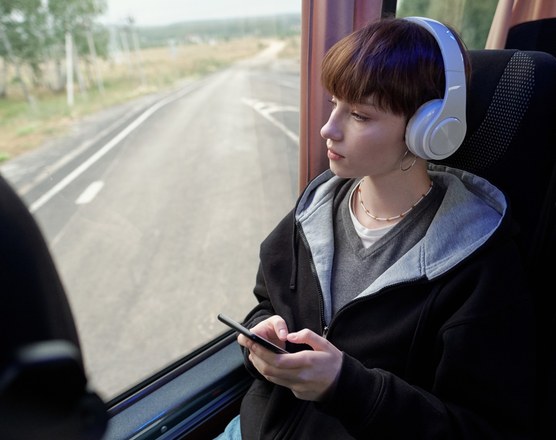
Autistic burnout is a state of long-term exhaustion1, loss of skills, and reduced tolerance for sensory input, understood as resulting from chronic life stress and a sustained mismatch between what is being demanded of a person and the support available to them.5 Research describes it as typically lasting three months or longer, and as distinct from both occupational burnout and clinical depression. It is not currently a formal diagnosis and has no official definition in the DSM-5-TR or ICD-11, though it is increasingly recognized in research and among clinicians who work with autistic adults.
Related conditions
Conditions and pages that commonly come up alongside autistic burnout.
Sensory processing in adults
Reduced sensory tolerance is a core feature here, and this is the wider picture.
Learn more →Sensory tools for adults
Practical ways to reduce sensory load, and what to try before buying anything.
Learn more →Pacing and activity management
The same overload-then-collapse cycle, and the technique that interrupts it.
Learn more →Support at work
Where sustained demand often comes from, and the adjustments that reduce it.
Learn more →What is autistic burnout?
The concept came from autistic communities long before it reached research. The first substantial study, published in 2020 by Dora Raymaker and colleagues at AASPIRE (Portland State University), noted that although autistic adults discussed autistic burnout frequently and attributed serious consequences to it, the concept was almost entirely absent from academic and clinical literature.6
That study used a community-based participatory approach — autistic researchers working alongside autistic participants — drawing on 19 interviews and 19 public internet sources. The definition it produced remains the reference point:
A syndrome conceptualized as resulting from chronic life stress and a mismatch of expectations and abilities without adequate supports, characterized by pervasive, long-term (typically 3+ months) exhaustion, loss of function, and reduced tolerance to stimulus.
Three core features recur across every subsequent study:
- Chronic exhaustion — pervasive and not resolved by ordinary rest.
- Loss of skills — capacities that were previously reliable become difficult or unavailable.
- Reduced tolerance to stimulus — sensory input that was manageable becomes overwhelming.
The research base has grown considerably since 2020, using4 varied methods including Delphi studies, mixed methods, and thematic analysis.32 A 2026 study in Autism extended the picture into the emotional and relational dimensions — shame, identity disruption, and the role of masking in onset and recovery.
What does autistic burnout feel like?
Descriptions from autistic adults tend to converge on the following. This is not a checklist and no number of items confirms anything.
Exhaustion
- Depletion that sleep and rest don't touch
- Physical heaviness; a sense of the body shutting down
- Effort required for things that previously took none
Loss of skills
- Speech becoming difficult or temporarily unavailable
- Executive function collapsing — planning, starting tasks, switching between them
- Difficulty with self-care that was previously routine
- Reduced capacity for social interaction, including with people you're close to
- Driving, cooking, reading, or working becoming unmanageable
Reduced sensory tolerance
- Sounds, lights, textures, or smells that were tolerable becoming intolerable
- A much narrower window before overload
- Increased need for withdrawal, darkness, or quiet
- More frequent shutdowns or meltdowns
Alongside these
- Increased need to stim, or noticeable loss of the ability to mask
- Emotional dysregulation
- Shame about reduced capacity, and grief for a previous level of functioning
- Withdrawal from commitments, relationships, work, or study
On the sensory dimension specifically: this is often the earliest noticeable change and the one most likely to be misread. If your usual environment has become abruptly harder to be in — the office lighting, the commute, the sound of the house — that shift is a recognized feature of this pattern, not oversensitivity or a personal failing. If it's hard to tell what's driving it, our guide on sensory overload and migraine may help.
How is autistic burnout different from depression?
This distinction matters, and getting it wrong in either direction causes harm. It is also a distinction that should be made with a clinician, not alone.
| Autistic burnout | Depression | |
|---|---|---|
| Interest in things you value | Often intact — the capacity to engage is what's missing, not the desire | Loss of interest and pleasure is a core feature |
| Sensory tolerance | Markedly reduced; a defining feature | Not a defining feature |
| Skills | Specific, identifiable skill loss | Broader impairment in functioning |
| What tends to help | Reduced demands, sensory accommodation, unmasking, recovery time | Established treatments including therapy and, where indicated, medication |
| Typical trigger | Sustained demand–support mismatch, often prolonged masking | Varies; may have no identifiable trigger |
Two cautions, both important.
Autistic burnout and depression frequently occur together, and burnout can precipitate depression. The presence of one does not rule out the other.
And the framing cuts both ways. Recognizing burnout can be genuinely useful — an autistic person may recover more effectively knowing their difficulties stem from burnout rather than assuming depression is the sole cause. But the reverse mistake is more dangerous: dismissing treatable depression as "just burnout" and not seeking care. If you are struggling, get assessed regardless of which label eventually fits. The label is not what determines whether you deserve support.
Occupational burnout is a third and separate thing. It is work-specific, and recovery generally means restoring capacity to return to previous functioning. Researchers increasingly argue that in autistic burnout, the previous way of functioning may itself have been a cause — which changes what recovery means.
What causes autistic burnout?
The research points to sustained mismatch rather than to any single event. Contributing factors described consistently across studies:
- Prolonged masking or camouflaging. Suppressing autistic traits to meet non-autistic expectations carries a cumulative cost. The 2020 research explicitly flagged the potential dangers of teaching autistic people to mask.
- Environments that don't fit. Sustained periods adapting to workplaces, schools, or homes that don't accommodate sensory and processing needs.
- Absent or inadequate support, including undiagnosed autism, dismissed requests for accommodation, and barriers to services.
- Life transitions and accumulated demand — new jobs, parenthood, bereavement, moving, or simply a long stretch with no recovery time. A high ongoing demand load — the kind described in pathological demand avoidance — can compound this.
- Not being believed. Participants described a lack of understanding from non-autistic people as compounding the experience.
Late-diagnosed adults are frequently affected, having often spent decades masking without knowing why it was so costly.
What helps with recovery?
There is no established treatment protocol, because autistic burnout is not a formal diagnostic category and no intervention research exists. What follows comes from what autistic adults reported as helpful in the 2020 study and subsequent lived-experience research.
Reported as supporting recovery
- Reduced demands and time off. Consistently the most-cited factor. Meaningful reduction, not a long weekend.
- Unmasking — doing things in an autistic way rather than an expected one, where it's safe to do so.
- Acceptance and social support, particularly from people who understand autism.
- Sensory accommodation. Reducing sensory load is one of the more actionable levers, given that reduced tolerance is a core feature. Adjusting light, sound, texture, and environment is often the fastest available relief.
- Rebuilding capacity gradually, rather than expecting a return to the previous baseline.
A note on what recovery means. Occupational burnout recovery usually aims at restoring the ability to resume as before. Researchers increasingly argue that autistic burnout is different, because the previous pattern of functioning may have been the cause. Recovery in this framing is less about returning to who you were and more about building a life that doesn't require operating at the edge of capacity indefinitely. This is worth knowing early, because "get back to normal" can be exactly the wrong goal.
Recovery can be slow. Months rather than weeks is common, and it is often not linear. Some people find it harder to recover from later episodes.
Is autistic burnout an official diagnosis?
No. It does not appear in the DSM-5-TR or the ICD-11, there is no official clinical definition, and no clinician can formally diagnose it as a condition in its own right.
The research literature is also newer and smaller than the volume of online discussion suggests. The 2020 study's own authors were explicit about its limits — a small qualitative study with a non-random sample, restricted to autism, with more research urgently needed. Later studies have strengthened and extended the picture, but no diagnostic instrument has been validated and no intervention trials exist.
What has changed is recognition: many clinicians working with autistic adults now take the concept seriously, and it appears in guidance from major autism organizations. If you raise it with a provider unfamiliar with the term, the 2020 Raymaker paper is open-access and citable.
When to seek support
Talk to a healthcare provider if:
- Exhaustion or reduced functioning has persisted for weeks and isn't improving with rest
- You've lost skills you previously relied on
- Work, study, self-care, or relationships are significantly affected
- You're unsure whether what you're experiencing is burnout, depression, or something else — this is a good reason to seek assessment, not a reason to wait
- A physical cause hasn't been ruled out. Fatigue and functional decline have many possible medical explanations, and autistic burnout should not be assumed before other causes are considered
If you are thinking about harming yourself, or you're in crisis: please reach out now.
- In the US, call or text 988 (Suicide & Crisis Lifeline), available 24/7.
- In the UK, call 116 123 (Samaritans).
- If you're elsewhere, findahelpline.com lists services by country.
The relationship between autistic burnout and suicidality is significant enough that the researchers who first defined the concept recommended including burnout education in suicide prevention programming. If you're at that point, this page is not what you need right now — please talk to someone.
Browse occupational therapy, physical therapy, and speech therapy providers by city and state.
Browse the DrSensory Therapy Directory →Frequently Asked Questions
How long does autistic burnout last?
Research describes it as typically lasting three months or longer. Recovery varies widely and is often not linear. Some people report that recovery becomes harder with later episodes.
Does masking cause autistic burnout?
Prolonged masking is one of the most consistently reported contributing factors. The foundational 2020 research explicitly flagged the potential dangers of teaching autistic people to camouflage their traits.
Is autistic burnout a real condition?
It is well-documented in research and widely recognized by clinicians who work with autistic adults, but it is not a formal diagnosis. It does not appear in the DSM-5-TR or ICD-11 and has no official clinical definition.
Is autistic burnout the same as depression?
No, though they frequently co-occur and burnout can lead to depression. Autistic burnout is marked by reduced sensory tolerance and specific skill loss, often with interest in valued activities intact. This distinction should be made with a clinician rather than self-assessed.
Can autistic burnout cause you to lose speech?
Yes. Loss of skills is one of the three core features, and reduced or absent speech is among the changes autistic adults commonly describe. It is usually temporary, though it can persist while burnout continues.
What does recovery from autistic burnout actually mean?
Not necessarily a return to how you were before. Researchers increasingly argue that autistic burnout differs from occupational burnout precisely because the previous pattern of functioning may have been the cause — so recovery is less about restoring it and more about building a life that does not require it.
What is the fastest thing that helps during autistic burnout?
Reducing sensory load. Reduced sensory tolerance is a core feature, which makes it one of the more actionable levers — adjusting light, sound, texture and environment is often the fastest available relief. Reduced demands and genuine time off are the most-cited factor overall, and that means a meaningful reduction rather than a long weekend.
Why does sensory sensitivity get worse during autistic burnout?
Reduced tolerance to stimulus is one of the three defining features. Input that could previously be filtered becomes overwhelming. Reducing sensory load is one of the more actionable responses.
Sources
- Raymaker DM, Teo AR, Steckler NA, et al. “Having all of your internal resources exhausted beyond measure and being left with no clean-up crew”: defining autistic burnout. Autism in Adulthood. 2020;2(2):132–143. doi:10.1089/aut.2019.0079. The first substantial study of the concept, from AASPIRE.
- Higgins JM, Arnold SRC, Weise J, Pellicano E, Trollor JN. Defining autistic burnout through experts by lived experience. Autism. 2021;25(8):2356–2369. A grounded Delphi study with autistic adults as the experts.
- Cage E, McManemy E. Burned out and dropping out: a comparison of the experiences of autistic and non-autistic students. Frontiers in Psychology. 2022;12:792945.
- Clarey MM, Ireland MJ, Abel S, Brownlow C. Beyond exhaustion: shame, identity disruption, and functional collapse in autistic burnout. Autism. 2026.
- National Autistic Society. Understanding autistic burnout and fatigue. Checked August 2026.
- AASPIRE — Academic Autism Spectrum Partnership in Research and Education. aaspire.org. The participatory research partnership behind the 2020 study.
Medical disclaimer. This page is for general educational purposes and does not constitute medical advice, diagnosis, or treatment. Autistic burnout is not a formal diagnostic category, and the symptoms described have many possible causes. Always consult a qualified healthcare provider about your child.