
Autism
Gestalt Language Processing: A Parent's Guide to Signs, Stages, and the Evidence
A widely used framework with very little formal evidence — and what to ask a therapist who uses it.
- Editorially Reviewed
- Evidence Based
- Patient Focused
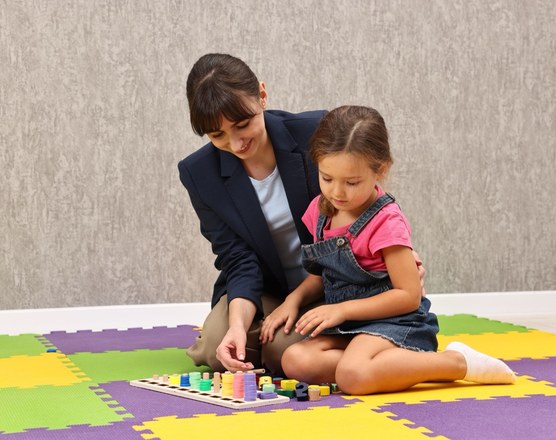
Gestalt language processing (GLP) describes a pattern in which a child learns language in whole chunks — phrases, song lines, or movie quotes — rather than building up from single words. A child who says "Wow, that's a big dog!" every time they see any animal is using a gestalt: a stored, meaningful unit of language. Over time, many children break these chunks apart and recombine the pieces into original sentences. The pattern is most often discussed in autistic children, but it is not exclusive to autism, and the framework used to describe it remains actively debated among speech-language pathologists.
What is gestalt language processing?
Gestalt language processing is one described route through early language development. The word gestalt is German for "whole" — and that is the core idea. Instead of acquiring language one word at a time and assembling those words into phrases, a gestalt processor takes in and stores an entire phrase as a single unit.
The contrast usually drawn is with analytic language processing, the more commonly described path:
| Analytic processing | Gestalt processing | |
|---|---|---|
| Starting unit | Single words | Whole phrases or scripts |
| Typical first speech | "Dog" → "big dog" → "the big dog ran" | "Wow, that's a big dog!" used whole |
| Salient feature | Individual word meanings | Intonation, rhythm, melody |
| Emotional link | Variable | Chunks often tied to a specific memory or feeling |
| Direction of growth | Building up from parts | Breaking down from wholes |
One important caveat: this is a spectrum, not a binary. There is no validated assessment that definitively sorts a child into one category or the other, and research in psycholinguistics suggests that all children rely on chunk-based processing to some degree. The difference between children appears to be one of degree, not kind.
What does gestalt language processing look like in a child?
Parents most often notice some combination of the following. None of these is diagnostic on its own, and a child can show several without being a gestalt processor.
- Delayed echolalia. Repeating phrases heard minutes, days, or even years earlier — movie lines, song lyrics, a phrase a parent or teacher uses often.
- Scripting. Using a stored chunk in a situation that feels emotionally connected to where it was first heard, even when the words themselves don't literally fit.
- Rich intonation before clear words. Babbling or vocalizing with noticeable melody, pitch, and rhythm — sometimes described as an "intonation-first" pattern — where the tune is more recognizable than the words.
- Attachment to repeated audio. Returning again and again to the same songs, video clips, or scenes.
- Phrases used as single units. A long string delivered at once, without the child appearing to separate or vary the individual words inside it.
- Difficulty with single-word demands. Struggling to produce isolated words on request while producing long phrases spontaneously.
What are the six stages of Natural Language Acquisition?
The stage model most often referenced is the Natural Language Acquisition (NLA) protocol, described by speech-language pathologist Marge Blanc in her 2012 book. Blanc's work built on earlier research by linguist Ann Peters on chunk-based acquisition and by Dr. Barry Prizant on echolalia in autistic children. Prizant described four stages; Blanc's analysis of clinical language samples proposed two further stages covering grammar development.
The six stages as described in the protocol:
- Delayed echolalia. The child uses whole, unmodified chunks of stored language.
- Mitigation. The child begins trimming and recombining chunks — mixing parts of two gestalts, or dropping a piece of one.
- Single words and two-word combinations. Isolated words emerge, along with short self-generated pairings.
- Beginning grammar. The child produces original simple sentences.
- Complex grammar. Sentence structure expands; clauses and more complex forms appear.
- Advanced language. Flexible, fully generative language.
Is gestalt language processing the same as autism?
No. These are three separate things that are frequently conflated:
- Autism is a neurodevelopmental diagnosis made by a qualified professional against established diagnostic criteria.
- Echolalia is an observable behavior — repeating language. It occurs in autistic children, in non-autistic children, in typical early development, and in several other conditions.
- Gestalt language processing is a proposed description of how some children acquire language. It is not a diagnosis, and no professional body recognizes it as one.
Gestalt processing is discussed most often in the context of autism because echolalia is common in autistic children. But it has been described in non-autistic children as well, including children with ADHD, Down syndrome, and children with no diagnosis at all. Ann Peters' foundational research on chunk-based acquisition studied typically developing children. The way whole chunks of language are taken in also connects to monotropism, the theory of autistic attention. If you're weighing related questions, our guide on autism and auditory processing disorder may help.
If you are trying to understand whether your child is autistic, gestalt language processing is not the question to be asking. Seek a developmental evaluation.
What does the research actually say about GLP and NLA?
This is where families deserve a straight answer, because most of what circulates online presents this framework as settled. It isn't.
Where there is broad agreement
- Echolalia is meaningful and communicative, not empty repetition.
- Child-led, play-based therapy that follows the child's interests is valuable.
- Suppressing or extinguishing echolalia as a target is not a defensible goal.
- Some children clearly do lean heavily on whole-phrase processing.
These practices are not unique to NLA. They appear across many established, evidence-supported approaches to supporting autistic children's communication, and a clinician can use all of them without adopting the NLA protocol.
Where there is genuine disagreement
A 2024 systematic review published in Current Developmental Disorders Reports3 (Bryant, Bowen, Grove, Dixon, Beals, Shane & Hemsley) searched for intervention studies evaluating GLP/NLA-based approaches and located none. The authors were careful about what this means: it is an absence of evidence. No study has shown these approaches to work, and equally, no study has shown them to be ineffective or harmful. The research simply has not been done.
A 2024 critical analysis by Hutchins, Knox and Fletcher, and a 2025 response article from Dr. Courtney Venker's team published in ASHA's Perspectives, raised specific concerns: that some GLP/NLA claims run against existing language research, that the framework may underestimate autistic children's language comprehension, and that certain protocol recommendations — such as steering away from modeling single words — lack a clear rationale and could limit a child's access to approaches that do have evidence behind them.
Proponents, including Blanc and colleagues writing in the same ASHA publication, argue the framework reflects extensive clinical observation and offers a more respectful reading of echolalia than approaches that treat it as a behavior to reduce.
What this means for you as a parent: an approach lacking formal evidence is not the same as an approach known to be wrong — but it does mean you should ask harder questions of any provider, and be cautious about any clinician who presents this framework as established fact or who proposes it as the sole approach for your child.
How do I find a speech therapist who understands gestalt language processing?
Because the framework is contested, provider selection matters more here than it would for a well-established approach. What you are looking for is not enthusiasm for a particular protocol — it is clinical judgment. You can browse speech-language pathologists near you in the DrSensory directory.
Questions worth asking any prospective SLP:
- How do you decide whether a child is processing language in gestalts, and what would change your mind about that assessment?
- How do you handle my child's echolalia, and why?
- What does progress look like, specifically, and how will you measure it?
- How familiar are you with the current debate around NLA, and where do you land on it?
- What will you teach me to do at home during ordinary routines?
- What would make you change or abandon this approach?
Signals worth attention: a provider who can describe the limits of the evidence, who assesses rather than assumes, who blends approaches based on the individual child, and who includes you in the work. Certification in a specific proprietary method is not a substitute for any of that.
What can I do at home?
These are general communication-supportive strategies. They are broadly consistent with what most approaches recommend, and none of them depends on the NLA protocol being correct. Coordinate specifics with your child's SLP.
- Model language in usable chunks. Offer short, flexible phrases tied to the moment — "Let's go outside," "This is so fun," "I want more" — rather than drilling isolated vocabulary.
- Use language your child can reuse. Avoid phrasing that only works from your perspective. "Let's find it" is reusable; "Do you want Mommy to find it?" is not.
- Follow their lead. Comment on what they're already engaged with instead of redirecting attention to what you'd prefer.
- Respond to the intent, not the literal words. If a movie line is being used to express excitement, respond to the excitement.
- Ease off the questions. Frequent questions create demand. Narration and commenting create models.
- Give processing time. Wait longer than feels natural after speaking.
- Notice patterns. Keep a simple log of which chunks appear, when, and in what emotional context. This is genuinely useful data for your SLP.
When should I seek an evaluation?
Speak with your pediatrician or a speech-language pathologist if:
- Your child is not meeting communication milestones for their age.
- Your child loses language skills they previously had — this warrants prompt attention regardless of any other pattern.
- Your child's communication is causing frustration or distress for them.
- Your child is largely reliant on stored phrases and isn't developing flexible, original language over time.
- You simply have concerns. You do not need to justify seeking an evaluation, and early input is generally better than waiting.
Occupational therapy can also support related areas; you can find occupational therapy providers in the directory as well.
Frequently Asked Questions
Is gestalt language processing a diagnosis?
No. It is a proposed description of a language-learning pattern, not a clinical diagnosis. No professional body recognizes it as a diagnostic category, and no validated assessment tool exists to formally identify it.
Is Natural Language Acquisition evidence-based?
Not currently, in the formal sense. A systematic review found no intervention studies evaluating its effectiveness. Several practices associated with it, such as honoring echolalia and child-led play-based therapy, are supported and are also used within other evidence-based approaches.
Should I stop my child from repeating movie lines?
Generally no. Current thinking across the field treats echolalia as meaningful communication rather than a behavior to eliminate. A more useful response is to work out what the phrase is being used to express.
Do all autistic children process language in gestalts?
No. Autistic children show a wide range of language-learning patterns. Any specific percentage figure should be treated skeptically; the most commonly cited statistic has no identifiable source.
Will my gestalt-processing child speak in full sentences?
Many children do develop flexible, generative language. Outcomes vary considerably, and no one can predict an individual child's trajectory. Progress is typically uneven rather than linear.
If the evidence is thin, is it wrong to use this approach?
No, and the distinction matters: the systematic review found an absence of intervention studies, which is not the same as evidence that it does not work. Several practices associated with it — honoring echolalia, following the child's lead — are supported and appear in other approaches too. What is reasonable is to ask a therapist which parts of what they do are evidence-based and which are not, and to expect a straight answer.
Can a child be both a gestalt and an analytic language processor?
Yes. Most researchers describe this as a spectrum rather than two separate categories. Research suggests all children use chunk-based processing to some degree, and many children show features of both patterns.
Is gestalt language processing related to sensory processing differences?
They are distinct, though they frequently co-occur. Some families notice that language use shifts with sensory load. If both are in the picture, coordination between the child's SLP and OT is worth requesting.
Sources
- Blanc M. Natural Language Acquisition on the Autism Spectrum: The Journey from Echolalia to Self-Generated Language. Communication Development Center; 2012.
- Blanc M, Blackwell A, Elias P. Using the Natural Language Acquisition protocol to support gestalt language development. Perspectives of the ASHA Special Interest Groups. 2023;8(6):1279–1286. doi:10.1044/2023_PERSP-23-00098
- Bryant L, Bowen C, Grove R, Dixon G, Beals K, Shane H, Hemsley B. Systematic review of interventions based on Gestalt Language Processing and Natural Language Acquisition. Current Developmental Disorders Reports. 2024;12(1). doi:10.1007/s40474-024-00312-z
- Hutchins TL, Knox SE, Fletcher EC. Natural language acquisition and gestalt language processing: a critical analysis of their application to autism and speech-language pathology. Autism & Developmental Language Impairments. 2024;9:23969415241249944. doi:10.1177/23969415241249944 (PMID 38784430)
- Lorang E, Mathée-Scott J, Johnson J, Venker C. A response to Blanc and colleagues’ viewpoint on Gestalt Language Processing and the Natural Language Acquisition protocol: concerns and common ground. Perspectives of the ASHA Special Interest Groups. 2026;11(1):43–50. doi:10.1044/2025_PERSP-25-00055 (PMID 42100129)
- Prizant BM, Duchan JF. The functions of immediate echolalia in autistic children. Journal of Speech and Hearing Disorders. 1981;46(3):241–249. doi:10.1044/jshd.4603.241
- Peters AM. The Units of Language Acquisition. Cambridge University Press; 1983.
Medical disclaimer. This page is for general educational purposes and does not constitute medical advice, diagnosis, or treatment. Always consult a qualified healthcare provider about your child. DrSensory does not endorse any specific therapeutic protocol.