
Children
Behavior and Emotions in Children
- Editorially Reviewed
- Evidence Based
- Patient Focused
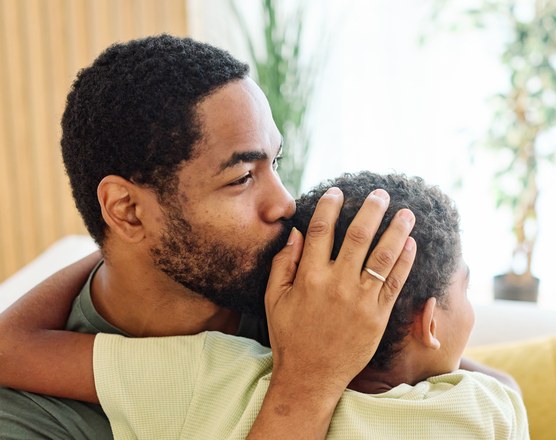
Behavioral and emotional conditions in children include anxiety disorders, mood conditions, and patterns of behavior that persistently interfere with home, school, or friendships. They are common, they are diagnosable, and they respond to treatment — but they’re frequently misread first as defiance, attitude, or poor parenting. The most useful reframe is that behavior is communication: a child who refuses, melts down, or withdraws is usually telling you something they can’t say directly. Many behavioral presentations also have causes that aren’t behavioral at all, including sensory difficulty, undiagnosed learning differences, poor sleep, and anxiety, which is why assessment should look wider than the behavior itself.
Behavior is communication
The single most useful idea on this page.
A child who won’t go into school, screams at homework, or hits a sibling is doing something. The question worth asking isn’t “how do I stop this,” but “what is this for.”
Common answers: the demand is beyond what they can currently manage · the environment is intolerable · they can’t express what’s wrong in words · something is frightening them · they’ve learned this works when nothing else does.
None of those responds to consequences alone.
Conditions covered here
Anxiety
Mood
What frequently sits underneath
Behavioral presentations often have non-behavioral causes, and this is where assessment most commonly goes wrong.
Sensory difficulty. A child who melts down at the end of every school day may have spent their capacity tolerating the environment. → Sensory over-responsivity
Undiagnosed learning differences. Refusing homework is a rational response to work you can’t do. → Learning and thinking
Communication difficulty. A child who can’t explain what’s wrong has fewer options. → Speech and language
Sleep. Poor sleep in children presents as irritability, inattention, and emotional dysregulation rather than as tiredness. → Sleep regressions · Mouth breathing and disrupted sleep
Anxiety. Frequently presents as anger or refusal in children rather than as visible worry.
ADHD and autism, both of which involve emotional regulation differences. → ADHD · Autism
Ask what’s driving the behavior before treating the behavior.
How these conditions are diagnosed
Who — a child psychiatrist, psychologist, or pediatrician with mental health training.
What’s involved — developmental and family history, standardized rating scales from parents and teachers, direct assessment, and observation. Diagnosis rests on how long difficulties have persisted, how many settings they appear in, and how much they interfere.
What’s ruled out — medical causes, sleep problems, sensory and learning differences, and the effects of significant life events.
One thing worth knowing: several of these conditions look similar in a young child and separate as they develop. An early diagnosis may be revised, and that isn’t a mistake — it’s how developmental assessment works.
What helps with behavior and emotions in children
Behavioral parent training has strong evidence for oppositional and disruptive behavior, and it’s typically first-line for younger children. It teaches strategies rather than treating the child directly.
Cognitive behavioral therapy is well supported for anxiety and depression in children old enough to engage with it.
School support — accommodations and behavior plans. → IEPs and 504 plans
Environmental change, which is frequently overlooked. Reducing the demand or the sensory load sometimes resolves what looked like a behavioral problem.
Medication, where indicated, and typically alongside rather than instead of the above.
When to seek help sooner
Contact your child’s doctor promptly if:
- Your child talks about wanting to die, or about hurting themselves
- There has been a marked change in mood, behavior, or functioning
- Your child is not eating, sleeping, or going to school
- Behavior is putting your child or others at risk
If you believe your child is in immediate danger, call 911 or go to an emergency department.
In the US, the 988 Suicide & Crisis Lifeline is available 24 hours a day by calling or texting 988.
Related topics
What frequently sits underneath the behavior, and where to read about it.
Sensory over-responsivity
An environment that is genuinely too much looks like refusal from the outside.
Learn more →ADHD
Impulsivity and low frustration tolerance account for a great deal of it.
Learn more →Autism
Demand-related distress and communication difficulty both present as behavior.
Learn more →Learning differences
Work that is genuinely too hard is refused, and the refusal gets the attention.
Learn more →Frequently Asked Questions
Is this behavior, or is something else going on?
Is my child’s behavior my fault?
Will my child grow out of it?
Who should we see?
Does my child need medication?
What if the school says it’s a behavior problem?
Disclaimer. For general educational purposes; not medical advice, diagnosis, or treatment. If you’re concerned about your child’s mental health, speak to a qualified professional.