
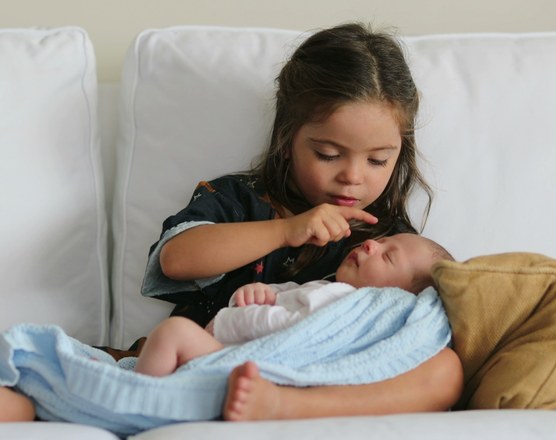
Three AM. Again. My couple-month-old son startles awake at the sound of our neighbor's dog barking, his little arms flailing in that reflexive way newborns do. Meanwhile, my one-year-old somehow sleeps soundly through the commotion, thanks to what I've come to think of as our household's MVP: the humble noise machine humming steadily in the corner of his room.
This scenario has me wondering about the role these little devices play in our family's sleep ecosystem. Are noise machines truly the game-changers they seem to be, or are we creating a dependence that might backfire down the road? As a mom navigating the sleep challenges of two young boys, I've experienced both the magic and the potential pitfalls of white noise firsthand.
If you're debating whether to introduce a noise machine to your baby's sleep routine—or questioning whether you should continue using one—let's explore the research, weigh the benefits against the concerns, and figure out what might work best for your family's unique situation.
Key takeaways
- White noise masks sudden sharp sounds such as a door slamming, which is the job most parents actually need it to do.
- Pink noise has a deeper, more natural profile and suits longer sleep stretches better than the variability of nature sounds.
- Nature sounds can be too variable for consistent sleep support, because the changing pattern is itself a signal.
- A plain fan is a legitimate alternative: it provides broadband noise and air circulation with no screen, app or account.
- The clearest benefit is in the newborn period, when the contrast between the womb and a quiet room is largest.
- Wean gradually rather than abruptly: lower the volume over weeks, or keep it for naps only, and do it during a stable period rather than during travel or illness.
What Exactly Are Noise Machines and How Do They Work?
Before diving into whether noise machines are helpful or harmful, it's worth understanding what they actually do. These devices produce consistent background sounds—whether it's white noise, pink noise, nature sounds, or gentle lullabies—designed to mask sudden environmental noises that might disturb sleep.
White noise contains all frequencies at equal intensity, creating that familiar "shh" sound that many parents instinctively make to soothe crying babies. Pink noise emphasizes lower frequencies and includes sounds like rainfall or ocean waves. Brown noise goes even deeper, resembling the rumble of thunder or strong wind.
The science behind why these sounds can be soothing lies in their ability to create what researchers call "auditory masking." Instead of experiencing jarring transitions from silence to sudden noise, babies hear a consistent sound backdrop that makes environmental changes less noticeable and startling.
Interestingly, babies are already familiar with constant sound — the womb is not a quiet place, with blood flow and the muffled noise of the outside world forming a steady background. This might explain why many newborns find complete silence more disturbing than gentle, consistent noise.
The Compelling Case for Noise Machines
My journey with noise machines started out of pure desperation. My older son was an incredibly light sleeper as an infant, waking at every creak of the floorboards, every car door slamming outside, every delivery truck rumbling down our street. Sleep felt impossible for our entire household.
The immediate sleep improvement was remarkable once we introduced a noise machine. Instead of tiptoeing around the house and shushing visitors, we could maintain a more normal rhythm of daily life while our baby slept. The consistent background sound seemed to create a protective bubble around his sleep space.
Research supports these observations. A study published in the Archives of Disease in Childhood found that 80% of newborns fell asleep within five minutes when exposed to white noise, compared to only 25% of babies in a quiet environment. The sound appears to trigger a calming response that helps babies transition from alertness to sleep more easily.
Extended sleep periods became more common once we started using the noise machine consistently. My son seemed to sleep through minor household disturbances that previously would have woken him completely. This meant longer stretches of rest for everyone, which improved our entire family's mood and functioning.
The portability factor has been invaluable for maintaining sleep routines away from home. Whether we're visiting grandparents, staying in hotels, or having playdates at friends' houses, the familiar sound helps create a consistent sleep environment that signals bedtime regardless of the location.
Soothing during fussy periods extends beyond just sleep time. During those inevitable crying spells that all babies experience, the white noise seems to provide comfort and help regulate their emotional state. It's like having a consistent, calming presence available at all times.
The Potential Drawbacks and Concerns
Despite the obvious benefits we've experienced, I've also encountered some challenges and concerns that make the noise machine question more complex than it initially appeared.
Creating dependency is perhaps the biggest worry I've grappled with. My older son now seems to require his noise machine to sleep well, which occasionally creates challenges when we forget it during travel or when the power goes out. I sometimes wonder if we've inadvertently made sleep more complicated rather than simpler.
Volume concerns are legitimate, especially given that babies' hearing is still developing. When researchers measured 14 infant sleep machines at full volume, every one exceeded 50 A-weighted decibels at a distance of 30 cm — the noise limit recommended for infants in hospital nurseries — and three exceeded 85 dBA, which risks noise-induced hearing loss if played for more than eight hours. Distance and volume are the two things you control: put the machine well across the room rather than beside the crib, and turn it down. Some parents unknowingly use volumes that could potentially impact hearing development over time.
Masking important sounds presents a safety consideration I hadn't initially thought about. While the noise machine helps my baby sleep through minor disturbances, I occasionally worry whether it might also mask sounds I actually need to hear—like changes in his breathing patterns or signs of distress.
Potential speech development impacts have been discussed in some research, though the evidence isn't conclusive. The theory suggests that constant background noise might interfere with a baby's ability to distinguish subtle differences in speech sounds, potentially affecting language development. However, most studies on this topic involve much louder industrial noise rather than the gentler sounds produced by baby noise machines.
Sleep association challenges can develop when babies become so accustomed to the noise machine that they struggle to sleep without it. This isn't necessarily problematic at home, but it can create difficulties during power outages, equipment failures, or situations where bringing the device isn't practical.
What the Experts Actually Say
Consulting with our pediatrician and researching expert opinions has helped me develop a more nuanced understanding of noise machines' role in infant sleep.
The American Academy of Pediatrics takes a cautiously positive stance on noise machines, acknowledging their potential benefits while emphasizing the importance of safe usage. They recommend volume levels no higher than 50 decibels, positioning the device away from the baby's head, and using it consistently rather than intermittently.
Pediatric sleep specialists generally support the use of white noise for babies, particularly during the first few months when the transition from womb to world is most challenging. Dr. Harvey Karp, author of "The Happiest Baby" series, considers white noise one of the essential tools for soothing babies and improving sleep.
Audiologists emphasize the importance of appropriate volume levels and duration of exposure. The consensus seems to be that noise machines, when used correctly, pose minimal risk to developing hearing while providing significant sleep benefits.
Developmental specialists note that babies need exposure to various sounds for proper auditory development, but this doesn't preclude the use of consistent background noise during sleep periods. The key is ensuring that babies also have plenty of quiet time during wake periods for sound discrimination and language development.
The expert consensus appears to be that noise machines can be beneficial tools when used appropriately, but they shouldn't be considered essential or used as substitutes for good sleep hygiene practices.
Finding the Sweet Spot: Practical Usage Guidelines
Through trial and error with both my boys, I've developed some practical guidelines that seem to maximize the benefits while minimizing potential drawbacks.
Volume calibration has been crucial. I use a smartphone decibel meter app to ensure the noise machine stays around 50 decibels—roughly the volume of rainfall or a quiet conversation. This provides enough masking without being potentially harmful to developing ears.
Strategic placement means positioning the device across the room rather than near the crib. This provides adequate sound coverage while reducing the intensity at the baby's location. I've found that corner placement often works well for distributing sound evenly throughout the room.
Consistent timing has worked better than intermittent use. Rather than turning the machine on only when there's a noise concern, I run it throughout all sleep periods—naps and nighttime. This creates a reliable sleep cue that helps signal rest time.
Gradual volume adjustment as babies grow helps prevent over-dependence while maintaining the benefits. I've slowly reduced the volume as my older son has become a more confident sleeper, preparing him for eventual independence from the device.
Multiple backup options ensure that equipment failure doesn't derail sleep routines. I keep smartphone apps with white noise sounds available and have discovered that even a fan can provide similar masking benefits in emergency situations.
Different Types of Noise: What Works Best?
Not all noise machines are created equal, and I've discovered that different types of sounds work better for different situations and children.
Classic white noise has been most effective for masking sudden, sharp sounds like door slams or car engines. Its broad frequency range provides comprehensive coverage for various types of environmental noise.
Pink noise, with its deeper, more natural sound profile, seems to be particularly effective for longer sleep periods. Some research suggests it might even enhance deep sleep phases, though more studies are needed to confirm this effect.
Nature sounds like rainfall or ocean waves can be soothing, but I've found they're sometimes too variable for consistent sleep support. The changing patterns in these sounds occasionally seem to capture my baby's attention rather than fade into the background.
Heartbeat sounds designed to mimic the maternal heartbeat can be comforting for very young babies, though their effectiveness seems to diminish as babies grow beyond the newborn stage.
Fan noise has proven to be an excellent, low-tech alternative that provides both white noise and gentle air circulation. This option eliminates concerns about electronic devices while still offering the masking benefits.
Age Considerations: When to Start and When to Stop
The appropriate use of noise machines seems to vary significantly based on a child's developmental stage and individual sleep patterns.
Newborn period (0-3 months) appears to be when noise machines provide the most obvious benefits. The transition from the noisy womb environment to the outside world can be jarring, and consistent background sound helps ease this adjustment.
Infant stage (3-12 months) continues to benefit from noise machines, particularly as babies become more aware of their surroundings and potentially more sensitive to environmental changes during sleep transitions.
Toddler years (1-3 years) present more complex considerations. While my one-year-old still seems to benefit from his noise machine, I'm starting to think about how to eventually transition him to sleeping without it.
Gradual weaning strategies might include slowly reducing volume over time, using the noise machine only for naps, or transitioning to gentler sounds like soft music rather than white noise.
The timing for reducing dependence on noise machines likely depends on individual children's sleep confidence, environmental factors, and family preferences rather than strict age guidelines.
Alternatives and Complementary Approaches
While noise machines can be helpful, they're not the only tool for improving infant sleep, and combining approaches often yields the best results.
Environmental modifications like carpeting, heavy curtains, and weather stripping can naturally reduce noise transmission without requiring electronic devices. These changes benefit the entire household and don't create potential dependencies.
Routine consistency remains one of the most important factors in healthy sleep development. Regular bedtimes, predictable pre-sleep activities, and consistent sleep environments often matter more than any specific product or device.
Room sharing arrangements can provide natural sound buffering while supporting safe sleep practices. When babies sleep near parents, the natural sounds of breathing and movement can provide similar comfort to electronic noise machines.
Swaddling and sleep sacks address comfort and security needs that sometimes get attributed to environmental noise when the real issue is physical comfort during sleep transitions.
Temperature optimization and lighting control create sleep-supportive environments that reduce the need for additional soothing tools like noise machines.
The Dependency Question: Real Concern or Overblown Worry?
One of my biggest questions about noise machines has been whether I'm creating an unhealthy dependence that will cause problems later. The evidence on this concern is mixed and depends largely on how you define "dependency."
Short-term dependence during infancy might not be problematic if it serves a specific developmental need. Just as babies outgrow swaddling and pacifiers, they can likely outgrow noise machines when their sleep systems mature.
Long-term usage isn't necessarily harmful if it continues to serve a purpose and doesn't interfere with normal development or daily functioning. Many adults use noise machines or other sleep aids without negative consequences.
Transition strategies can help reduce dependence over time if that becomes a goal. Gradually reducing volume, limiting use to certain sleep periods, or switching to less intensive sound options can help children develop sleep confidence without abrupt changes.
Individual differences matter enormously in this discussion. Some children seem naturally more sensitive to environmental sounds and may benefit from noise machines longer than others. There's no universal timeline that works for every family.
The key seems to be maintaining awareness of how the noise machine is being used and being willing to adjust the approach as children's needs change rather than viewing it as a permanent solution.
Making the Decision That's Right for Your Family
After months of using noise machines with both my boys and observing their effects on our family's sleep quality, I've come to view them as useful tools rather than essential equipment or dangerous crutches.
Consider your specific circumstances. If you live in a noisy environment, have multiple children, or are dealing with particularly sensitive sleepers, the benefits of noise machines likely outweigh the potential drawbacks. In quieter homes with naturally good sleepers, they might be unnecessary.
Start with conservative usage if you decide to try a noise machine. Use appropriate volumes, position the device safely, and pay attention to how your baby responds rather than assuming it's automatically beneficial.
Stay flexible in your approach. What works during the newborn period might not be necessary as your child grows, and what doesn't work initially might become helpful during different developmental phases.
Combine with other good sleep practices rather than viewing noise machines as standalone solutions. Consistent routines, appropriate sleep environments, and responsive parenting remain the foundation of healthy sleep development.
Trust your observations over general recommendations. You know your child's sleep patterns and needs better than anyone else, and what works for other families might not work for yours.
The Bigger Picture: Sleep as a Family System
My experience with noise machines has taught me that infant sleep doesn't exist in isolation—it's part of a complex family system where everyone's rest affects everyone else's wellbeing.
Parental sleep quality improves when babies sleep better, regardless of the specific methods used to achieve that improvement. Well-rested parents are more patient, responsive, and capable of making good decisions about their children's needs.
Household harmony benefits when sleep disruptions are minimized. The ability to maintain normal activities while babies sleep reduces stress on relationships and allows families to function more smoothly.
Sibling considerations become important in homes with multiple children. Noise machines can help prevent one child's sleep from being disrupted by another's needs, which is particularly valuable with close-aged siblings.
Long-term perspective reminds us that most sleep challenges in infancy are temporary. Whether we use noise machines or not, most children eventually develop the ability to sleep well in various environments as their nervous systems mature.
The goal isn't perfect silence or perfect noise—it's creating conditions that support healthy sleep development while maintaining family wellbeing during the challenging early months of parenthood.
Looking Ahead: When and How to Transition Away
As my older son approaches toddlerhood, I'm starting to think about how and when to reduce his reliance on the noise machine. This transition doesn't need to be abrupt or traumatic, and there's no rush to eliminate something that's working well.
Gradual reduction over several weeks or months allows children to adjust slowly rather than experiencing sudden changes in their sleep environment. Small volume decreases or shorter usage periods can help assess readiness for independence.
Seasonal timing might influence transition success. Making changes during stable periods rather than during travel, illness, or other disruptions increases the likelihood of smooth adjustments.
Alternative comfort objects can sometimes replace the security that noise machines provide. Special blankets, stuffed animals, or other soothing items might help bridge the transition to sleeping without background sound.
Family readiness matters as much as child readiness. If parents aren't prepared to handle potential sleep disruptions during a transition period, it might be better to wait until circumstances are more stable.
The decision about when to transition away from noise machines ultimately depends on individual children's development, family circumstances, and personal preferences rather than arbitrary timelines.
A Balanced Perspective for Real Families
After living with noise machines as part of our family's sleep routine, I've come to see them as neither miracle solutions nor problematic dependencies, but rather as useful tools that can support healthy sleep when used thoughtfully.
The benefits—improved sleep quality, reduced environmental disruptions, easier sleep transitions, and enhanced family rest—have been significant for our household. The potential drawbacks—dependency concerns, volume considerations, and masking of important sounds—are manageable with appropriate precautions and awareness.
Most importantly, I've learned that there's no perfect solution to infant sleep challenges. Every family's situation is unique, and what works brilliantly for one baby might be completely ineffective for another. The key is staying attuned to your child's individual needs and being willing to adjust approaches as those needs change.
Whether you choose to use noise machines or not, remember that the goal is supporting healthy sleep development while maintaining family wellbeing. Sometimes that means using every helpful tool available, and sometimes it means keeping things simpler. Both approaches can be successful when they match your family's specific circumstances and values.
Final Thoughts: Trust Your Parental Instincts
As I write this, both my boys are sleeping peacefully—one with his trusted noise machine humming softly in the background, and one learning to sleep in quieter environments as he grows. Neither approach is right or wrong; they're simply different tools for different developmental needs.
The noise machine question ultimately comes down to whether this tool serves your family's sleep goals while aligning with your comfort level regarding potential risks. For us, the benefits have clearly outweighed the concerns, but I respect that other families might reach different conclusions based on their unique situations.
What matters most is making informed decisions based on credible information, your observations of your child's needs, and guidance from healthcare providers you trust. Whether you embrace noise machines as sleep allies or choose to pursue other approaches, you're doing the thoughtful work of parenthood by considering what's best for your family.
Here's to peaceful sleep for babies and parents alike, achieved through whatever safe and sensible methods work best for your unique family constellation.
Sweet dreams and confident choices,
A mom navigating the wonderful world of infant sleep solutions
Need more than an article?
Gear can only do so much. If something about how your child eats, moves, or talks has been on your mind, a pediatric therapist is the person who assesses it — and most families do not need a referral to ask.
Find a therapist near you →Related DrParenting guides
All DrParenting guides →More from DrSensory
DrParenting covers the gear. DrSensory covers the development behind it, written and reviewed by clinicians.
Sources
- Hugh SC, et al. Infant Sleep Machines and Hazardous Sound Pressure Levels. Pediatrics. 2014; 133(4). doi:10.1542/peds.2013-3617
- National Institute on Deafness and Other Communication Disorders. Noise-Induced Hearing Loss. nidcd.nih.gov. Checked August 21, 2026.
- Moon RY, et al. Sleep-Related Infant Deaths: Updated 2022 Recommendations for Reducing Infant Deaths in the Sleep Environment. Pediatrics. 2022; 150(1). doi:10.1542/peds.2022-057990
Medical disclaimer. This page is for general educational purposes and does not constitute medical advice, diagnosis, or treatment. Product information is checked against the manufacturer at the date shown and can change without notice — confirm weight and age limits on the product itself before you rely on them. Talk to your pediatrician about your own child.