
Adult therapy
Urinary Incontinence in Adults
Expert-reviewed guidance on urinary incontinence — the four types, what treats each, why Kegels are not always the answer, and when to see a doctor first.
- Expert Reviewed
- Evidence Based
- Patient Focused
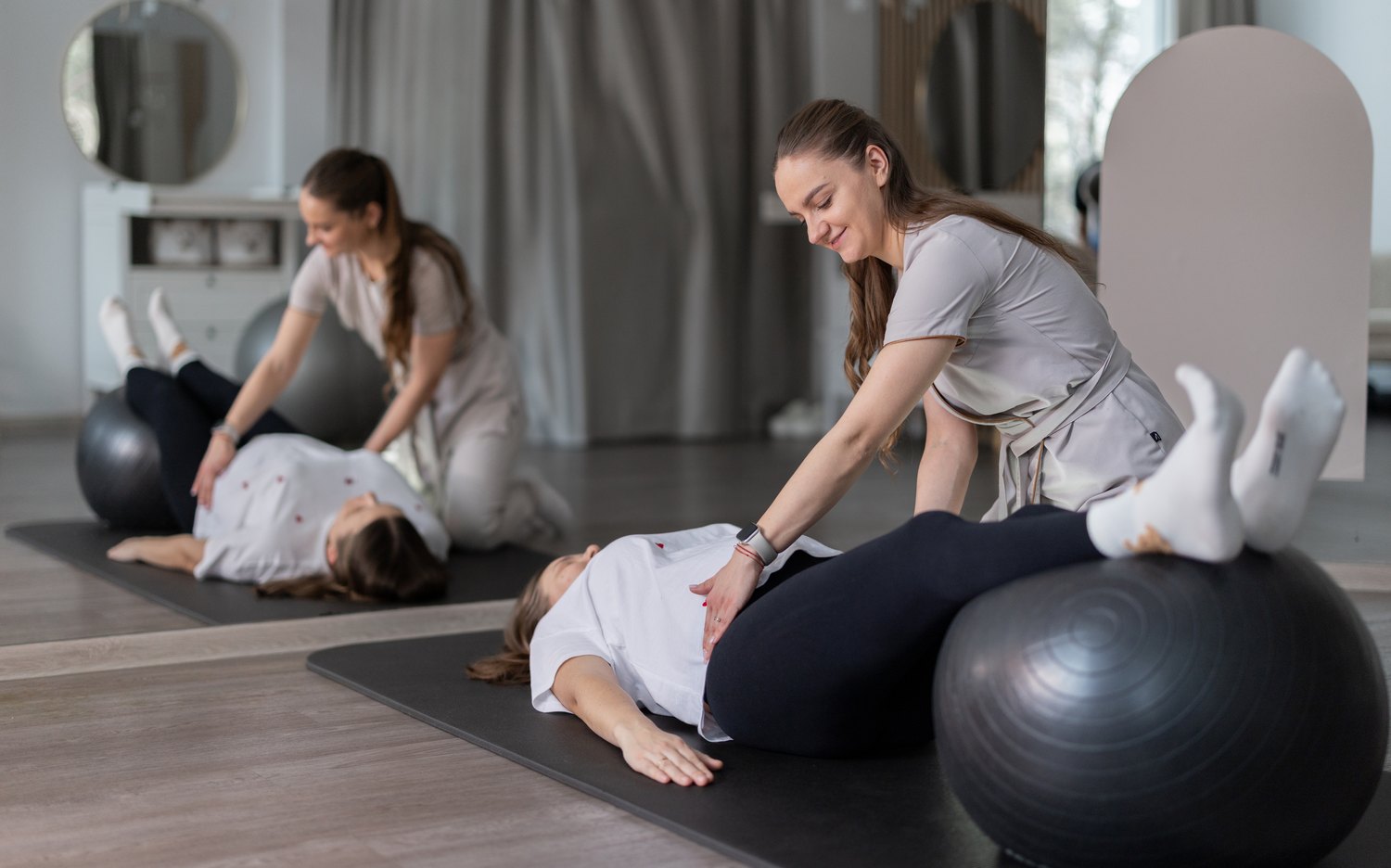
Urinary incontinence means leaking urine when you do not intend to, and it affects a very large number of adults — most of whom never mention it to anyone. It is common and it is treatable, and those are different things. The type matters: leaking when you cough, sneeze, laugh, or exercise is stress incontinence, while a sudden urgent need with little warning is urge incontinence, and they respond to different treatment. For stress incontinence, supervised pelvic floor muscle training is first-line treatment and it works for most people who complete it. Kegels are not the universal answer, though — some incontinence involves pelvic floor muscles that are too tight rather than too weak, and squeezing more makes that worse.
When to see a doctor before anything else
See a doctor rather than starting exercises if you have:
- Blood in your urine
- Pain or burning when you urinate, or fever
- Sudden onset of leaking with no clear cause
- Difficulty starting to urinate, or a feeling of not emptying
- Sudden inability to pass urine at all — this is urgent
- New numbness in the saddle area, or leaking alongside new weakness or numbness in the legs — this is urgent
- Unexplained weight loss
- Recurrent urinary tract infections
These need medical assessment first. Incontinence has causes that exercise does not address, and some of them need ruling out.
Is leaking urine normal?
It is common. It is not something you have to live with, and those are not the same thing. Leaking is reported by a very large share of women after childbirth, by many men after prostate surgery, and by a substantial proportion of older adults of both sexes.
But common does not mean untreatable. Most stress incontinence improves substantially with pelvic floor muscle training, and most people never try it because nobody told them it existed.
The four types, and why it matters which you have
They respond to different treatment, so identifying the type comes before anything else.
| Type | What triggers it | What it feels like | First-line treatment |
|---|---|---|---|
| Stress | Coughing, sneezing, laughing, lifting, running | A small amount, at the moment of effort | Pelvic floor muscle training |
| Urge | A sudden, strong need | Little warning, sometimes a large amount | Bladder training, plus pelvic floor work |
| Mixed | Both of the above | Both patterns | Both approaches, together |
| Overflow | Bladder not emptying fully | Dribbling, weak stream, feeling not empty | Medical assessment first |
What is stress incontinence?
Leaking when pressure inside the abdomen rises — coughing, sneezing, laughing, lifting, jumping, running. The pelvic floor muscles and the structures supporting the urethra are not resisting that pressure well enough, so a small amount escapes at the exact moment of effort.
It is most common in women after childbirth and around menopause, and in men after prostate surgery.
What is urge incontinence, or overactive bladder?
A sudden, strong need to urinate with little warning, sometimes with leaking before you get there. The bladder muscle contracts when it should not, and it frequently comes with urinating often and getting up at night.
Triggers are common and specific — running water, arriving home, cold weather, seeing a bathroom.
What is mixed incontinence?
Both patterns together, and it is very common. Treatment addresses both, and which is more bothersome usually determines where to start.
What is overflow incontinence?
The bladder does not empty fully and overflows — dribbling, a weak stream, a sense of incomplete emptying. This one needs medical assessment before anything else, because causes include obstruction, which in men is frequently prostate-related, and nerve-related bladder dysfunction.
Why do I leak when I sneeze, cough, or laugh?
Because a sneeze creates a sudden spike in abdominal pressure, and the system supporting your urethra is not resisting it. Normally the pelvic floor tightens fractionally before and during that spike, keeping the urethra closed; when that response is weakened, delayed, or poorly coordinated, a small amount escapes.
The timing matters as much as the strength. Some people have adequate strength and poor timing — the muscles do not fire quickly enough ahead of the pressure. Training addresses both, which is one reason a proper program works better than squeezing at random.
Common contributors: pregnancy and childbirth, menopause and lower estrogen, prostate surgery, chronic cough, chronic constipation and straining, high-impact exercise without adequate support, and weight.
Why do I suddenly need to go and barely make it?
Because the bladder muscle is contracting before it should, sending an urgent signal at a volume that should not produce one. It is not about how much urine is there — people with urge incontinence frequently pass small amounts, urgently, many times a day.
Triggers develop because the bladder learns associations. Running water, arriving at your front door, standing up, cold air — these become cues because the pattern has been repeated. Which is also why bladder training works: the association can be unlearned.
Bladder leaks after having a baby
Extremely common, and one of the least well-followed-up problems in postpartum care. Pregnancy and delivery load the pelvic floor substantially, and recovery is not automatic.
It is treatable at any point afterward — six weeks, six months, sixteen years. There is no window you have missed.
Assessment before returning to running matters. Guidance in this area has developed, and returning to impact needs adequate strength and load tolerance rather than only elapsed time. Leaking during exercise is information, not a verdict: it means the load exceeds current capacity, not that you should stop exercising.
See pelvic health and pelvic floor therapy.
Incontinence after prostate surgery
Very common in the early period, and it improves for most men. Pelvic floor muscle training is well established here, and starting before surgery where possible is associated with faster recovery.
It is badly under-referred. Many men are given a pad and no referral. Ask directly: “Should I be seeing a pelvic floor physical therapist?”
Incontinence as you get older
Age is a risk factor. Age is not a cause, and incontinence is not an inevitable part of aging.
What actually changes: muscle strength, including the pelvic floor; in women, tissue changes after menopause; in men, prostate enlargement; mobility, which affects getting to the bathroom in time; and medication, since several classes contribute.
Two things are worth raising with a doctor. A medication review, because several common medications contribute to incontinence and this is frequently not considered. And the falls connection: rushing to the bathroom, particularly at night, is a genuine falls risk. Incontinence and falls are linked, and treating one helps the other.
See falls and balance and staying independent at home.
Why Kegels are not always the answer
This is the most consequential misconception in this field. Incontinence can come from pelvic floor muscles that are too weak, muscles that are too tight, or poor coordination between them.
If the muscles are already overactive, squeezing more makes symptoms worse. That is common alongside pelvic pain, difficulty emptying, and some urgency.
And many people doing Kegels are doing them incorrectly. In a study of women given brief standardized verbal instruction, fewer than half produced an ideal contraction, and a quarter used a technique the authors described as one that could potentially promote incontinence — bearing down rather than lifting. The authors concluded that simple verbal or written instruction does not represent adequate preparation for someone about to start a pelvic floor exercise program.2
What actually treats incontinence
What is pelvic floor muscle training?
A supervised, progressive program of pelvic floor exercises, individually prescribed after assessment. It is first-line treatment for stress incontinence, and a Cochrane review concluded that “we can be confident that PFMT can cure or improve symptoms of stress urinary incontinence and all other types of urinary incontinence” and that it could be included in first-line conservative management.1
Supervised beats unsupervised, consistently. A leaflet is not the treatment. A program typically involves assessing whether the muscles are weak, tight, or poorly coordinated; training both strength and the timing of the response; progressing over weeks; and integrating it into the activities where you actually leak.
What is bladder training?
A structured program for urge incontinence, gradually increasing the interval between visits and teaching techniques to suppress urgency rather than rushing. It works by breaking the learned associations that produce urgency at a trigger, and it is frequently combined with pelvic floor training, since a quick pelvic floor contraction can help suppress an urge.
What about medication and surgery?
Medication is available for urge incontinence and is a conversation with your doctor. There is less pharmacological option for stress incontinence, which is part of why the exercise evidence matters so much.
Surgical options exist for stress incontinence and for prolapse, and they are usually considered after conservative treatment has been tried.
How long does pelvic floor therapy take to work?
Most programs run for a minimum of three months, and improvement typically becomes noticeable within the first six to twelve weeks. It is muscle training, so it follows the same rules as any other: consistency matters more than intensity, progress is gradual, and stopping means losing ground.
Two things people are rarely told. Maintenance is ongoing — the gains fade if the training stops entirely, so most people continue at reduced frequency. And a plateau is not failure: if progress stalls, that is a reason to reassess the program rather than to conclude it does not work.
What makes leaking worse
Several of these are more modifiable than people expect.
- Constipation and straining. A loaded rectum presses on the bladder, and straining loads the pelvic floor repeatedly. Frequently the single most modifiable factor and rarely mentioned.
- Chronic cough, including from smoking.
- Weight, which increases abdominal pressure.
- Caffeine and alcohol, both bladder irritants, particularly for urgency.
- Drinking too little. Concentrated urine irritates the bladder, so restricting fluid to reduce leaking commonly makes urgency worse.
- Going “just in case.” Frequent precautionary emptying trains the bladder to signal at lower volumes.
- High-impact exercise without adequate support, where the load exceeds current capacity.
What to expect at a pelvic floor appointment
Uncertainty about this is the main reason people do not go, so it is worth describing plainly.
A long conversation first: history, symptom pattern, what triggers it, what you have already tried, and what you want to get back to. That is most of a first appointment.
An external assessment of your back, hips, abdomen, breathing, and movement.
An internal assessment, only with your consent. It is the most accurate way to evaluate pelvic floor muscle function. You can decline it at any point, a good therapist will offer alternatives, and it is never a condition of treatment.
A bladder diary — a few days of recording intake, output, and leaks. Unglamorous, and one of the most useful diagnostic tools available.
How do I find a pelvic floor therapist?
Look for a physical therapist with specific pelvic health training. It is a distinct specialty and not every physical therapist does it.
Questions worth asking: what training do you have in pelvic health? Do you do internal assessment, and what if I would rather not? How many sessions do you expect? Do you treat men?
In many US states you can see a physical therapist without a physician referral, though the specifics vary.
Pelvic floor therapy · Find a physical therapist
Goals worth setting
Goals that work
- Sneeze without leaking
- Run three miles without a pad
- Get through a workday without mapping the bathrooms
- Sleep through the night without getting up twice
- Use a trampoline with my children
- Laugh properly
Goals that do not
- Improve pelvic floor strength
- Reduce leakage episodes
- Increase bladder capacity
Related
Frequently Asked Questions
Do Kegels actually work?
Supervised pelvic floor muscle training works well for stress incontinence. Kegels done alone from written instructions frequently do not, because a substantial proportion of people perform them incorrectly, and because some incontinence involves muscles that are too tight rather than too weak.
Do men get incontinence?
Yes, most commonly after prostate surgery. Pelvic floor muscle training is well established for it and is badly under-referred — many men are given a pad and no referral.
Will I need an internal exam?
Possibly, and only with your consent. It is the most accurate way to assess pelvic floor muscle function, but you can decline at any point and a good therapist will offer alternatives without making it a condition of treatment.
Why do I leak urine when I sneeze?
A sneeze creates a sudden spike in abdominal pressure, and the pelvic floor is not resisting it well enough or quickly enough. That is stress incontinence, and supervised pelvic floor muscle training is first-line treatment for it.
Can constipation cause incontinence?
It makes it worse, and it is frequently the most modifiable factor. A loaded rectum presses on the bladder, and repeated straining loads the pelvic floor.
Can I fix incontinence without surgery?
For most people with stress incontinence, yes. Supervised pelvic floor muscle training is the usual first step before surgery is considered, and a Cochrane review concluded it can cure or improve symptoms of stress incontinence and all other types.
Is it too late if this started years ago?
No. Pelvic floor muscle training works years and decades afterward. Duration does not reduce treatability, though established patterns may take longer to change.
Should I drink less water to stop leaking?
No, and it usually backfires. Concentrated urine irritates the bladder and makes urgency worse. Restricting fluid is one of the more common self-management mistakes.
Is incontinence just part of getting older?
No. Age is a risk factor, not a cause. Incontinence at any age is treatable, and in older adults it also raises falls risk — particularly rushing to the bathroom at night.
Why do I leak when I run but not otherwise?
Because running produces repeated impact loading that exceeds what your pelvic floor currently tolerates. It means the load is too much for now, not that you should stop running. Assessment before returning to impact is worth arranging.
Is it normal to leak urine after having a baby?
It is very common and it is treatable. It is not something you have to accept, and treatment works at any point afterward — six weeks or sixteen years.
Why do I suddenly have to go and barely make it?
That is urge incontinence, caused by the bladder muscle contracting before it should. Bladder training, which gradually rebuilds the interval between visits, is first-line treatment.
How long does it take for pelvic floor exercises to work?
Most programs run at least three months, with improvement typically noticeable within six to twelve weeks. It is muscle training, so consistency matters more than intensity.
What is the difference between stress and urge incontinence?
Stress incontinence leaks at the moment of physical effort — coughing, sneezing, lifting. Urge incontinence is a sudden strong need with little warning. They respond to different treatment, which is why identifying the type comes first.
Sources
- Dumoulin C, Cacciari LP, Hay-Smith EJC. Pelvic floor muscle training versus no treatment, or inactive control treatments, for urinary incontinence in women. Cochrane Database of Systematic Reviews. 2018;CD005654. doi:10.1002/14651858.CD005654.pub4 (PMID 30288727)
- Bump RC, Hurt WG, Fantl JA, Wyman JF. Assessment of Kegel pelvic muscle exercise performance after brief verbal instruction. American Journal of Obstetrics and Gynecology. 1991;165(2):322–329. doi:10.1016/0002-9378(91)90085-6 (PMID 1872333)
Disclaimer. For general educational purposes; not medical advice, diagnosis, or treatment. See a doctor for blood in your urine, pain when urinating, sudden inability to pass urine, or new numbness in the saddle area.