
Speech and language
Childhood Apraxia of Speech
A motor planning difficulty, not a muscle one — why it is hard to diagnose and what treatment actually looks like.
- Editorially Reviewed
- Evidence Based
- Patient Focused
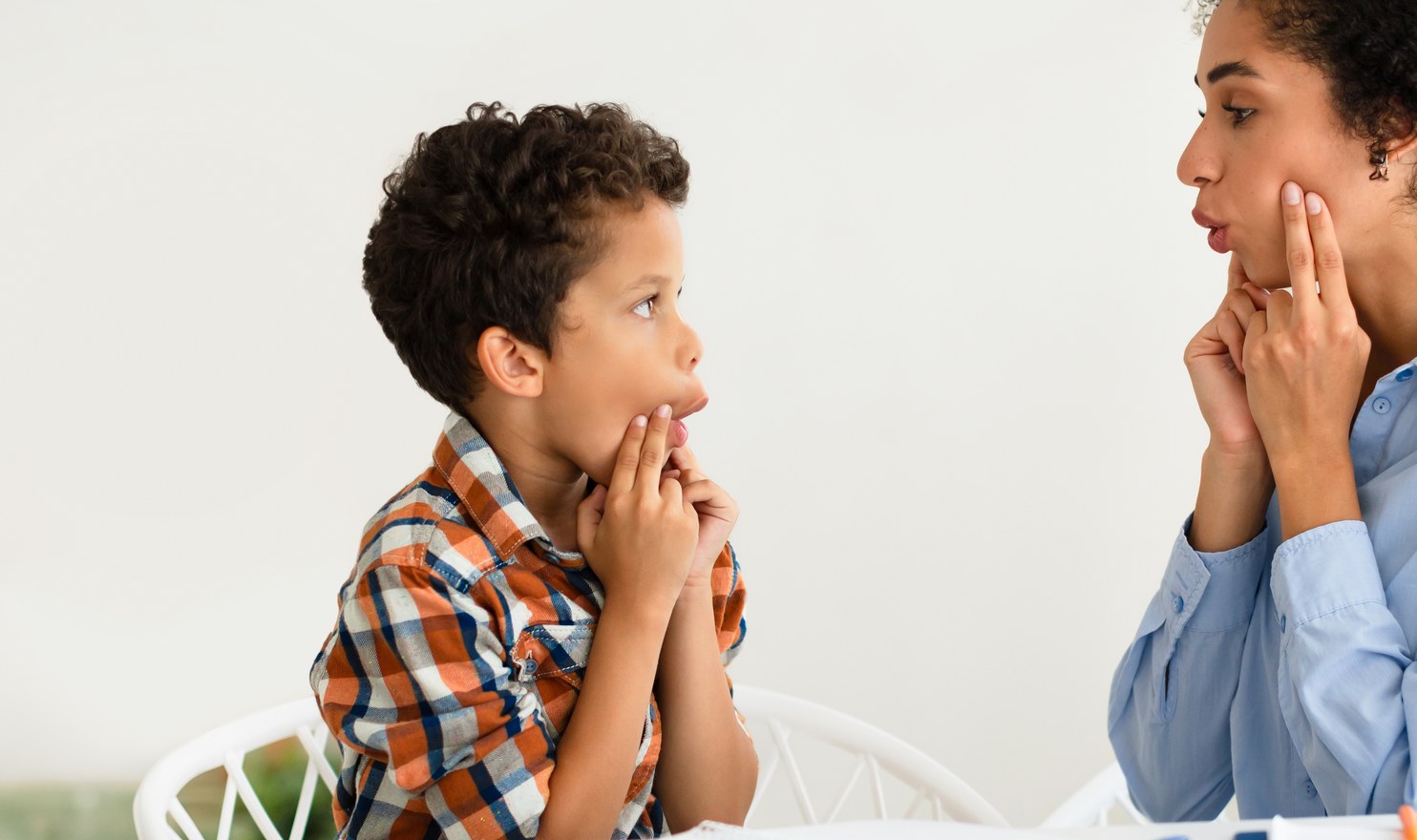
Childhood apraxia of speech is a motor speech disorder. A child knows what they want to say, and the muscles involved are not weak — the difficulty is in planning and sequencing the movements needed to produce the sounds. That distinction is what separates it from a speech delay, where sounds develop in a typical pattern but later than expected, and from dysarthria, where there is genuine muscle weakness. The features clinicians look for include errors that change from one attempt to the next on the same word, difficulty moving between sounds and syllables, and unusual rhythm or stress. Diagnosis is genuinely difficult in very young children and frequently takes more than one appointment. Treatment is speech therapy delivered frequently and intensively, built on principles of motor learning.
1 · What childhood apraxia of speech is
The clearest way to explain it: the message is intact, the instructions to the mouth are not.
A child with apraxia knows the word. They have the language. The muscles work. What is disrupted is the brain's planning of the sequence of movements — the lips, tongue, jaw, and voice all have to move in a precise order and timing, and that plan is not coming together reliably.
Which is why the same word can come out differently on consecutive attempts. That inconsistency is characteristic, and it is frequently the thing parents notice before anyone names it.
On terminology: you may also see verbal dyspraxia or developmental verbal dyspraxia, which refer to the same thing.
2 · How it differs from other speech difficulties
This is the question most parents arrive with.
| What is happening | Typical pattern | |
|---|---|---|
| Speech delay | Sounds are developing in the usual order, later than expected | Errors are fairly consistent and predictable |
| Phonological disorder | Patterns of sound use are simplified in rule-based ways | Errors follow a system — for example, all sounds made at the back come out at the front |
| Childhood apraxia of speech | Difficulty planning and sequencing the movements | Errors change between attempts at the same word; difficulty moving between sounds; unusual rhythm |
| Dysarthria | Genuine muscle weakness or reduced control | Speech may be slurred, quiet, or effortful, and errors are consistent |
What clinicians look for in apraxia specifically:
- Inconsistent errors on the same word across repeated attempts
- Difficulty with the transitions between sounds and syllables, not just the sounds themselves
- Unusual rhythm, stress, or intonation
- Groping — visible searching movements of the mouth before a sound comes out
- More difficulty with longer or more complex words than shorter ones
- A gap between what a child understands and what they can say, often a large one
Any of these can appear in other conditions. It is the combination, and how it behaves over time, that distinguishes apraxia — which is part of why diagnosis is difficult.
These can also co-occur. A child may have apraxia alongside a language disorder or a phonological difficulty, and that changes the plan.
3 · What parents notice
- Very little babbling as a baby, or a quieter baby than expected
- A first word that appeared, then disappeared
- The same word said differently every time — and sometimes said perfectly once, then never again
- Visible effort — the mouth moving, searching, before anything comes out
- Understanding far more than they can say
- Better speech on automatic phrases than on words they are trying to produce deliberately
- Frustration, sometimes considerable, and behavior that follows from being unable to be understood
- Family understands them, others do not
4 · Why diagnosis is difficult
Very young children may not produce enough speech to assess. Many of the diagnostic features require a child to attempt words repeatedly, which is difficult if they are saying very little.
The features overlap with other conditions, particularly early on.
It is both over- and under-diagnosed. Some children are given the label very early on limited evidence; others go years without it.
Which is why assessment frequently happens over time rather than in a single appointment, and why a provisional or descriptive term may be used before a firm diagnosis.
5 · What assessment involves
A speech-language pathologist carries out the assessment.
What is involved: developmental and medical history · listening to spontaneous speech and structured attempts · repeated productions of the same words, to look for consistency · assessing longer and more complex words · an oral motor examination to check structure and movement · assessing understanding separately from expression · a hearing check, which should be part of any speech assessment.
6 · What treatment involves
Speech therapy is the treatment, and two features of it matter more than which specific approach is used.
Frequency and intensity. Apraxia is a motor learning problem, and motor learning depends on repetition. In a study of 37 children aged between 32 and 54 months, those treated twice a week for ten weeks showed significantly better articulation and functional communication than those treated once a week; once-weekly treatment did not produce the same gains. Frequent, shorter sessions generally work better than occasional longer ones, and it is worth asking about directly.
Principles of motor learning. Many repetitions, practice distributed over time, varied practice contexts, and feedback that reduces as skill develops.
Named approaches you may encounter include DTTC, ReST, PROMPT, and the Nuffield Dyspraxia Program. They differ in method and in the evidence behind them, and a speech-language pathologist will select based on your child's age and profile.
Home practice matters, because the repetition needed exceeds what any session provides. Your speech-language pathologist should show you exactly what to practice and how.
7 · Communication while speech develops
A child who cannot yet speak still needs to communicate. Waiting for speech before providing another route leaves a child without a way to be understood, often for years.
Augmentative and alternative communication does not delay speech
This is the concern parents raise most, and it is the one the evidence answers most clearly.
Two things worth knowing about that finding. The gains were, for the most part, modest. And the participants were people with developmental disabilities generally — mostly autism and intellectual disability, across a wide age range — rather than children with apraxia specifically. What the evidence does not show, anywhere, is AAC holding speech back.
Being able to communicate reduces frustration, supports language development, and gives a child a reason to keep trying. AAC and speech therapy run alongside each other. One does not replace the other.
8 · What to expect over time
Most children make progress with appropriate therapy. How much and how quickly varies considerably, and it depends on severity, what else is going on, and how much practice happens.
Some children reach speech that is fully intelligible. Others continue to have some difficulty, particularly with longer words or under pressure, and continue to benefit from support.
Progress is frequently slow and non-linear, and plateaus are common. That is the nature of motor learning rather than a sign that therapy is not working — but it is worth discussing with your speech-language pathologist if it persists.
Reading and spelling are worth watching. Children with apraxia have higher rates of literacy difficulty, and monitoring this early is easier than catching up later. → Dyslexia
9 · Getting help
Under three in the US: early intervention is free in most states and a parent can refer their own child directly — no doctor's referral, no diagnosis required. Search for your state's early intervention program.
Three and over: request a school evaluation in writing. → IEPs and 504 plans
Privately, at any age. → Find a speech-language pathologist · Speech therapy costs
Questions worth asking: how often would you see my child, and why that frequency? · what approach do you use, and what is it based on? · what should we practice at home? · how will we know it is working, and by when? · do you use AAC alongside speech work?
10 · Frequently asked questions
Do oral motor exercises help?
A Cochrane review found no strong evidence that non-speech oral motor treatments — blowing, tongue movements, lip exercises — are effective either on their own or alongside other therapy for children with speech sound disorders. Practice of speech itself is what drives change.
How often should therapy happen?
Frequency matters in apraxia more than in most speech difficulties, because it is a motor learning problem. In one study of 37 children aged between 32 and 54 months, only twice-weekly treatment produced significantly better articulation and functional communication than once weekly over ten weeks. It is worth asking your speech-language pathologist about directly.
Is apraxia the same as dyspraxia?
Verbal dyspraxia is another term for childhood apraxia of speech. Dyspraxia used on its own usually means developmental coordination disorder, which affects whole-body movement — a different condition.
What is childhood apraxia of speech?
A motor speech disorder in which a child has difficulty planning and sequencing the movements needed for speech. They know what they want to say and their muscles are not weak — the difficulty is in the planning.
Can apraxia be diagnosed in a two-year-old?
It is difficult, because diagnosis relies partly on repeated attempts at words, which requires a child to be producing speech. Assessment often takes place over several sessions. Treatment does not have to wait for a firm diagnosis.
How is apraxia different from a speech delay?
In a speech delay, sounds develop in the usual order, just later. In apraxia, errors are inconsistent — the same word comes out differently on different attempts — and there is difficulty moving between sounds and syllables.
Why does my child say a word perfectly once and then never again?
This is characteristic of apraxia. When the movement plan happens to come together, the word is produced correctly; reproducing it deliberately is the difficulty.
Will using signs or a communication device stop my child from talking?
No. In a meta-analysis of studies with sufficient methodological rigor, none of the 27 cases showed a decrease in speech production after augmentative and alternative communication was introduced: 11 percent showed no change and 89 percent showed gains. Being able to communicate reduces frustration and supports language development, and AAC runs alongside speech therapy rather than replacing it.
Find a speech therapist who treats apraxia
265 practices in the DrSensory directory name apraxia among the conditions they treat — 2 PT, 5 OT, 258 SLP — across 51 states. They are grouped by state below.
Alabama3 practices
- Expressions Pediatric Therapy — Birmingham, AL · SLP
- Rocket City Speech Therapy — Huntsville, AL · SLP
- The SpOT Clinic (Madison) — Huntsville, AL · SLP
Alaska1 practice
- Achieve Speech Therapy LLC — Anchorage, AK · SLP
Arizona9 practices
- Milestone Pediatrics — Mesa, AZ · SLP
- Pediatric Speech & Language Specialists (PSLS) — Mesa, AZ · SLP
- Ridge Zeller Therapy — Mesa, AZ · SLP
- Way to Grow Pediatric Therapy & Dyslexia Center — Mesa, AZ · SLP
- Bilingual Pediatric Therapies — Phoenix, AZ · SLP
- Ridge Zeller Therapy — Phoenix, AZ · SLP
- Your Speech Partner, LLC — Phoenix, AZ · SLP
- Saguaro Occupational, Speech, and Physical Therapy — Tucson, AZ · OT
- Therapy Builders — Tucson, AZ · SLP
California24 practices
- Mimi & Me Speech Therapy — Los Angeles, CA · SLP
- NAPA Center (LA) — Los Angeles, CA · SLP
- SoCal Speech-Language Therapy, PC — Los Angeles, CA · SLP
- Wonder Talk Speech Therapy — Los Angeles, CA · SLP
- American River Speech Therapy — Sacramento, CA · SLP
- Bright Start Therapies — Sacramento, CA · SLP
- Total Spectrum Speech Therapy — Sacramento, CA · SLP
- Kara Dodds & Associates — San Diego, CA · SLP
- North Star SLPC, Inc. — San Diego, CA · SLP
- Ocean Beach Speech — San Diego, CA · SLP
- Radiant Kids Therapy — San Diego, CA · SLP
- San Diego Center for Speech Therapy & Myofunctional Therapy — San Diego, CA · SLP
- SmallTalk Pediatric Therapy — San Diego, CA · SLP
- Speech Bee Speech Therapy, Inc. — San Diego, CA · SLP
- Hearing and Speech Center of Northern California — San Francisco, CA · SLP
- SF Speech Therapy — San Francisco, CA · SLP
- Talk Shop Speech Therapy — San Francisco, CA · SLP
- The Speech Path — San Francisco, CA · SLP
- Words To Share (Diana V. Angeles, MS, CCC-SLP) — San Francisco, CA · SLP
- Gold Speech, Inc. — San Jose, CA · SLP
- IICA Speech — San Jose, CA · SLP
- Lexis Pediatric Speech Therapy — San Jose, CA · SLP
- Peninsula Associates Speech Therapy Services — San Jose, CA · SLP
- RiteCare Childhood Language Center of San Jose — San Jose, CA · SLP
Colorado9 practices
- Reach Speech Therapy — Colorado Springs, CO · SLP
- WellCare & Nurture Pediatric Therapy — Colorado Springs, CO · SLP
- Zoah Speech & Outreach — Colorado Springs, CO · SLP
- Center for Children's Speech-Language Disorders — Denver, CO · SLP
- Children's Therapy Services of Colorado (CTSC) — Denver, CO · SLP
- HealthPRO Pediatrics — Denver, CO · SLP
- Laura M. Biegner & Associates (Colorado Speech Therapy) — Denver, CO · SLP
- NAPA Center Denver — Denver, CO · SLP
- Therapies of the Rockies — Denver, CO · SLP
Connecticut6 practices
- King's Speech and Learning Center — Hartford, CT · SLP
- Pediatric and Adolescent Speech Therapy Associates — Hartford, CT · SLP
- Pediatric Communication Center, LLC — Hartford, CT · SLP
- Pediatric Therapy Solutions, LLC — Hartford, CT · SLP
- Baron Therapy Services, LLC — New Haven, CT · SLP
- Yale New Haven Children's Hospital — Pediatric Outpatient Rehab (Speech-Language Pathology) — New Haven, CT · SLP
Delaware2 practices
- Empowered Speech Therapy & Language Services — Wilmington, DE · SLP
- Speech and Language for Kids LLC — Wilmington, DE · SLP
District of Columbia1 practice
- Little Feet Therapy — Washington, DC · SLP
Florida12 practices
- Sunshine Speech — Jacksonville, FL · SLP
- Tavvy Speech Therapy Services LLC — Jacksonville, FL · SLP
- Exceptional Speech Therapy — Miami, FL · SLP
- SLP Miami Therapy, Inc. — Miami, FL · SLP
- Step by Step Speech Corporation — Miami, FL · SLP
- TEAM Pediatric Therapy — Orlando, FL · SLP
- Bridge Speech Therapy, LLC — St Petersburg, FL · SLP
- Saint Pete Speech Therapy — St Petersburg, FL · SLP
- Sunshine Speech Buds — St Petersburg, FL · SLP
- Sunshine Speech Services — St Petersburg, FL · SLP
- Alyssa Campbell Therapies, P.A. — Tampa, FL · SLP
- Playful Paths Speech Therapy — Tampa, FL · SLP
Georgia6 practices
- Children's Healthcare of Atlanta (CHOA) — Speech-Language Pathology — Atlanta, GA · SLP
- Lighting the Way Occupational Therapy — Atlanta, GA · OT
- Path to Progress Speech Solutions, LLC — Atlanta, GA · SLP
- Savannah Speech & Hearing Center — Savannah, GA · SLP
- The Speech Clinic of the Coastal Empire — Savannah, GA · SLP
- Utter Success Speech Services, LLC — Savannah, GA · SLP
Hawaii1 practice
- Speech Solutions Hawaii — Honolulu, HI · SLP
Idaho3 practices
- Chatterbox Pediatric Therapy — Boise, ID · SLP
- Children's Therapy Place — Boise, ID · SLP
- RISE Pediatric Therapies — Boise, ID · SLP
Illinois6 practices
- Community Therapy Services (CTS Pediatrics) — Aurora, IL · SLP
- Therapy Care — Aurora, IL · SLP
- Chicago Speech Therapy — Chicago, IL · SLP
- Lurie Children's Hospital — Speech-Language Pathology — Chicago, IL · SLP
- North Shore Pediatric Therapy (NSPT) — Bucktown — Chicago, IL · SLP
- Oak Tree Development Center — Chicago, IL · SLP
Indiana1 practice
- Spark Speech Therapy LLC — Indianapolis, IN · SLP
Iowa1 practice
- UnityPoint Health – Blank Children's Pediatric Therapy – Des Moines — Des Moines, IA · SLP
Kansas1 practice
- Heartspring Pediatric Outpatient Clinic — Speech — Wichita, KS · SLP
Kentucky3 practices
- ASL Pediatric Therapy Services — Louisville, KY · SLP
- Mind Body Child — Louisville, KY · SLP
- UofL Health – Frazier Rehab / Kosair for Kids Pediatric Center — Louisville, KY · SLP
Louisiana6 practices
- Excellence in Speech Pathology (ESP) Pediatric Therapy Services — Baton Rouge, LA · SLP
- CRANE Rehab Center Pediatrics — New Orleans, LA · SLP
- Manning Family Children's (Children's Hospital New Orleans, LCMC Health) — New Orleans, LA · SLP
- Ochsner Health — Pediatric Speech-Language Pathology — New Orleans, LA · SLP
- Southern Oaks Pediatric Therapy — New Orleans, LA · SLP
- Spark Pediatric Therapy — New Orleans, LA · SLP
Maine5 practices
- Hammond Associates — Portland, ME · SLP
- Mainely Speech Therapy for Kids — Portland, ME · SLP
- Portland Pediatric Speech Therapy — Portland, ME · SLP
- Scarborough NeuroDevelopment Center — Portland, ME · SLP
- SkillBuilders Speech Therapy, PA — Portland, ME · SLP
Maryland4 practices
- GBMC — Milton J. Dance Jr. Center, Pediatric Speech — Baltimore, MD · SLP
- Spectrum Speech Therapy — Baltimore, MD · SLP
- The Therapy Spot — Baltimore, MD · SLP
- Stepping Stones Therapy — Bethesda, MD · OT
Massachusetts3 practices
- Boston Children's Hospital — Speech-Language Pathology Program — Boston, MA · SLP
- Zebra Speech — Boston, MA · SLP
- Emilulu Speech Therapy — Worcester, MA · SLP
Michigan4 practices
- Kaufman Children's Center — Detroit, MI · OT
- Kaufman Children's Center — Detroit, MI · SLP
- Exemplary Speech Services — Grand Rapids, MI · SLP
- Family Tree Therapies — Grand Rapids, MI · SLP
Minnesota5 practices
- Sol Therapy Services — Minneapolis, MN · SLP
- ACE Speech and Language Clinic, LLC — Saint Paul, MN · SLP
- Children's Minnesota — St. Paul Rehabilitation Clinic — Saint Paul, MN · SLP
- Kidspeak Ltd. — Saint Paul, MN · SLP
- Rosenberg Center — Saint Paul, MN · SLP
Mississippi2 practices
- Beyond Therapy for Kids — Jackson, MS · SLP
- Outreach Therapy — Jackson, MS · SLP
Missouri8 practices
- Children's Mercy Kansas City — Hearing & Speech Clinic — Kansas City, MO · SLP
- Speech & Swallowing Specialists of KC (SASS KC) — Kansas City, MO · SLP
- Super Speech Therapy — Kansas City, MO · SLP
- Little Talkers Speech Therapy, LLC — St Louis, MO · SLP
- SSM Health Cardinal Glennon Children's Hospital — Pediatric Therapy — St Louis, MO · SLP
- Tiny Speech, LLC — St Louis, MO · SLP
- Word Play Speech Therapy — St Louis, MO · SLP
- Your Village STL — St Louis, MO · SLP
Montana1 practice
- McKenzie Speech Therapy, LLC — Billings, MT · SLP
Nebraska3 practices
- Children's Nebraska — Speech Therapy — Omaha, NE · SLP
- Grow With Me Pediatric Therapy — Omaha, NE · SLP
- Kim Norris Speech Therapy Clinic PC — Omaha, NE · SLP
Nevada8 practices
- Mustard Seeds Therapy — Las Vegas, NV · SLP
- OccuTherapy, LLC — Las Vegas, NV · OT
- Rescue My Speech — Las Vegas, NV · SLP
- Speakeasy Therapy Services — Las Vegas, NV · SLP
- The Speech House — Las Vegas, NV · SLP
- Time to Talk Speech/Feeding Therapy — Las Vegas, NV · SLP
- Nevada Speech and Therapy Group — Reno, NV · SLP
- Silver State Speech Therapy — Reno, NV · SLP
New Hampshire1 practice
- Clearly Speaking — Manchester, NH · SLP
New Jersey9 practices
- Chance To Advance, LLC — Jersey City, NJ · PT
- Jersey City Speech Therapy (Laura Canetti, MA-CCC-SLP) — Jersey City, NJ · SLP
- Sofia Sullivan SLP, LLC — Jersey City, NJ · SLP
- Speech & Hearing Associates — Secaucus — Jersey City, NJ · SLP
- Children's Specialized Hospital — Outpatient Center, Newark (RWJBarnabas Health) — Newark, NJ · SLP
- Children's Specialized Hospital — Outpatient Center, West Orange (RWJBarnabas Health) — Newark, NJ · SLP
- Pediatric Therapy Center of NJ — Cedar Grove — Newark, NJ · SLP
- Rose Garden Speech Therapy — Newark, NJ · SLP
- Village Therapy — Newark, NJ · SLP
New Mexico1 practice
- Albuquerque Speech Language and Hearing Center (ASLHC) — Albuquerque, NM · SLP
New York8 practices
- Noon Speech Therapy, PLLC — Buffalo, NY · SLP
- University at Buffalo Speech-Language & Hearing Clinic — Buffalo, NY · SLP
- Brooklyn Speech Therapy — New York, NY · SLP
- HSS Pediatric Rehabilitation — Speech Therapy — New York, NY · SLP
- Nurture Speech & Feeding Therapy PLLC — New York, NY · SLP
- Speech in The City PLLC — New York, NY · SLP
- Speech Zone NYC — New York, NY · SLP
- Sound Speech Therapy — Rochester, NY · SLP
North Carolina11 practices
- Speech and Feeding Haven PLLC — Charlotte, NC · SLP
- Duke Children's Health Center — Speech Pathology & Audiology Clinic — Durham, NC · SLP
- Emerge Pediatric Therapy — Durham, NC · SLP
- Little Seeds Speech Therapy, PLLC — Durham, NC · SLP
- Move With Me Physical Therapy — Durham, NC · PT
- Radiant Moments Pediatric Therapy — Durham, NC · SLP
- Pediatric Therapy Connection, PLLC — Greensboro, NC · SLP
- Chitter Chatter Therapy — Raleigh, NC · SLP
- Find Your Voice Speech & Language Therapy, PLLC — Raleigh, NC · SLP
- The Aspen Center — Raleigh, NC · SLP
- Wake Pediatric Speech Therapy, PLLC — Raleigh, NC · SLP
North Dakota1 practice
- On Spot Therapy and Orofacial Myology — Fargo, ND · SLP
Ohio6 practices
- BeYOUtiful Adventures in Speech — Cincinnati, OH · SLP
- Laurel Speech Therapy — Cincinnati, OH · SLP
- TherapyWorks Cincinnati — Cincinnati, OH · SLP
- Totally Communicating — Cincinnati, OH · SLP
- Dynamic Speech Therapy Services — Cleveland, OH · SLP
- Flourish Integrated Therapy, LLC — Columbus, OH · SLP
Oklahoma3 practices
- Speech Pathway — Oklahoma City, OK · SLP
- Monarch Speech and Language Institute — Tulsa, OK · SLP
- Speech and Beyond Pediatric Therapy — Tulsa, OK · SLP
Oregon6 practices
- Birdsong Speech Therapy — Eugene, OR · SLP
- Children's Therapy Clinic (dba Eugene Speech Therapy) — Eugene, OR · SLP
- UO Speech-Language-Hearing Center (HEDCO Clinic) — Eugene, OR · SLP
- Little Peas Speech and Occupational Therapy — Portland, OR · SLP
- Little Pines Speech Therapy — Portland, OR · SLP
- Portland Speech Clinic — Portland, OR · SLP
Pennsylvania6 practices
- Jill Feldbaum Speech and Language Therapy — Philadelphia, PA · SLP
- Milestone Therapy Group — Philadelphia, PA · SLP
- Azzurri Speech Therapy — Pittsburgh, PA · SLP
- Pediatric Therapy Source — Pittsburgh, PA · SLP
- Reach for Speech (Kids Reach 4 Speech) — Pittsburgh, PA · SLP
- Uptown Speech Therapy — Pittsburgh, PA · SLP
Rhode Island1 practice
- Rhode Island Speech Therapy (Tammie Guerra, MS CCC-SLP/L) — Providence, RI · SLP
South Carolina3 practices
- Mount Pleasant Pediatric Therapy — Charleston, SC · SLP
- Spoken Word Children's Therapy — Charleston, SC · SLP
- Sweet Talkers Speech Therapy, LLC — Charleston, SC · SLP
South Dakota1 practice
- Happy Day Speech Therapy — Sioux Falls, SD · SLP
Tennessee7 practices
- Bluebird Speech Therapy — Knoxville, TN · SLP
- Discover Speech Therapy — Knoxville, TN · SLP
- Growing Little Voices Speech Therapy, LLC — Knoxville, TN · SLP
- Little Big and LOUD Pediatric Therapy — Knoxville, TN · SLP
- Stidham Speech Therapy — Knoxville, TN · SLP
- Honeysuckle Pediatric Therapy — Nashville, TN · SLP
- Tandem Pediatric Therapies — Nashville, TN · SLP
Texas20 practices
- Where Language Blooms — Austin, TX · SLP
- Burtis & Noel Speech Language Center — Dallas, TX · SLP
- Monkey Mouths — Dallas, TX · SLP
- Speech Wings Therapy, LLC — Dallas, TX · SLP
- Synaptic Pediatric Therapies — Dallas, TX · SLP
- Bloom Bilingual Speech Therapy — Fort Worth, TX · SLP
- Cook Children's Rehabilitation — Speech — Fort Worth, TX · SLP
- Cowtown Pediatrix Clinic — Fort Worth, TX · SLP
- Joyful Noise Speech Therapy — Fort Worth, TX · SLP
- Little Red Wagon Therapy — Fort Worth, TX · SLP
- Monkey Mouths — Fort Worth, TX · SLP
- PediaPlex — Fort Worth, TX · SLP
- Talking Tadpoles — Fort Worth, TX · SLP
- Luna Bilingual Speech Therapy — Houston, TX · SLP
- North Star Pediatric Speech Therapy — Houston, TX · SLP
- Speech Center of Katy — Houston, TX · SLP
- Thriving Roots Speech Therapy — Houston, TX · SLP
- Wilkenfeld Speech, Language and Learning Center — Houston, TX · SLP
- Crossroads Therapy Clinic — San Antonio, TX · SLP
- Pediatric Therapy Specialists, LLC — San Antonio, TX · SLP
Utah5 practices
- Blacksmith Pediatric Speech Therapy — Salt Lake City, UT · SLP
- Precision Speech and Language Therapy — Salt Lake City, UT · SLP
- University of Utah Health Speech-Language-Hearing Clinic — Salt Lake City, UT · SLP
- Utah Premier Therapies — Salt Lake City, UT · SLP
- Wasatch Speech & Language Center — Salt Lake City, UT · SLP
Vermont1 practice
- Evolve Speech Language Pathology — Burlington, VT · SLP
Virginia12 practices
- Children's Speech and Language Services — Arlington, VA · SLP
- The Communication Carr — Arlington, VA · SLP
- Norfolk Speech & Language Services (NSLS) — Norfolk, VA · SLP
- Sentara Therapy – Pediatrics — Norfolk, VA · SLP
- Play on Words Speech & Reading — Richmond, VA · SLP
- Speak Easy RVA — Richmond, VA · SLP
- Speech Connections — Richmond, VA · SLP
- Sunshine Speech Therapy — Richmond, VA · SLP
- The Speech Path — Richmond, VA · SLP
- Coastal Kids Speech Therapy, LLC — Virginia Beach, VA · SLP
- Resolute Therapy Collaborative — Virginia Beach, VA · SLP
- Speech at the Beach, PLLC — Virginia Beach, VA · SLP
Washington9 practices
- In Bloom Speech Therapy — Seattle, WA · SLP
- Seattle Therapy — Skills for Life — Seattle, WA · SLP
- SPARC Health — Seattle, WA · SLP
- Swanson Speech Therapy — Seattle, WA · SLP
- Wagner Pediatric Speech & Language — Seattle, WA · SLP
- Spokane Valley Pediatric Speech Therapy — Spokane, WA · SLP
- Stepping Stones Pediatric Therapy — Spokane, WA · SLP
- Communication Therapies, LLC — Tacoma, WA · SLP
- Speech Therapy Tacoma — Tacoma, WA · SLP
West Virginia2 practices
- Children's Therapy Clinic — Charleston, WV · SLP
- Laurance Jones III Childhood Language Center — Charleston, WV · SLP
Wisconsin3 practices
- Children's Therapy Network (CTN) — Madison, WI · SLP
- CI Pediatric Therapy Centers — Madison, WI · SLP
- Chatterbox Speech and Language Therapy — Milwaukee, WI · SLP
Wyoming2 practices
- A Time To Talk, LLC (Rachel K. Thompson, MA, CCC-SLP) — Cheyenne, WY · SLP
- Wyoming Speech and Literacy — Cheyenne, WY · SLP
Each practice appears here because its own listing names this among what it treats. A listing is not an endorsement or a referral, and inclusion does not mean we have verified a practice’s credentials, licensure or insurance — check those directly. Browse all speech therapy practices.
Sources
- American Speech-Language-Hearing Association. Childhood apraxia of speech: position statement. Checked August 19, 2026.
- American Speech-Language-Hearing Association. Practice portal: childhood apraxia of speech. Checked August 19, 2026.
- Millar DC, Light JC, Schlosser RW. The impact of augmentative and alternative communication intervention on the speech production of individuals with developmental disabilities: a research review. Journal of Speech, Language, and Hearing Research. 2006;49(2):248–264. doi:10.1044/1092-4388(2006/021) (PMID 16671842)
- Namasivayam AK, Pukonen M, Goshulak D, Hard J, Rudzicz F, Rietveld T, et al. Treatment intensity and childhood apraxia of speech. International Journal of Language & Communication Disorders. 2015;50(4):529–546. doi:10.1111/1460-6984.12154 (PMID 25581372)
- Lee ASY, Gibbon FE. Non-speech oral motor treatment for children with developmental speech sound disorders. Cochrane Database of Systematic Reviews. 2015;(3):CD009383. doi:10.1002/14651858.CD009383.pub2 (PMID 25805060)
Disclaimer. This page is for general educational purposes and does not constitute medical advice, diagnosis, or treatment. It has not been reviewed by a speech-language pathologist. If you have concerns about your child's speech, speak to a speech-language pathologist or your pediatrician.