
Therapy guides
Speech Therapy for Babies and Toddlers
What speech and language therapy looks like for under three — what a session involves, and what to ask for.
- Editorially Reviewed
- Evidence Based
- Patient Focused
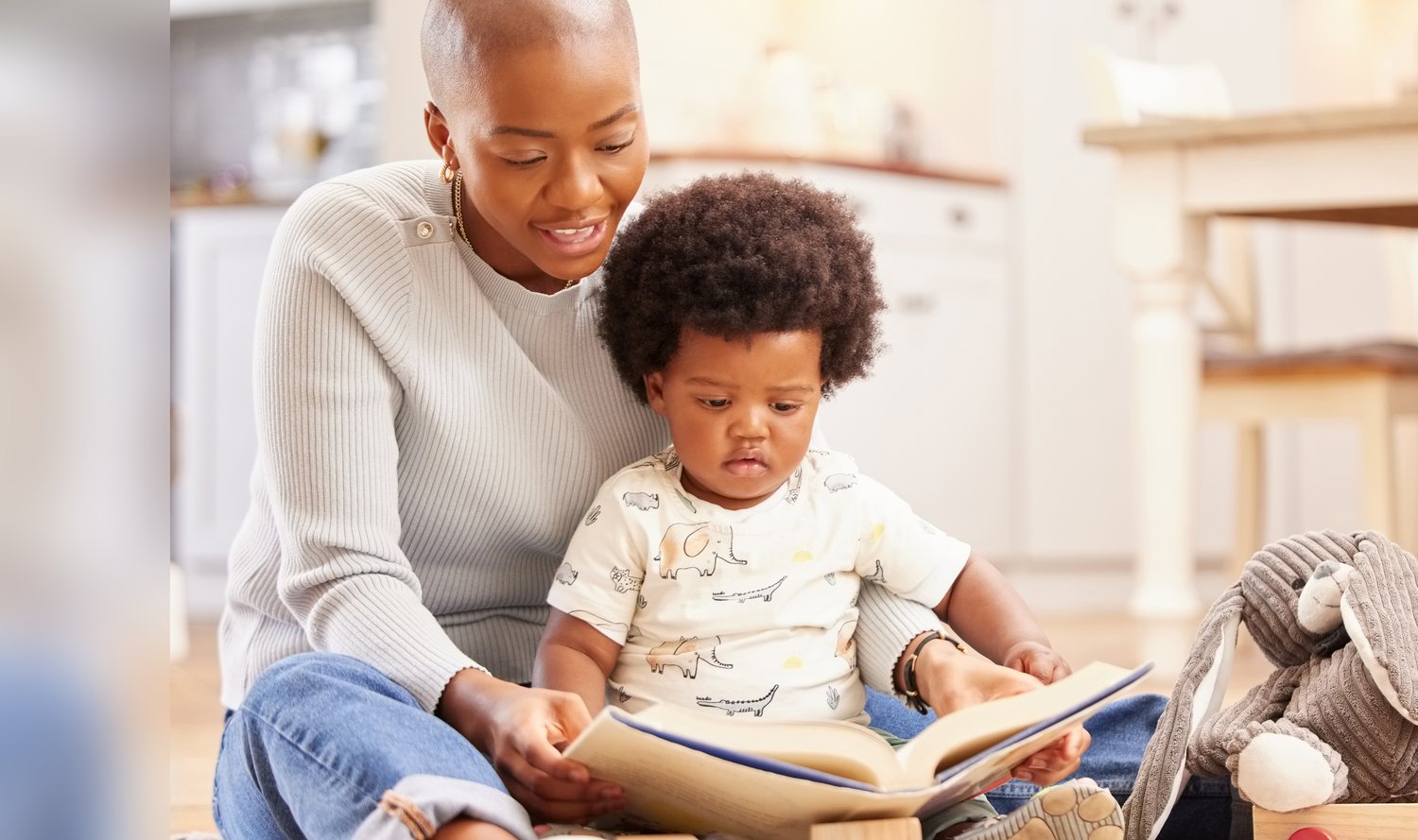
Speech therapy for a child under three looks almost nothing like what most parents picture. There is no desk, no worksheets, and often no obvious therapy happening at all. Sessions usually take place at home, they run through play and everyday routines, and much of the therapist's work is with you rather than directly with your child. That is deliberate: a child this age learns language from thousands of interactions a week with the people around them, and a therapist sees them for one hour. In the United States, early intervention for children under three is free, requires no doctor's referral, and a parent can arrange the evaluation themselves.
What does speech therapy do for a baby or toddler?
Understanding comes first. A speech-language pathologist assesses what your child understands, not only what they say — and difficulty understanding is both more concerning and more easily missed.
Building the foundations of communication, which come before words: eye contact and joint attention, turn-taking, gesture, pointing to show rather than only to request, and imitating sounds and actions.
First words and word combinations, and the pathways toward them.
Speech sounds — though at this age clarity is expected to be limited, and the emphasis is on communicating rather than on precision.
Feeding and swallowing. Many parents do not know SLPs cover this. Difficulty with textures, gagging, chewing, or coughing during meals is squarely their field, and it is shared territory with occupational therapy.
Alternative communication where speech is not yet available — signs, pictures, or a device.
Signs speech therapy for babies and toddlers might help
- Not babbling with consonants by around 9 months
- Not responding to their name by around 9 months
- No gestures — pointing, waving, showing — by 12 months
- No words by 15 to 18 months
- Fewer than 50 words, or no two-word combinations, by 24 to 30 months
- Hard for unfamiliar adults to understand at 2 to 3 years
- Understanding seems limited, not just speaking
- Difficulty with textures, gagging, or coughing during meals
- Frustration around communicating
- Loss of words they previously used — this warrants prompt medical evaluation rather than a wait
What happens in a speech therapy session for a toddler?
Where does speech therapy for babies and toddlers happen?
Usually at home, for children under three receiving early intervention. Sometimes at a clinic or a childcare setting. Home matters more than it sounds: a therapist sees how your child communicates in the place they actually live, with the people and objects they actually use, which is a truer picture than any clinic room provides.
What does the therapist actually do?
Play — genuinely. On the floor, with your child's toys, following what your child is interested in rather than directing them. They will model rather than test: naming things, expanding what your child says, pausing to leave space for a response. They will use your routines — snack time, diaper changes, getting dressed, bath — not because those are convenient but because repetition inside a predictable routine is how language is learned. And they will talk to you a great deal.
What am I supposed to be doing?
Participating, not watching. You will be asked to try things while the therapist is there, and to keep doing them during the week. Asking questions is part of it. "Why did you pause there?" is a good question and a good therapist will welcome it.
Why so much of speech therapy happens through you
A therapist sees your child for perhaps an hour a week. You see them for the other hundred and sixty-seven.
Language develops through volume of interaction rather than through sessions. A strategy used twenty times a day for a week will do more than an hour of expert input.
Following your child's lead rather than directing — naming what they are already looking at.
Waiting. Leaving a pause after you speak, long enough to feel awkward. Children with language difficulty need longer than most adults naturally allow.
Expanding. They say "car," you say "big car" or "car goes."
Narrating routines — what you are doing, while you are doing it.
Reducing questions. Comments teach language; questions test it. Most adults ask far more than they comment.
Bilingual families
Growing up with more than one language does not cause a speech or language delay, and dropping a home language does not fix one.
Bilingual children may know fewer words in each language counted separately while knowing as many or more across both, so vocabulary should be counted across all of a child's languages. An assessment that ignores the home language will get the answer wrong.
Speak to your child in the language you are most fluent and most comfortable in. That is where the richest input comes from, and richness of input is what matters.
What makes speech therapy different before age three?
The window is favorable. Language develops fastest in the first three years, and intervention during that period is more effective than the same intervention later.
A diagnosis is not needed. Early intervention is based on assessed need — you do not have to know what is going on to get help.
Progress can be fast, and it can also be uneven. Bursts and plateaus are both normal.
And the family is the intervention. By school age, therapy shifts toward working with the child directly. At this age it does not, and that is by design.
How to get started
Do I need a referral?
No. In the United States, the early intervention evaluation for children under three is free, has no income requirement, and a parent can refer their own child. No doctor's referral and no diagnosis are required.
Search "[your state] early intervention" and call — there is a legal timeline once you make contact. Your pediatrician can also refer, and many families do both.
What does speech therapy for babies and toddlers cost?
The early intervention evaluation is free. From age three, school district services are free where a child qualifies.
Private therapy is available at any age, and insurance coverage varies. → Therapy costs and insurance
How will I know speech therapy is working?
Not linear. Bursts followed by plateaus are normal and do not mean therapy stopped working.
Understanding usually moves before speaking does, which can be frustrating to watch. It is still progress.
Early wins are often about communication rather than words — more gesture, more attempts, more turn-taking, less frustration. Those come first and they matter.
How long varies widely. Ask your SLP what they expect and what would change their mind. → Developmental language disorder · Apraxia of speech
What goals should a speech therapy plan have at this age?
| Goals that work | Goals that don't |
|---|---|
| Uses a gesture to ask for more at mealtimes Says "up" when they want to be lifted Points to show me things they find interesting Follows a simple instruction without me gesturing Puts two words together to ask for something Family friends can understand what they want | Improve expressive language Increase mean length of utterance Improve receptive vocabulary |
What should I ask my child's speech therapist?
- What did you notice in the assessment that concerned you most?
- What should I be doing during the week, specifically?
- How will we know this is working, and by when?
- What would make you change the approach?
- Should we be using signs or pictures alongside speech?
- Do you have any concerns beyond speech and language?
Frequently Asked Questions
Do I need a doctor's referral?
No. Early intervention evaluations in the United States are free for children under three, have no income requirement, and a parent can refer their own child directly.
Is my child too young for therapy?
No, and this is the age where it tends to do the most. Early intervention in the US is built for birth to three precisely because that is when development is most responsive, and a parent can refer their own child without a doctor's note. Waiting for a clearer picture is the common instinct and usually the costlier one: the skills being worked on are the ones everything later is built from.
Does my toddler need speech therapy?
If they have no words by 18 months, fewer than 50 words or no two-word combinations by 24 months, are hard for unfamiliar adults to understand at 2 to 3, or seem to understand less than expected, an evaluation is worth arranging. Evaluation is free under three and you can arrange it yourself.
Should I wait and see if they catch up?
Most late talkers do catch up, but there is no reliable way to tell at two which ones will. Since evaluation is free and early intervention works better earlier, waiting to find out costs the window rather than saving anything.
Does being bilingual cause speech delay?
No. Bilingual children may have fewer words in each language while having a comparable total. A bilingual child with delayed speech has delayed speech, and dropping a home language is outdated advice.
Will using signs stop my child from talking?
No. A research review of AAC found that none of the cases examined showed a decrease in speech, and the majority showed gains. Being able to communicate reduces frustration and supports language development.
What happens in speech therapy for a two-year-old?
Play, usually at home, following your child's interests. The therapist models language, builds it into your routines, and teaches you strategies to use during the week. Most of the change happens between sessions.
Why does the therapist keep talking to me instead of my child?
Because you see your child for a hundred and sixty-seven hours a week and they see them for one. Making you effective is the intervention at this age, not an interruption to it.
Sources
- Millar, D. C., Light, J. C., & Schlosser, R. W. (2006). The impact of augmentative and alternative communication intervention on the speech production of individuals with developmental disabilities: a research review. Journal of Speech, Language, and Hearing Research, 49(2), 248–264. PMID 16671842
- Centers for Disease Control and Prevention, Learn the Signs. Act Early. developmental milestone checklists. cdc.gov/act-early/milestones
- American Speech-Language-Hearing Association, communication milestones and early intervention guidance. asha.org
Disclaimer. This page is for general educational purposes and does not constitute medical advice, diagnosis, or treatment.