
Dental and oral development
Jaw Clicking and TMJ Problems in Children
A click on its own is usually nothing — what the joints do, and the signs that change that.
- Expert Reviewed
- Evidence Based
- Patient Focused
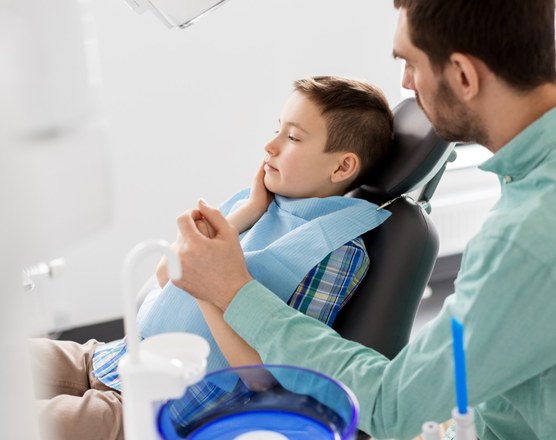
The temporomandibular joints connect the jaw to the skull, and clicking from them is common in children — frequently painless and often requiring no treatment. Where clicking occurs alongside pain, restricted opening, or difficulty chewing, it may indicate a temporomandibular disorder (TMD), which is less common in children than adults but does occur. Management is conservative first: rest, soft diet, heat, and addressing contributing habits. Irreversible treatments — occlusal adjustment, orthodontics undertaken specifically to treat TMD, or surgery — are not first-line in children, and a growing jaw complicates decisions that would be straightforward in an adult.
What do the jaw joints do, and why do they click?
The temporomandibular joints sit just in front of each ear. They're unusual: they hinge and slide, and both sides have to work together. That complexity is why noises are common and why they're often unremarkable. Jaw joint symptoms in this age group are not rare either: a systematic review found prevalence between the ages of 10 and 19 varying from 7.3% to 30.4%, with myofascial pain and disc displacement the most common findings.2
Clicking, popping, or a soft grating sound frequently occurs as the disc within the joint moves. A painless click, on its own, is usually not a problem.1
When is jaw clicking in a child nothing to worry about?
A click on its own, with all of these, is very likely fine
- Occasional painless clicking
- Clicking that's been present a long time and hasn't changed
- No pain, no restriction, no difficulty eating
- Full, comfortable opening
Worth mentioning at a routine dental visit so it's noted and can be compared over time — but not a reason for concern on its own.
When should a child's jaw clicking be checked by a dentist?
Book an appointment for:
- Jaw pain, or pain in front of the ear
- Pain when chewing, yawning, or opening wide
- Headaches, particularly around the temples
- Difficulty opening as wide as usual
- Clicking that has recently started or changed
- Facial muscle tenderness
- Ear pain with no ear infection found
Also raise: jaw pain following any injury to the face or jaw, or a change in how the teeth meet. → Early TMJ symptoms to watch for · How dental alignment affects chewing
What causes jaw clicking and TMJ pain in children?
Awake clenching or grinding
Common during concentration, screen use, or tension. → Daytime teeth grinding
Sleep bruxism
Grinding during sleep loads the same muscles and joints overnight. → Teeth grinding in children
Habits
Nail biting, pen chewing, chewing gum extensively, resting the chin on a hand.
Trauma
A knock to the jaw or face, sometimes months earlier.
Stress
Clenching increases under stress, and the jaw muscles carry it.
Hypermobility
Children with generalized joint hypermobility may have more mobile jaw joints, and joint noises are more common. → Ehlers-Danlos syndromes
Posture and airway
Head and neck posture affects jaw position, and mouth breathing changes resting posture of the jaw and tongue. → Tongue posture and jaw development. → Breathing vs chewing
How is TMJ treated in children?
Most children improve with simple measures, and these are the starting point.3
- Rest the joint — softer food temporarily, smaller bites, avoiding wide opening and chewy or hard foods
- Stop the habits — gum, nail biting, pen chewing, chin resting
- Heat — a warm compress to the jaw muscles
- Gentle jaw exercises, where a dentist or physical therapist has advised them specifically
- Address clenching, including any contributing sleep or airway factor
- Pain relief where needed, discussed with your doctor or dentist
Physical therapy can help where muscle tension and posture are contributing — jaw and neck muscle work, posture, and habit change. → Find a physical therapist · TMJ pain relief exercises
Popular next reads
Frequently Asked Questions
What is TMD?
Temporomandibular disorder — a group of conditions affecting the jaw joints and the muscles that move them, causing pain, restricted movement, or joint noises. Less common in children than adults, but it does occur.
Will it go away?
Frequently, yes. Most children improve with conservative measures, and jaw symptoms in children often resolve as growth continues.
Can grinding cause jaw problems?
Clenching and grinding both load the jaw muscles and joints and can contribute. Addressing the grinding — including any airway factor behind it — is part of managing the jaw symptoms.
Is jaw clicking in children normal?
Clicking is common and frequently painless. On its own, without pain or restricted opening, it usually needs no treatment — though it's worth mentioning at a routine dental visit.
Does my child need braces to fix it?
Orthodontic treatment undertaken specifically to treat jaw symptoms isn't first-line in children. Conservative management comes first, and the evidence for irreversible treatment in children is limited. Ask what has been tried and what the evidence is.
When should I worry about jaw clicking?
When it comes with pain, difficulty opening, headaches, or difficulty chewing — or when it starts or changes suddenly. If the jaw locks open or won't open fully, seek assessment promptly.
Sources
- National Institute of Dental and Craniofacial Research. TMJ disorders. Checked August 19, 2026.
- Christidis N, Lindström Ndanshau E, Sandberg A, Tsilingaridis G. Prevalence and treatment strategies regarding temporomandibular disorders in children and adolescents: a systematic review. Journal of Oral Rehabilitation. 2019;46(3):291–301. doi:10.1111/joor.12759 (PMID 30586192)
- American Academy of Pediatric Dentistry. The Reference Manual of Pediatric Dentistry. Checked August 19, 2026.
Medical disclaimer. This page is for general educational purposes and does not constitute medical or dental advice, diagnosis, or treatment. Concerns about your child's teeth or jaw should be assessed by a dentist.