
Sensory processing
Sensory Under-Responsivity: Signs and What Helps
Signals that arrive faintly or late — and why it is so often read as not listening, or not caring.
- Expert Reviewed
- Evidence Based
- Patient Focused
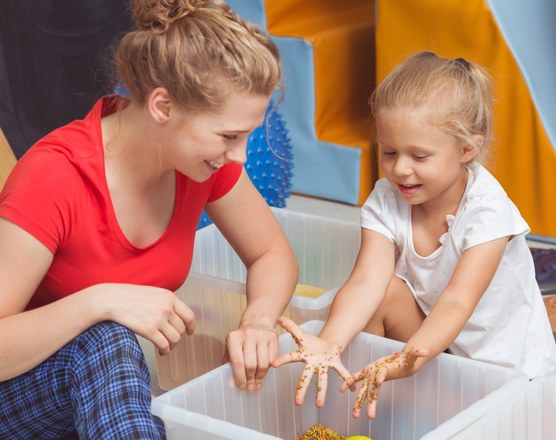
Sensory under-responsivity describes registering sensory input less, more slowly, or requiring more of it before responding. A child who doesn't notice a scraped knee, doesn't respond to their name, seems unaware of a messy face, or appears tired and disengaged may be under-registering input rather than ignoring it. It is frequently mistaken for inattention, low motivation, or hearing difficulty — and hearing should always be checked. Under-responsivity often affects interoception too, meaning hunger, thirst, and the need for a bathroom may not register in time. Support focuses on increasing salience and building routines that don't depend on internal signals arriving.
Key takeaways
- It is not a choice. An under-responsive child is not ignoring input. The input is registering less strongly, or more slowly, than it does for other children.
- It is the sensory pattern that differs most. In a meta-analysis of fourteen studies comparing autistic and typically developing groups, the greatest difference of the three modulation patterns was in under-responsivity, ahead of over-responsivity and sensation seeking.2
- It is quiet, so it gets missed. An under-responsive child rarely disrupts a classroom. That is exactly why they are often the last to be identified.
- It has developmental consequences. Hyporesponsiveness to social and nonsocial stimuli predicted lower levels of joint attention and language in autistic children in a study of 178 children.4
- Check hearing first, always. Middle ear fluid is common, frequently silent, and the leading cause of acquired hearing loss in childhood.8
- Interoception is often involved. Hunger, thirst, temperature, and the need for the bathroom may not register until they are urgent.
- There is a real safety dimension. Reduced pain and temperature awareness means injuries and illness can go unreported.
- Support raises salience and replaces signals with schedules. The goal is daily function, not increasing responsivity in the abstract.
- Largestof the three sensory modulation patterns — under-responsivity differs most between autistic and typically developing groups
- 80%of children have had at least one episode of middle ear fluid by age 4, which is why hearing gets checked first
- 4,606individuals with autism in the largest meta-analysis of sensory symptoms, which found large effects for all three patterns
What sensory under-responsivity is
An under-responsive child takes in less of the sensory world, or takes longer to register it. It can look like calm, like tiredness, or like not caring — but the child is not choosing to ignore input. It is simply not reaching them at the usual strength.1
Three mechanisms are usually described, and they are worth distinguishing because they point toward different support.
- A higher threshold
More input is needed before the nervous system registers it at all. An instruction at normal volume lands below threshold; the same instruction at close range, with a name and a touch, lands above it. This is what Dunn’s model calls low registration.
- Slower orienting
The input registers, but the turn toward it is delayed. You call, and four seconds later they look up. That delay is frequently read as deliberate.
- Lower arousal
Overall alertness sits lower, so everything competes for a smaller pool of available attention. This is why under-responsivity so often looks like tiredness.
Under-responsivity sits within the sensory modulation group in the proposed classification most occupational therapists work from, alongside over-responsivity and sensory seeking.1 For the whole framework, see our overview of sensory processing differences in children, and for the opposite pattern, sensory over-responsivity. If your child shows both, our comparison of over-responsivity and under-responsivity side by side may be the more useful starting point.
Mixed profiles are the norm. A child can be under-responsive to sound and touch while being over-responsive to smell and a sensory seeker in movement. Inconsistency across the senses is not a contradiction. It is the usual picture, and it is why an assessment reports a profile rather than a single label.
What under-responsivity looks like, sense by sense
The signs below are the ones parents and teachers describe most often. A child may show under-responsivity in one or two senses and be typical or over-responsive in the rest.
| Sense | What under-responsivity can look like |
|---|---|
| Auditory (hearing) | Does not turn when called; seems to tune out; needs instructions repeated; does not pick their name out of a noisy room |
| Visual | Misses objects in the path; does not notice a waving hand; overlooks visual detail; walks into things |
| Tactile (touch) | Does not notice a messy face or hands; does not feel a tag, a wet sleeve, or a shoe on the wrong foot; unaware of light touch |
| Pain and temperature | High pain tolerance; does not report injuries; does not notice being too hot or too cold; underdressed or overdressed without complaint |
| Vestibular (movement and balance) | Does not get dizzy; can spin for a long time without effect; slow to right themselves; low overall activity level |
| Proprioceptive (body position) | Bumps into things; unaware of where the body is in space; may seek heavy input to compensate; slumped posture |
| Olfactory and gustatory (smell and taste) | Does not notice strong smells; does not register flavors strongly |
| Interoceptive (internal) | Does not notice hunger, thirst, or a full bladder until it is urgent; difficulty identifying emotions in the body |
The overall impression is often what a parent describes before any specific sign: seems lethargic, in their own world, the easy one, hard to reach, takes forever to get going.
Why sensory under-responsivity gets missed
Identification is the whole bottleneck for this pattern, so it is worth being blunt about why it fails.
An over-responsive child covers their ears, bolts from the cafeteria, and melts down at the hand dryer. Everyone notices. An under-responsive child sits quietly, does not complain, disrupts nothing, and completes roughly half of what was asked. Nobody notices — or rather, what gets noticed is the half that did not get done, and it gets attributed to attitude.
The words that follow an under-responsive child through school are recognizable: lazy, unmotivated, not listening, does not care, could try harder, dreamy, slow, does not apply themselves. Every one of them describes the observable behavior accurately and the mechanism wrongly.
A child who does not complain is not the same as a child who is fine
Under-responsivity to touch, pain, and interoception means a child may have fewer complaints precisely because they register less — including discomfort, hunger, illness, and injury. Quietness is data, not reassurance. It is the reason the safety section below exists.
Why sensory under-responsivity matters for development
The under-responsive child is often called the easy one. The research points the other way, and this is the strongest case for taking the pattern seriously rather than waiting it out.
It is the pattern that differs most. A meta-analysis of fourteen studies comparing autistic and typically developing groups found a significant, large difference in the presence and frequency of sensory symptoms — with the greatest difference in under-responsivity, followed by over-responsivity and then sensation seeking.2 An updated meta-analysis covering fifty-five questionnaire studies and 4,606 individuals with autism found the effect size large and significant for all three patterns relative to typical controls, though heterogeneous.3
And it predicts developmental outcomes. In a study of 178 children aged 11 to 105 months across autism, developmental delay, and typically developing groups, hyporesponsiveness to social and nonsocial stimuli predicted lower levels of joint attention and language in the children with autism.4 The authors proposed that generalized processes in attention disengagement and behavioral orienting may be relevant both for identifying early risk and for facilitating learning across contexts.4
A separate study of 72 children with autistic disorder and 44 children with other developmental disabilities found hyporesponsiveness positively associated with social-communicative symptom severity, with no significant difference in that association between the two groups.5 A smaller longitudinal study of 40 infants with autistic and non-autistic siblings later found negative correlations between caregiver-reported responsiveness — both hyper- and hypo- — at 12 to 18 months and communication nine months on, though only six of those infants were later diagnosed and the authors name the sample size as a limitation.6
The proposed mechanism is a cascade. Early hyporesponsiveness may have knock-on effects on development because it can lead to important cues being missed during critical periods; hyporesponsiveness in infancy has been associated with lower joint attention and language, reduced neural response to social stimuli, and fewer social approach behaviors.4,7
What to take from this, carefully. Not that under-responsivity causes language delay in every child. This research sits largely in autistic and developmentally delayed samples, and association is not causation. What it does support is that the pattern has developmental consequences worth acting on, and that “they will grow out of it” is a weaker assumption here than it is for the noisier patterns. There is a reassuring finding alongside it: hyporesponsiveness decreased across all groups as developmental level rose, and at a higher mental age the group differences were no longer significant.4
The practical implication runs through the rest of this page. If a child registers less, then raising the salience of important input is not a comfort measure. It is how you get the cue to land so that learning can happen at all.
Check hearing first
This is the most important instruction on the page and it deserves more than an aside.
Undetected hearing difficulty looks identical to auditory under-responsivity from the outside. Both produce a child who does not turn when called, needs things repeated, and appears to tune out. One of them is treatable in weeks.
Middle ear fluid is common and often silent. Otitis media with effusion is fluid behind an intact eardrum without the acute signs of an ear infection. By age 4, up to 80% of children have had at least one episode, though prevalence typically declines after age 6, and it is the leading cause of acquired hearing loss in childhood.8 Most children recover within three months without intervention, but recurrence happens in roughly 30% to 40% of cases.8
The problem is that it frequently goes undetected and undiagnosed, because it does not have a symptomatic picture as significant as an acute ear infection.9 The fluid and the reduced eardrum movement act as a barrier to sound conduction, and the main effect is auditory.9 A child can carry a meaningful conductive hearing loss for months with no earache, no fever, and no complaint of any kind.
What to do: ask for a hearing evaluation before or alongside any sensory assessment — audiology with tympanometry, not just a quick screen in a pediatrician’s office. If your child has a history of ear infections, this moves to the top of the list. Also consider auditory processing difficulties, where hearing itself is normal but the brain’s handling of sound is not — a third possibility that looks the same again from across the room.
What sensory under-responsivity is mistaken for
Five other explanations produce a child who is slow to respond. They are not mutually exclusive, and in practice they overlap constantly.
| Looks like | Key distinguishing feature | Who assesses | |
|---|---|---|---|
| Sensory under-responsivity | Slow to respond, misses cues, seems unaware | The pattern spans multiple senses, including touch, pain, and internal signals — not sound alone | Occupational therapist |
| Hearing difficulty | Does not respond to name, needs repetition | Confined to sound; often fluctuates with colds and ear infections | Audiologist |
| Auditory processing difficulty | Struggles to follow spoken instructions, much worse in noise | Hearing tests come back normal; listening breaks down specifically when it is complex or noisy | Audiologist, SLP |
| Inattentive ADHD | Does not finish tasks, seems dreamy, misses instructions | Attention regulation across contexts; often markedly better when interest is high | Pediatrician, psychologist |
| Low mood or withdrawal | Flat, disengaged, low energy | A change from a previous baseline; affects enjoyment and mood, not registration alone | Pediatrician, psychologist |
| Autism | Does not respond to name, appears to be in their own world | Social communication differences and repetitive patterns alongside the sensory picture | Developmental pediatrician, psychologist |
Research identifying distinct sensory subtypes found that sensory-seeking and sensory under-responsive groups showed elevated ADHD scores, while the sensory over-responsive group showed distinctively elevated anxiety — and all three atypical groups showed elevated emotion dysregulation, which the authors suggested may be a shared underlying mechanism.10 So “is it sensory or is it ADHD?” frequently has the answer “both, and they interact.” Our comparison of ADHD and sensory processing differences covers that overlap in more depth.
Interoception: hunger, thirst, and the bathroom signal
Interoception is the sense that reports internal state: hunger, thirst, temperature, the need for the bathroom, heart rate, and the physical components of emotion. It is frequently involved in under-responsivity, and it has the most immediate practical consequences of any of the senses.
- Toileting
When the “I need to go” signal registers late, it may not arrive with enough warning to act on. This is a common and under-recognized contributor to accidents in children who are otherwise fully toilet trained, and it is regularly misread as laziness or attention-seeking. Bathroom breaks by the clock work better than waiting for a signal that arrives too late.
- Temperature
A child who does not register cold may go out without a coat and genuinely not feel uncomfortable until they are very cold. Dress by weather rather than by complaint, and check at the door rather than asking.
- Thirst
Regular drink times built into the day, rather than waiting for the child to feel thirsty and say so.
- Emotion
Difficulty identifying what a feeling is in the body makes emotional regulation harder, because a child who cannot detect rising frustration cannot act on it early. Worth understanding before concluding that a child goes from zero to sixty — often they were at forty and could not feel it.
On eating. If food is the concern — a restricted diet, texture difficulty, gagging, or distress at mealtimes — that is a feeding assessment question rather than a sensory-strategy question. Find a speech-language pathologist or an occupational therapist with feeding training. This page does not recommend specific foods, amounts, or timings as regulation strategies, because the evidence for doing so is not there.
Safety: when pain and temperature do not register
The one part of this pattern with physical-risk implications
A child who does not register pain or temperature strongly may:
- Not report injuries. Fractures, burns, and infections can go unnoticed simply because nobody was told about them.
- Not notice heat or cold. Hot water, radiators, sun exposure, and cold weather all carry more risk when the warning signal is faint.
- Not report illness. Ear pain, sore throat, and abdominal pain may go unmentioned until they are severe.
- Have less protective caution, because the feedback loop that teaches “that hurt, do not do it again” is weaker.
What to do about it:
- Do a visual body check at bath time rather than relying on your child to report.
- Set the water heater temperature low.
- Teach the rule rather than relying on the sensation. “We always wear shoes outside.” “We always test the water first.” A rule works when the feeling that would normally enforce it does not arrive.
- Tell school and childcare explicitly that your child may not report an injury, so they check rather than ask.
- When your child does report pain, take it seriously immediately. For this child, saying so means it got past a high threshold.
What helps an under-responsive child
Support works on two fronts: raising the salience of important input, and building routines that do not depend on internal signals arriving on time. The goal is daily function, not increasing responsivity in the abstract.
The salience ladder: how to get a cue to land
For getting an instruction to land, move up one rung at a time. Most children need two or three of these, not all five — and the point is to climb until the cue lands, then stop.
- Say it from across the room
The default, and frequently below threshold. If this were working you would not be reading this page.
- Say their name first, pause, then the instruction
The name is the alerting signal and the pause gives orienting time to catch up. Running the two together means the instruction arrives while attention is still turning.
- Get to eye level and within arm’s reach
Proximity does a great deal of the work on its own.
- Add light touch on the shoulder or arm before speaking
A second channel, arriving just before the words rather than during them.
- Add a visual — point, show, or hand them the object
The most salient version of the same instruction, and the one to keep in reserve for what actually matters.
Other ways to raise salience
- Reduce the competing input when something matters. Turn off the background noise before giving an instruction rather than talking over it.
- Increase contrast. A brightly colored placemat under a plate, a marked hook for the coat, high-contrast labels on drawers.
- Slow down and allow processing time. Ask, then count silently to five before repeating.
- Give one instruction at a time, and check that it landed before adding the next.
- Use movement before demanding attention. Activity raises arousal, and arousal raises registration — our movement break cards are built for exactly this.
Routines instead of signals
If the internal alarm is unreliable, use an external one.
| Instead of waiting for the signal | Schedule it |
|---|---|
| Waiting to feel the need for the bathroom | Bathroom breaks by the clock, especially before transitions and outings |
| Waiting to feel thirsty | Regular drink times built into the day |
| Waiting to feel tired | Scheduled rest and downtime |
| Waiting to feel cold | Layers by weather, checked at the door |
| Waiting to notice a mess | A routine face-and-hands check after meals, in the mirror |
This is not a workaround to be phased out. For many children it is a permanent and entirely reasonable adaptation, and it is the same logic as any adult setting a reminder for something they would otherwise forget.
Oral seeking and chew tools
Oral seeking is common alongside under-responsivity, and a chew tool is usually the right answer, because it delivers the input directly and safely. If eating itself is the concern, that is a feeding question rather than a sensory-strategy question — see the note above.
Do sensory diets work for under-responsivity?
A scheduled program of individualized sensory input across the day is standard occupational therapy practice and makes theoretical sense here. The direct evidence is thin, largely because the approach is individualized by design and therefore hard to trial. Reasonable to use with a therapist, with defined functional goals and a review date rather than open-endedly. Our page on sensory diet strategies covers what these look like in practice.
What not to do
- Do not repeat louder and faster. It restarts the processing rather than reinforcing the message.
- Do not use consequences for missed instructions until you are confident the instruction actually landed.
- Do not over-stimulate to wake them up. More input is not automatically more registration — it can just be more noise to filter.
- Do not suppress movement. For a child with low arousal, moving is often how they stay available.
School accommodations for an under-responsive child
Under-responsive children are the least likely to be flagged and the most likely to quietly fall behind, so accommodations are worth requesting explicitly rather than waiting for the school to raise the subject.
These are usually straightforward to get:
- Seating close to the teacher, within easy cueing distance
- A private cue — an agreed touch on the desk or a card, rather than the child’s name called across the room
- Instructions given individually after the whole-class version, not instead of it
- Extra processing time before a response is expected
- Written or visual backup for verbal instructions
- Movement built into the day, and never withheld as a consequence
- Scheduled bathroom breaks, without the child having to ask each time
- Explicit checking of understanding, rather than relying on the child to ask
These belong in an IEP or 504 plan. Our resources for teachers include material you can hand over directly, and our free downloadable guides include a school evaluation request letter and questions to ask designed for meetings.
One thing worth saying to teachers plainly: this child will not ask for help. Under-responsivity plus a quiet temperament means the request never comes. The check-in has to be initiated by the adult, every time, or it does not happen.
When to seek an assessment for sensory under-responsivity
Consider an occupational therapy assessment if the pattern interferes with daily life — school, friendships, self-care, or family routines — or if you are simply unsure what you are looking at. You do not need to be certain something is wrong in order to ask. That is what the assessment is for.
If your child loses skills they previously had, contact their doctor promptly
Regression warrants medical evaluation regardless of anything else on this page. A child who used to respond to their name and now does not, or who was toilet trained and no longer is, is in a different situation from a child who has always registered input slowly.
The sequence that usually makes sense
- Hearing evaluation
Audiology with tympanometry, for the reasons in the section above. This comes first because it is the one explanation that is both common and quickly treatable.
- Pediatrician
To rule out other medical contributors and to consider the wider developmental picture, including motor milestones.
- Occupational therapy assessment
Find a pediatric occupational therapist — this is the assessment that produces the sensory profile itself.
- Speech-language pathology, where communication or feeding is affected
Find a speech-language pathologist. Given what the research says about language outcomes, this is worth pursuing early rather than waiting.
For children under three, you can refer directly to your state’s early intervention program without a physician referral, and the evaluation is free. Browse providers by state, or see our cost and insurance guides if you are working out what is covered.
What a sensory assessment involves
A standardized parent questionnaire; direct observation of how your child responds to different kinds of input; a functional interview about daily routines; and often observation in a natural setting such as the classroom. Expect the report to describe a profile across the senses rather than deliver a yes-or-no answer. The profile is the useful part, because it tells you which senses need the salience work and which do not.
Popular next reads
Frequently Asked Questions
Why doesn’t my child respond to their name?
Under-registering input is one possible reason, but hearing should always be checked first, because undetected hearing difficulty looks identical and is both common and treatable. By age 4, up to 80% of children have had at least one episode of middle ear fluid, and it is the leading cause of acquired hearing loss in childhood. It frequently goes undetected because it does not have a symptomatic picture as significant as an acute ear infection. Auditory processing difficulty is a third possibility that looks similar again.
Is sensory under-responsivity a sign that my child doesn’t care?
No. The child is not choosing to ignore input; the input is registering less strongly or more slowly. Reading it as not caring misses what is actually happening, and words like lazy or unmotivated describe the behavior accurately while describing the mechanism wrongly.
Does sensory under-responsivity matter, or is my child just easy-going?
It matters. In a study of 178 children, hyporesponsiveness to social and nonsocial stimuli predicted lower levels of joint attention and language in autistic children, and a separate study of 116 children found hyporesponsiveness positively associated with social-communicative symptom severity. The proposed mechanism is a cascade in which faint registration means important cues are missed during critical periods. Reassuringly, hyporesponsiveness decreased as developmental level rose.
Does sensory under-responsivity affect toilet training?
It can. When internal signals register late, the need for the bathroom may not arrive with enough warning to act on, which is why scheduled bathroom breaks often help more than waiting for the signal. This is regularly misread as laziness in children who are otherwise fully toilet trained.
My child doesn’t seem to feel pain. Is that dangerous?
It carries real risk and is worth managing actively. Injuries, burns, and illness can go unreported because the signal does not reach the usual strength. Do a visual body check at bath time rather than relying on report, set the water heater temperature low, teach rules rather than relying on sensation, and tell school explicitly that your child may not report injuries. When your child does report pain, take it seriously immediately.
Should I use crunchy snacks to help my child focus?
Use a chew tool rather than specific foods. This page does not recommend particular foods, amounts, or timings as regulation strategies. If eating itself is a concern — a restricted diet, texture difficulty, or distress at mealtimes — seek a feeding assessment from a speech-language pathologist or an occupational therapist with feeding training.
Is sensory under-responsivity the same as inattentive ADHD?
They overlap and frequently co-occur. Research identifying distinct sensory subtypes found that sensory under-responsive and sensory-seeking groups showed elevated ADHD scores, while the over-responsive group showed elevated anxiety, and all three showed elevated emotion dysregulation. The answer is often both, and the two interact.
Can a child be under-responsive in some senses and over-responsive in others?
Yes, and it is the usual picture. A child might not notice a scraped knee but cover their ears at the hand dryer. Inconsistency across the senses is not a contradiction; it is how sensory profiles normally look, which is why an assessment reports a profile rather than a single label.
How do I get my child’s attention without shouting?
Raise salience rather than volume. Say their name first, pause, then give the instruction. Get to eye level and within arm’s reach. Add light touch before speaking. Add a visual, such as pointing or handing them the object. Repeating louder and faster restarts the processing rather than reinforcing the message.
Will my child grow out of sensory under-responsivity?
Registration often improves with development, and hyporesponsiveness decreased across groups as mental age rose in one study of 178 children. But the profile generally persists in some form, and the useful goal is a child who understands their own pattern and has systems that work with it rather than against it.
Is sensory under-responsivity a diagnosis?
Not a standalone one. Sensory processing disorder is not in the DSM-5-TR or the ICD-11 as its own condition, so this describes a pattern within occupational therapy practice frameworks rather than a formal diagnostic category. The ICD-11 does include sensory processing differences within the diagnostic criteria for autism. You do not need a diagnosis to get an occupational therapy assessment or school accommodations.
Sources
- Miller LJ, Anzalone ME, Lane SJ, Cermak SA, Osten ET. Concept evolution in sensory integration: a proposed nosology for diagnosis. American Journal of Occupational Therapy. 2007;61(2):135–140. PMID 17436834.
- Ben-Sasson A, Hen L, Fluss R, Cermak SA, Engel-Yeger B, Gal E. A meta-analysis of sensory modulation symptoms in individuals with autism spectrum disorders. Journal of Autism and Developmental Disorders. 2009;39(1):1–11. PMID 18512135. Fourteen studies; the greatest difference between autistic and typically developing groups was in under-responsivity, followed by over-responsivity and sensation seeking.
- Ben-Sasson A, Gal E, Fluss R, Katz-Zetler N, Cermak SA. Update of a meta-analysis of sensory symptoms in ASD: a new decade of research. Journal of Autism and Developmental Disorders. 2019;49(12):4974–4996. PMID 31501953. Fifty-five questionnaire studies including 4,606 individuals with autism; effect size large and significant for over-responsivity, under-responsivity and seeking, though heterogeneous.
- Baranek GT, Watson LR, Boyd BA, Poe MD, David FJ, McGuire L. Hyporesponsiveness to social and nonsocial sensory stimuli in children with autism, children with developmental delays, and typically developing children. Development and Psychopathology. 2013;25(2):307–320. PMID 23627946. 178 children aged 11 to 105 months. Hyporesponsiveness predicted lower joint attention and language in the autism group, and decreased across groups as mental age rose.
- Watson LR, Patten E, Baranek GT, Poe M, Boyd BA, Freuler A, Lorenzi J. Differential associations between sensory response patterns and language, social, and communication measures in children with autism or other developmental disabilities. Journal of Speech, Language, and Hearing Research. 2011;54(6):1562–1576. PMID 21862675. 72 children with autistic disorder and 44 with other developmental disabilities.
- Feldman JI, Garla V, Dunham K, et al. Longitudinal relations between early sensory responsiveness and later communication in infants with autistic and non-autistic siblings. Journal of Autism and Developmental Disorders. 2024;54(2):594–606. PMID 36441431. 40 infants, of whom six were later diagnosed with autism. Negative correlations between caregiver-reported hyper- and hyporesponsiveness at 12 to 18 months and communication nine months later; the authors name the small sample as a limitation.
- Baranek GT, Woynaroski TG, Nowell S, Turner-Brown L, DuBay M, Crais ER, Watson LR. Cascading effects of attention disengagement and sensory seeking on social symptoms in a community sample of infants at-risk for a future diagnosis of autism spectrum disorder. Developmental Cognitive Neuroscience. 2018;29:30–40. PMID 28869201.
- Searight FT, Singh R, Peterson DC. Otitis media with effusion. In: StatPearls. Treasure Island (FL): StatPearls Publishing; updated July 7, 2025. NCBI Bookshelf NBK538293 — “By age 4, up to 80% of children experience at least 1 episode, though prevalence typically declines after the age of 6 years.” “As the leading cause of acquired hearing loss in childhood, OME often develops early in life.” “Most children recover within 3 months without intervention; however, recurrence occurs in approximately 30% to 40% of cases.”
- Di Francesco RC, Barros VB, Ramos R. Otitis media with effusion in children younger than 1 year. Revista Paulista de Pediatria. 2016;34(2):148–153. (PMC4917264) — “OME often goes undetected and undiagnosed because it does not have a symptomatic picture as important as acute otitis media.”
- Brandes-Aitken A, Powers R, Wren J, Chu R, Shapiro KA, Steele M, Mukherjee P, Marco EJ. Sensory processing subtypes relate to distinct emotional and behavioral phenotypes in a mixed neurodevelopmental cohort. Scientific Reports. 2024;14:29326. PMID 39592662. Latent profile analysis identified five sensory subtypes; the sensory-seeking and sensory under-responsive groups showed elevated ADHD scores.
Medical disclaimer. This page is for general educational purposes and does not constitute medical advice, diagnosis, or treatment. It is not a substitute for evaluation by a qualified clinician who knows your child. Sensory and motor concerns are best assessed by an occupational or physical therapist who can evaluate your individual child. If your child has lost skills they previously had, contact their doctor promptly.