
Dental and oral development
Preparing for the First Dental Visit
Earlier than most people expect — what actually happens, and what helps a child who finds it genuinely hard.
- Expert Reviewed
- Evidence Based
- Patient Focused
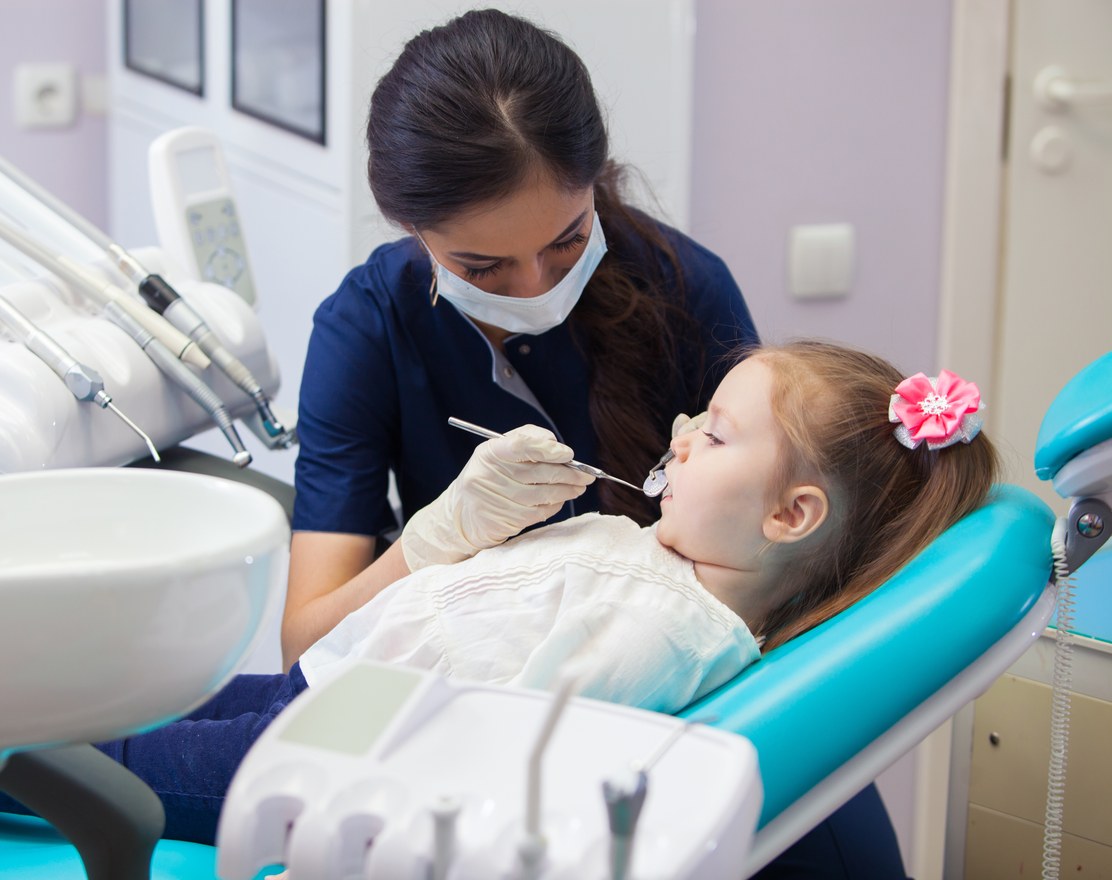
Guidance is that a child's first dental visit should happen by their first birthday, or within six months of the first tooth appearing — earlier than most parents expect. The purpose isn't treatment. It's establishing a baseline, checking how teeth and jaws are developing, and giving parents guidance on brushing, feeding, and habits at the point where it's most useful. A first visit is usually short and largely a conversation, often with the child sitting on a parent's lap. For children who find dental care genuinely difficult, telling the practice in advance is the single most useful thing a parent can do.
Earlier than most people expect
The American Academy of Pediatric Dentistry advises that a child should see a dentist when the first tooth appears, or no later than their first birthday. Most families arrive considerably later than that, usually because a mouth with two teeth in it does not look like something that needs a dentist.1
What actually happens
A first visit is usually short, and mostly talking. Typically:
- Your child sits on your lap, often knee-to-knee with the dentist, rather than alone in the chair
- A quick look at the teeth, gums, and how the jaws are meeting
- A check for early signs of decay and how the teeth are developing
- Fluoride varnish, in many cases — painted on in seconds, no drilling and no numbing
- A conversation about brushing, bottles, pacifiers, and what to expect next
- A chance for you to ask about anything you have noticed
There is normally no drilling, no injection, and no treatment. X-rays are not routine at a first visit and are taken based on individual need.
Why some children find this genuinely hard
Consider what a dental examination actually asks of a body. All at once:
- A bright light pointed directly at the face, which cannot be looked away from
- High-pitched sounds — the suction, the polisher, the scaler — that are unpredictable in timing and pitch
- Strong tastes and unfamiliar textures, particularly prophy paste and fluoride varnish
- Clinical smells, which for many children are the single strongest trigger in the room
- Lying back, which removes the ability to see what is happening and changes the vestibular picture entirely
- Someone's hands in your mouth — an intimate area, by a stranger, without a way to say stop
- Being asked questions while unable to speak or swallow normally
- Latex gloves, which have a distinct smell and feel
For a child with sensory over-responsivity, several of those are not merely unpleasant but genuinely intolerable — and the resulting behavior gets read as difficult. It is a nervous system doing what it is designed to do when overloaded.
What actually helps
Tell the practice before you arrive — this is the highest-value thing you can do
Not on the day, at the desk, with your child listening. Phone ahead. Say what your child finds difficult, what has happened at previous appointments, and what has worked. A practice that knows in advance can book a longer slot, choose a quieter time, and plan the appointment differently. A practice that finds out in the chair cannot.
Ask for a familiarization visit
Many practices will let a child come in with nothing planned at all — sit in the chair, ride it up and down, meet the dentist, look at the instruments, and leave. It is the single most effective preparation there is, and it costs one short appointment.
Bring the things that help
- Sunglasses for the overhead light
- Headphones or ear defenders, with something familiar playing, where the dentist agrees they can still be heard
- A comfort object to hold, which also gives the hands somewhere to be
- A weighted lap item, if that is something your child already finds settling
- Their own toothbrush, if a familiar taste and texture helps
Agree a stop signal, and make sure it works
A raised hand that reliably pauses what is happening changes the whole experience, because the difficulty is often less about the sensation than about not being able to end it. A signal that gets ignored once will not be trusted again, so it is worth confirming with the dentist that they will honor it.
Ask to see and hold things first
The mirror, the suction, the polisher — turned on, held in the child's own hand, tried on a fingernail. Predictable is tolerable far more often than unfamiliar is.
Prepare honestly at home
- Describe what will happen without over-promising. Avoid "it won't hurt" — it introduces a possibility they had not considered and stakes your credibility on it.
- Read a book about it, or play dentist with a toothbrush and a stuffed animal, taking turns.
- Do not pass on your own dental anxiety. Children read it accurately and quickly.
- Avoid words like hurt, shot, drill and pain, even in reassurance. Practices have their own gentler vocabulary.
- Book a morning appointment where you can, before a child is tired.
If the visit does not go well
If a practice is dismissive about sensory differences, or their answer to a distressed child is to press on regardless, it is reasonable to find a different one. Pediatric dentists differ considerably in how they work with children who find this hard.
Questions worth asking
- How am I doing with brushing — can you show me on my child's actual teeth?
- How much toothpaste, at this age? (A rice-grain smear under three, a pea-sized amount from three.)
- Is anything about the way the teeth are coming in worth watching?
- Is the bite developing as you would expect?
- When should we come back?
- What would you like me to do differently at home?
Frequently Asked Questions
What happens at a first dental visit?
It is usually short and mostly a conversation. Your child often sits on your lap rather than alone in the chair, the dentist takes a quick look at the teeth, gums and bite, fluoride varnish may be painted on, and you discuss brushing, bottles, pacifiers and what to expect next. There is normally no drilling, no injection and no treatment.
Should I tell my child it won't hurt?
Better not to. It introduces a possibility they had not considered, and it stakes your credibility on something you cannot guarantee. Describing what will actually happen — where they will sit, what the dentist will look at, how long it will take — works better, and practices have their own gentler vocabulary for the rest.
What if the first appointment doesn't go well?
An appointment that ends early with nothing achieved is a normal outcome for plenty of children, not a failure. What matters is that your child left without being held down or frightened, since that determines whether the next visit is possible. Ask the practice what they would do differently and book a shorter follow-up sooner rather than later.
Why does my child react so badly to the dentist?
A dental examination asks a lot of a body all at once — a bright light that cannot be looked away from, unpredictable high-pitched sounds, strong tastes and clinical smells, lying back, and a stranger's hands in the mouth without an obvious way to say stop. For a child with sensory over-responsivity several of those are genuinely intolerable rather than merely unpleasant, and the behavior that follows is a nervous system responding to overload.
When should my child have their first dental visit?
The American Academy of Pediatric Dentistry advises seeing a dentist when the first tooth appears, or no later than the first birthday. That is earlier than most families expect, and the reason is timing rather than the teeth — it establishes a relationship before anything is wrong and gives you guidance while habits are still forming.
My child has sensory sensitivities. How do I prepare them for the dentist?
Phone the practice before the appointment and tell them what your child finds difficult and what has worked before, so they can book a longer or quieter slot. Ask for a familiarization visit with nothing planned, bring sunglasses for the light and headphones for the sound, agree a stop signal the dentist will honor, and ask to let your child see and hold the instruments first.
Sources
- American Academy of Pediatric Dentistry. Perinatal and Infant Oral Health Care. In: The Reference Manual of Pediatric Dentistry. The AAPD's recommendations on oral health care in the first year, including the recommendation that a dental home be established by age one. aapd.org. Checked September 13, 2026.
Medical disclaimer. This page is for general educational purposes and does not constitute medical or dental advice, diagnosis, or treatment.