
Sensory processing
Sensory Processing Treatment: What Actually Helps and How to Get It
What a treatment plan actually contains, what the evidence supports, and what to expect from a course of therapy.
- Expert Reviewed
- Evidence Based
- Patient Focused
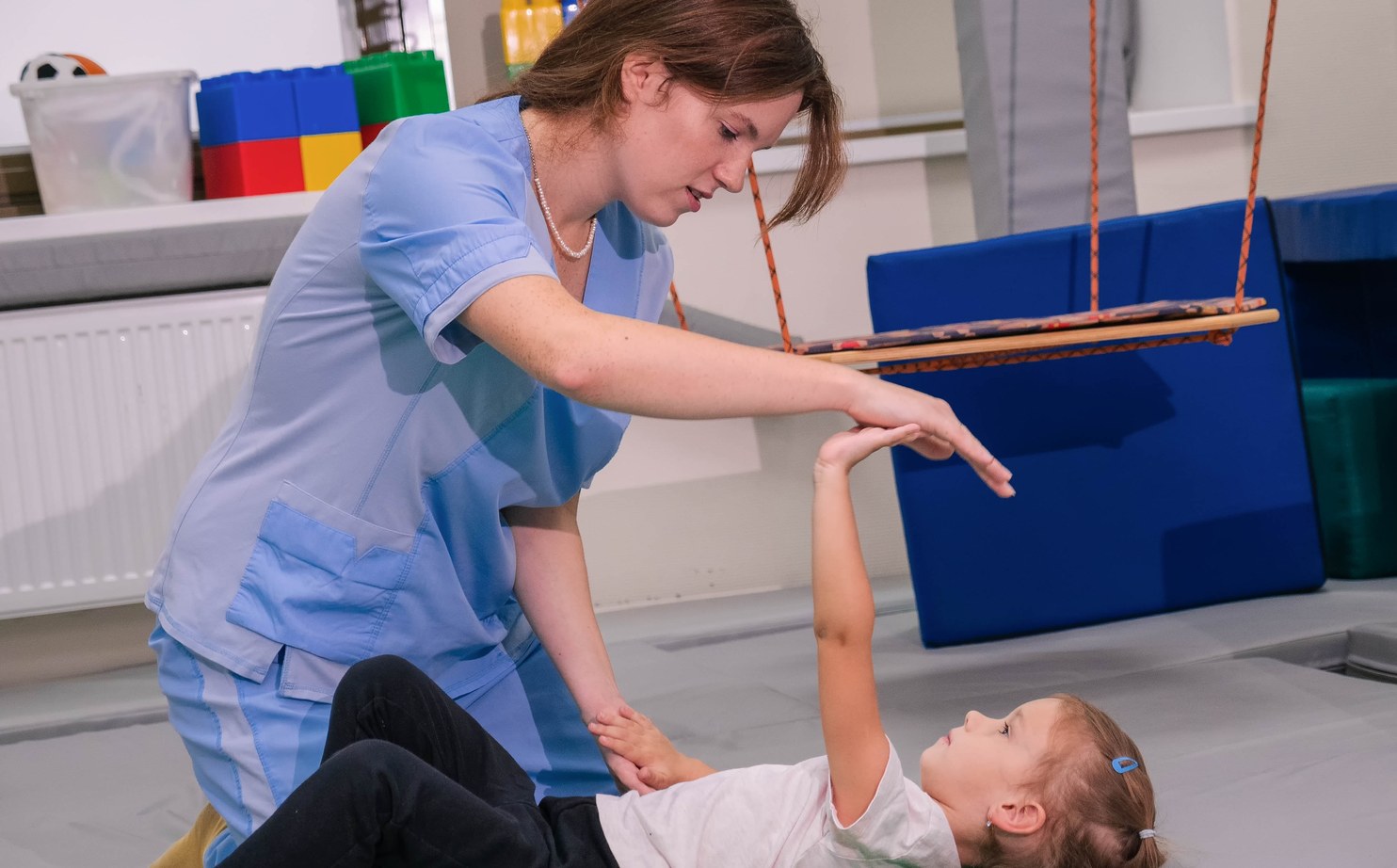
Treatment for sensory processing difficulties is led by an occupational therapist and usually combines three things: direct therapy, changes to the environment, and strategies the family uses at home. The strongest evidence is for deep pressure tactile input and for training caregivers in sensory strategies — the training is the intervention, and it runs all week rather than for one hour of it.6 Ayres Sensory Integration, the manualized approach delivered in an equipped clinic, carries moderate-quality evidence and evidence-based-practice status for autistic children on individualized functional goals.12 Sensory processing disorder is not a standalone DSM-5 or ICD-11 diagnosis, so treatment is usually reached through an occupational therapy assessment rather than a psychiatric one.
What does a treatment plan involve?
Three components, and a good plan uses all three:
1. Direct therapy. Sessions with an occupational therapist, usually weekly or more often, in a space set up for it. This is where Ayres Sensory Integration sits.
2. Environmental modification. Changing the surroundings rather than the child — lighting, noise, seating, clothing, the layout of a classroom or bedroom. This has some of the more positive findings in the research and is usually the cheapest thing available.
3. Home and school strategies. What you and teachers do day to day: advance warning before transitions, movement breaks, a predictable routine, adjustments to clothing and food presentation.
Point three is the one families most often get least of, and it matters most, because it operates all week rather than for one hour of it. If your plan is only sessions, ask what you should be doing between them.
What happens in a sensory integration session?
A session with a trained occupational therapist in a sensory gym looks like play, because it is built to. The room has suspended equipment — swings, a platform, a bolster — climbing structures, crash mats, a ball pit, and tactile materials. The therapist sets up activities that give the child the input their profile calls for, at a level that is challenging but achievable, and adjusts moment by moment. The child chooses within a structure; the therapist shapes the structure.
Three things separate a fidelity-adherent session from general sensory play: the activities are matched to an assessed profile and to specific functional goals, the therapist grades the challenge in real time, and the session ends with the child organized rather than dysregulated. If your child's sessions are unstructured play with no stated goal, or the same fixed circuit every week, ask what the goals are and how progress is measured.
What you should get between sessions: a written strategy list for home and school, specific to your child's profile. The strong finding for caregiver training means this handover is not an extra — it is the part of the intervention with the best evidence behind it.6
What does the evidence support?
Strong evidence
- Deep pressure tactile input — firm, sustained pressure: firm hugs, being rolled in a blanket while awake, heavy work. Rated strong in a 2025 systematic review of 21 controlled studies.6 Needs no product.
- Caregiver training in sensory strategies — a parent who understands the child's profile and knows what to do when. Also rated strong.6 This is the finding that should shape how families spend: the training is the intervention, and it operates all week rather than for one hour of it.
- Targeting several sensory systems rather than one — moderate to strong.6 A single-tool plan is the least likely shape to work.
- Qigong massage — a parent-delivered massage protocol, rated strong in a review of specific sensory techniques.4 That rating rests on a narrow base: one technique, studied in autistic children, by a small number of teams. It is worth knowing about rather than worth reorganising a plan around.
Moderate evidence
- Ayres Sensory Integration — manualized, individualized, delivered by a trained occupational therapist in an equipped space with fidelity measures. Moderate-quality evidence, and evidence-based-practice status for autistic children aged 4 to 12 on individualized functional goals.123 No benefit for behaviors of concern such as irritability, which a 2024 review explicitly does not recommend it for.5 Two randomized trials reported effect sizes of 0.72 to 1.62 on Goal Attainment Scaling.3 Effectiveness tracks dosage, fidelity and individualization.
Thin evidence, low cost, worth doing anyway
- Environmental modification — lighting, noise, seating position, clothing, layout. The 2025 review found too few studies to rate it; an earlier review found one eligible study, in a dental clinic, with moderate evidence.46 It stays on the list because the mechanism is obvious, the cost is near zero, and for an over-responsive child it is most of the plan.
- Task-specific practice — working on the actual thing the child cannot do: the haircut, the cafeteria, the pencil. The same principle as the rest of rehabilitation.
Not supported
- Alternative seating — wobble cushions, therapy balls: moderate evidence of no improvement in attention.6
- Weighted vests — limited evidence; not supported for the behavior or attention outcomes claimed.4
- Weighted blankets — no effect on sleep in the one randomized trial in autistic children, though the children preferred them. A comfort item rather than a treatment, and one with a recall history. The narrow exception: a 2026 randomized crossover trial in 42 children with mild intellectual disability found a weighted blanket lowered anxiety during a dental procedure.7 One site, one procedure, small effects — enough to say a weighted blanket may settle a child through something specific and stressful, not enough to make it a treatment for anxiety. The sensory tools evidence page has the sleep trial.
- Brushing protocols (Wilbarger and similar) — no adequate supporting evidence.
- Sound and auditory integration therapies — little to no significant effect.
- Reflex integration programs as a treatment for sensory difficulties — see retained primitive reflexes.
What "not supported" means. Not dangerous, with the exception of weighted products used unsafely. A child may like a weighted blanket or a brushing routine, and that is fine. What the research says is that they do not produce the regulation or attention changes they are sold for, and the cost is money, time, and whatever those could have gone to instead.
How do I get an assessment?
Sensory processing disorder is not a standalone diagnosis in the DSM-5 or ICD-11. That has a practical consequence: you generally can't get "an SPD diagnosis" the way you'd get an autism or ADHD diagnosis. What you can get is an occupational therapy sensory assessment, which produces a sensory profile and a treatment plan.
The usual route:
- Raise it with your pediatrician and ask for a referral to occupational therapy. Describe function, not labels — "he can't tolerate the school cafeteria and hasn't eaten lunch in two months" gets further than "I think he has SPD."
- Through school. In the US, an OT evaluation can be requested as part of an IEP or 504 process (IEPs and 504 plans) where sensory difficulties affect education. Request it in writing.
- Privately, if waiting lists are long or you don't meet service thresholds.
What the assessment involves: standardized questionnaires such as the Sensory Profile 2 or the Sensory Processing Measure, direct observation, developmental history, and ruling out other explanations — hearing and vision in particular.
On insurance. Because SPD isn't a standalone diagnosis, coverage is often tied to an associated diagnosis such as autism, ADHD, or a developmental delay, or to functional impairment. Ask the provider directly how they bill and what they've seen covered before committing to a package.
How much does sensory processing therapy cost?
This site does not publish a national session rate, because it varies too much by region, setting and session length for one figure to be useful. What is worth knowing is the shape of the bill and the routes that avoid it: a course is usually weekly over a block of months, so the total matters more than the session rate, and an initial assessment costs more than a session because it is longer and includes scoring and a written report.
Three routes reduce or remove the cost:
- Early intervention, under three — free in every state under IDEA Part C, and a parent can refer directly. Covers occupational therapy where sensory difficulties affect development.
- School-based occupational therapy, three and over — free through an IEP or 504 plan where the difficulty affects education; request an evaluation in writing. School OT targets school function rather than the whole profile, so it may not replace private therapy.
- Insurance — coverage usually depends on an associated diagnosis such as autism, ADHD or developmental delay, or on documented functional impairment, because sensory processing disorder is not a billable standalone diagnosis. Ask the provider what code they bill under and what they have seen covered.
The cost of pediatric occupational therapy and the cost and insurance guides cover the detail and the state-by-state variation.
Is there sensory processing treatment for adults?
Yes, though it is less available. Adult occupational therapists assess sensory processing as part of a functional assessment, and the strategies carry over directly: reducing load at work and at home, deep pressure, environmental change. What differs is who does the work — an adult can self-report, self-direct and change their own environment, so the caregiver-training finding becomes self-training. Sensory tools for adults and sensory processing in adults cover it.
What should I expect, and over what timescale?
- Sessions are typically weekly, sometimes more, for a block of months. Effectiveness in the research is associated with meaningful intensity rather than occasional sessions.
- Goals should be functional and specific — tolerating a haircut, staying at the dinner table, wearing school shoes. Not "improve sensory processing."
- Progress is usually uneven. Gains in one area don't automatically transfer to others.
- Review points matter. Ask at the start when you'll review, and what would prompt a change of approach — if there's no functional progress after an agreed review period, a good therapist reassesses rather than continues.
Browse providers by city and state.
Browse the DrSensory Therapy Directory →Frequently Asked Questions
What can I do at home?
Reduce sensory load where you can, give advance warning before transitions, build in movement breaks, keep routines predictable, and adjust clothing and food presentation to what your child tolerates. Ask your OT for strategies specific to your child's profile — the home component often does more work than the sessions.
Do weighted blankets and vests help?
Weighted vests have not been shown to help the behavior or attention outcomes they're sold for. Weighted blankets have weaker, mixed evidence — some recent studies suggest a modest benefit for anxiety, but not reliable sleep or regulation effects. A child may find either comforting, which is fine, but they shouldn't displace approaches with better evidence.
Can sensory processing disorder be cured?
It isn't framed as a cure. Many children's sensory responses change as they develop, and therapy aims to improve daily functioning and build strategies rather than eliminate sensory differences. Many people manage well with the right accommodations.
How long does sensory processing therapy take?
Typically months rather than weeks, with sessions weekly or more often. Effectiveness is associated with meaningful dosage. Your therapist should set functional goals and a review point at the start.
Do I need a diagnosis before starting therapy?
Usually not for the therapy itself, since SPD isn't a standalone DSM-5 or ICD-11 diagnosis. You need an occupational therapy assessment. Insurance coverage may depend on an associated diagnosis such as autism or ADHD, so ask the provider how they bill.
What is the treatment for sensory processing disorder?
Occupational therapy is the primary approach, usually combining direct therapy, environmental modification, and home and school strategies. Ayres Sensory Integration has the strongest evidence, particularly for autistic children.
Sources
- Schoen SA, Lane SJ, Mailloux Z, et al. A systematic review of Ayres Sensory Integration intervention for children with autism. Autism Research. 2019;12(1):6–19. doi:10.1002/aur.2046 (PMID 30548827)
- Watling R, Hauer S. Effectiveness of Ayres Sensory Integration® and sensory-based interventions for people with autism spectrum disorder: a systematic review. American Journal of Occupational Therapy. 2015;69(5):604–616. doi:10.5014/ajot.2015.018051
- Case-Smith J, Weaver LL, Fristad MA. A systematic review of sensory processing interventions for children with autism spectrum disorders. Autism. 2015;19(2):133–148. doi:10.1177/1362361313517762 (PMID 24477447)
- Bodison SC, Parham LD. Specific sensory techniques and sensory environmental modifications for children and youth with sensory integration difficulties: a systematic review. American Journal of Occupational Therapy. 2018;72(1):7201190040. doi:10.5014/ajot.2018.029413 (PMID 29280714)
- Acuña C, Gallegos-Berrios S, Barfoot J, Meredith P, et al. Ayres Sensory Integration® with children ages 0 to 12: a systematic review of randomized controlled trials. American Journal of Occupational Therapy. 2025;79(3):7903205180. doi:10.5014/ajot.2025.051023 (PMID 40193295)
- Piller A, McHugh Conlin J, Glennon TJ, Andelin L, Auld-Wright K, Teng K, Tarver T. Systematic review of sensory-based interventions for children and youth (2015–2024). Frontiers in Pediatrics. 2025;13. doi:10.3389/fped.2025.1720179 (PMID 41321460). Checked August 26, 2026.
- Shetty NM, Rai K, Hegde AM, et al. Weighted blankets for special children: a randomized crossover trial investigating effects on dental anxiety. International Journal of Paediatric Dentistry. 2026. PMID 42067993. Forty-two children aged 6–14 with mild intellectual and developmental disabilities; a weighted blanket at 10% of body weight reduced anxiety scores and physiological markers during restorative dental treatment. doi:10.1111/ipd.70085
Medical disclaimer. This page is for general educational purposes and does not constitute medical advice, diagnosis, or treatment. It does not discourage seeking occupational therapy support. Always consult a qualified healthcare provider about your child.