
Sensory processing
Types of Sensory Processing Difficulty
The three patterns the research describes, why most profiles are a mix, and what the classification is actually for.
- Expert Reviewed
- Evidence Based
- Patient Focused
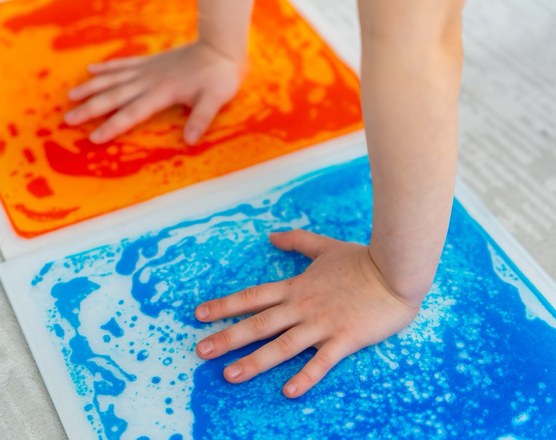
Sensory processing difficulties are usually grouped into three patterns. Sensory modulation differences involve difficulty regulating responses to input — over-responding, under-responding, or actively seeking intense input. Sensory discrimination difficulties involve trouble telling similar sensations apart. Sensory-based motor difficulties involve sensory information not supporting movement effectively, covering postural difficulties and dyspraxia. These patterns describe how difficulties present rather than functioning as formal diagnoses — sensory processing disorder is not a standalone diagnosis in the DSM-5 or ICD-11. Most people show a mixed profile rather than fitting one category, and a child can be over-responsive to sound while under-responsive to pain.
Sensory processing difficulties are usually grouped into three patterns. Modulation difficulties involve regulating responses to input — over-responding, under-responding, or actively seeking it. Discrimination difficulties involve telling similar sensations apart. Sensory-based motor difficulties involve sensory information not supporting movement effectively. These describe how difficulties present rather than functioning as formal diagnoses. Most people show a mixed profile, and a child can be over-responsive to sound while under-responsive to pain — that combination is ordinary, not contradictory.
- Modulation
Regulating the response to input. Three sub-patterns: over-responsivity, under-responsivity, and seeking. Support points toward changing how much input arrives, and when.
- Discrimination
Telling similar sensations apart — two textures, two similar sounds, how hard you are pressing. Support points toward ruling out hearing and vision first, then more processing time.
- Sensory-based motor
Sensory information not supporting movement well. Two sub-patterns: postural difficulties and dyspraxia. Support points toward the specific activity, plus seating and positioning.
Key takeaways
- Three patterns, and they point in different directions. Knowing which one you are looking at is what makes support fit.
- These are descriptions, not diagnoses. Sensory processing disorder is not a standalone diagnosis in the DSM-5-TR or the ICD-11. The framework comes from a nosology proposed in 2007 to give clinicians a shared vocabulary.1
- Mixed profiles are the norm. The patterns operate per sensory system, not per child, so there is no reason they should be consistent across senses.
- The pattern you see may predict what travels with it. In a mixed neurodevelopmental cohort, the over-responsive group showed distinctively elevated anxiety while the seeking and under-responsive groups showed elevated ADHD scores.2
- One of the three has a real diagnostic route. Dyspraxia overlaps with developmental coordination disorder, which is in the DSM-5 and is largely under-recognized.3
- Prevalence should not be given as one number. Two studies measuring different things in different populations give roughly 5% and roughly 16%.4,5
Is sensory processing disorder a real diagnosis?
These categories come from clinical frameworks used in occupational therapy, not from a diagnostic manual. They are useful for describing a child’s profile and planning support, and they are not diagnoses. Sensory processing disorder is not a standalone diagnosis in the DSM-5-TR or the ICD-11. This is consistent with the sensory processing hub.
The three-pattern framework comes from a proposed nosology published in 2007, written to give clinicians a shared vocabulary.1 It has done that job well and is widely used in practice. It was never adopted into a diagnostic manual, and that distinction matters for what an assessment can and cannot tell you.
What are the 8 senses?
| System | What it tells the body | What difficulty here can look like |
|---|---|---|
| Sight (visual) | Light, color, movement, spatial information | Squinting in ordinary light; missing things in the path; overwhelmed by busy walls |
| Hearing (auditory) | Sound, direction, distance | Covering ears at hand dryers; not turning when called; distress at fire drills |
| Touch (tactile) | Pressure, texture, temperature, pain | Fighting clothing tags and seams; not noticing a messy face; high pain tolerance |
| Taste (gustatory) | Flavor | A very restricted food range; gagging; preferring intense flavors |
| Smell (olfactory) | Odor | Refusing rooms because of a smell; not noticing strong odors |
| Vestibular | Balance, movement, head position | Fear of swings and escalators — or endless spinning without dizziness |
| Proprioception | Where the body is in space, and how much force to use | Crashing and bumping; gripping too hard; W-sitting |
| Interoception | Internal signals — hunger, thirst, needing the bathroom, heart rate | Toileting accidents; not noticing hunger until distressed; difficulty naming feelings |
The last three are the ones most parents have not heard of and the ones that explain the most. Proprioception accounts for much of what gets called clumsiness or roughness — a child who cannot feel how hard they are pushing will push too hard. Interoception is the most overlooked of all, and it is frequently behind toileting difficulties, meltdowns that seem to come from nowhere, and difficulty identifying emotions.
Type 1: Sensory modulation difficulties
Difficulty regulating the response to input. This is the most researched pattern and the one most people mean by “sensory issues.”
- Over-responsivity — input feels too intense. Covering ears, avoiding textures, distress at ordinary sensation.
- Under-responsivity — input does not register as strongly. Not noticing pain, cold, or a full bladder.
- Seeking and craving — actively pursuing intense input. Crashing, spinning, chewing, touching everything.
What research says about how these separate. A study using latent profile analysis in a mixed neurodevelopmental cohort identified five sensory subtypes and found they related to different emotional and behavioral profiles: the sensory over-responsive group showed distinctively elevated anxiety, while the sensory seeking and sensory under-responsive groups showed elevated ADHD scores. All three atypical groups showed elevated emotion dysregulation, which the authors suggested may be a shared mechanism.2
That is a useful finding for a parent: the pattern you are seeing may predict which co-occurring difficulty is most likely, and therefore which specialist is worth seeing.
Seeking is the pattern most often misread as misbehavior
It is active and disruptive, so it looks like a choice. A child crashing into furniture is usually not being destructive; they are getting input their nervous system is asking for. Stimming belongs in the same category — very often an effective regulation strategy rather than a symptom to suppress.
Type 2: Sensory discrimination difficulties
Sensory discrimination difficulties involve trouble telling similar sensations apart — distinguishing coins in a pocket by feel, or telling similar sounds apart.
| Where | What it affects |
|---|---|
| Visual | Telling apart similar shapes, letters or colors, which can make reading and letter recognition harder |
| Auditory | Distinguishing similar sounds, which can make it harder to follow speech and process language |
| Tactile | Telling textures apart by feel, which affects buttons, fastenings, and finding an object at the bottom of a bag |
| Proprioceptive | Grading force, so a child presses too hard with a pencil, breaks things by accident, or cannot judge how heavy something is |
| Vestibular | Reading movement and position information, which affects balance and spatial awareness |
Why this pattern gets missed. Discrimination difficulty is quiet. It does not produce a meltdown; it produces a child who is slower, less accurate, and looks like they are not trying. It is frequently mistaken for inattention or low ability.
Rule out the sense organs first
Difficulty telling sounds apart can be hearing loss, auditory processing difficulty, or discrimination — and hearing testing distinguishes them. The same goes for vision. This is the pattern where checking the basics matters most, because two of the three explanations are directly treatable.
Type 3: Sensory-based motor difficulties
Sensory information not effectively supporting movement. Two sub-patterns.
- Postural difficulties — core stability, balance and endurance. A child who slumps, tires quickly, props on their hands, or avoids physical play.
- Dyspraxia — difficulty planning and sequencing unfamiliar movements. A child who knows what they want to do but cannot organize the body to do it.
That makes this pattern different from the other two in a practically important way: if coordination is your main concern, there is a formal diagnostic pathway available, with a real diagnosis, real guidelines, and access to services that a descriptive sensory label will not unlock. Our sensory-based motor difficulties page covers the two patterns in depth, and the dyspraxia and DCD page covers the diagnostic route.
What this pattern is mistaken for: laziness, poor attention, or clumsiness as a character trait. A child working hard to stay upright has less capacity left for listening or writing.
Which pattern am I seeing?
- Reacts too much
Covers ears, pulls away from touch, distressed by ordinary sensation → modulation, over-responsive
- Does not notice
Misses pain, cold, a full bladder, being called → modulation, under-responsive
- Pursues intense input
Crashes, spins, chews, touches everything → modulation, seeking
- Cannot tell similar things apart
Confuses similar sounds or textures; presses too hard; slow and inaccurate rather than distressed → discrimination
- Knows what to do but cannot make the body do it
Or can do it and tires quickly → sensory-based motor
Can a child have more than one type of SPD?
Parents often try to place a child in one box. Most do not fit one.
A child who covers their ears at hand dryers, does not notice a scraped knee, and crashes into furniture is showing three patterns at once — over-responsive to sound, under-responsive to pain, and seeking proprioceptive input. That combination is ordinary, not contradictory.
- Covers ears at hand dryers
Over-responsive — auditory
- Does not notice a scraped knee
Under-responsive — pain and touch
- Crashes into furniture
Seeking — proprioception
The reason is that these patterns operate per sensory system, not per child. There is no reason a nervous system that finds sound overwhelming should also find pain overwhelming — they are different pathways doing different jobs.
What this means for you: stop looking for the label that fits your whole child. Look instead at which system, in which situation. “He is sensory seeking” explains less than “he seeks movement and deep pressure, is fine with touch, and cannot tolerate loud unpredictable noise.”
How do sensory patterns change with age?
The profile usually persists; the presentation changes.
| Stage | What tends to change |
|---|---|
| Toddler and preschool | Everything is visible because there is no masking. Overload comes out as meltdown; seeking comes out as motion |
| School age | The classroom raises demand sharply. Discrimination and motor patterns start to have academic consequences that were not visible before |
| Adolescence | Masking begins in earnest. Difficulty gets hidden at school and released at home, which makes it look like a home problem |
| Adulthood | More control over the environment, less permission to ask for adjustments. See sensory processing in adults |
One consistent finding across ages: sensory tolerance depletes through a day and a week. A child who manages Monday and falls apart Friday is showing accumulated load rather than deterioration — covered in living with sensory processing differences.
Why identifying the right type changes what helps
It shapes support, and the three patterns point in genuinely different directions.
| Pattern | Support points toward |
|---|---|
| Over-responsivity | Reducing load — quieter, dimmer, fewer people, advance warning |
| Under-responsivity | Increasing salience, and routines that do not rely on internal signals arriving |
| Seeking | Providing the input safely and proactively, rather than waiting for it to be taken |
| Discrimination | Ruling out hearing and vision first, then compensatory strategies and more processing time |
| Sensory-based motor | Task-oriented work on the specific activity, plus seating and positioning |
Getting the pattern right is what makes support fit. It is also why a generic sensory plan downloaded from the internet so often does nothing — it is aimed at an average child rather than at a profile. See sensory activities and strategies.
On prevalence
Estimates vary widely and should not be stated as a single figure. The two most-quoted studies measured different things.
| Study | What it measured | Figure |
|---|---|---|
| Ahn 2004 | Parent-perceived sensory difficulty on the Short Sensory Profile, in one suburban school district. 703 surveys came back, 39% of the district’s kindergarten enrollment | 13.7% of the children surveyed met screening criteria — or 5.3% of the whole enrollment, if you assume every non-respondent would have failed to meet them4 |
| Ben-Sasson 2009 | Sensory over-responsivity specifically, in a representative sample of 925 children aged 7 to 11 followed from infancy | 16% of parents reported that at least four tactile or auditory sensations bothered their child5 |
Those are not two attempts to measure the same thing. One screens broadly for sensory difficulty and reports a range depending on an assumption about the people who did not reply; the other counts one specific pattern against a stated threshold. Anyone quoting a single confident number for how common this is has picked one and dropped the other.
How is sensory processing disorder diagnosed?
An occupational therapist typically uses a standardized parent questionnaire, direct clinical observation of movement and responses to input, and a functional interview about daily routines. Expect a report describing a profile across systems rather than one of these labels. That profile is the useful part.
A good assessment also considers what else could explain the picture: hearing, vision, autism, ADHD, developmental coordination disorder, anxiety, and language disorder. If the assessment stops at “sensory,” ask what else was ruled out.
See diagnosis and therapy and treatment for the full process, or find a pediatric occupational therapist.
If a child loses skills they previously had, contact their doctor
Regression is a medical question regardless of anything on this page, and it warrants evaluation on its own.
Frequently Asked Questions
What are the types of sensory processing disorder?
They are usually grouped into three patterns: sensory modulation (over-responsivity, under-responsivity and seeking), sensory discrimination, and sensory-based motor (postural difficulties and dyspraxia). These describe how difficulties present rather than being formal diagnoses.
What are the eight senses?
The five familiar senses — sight, hearing, touch, taste and smell — plus three internal ones: vestibular (balance and movement), proprioception (body position and force), and interoception (internal signals such as hunger and needing the bathroom).
Can a child have more than one type?
Yes, and mixed profiles are the norm. A child who covers their ears at hand dryers, does not notice a scraped knee and crashes into furniture is showing three patterns at once. The patterns operate per sensory system rather than per child, so there is no reason they should be consistent across senses.
How do I tell which pattern I am seeing?
Roughly: reacts too much points to over-responsivity; does not notice points to under-responsivity; actively pursues intense input points to seeking; cannot tell similar things apart points to discrimination; and knows what to do but cannot organize the body to do it points to sensory-based motor. Most children show more than one, and an occupational therapy assessment produces the full profile.
Is sensory processing disorder a real diagnosis?
Sensory processing differences are real and can significantly affect daily life, but sensory processing disorder is not a standalone diagnosis in the DSM-5-TR or the ICD-11. The patterns come from a nosology proposed in 2007 to give clinicians a shared vocabulary, and are widely used in occupational therapy for that purpose.1
Is dyspraxia a diagnosis?
Dyspraxia overlaps with developmental coordination disorder, which is a recognized DSM-5 diagnosis, unlike the sensory subtypes. Current prevalence estimates for DCD range from 2 to 20 percent of children with 5 to 6 percent most frequently quoted, it has international clinical practice recommendations, and it remains largely under-recognized by health and education professionals.3
How common are sensory processing difficulties?
Estimates vary because studies measure different things. One screening study of kindergarteners found 13.7 percent of the children surveyed met criteria, or 5.3 percent of the whole enrollment on the conservative assumption that every non-respondent would not have. Another found 16 percent of parents reported at least four tactile or auditory sensations bothered their child, in a representative sample of 925 children aged 7 to 11. A single confident figure would overstate what the research supports.4,5
Why does my child appear clumsy or struggle with coordination?
This can reflect the sensory-based motor pattern — postural difficulties affecting stability and endurance, or dyspraxia affecting the planning of new movements. Dyspraxia overlaps with developmental coordination disorder, which has its own diagnostic pathway. An occupational or physical therapist can assess what is driving it, and other causes should be ruled out.
Could trouble telling similar sounds or shapes apart be a sensory issue?
It can reflect the discrimination pattern. But similar difficulties also come from hearing loss, vision problems or auditory processing differences, and two of those are directly treatable. Hearing and vision checks come before assuming it is sensory.
Does the pattern change as my child grows?
The profile usually persists; the presentation changes. Young children show everything openly, school-age children start to show academic consequences, and adolescents often mask at school and release at home. The goal is a person who understands their own profile rather than one who no longer has it.
Do I need a diagnosis to get help?
No. An occupational therapist can assess and treat without a psychiatric diagnosis, and schools can implement accommodations under a 504 plan based on documented functional impact. A diagnosis may matter for insurance coverage.
Sources
- Miller LJ, Anzalone ME, Lane SJ, Cermak SA, Osten ET. Concept evolution in sensory integration: a proposed nosology for diagnosis. American Journal of Occupational Therapy. 2007;61(2):135–140. PMID 17436834. The source of the three-pattern framework used on this page. It proposes a shared vocabulary for clinicians; it was not adopted into a diagnostic manual.
- Brandes-Aitken A, Powers R, Wren J, et al. Sensory processing subtypes relate to distinct emotional and behavioral phenotypes in a mixed neurodevelopmental cohort. Scientific Reports. 2024;14:29326. PMID 39592662. Latent profile analysis identified five sensory subtypes. The sensory over-responsive group showed distinctively elevated anxiety scores; the sensory seeking and sensory under-responsive groups showed elevated ADHD scores. All three atypical groups showed elevated emotion dysregulation, which the authors suggest may be a shared mechanism.
- Blank R, Barnett AL, Cairney J, et al. International clinical practice recommendations on the definition, diagnosis, assessment, intervention, and psychosocial aspects of developmental coordination disorder. Developmental Medicine & Child Neurology. 2019;61(3):242–285. PMID 30671947. From the full text: “Current prevalence estimates for DCD range from 2% to 20% of children, with 5% to 6% being the most frequently quoted percentage in the literature.” “At least 2% of all individuals with typical intelligence experience severe consequences in everyday living including academic productivity, and a further 3% have a degree of functional impairment in activities of daily living or school work.” “DCD is largely underrecognized by health care and educational professionals.”
- Ahn RR, Miller LJ, Milberger S, McIntosh DN. Prevalence of parents’ perceptions of sensory processing disorders among kindergarten children. American Journal of Occupational Therapy. 2004;58(3):287–293. PMID 15202626. Parents of incoming kindergartners in one suburban US public school district, surveyed with the Short Sensory Profile. 703 completed surveys were returned, 39% of the district’s kindergarten enrollment of 1,796. Of the 703 children, 96 (13.7%) met criteria. A deliberately conservative estimate assuming all non-respondents failed to meet criteria gives 5.3% (96 of 1,796). The authors call for rigorous epidemiological studies.
- Ben-Sasson A, Carter AS, Briggs-Gowan MJ. Sensory over-responsivity in elementary school: prevalence and social-emotional correlates. Journal of Abnormal Child Psychology. 2009;37(5):705–716. PMID 19153827. A representative sample of 925 children aged 7 to 11, 50% boys, followed from infancy. “Sixteen percent of parents reported that at least four tactile or auditory sensations bothered their children.” Parents of children with elevated sensory over-responsivity reported higher frequencies of early and co-occurring internalizing, externalizing and dysregulation problems, and lower levels of concurrent adaptive social behaviors.
Medical disclaimer. This page is for general educational purposes and does not constitute medical advice, diagnosis, or treatment. Sensory processing concerns are best assessed by an occupational therapist who can evaluate your individual child.