
Dental and oral development
Early Signs of Bite Problems in Children
Most of what looks wrong in a toddler's bite is normal — the few signs that are not, and why crossbite stands out.
- Expert Reviewed
- Evidence Based
- Patient Focused
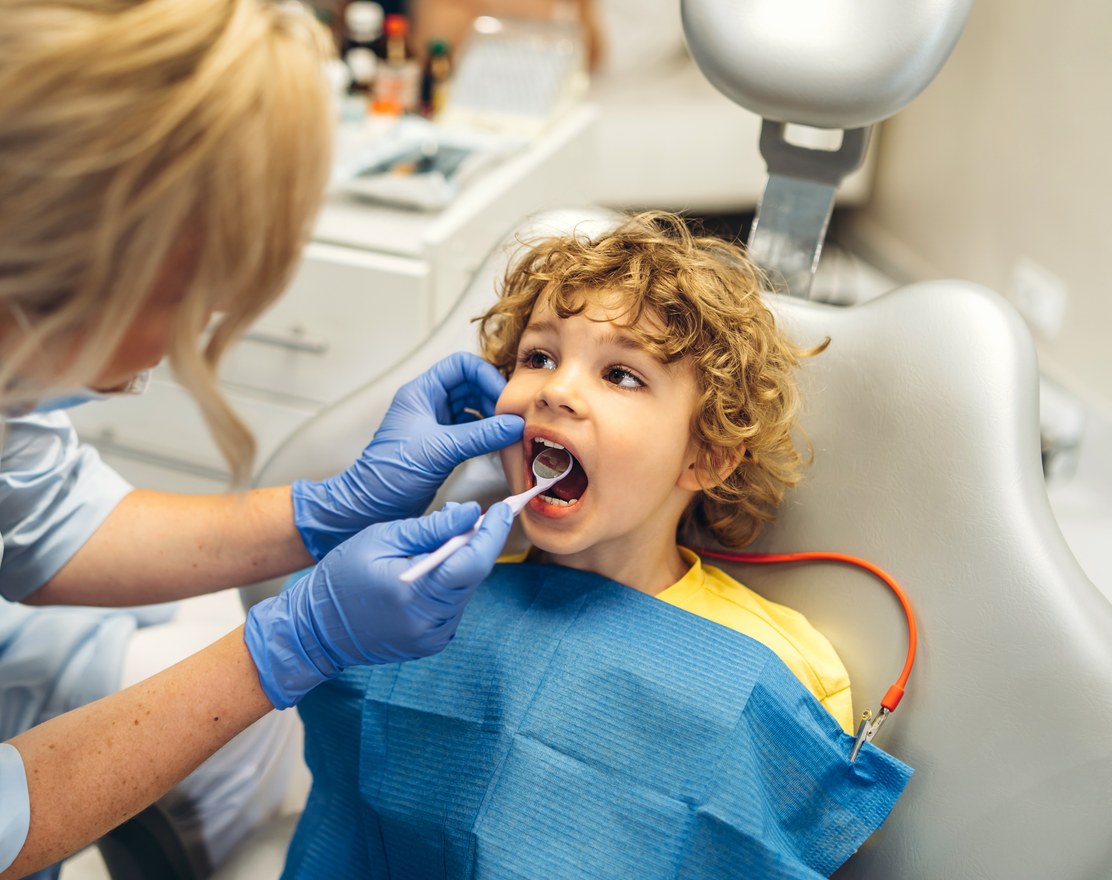
Malocclusion means the teeth and jaws don't meet as expected. Some variation is entirely normal in a developing mouth, and many things that look concerning in a toddler resolve as the jaw grows and permanent teeth arrive. A few patterns are worth mentioning earlier rather than later — particularly a crossbite, where upper teeth sit inside the lower ones on one side, since it can affect how the jaw grows and is often easier to address while a child is still growing. Habits also matter: prolonged pacifier use, thumb sucking, and persistent mouth breathing all influence how the bite develops, and addressing the habit frequently matters more than treating the teeth.
Start with what is normal, because most of it is
A developing mouth is supposed to look unfinished. Several things that worry parents are signs that development is going well.
Also usually unremarkable in a young child: teeth that arrive slightly rotated and straighten as they settle, a lower jaw that looks small relative to the upper one, and permanent front teeth that come through looking too big for the face. Faces grow into teeth.
The signs worth mentioning
- A crossbite — upper back teeth biting inside the lower ones on one side, or an upper front tooth sitting behind a lower one
- The lower jaw shifting to one side to get the teeth to meet
- An open bite — front teeth that do not meet at all when the back teeth are closed, leaving a visible gap
- Front teeth that stick out well beyond the lower ones, which matters mainly because they are more exposed in a fall
- Difficulty biting through food with the front teeth
- Persistent mouth breathing, or lips that never rest together
- Sucking habits continuing well into the preschool years
- Baby teeth lost very early through decay or injury, which can let neighboring teeth drift into the space
Why crossbite is the one that stands out
Most bite differences in young children are watched. A crossbite is the one most likely to be acted on earlier, and the reason is mechanical rather than cosmetic.1
When the upper and lower teeth meet in the wrong relationship on one side, a child frequently shifts the lower jaw sideways to find a comfortable bite, and then chews in that shifted position all day. Because the jaw is still growing, growth follows the position it is habitually held in — so a shift that starts as a workaround can become the shape the jaw grows into.
Correcting it typically involves widening the upper arch, and that is generally more straightforward while the bones of the palate are still growing than it is later.
Habits shape the bite more than most people expect
Teeth sit in a balance between the tongue pushing out and the lips and cheeks pushing in. Anything that changes that balance for hours a day, over years, changes where the teeth end up.
Sucking habits
Thumbs and pacifiers apply a sustained force that can produce an open bite and narrow the upper arch. Duration and hours per day matter far more than the object. Most changes improve on their own once the habit stops, particularly while the baby teeth are still in place.
Mouth breathing and tongue posture
When a child breathes through the mouth, the tongue drops away from the palate — and the tongue resting against the palate is part of what encourages the upper jaw to widen. The palate tends to develop narrower and higher, which is a common route to a crossbite.
This is why the airway thread runs through the whole of this section. Mouth breathing is usually a sign that nasal breathing is obstructed, not a habit to correct directly.
Prolonged bottle use
Extended bottle use into the toddler years has an effect similar to extended pacifier use, alongside its more significant consequences for decay.
When assessment usually happens
In practice, most bite development is monitored at routine dental check-ups from the first visit onward, and a dentist raises a referral when something specific warrants it. That is the honest answer: assessment is continuous, and referral is triggered by a finding rather than by a birthday.
Where a child has a crossbite, a jaw shift, a severe open bite, or a habit that is visibly changing the bite, that referral usually comes earlier.
What is useful to notice at home
- Whether your child's lips rest together when they are not thinking about it
- Whether the jaw slides sideways as the teeth come together
- Whether the front teeth meet when the back teeth are closed
- Whether they can bite through a sandwich with the front teeth
- How many hours a day a pacifier or thumb is actually in the mouth
- Whether they snore or breathe through the mouth at night
A photograph of your child biting together, taken from the front and from the side with the lips gently held back, is a genuinely useful thing to bring to an appointment.
Frequently Asked Questions
Are gaps between my toddler's baby teeth a problem?
Usually the opposite. Permanent teeth are considerably larger than the baby teeth they replace, so spacing means room is being held for them. Baby teeth that sit tightly together with no gaps are more often the pattern associated with crowding later.
What is a crossbite, and why does it matter?
A crossbite is when upper teeth sit inside the lower ones — either at the back on one side, or a front tooth sitting behind a lower one. It matters because children frequently shift the lower jaw sideways to find a comfortable bite, and since the jaw is still growing, growth tends to follow the position it is habitually held in.
Will my child's bite correct itself?
Many things do. Teeth that arrive rotated often settle, a lower jaw that looks small relative to the upper one is common in young children, and front teeth usually look too large before the face grows. Crossbites, jaw shifts, and bites being actively changed by a sucking or breathing habit are the ones less likely to resolve on their own.
Does thumb sucking ruin teeth?
What matters is how long the habit continues and how many hours a day it is happening, rather than the habit itself. Sustained pressure over years can produce an open bite and narrow the upper arch. Most changes improve once the habit stops, particularly while the baby teeth are still in place.
Can mouth breathing affect my child's bite?
Yes. When a child breathes through the mouth the tongue drops away from the palate, and tongue contact with the palate is part of what encourages the upper jaw to widen. The palate tends to develop narrower and higher, which is a common route to a crossbite. Persistent mouth breathing is usually a sign that nasal breathing is obstructed and is worth having assessed.
When should my child first see an orthodontist?
There is no single age that applies to every child. Bite development is monitored at routine dental appointments from the first visit onward, and a dentist refers when a specific finding warrants it — a crossbite, a jaw shift, a severe open bite, or a habit visibly changing the bite usually prompts an earlier referral.
Sources
- American Academy of Pediatric Dentistry. Management of the Developing Dentition and Occlusion in Pediatric Dentistry. In: The Reference Manual of Pediatric Dentistry. The AAPD's recommendations on the assessment and management of a developing bite, including when early treatment is indicated and when watching is appropriate. aapd.org. Checked September 13, 2026.
- Hung M, Marx J, Ward C, Schwartz C. Pacifier use and its influence on pediatric malocclusion: a scoping review of emerging evidence. Dentistry Journal. 2025;13(7):319. doi:10.3390/dj13070319 (PMID 40710164)
Medical disclaimer. This page is for general educational purposes and does not constitute medical or dental advice, diagnosis, or treatment.