
Dental and oral development
Pacifier Use, Teeth, and Speech
Two variables decide almost everything here — and the speech question deserves a straighter answer than it usually gets.
- Expert Reviewed
- Evidence Based
- Patient Focused
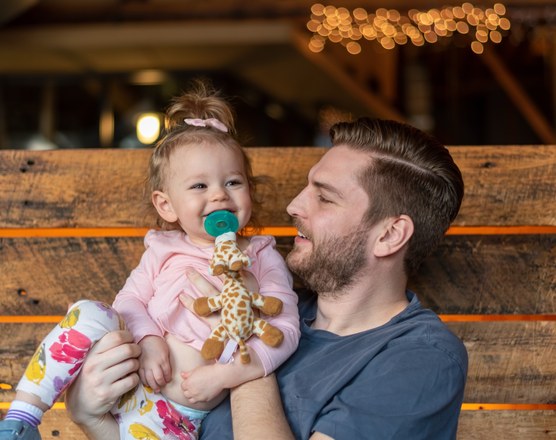
Pacifiers are useful in infancy and are not a problem in themselves — what matters is how long they're used and how much of the day they're in. Prolonged use into the toddler years applies sustained pressure that can affect how the bite and palate develop, most commonly producing an open bite where the front teeth don't meet. A pacifier in the mouth also reduces babbling and sound practice, which is the mechanism behind the speech association rather than any direct effect on speech itself. Most bite changes from pacifier use improve on their own once the habit stops, particularly if it stops while the baby teeth are still in place.
The two variables that matter
That framing is useful because it turns an anxious yes-or-no question into something you can actually act on. You do not have to remove a pacifier to reduce its effect — you can reduce when it is available.
What sustained sucking does to a developing mouth
Teeth sit in a balance between the tongue pushing outward and the lips and cheeks pushing inward. A pacifier held between the teeth for hours a day changes that balance in three ways:
- An open bite — the most common change, where the front teeth do not meet when the back teeth are closed, leaving a gap roughly the shape of what was held there
- A narrower upper arch, because the cheeks press inward during sucking while the tongue is held low and away from the palate
- Upper front teeth tipped forward, and sometimes lower front teeth tipped back
A narrowed upper arch is one of the routes to a crossbite, which is the bite change most likely to need attention.
The speech question, answered properly
The association between prolonged pacifier use and speech is frequently stated and rarely explained, which leaves parents thinking a pacifier damages speech mechanically. That is not the mechanism.
There is a second, smaller effect worth knowing: a pacifier holds the tongue in a low, forward position, and some sound patterns are harder to establish from there. But the practice explanation is the main one, and it is the one that tells you what to do — keep the mouth free during the hours a child is awake, alert and interacting.
Does an orthodontic shape solve it?
Pacifiers described as orthodontic have a flatter, thinner section where the teeth close, which reduces how much the teeth are pushed apart compared with a bulkier round shape.
The shape helps. It does not remove the duration question. A well-designed pacifier used for most of the day for three years has more effect than a basic one used at sleep times and given up early. Shape is a secondary variable, and it is frequently marketed as though it were the primary one.
Safety, without qualification
- Never dip a pacifier in anything sweet — not honey, sugar, juice, jam or syrup. It coats the teeth with sugar for the length of a nap, and honey additionally carries a risk of infant botulism under one year.
- Never attach a pacifier to a cord, ribbon or chain around a child's neck. Use a clip with a short strap designed for the purpose, attached to clothing.
Also: check regularly for splits or thinning and replace it, clean it rather than putting it in your own mouth to do so, and use a size appropriate to your child's age.2
Weaning, gently
Pacifiers do a job — usually settling, comfort, and transition to sleep. Taking one away without replacing the function is what makes weaning hard, and it is why abrupt removal often fails and then gets reinstated at greater intensity.
Reduce the hours before removing the object
Move from all-day availability to specific situations — the car, sleep, distress — then to sleep only. Most of the dental effect comes off the table at this stage, which means there is no need to rush the last part.
Make it a place, not a permission
A bowl or a drawer the pacifier lives in changes the negotiation from a person saying no to a rule that simply exists.
Replace the function
For settling, a consistent routine, a comfort object, or extra physical closeness at the same moment. For a child who is seeking oral input more generally — chewing clothing, mouthing objects — that need does not disappear when the pacifier does, and giving it somewhere else to go makes the difference.
Pick a calm week
Not during illness, a house move, a new sibling, or the first week of a new setting.
Do not shame it
Comments from adults about being a big kid tend to make a child hold on harder. Matter-of-fact works better than praise or teasing.
When to ask a dentist
- The habit is continuing into the preschool years and is not reducing
- You can see a change in the bite — front teeth not meeting, or upper teeth tipping forward
- The upper teeth are biting inside the lower ones on one side
- Your child is speaking noticeably less than peers, or is hard to understand
- You have tried to wean and it is not working — a dentist saying it is worth stopping now often lands differently than a parent saying it
Frequently Asked Questions
At what age should a child stop using a pacifier?
Rather than a single cut-off, what matters is reducing how many hours a day it is in the mouth and stopping while the baby teeth are still in place, since most bite changes improve on their own after the habit ends. Moving from all-day use to sleep only removes most of the dental effect, and your dentist can advise on timing for your child specifically.
Do pacifiers cause speech delay?
Not by damaging the mouth. The mechanism is lost practice — babies learn to talk by producing sound constantly, and a pacifier in the mouth physically occupies the equipment, so a child using one for much of the day gets fewer hours of practice. Keeping the mouth free during waking, interactive hours is what addresses it.
Are orthodontic pacifiers better for teeth?
They have a flatter, thinner section where the teeth close, which reduces how much the teeth are pushed apart compared with a bulkier shape. The shape helps, but it does not remove the duration question — a well-designed pacifier used most of the day for years has more effect than a basic one used at sleep times and given up early.
Will my child's teeth fix themselves after we stop?
Most bite changes caused by pacifier use improve on their own once the habit stops, particularly while the baby teeth are still in place and there is growth remaining. Stopping is what does the work. Changes that persist, or a crossbite, should be assessed by a dentist.
What is the easiest way to wean off a pacifier?
Reduce the hours before removing the object — from all-day availability to specific situations, then to sleep only — and replace the function it was doing, whether that is settling, comfort, or oral input. Give it a place it lives rather than making it a permission, choose a calm week, and avoid shaming, which tends to make children hold on harder.
Is it safe to put honey or sugar on a pacifier?
No, and there is no version of this that is safe. It coats the teeth in sugar for the length of a nap, which is a direct route to early childhood decay, and honey specifically carries a risk of infant botulism in children under one year.
Sources
- Hung M, Marx J, Ward C, Schwartz C. Pacifier use and its influence on pediatric malocclusion: a scoping review of emerging evidence. Dentistry Journal. 2025;13(7):319. doi:10.3390/dj13070319 (PMID 40710164)
- American Academy of Pediatric Dentistry. Management of the Developing Dentition and Occlusion in Pediatric Dentistry. In: The Reference Manual of Pediatric Dentistry. The AAPD's recommendations on non-nutritive sucking habits and their effect on the developing bite. aapd.org. Checked September 13, 2026.
Medical disclaimer. This page is for general educational purposes and does not constitute medical or dental advice, diagnosis, or treatment.