
Autism
Autism and Noise Sensitivity
Why covering the ears is a reasonable thing to do — and the honest caveat about all-day ear defenders.
- Expert Reviewed
- Evidence Based
- Patient Focused
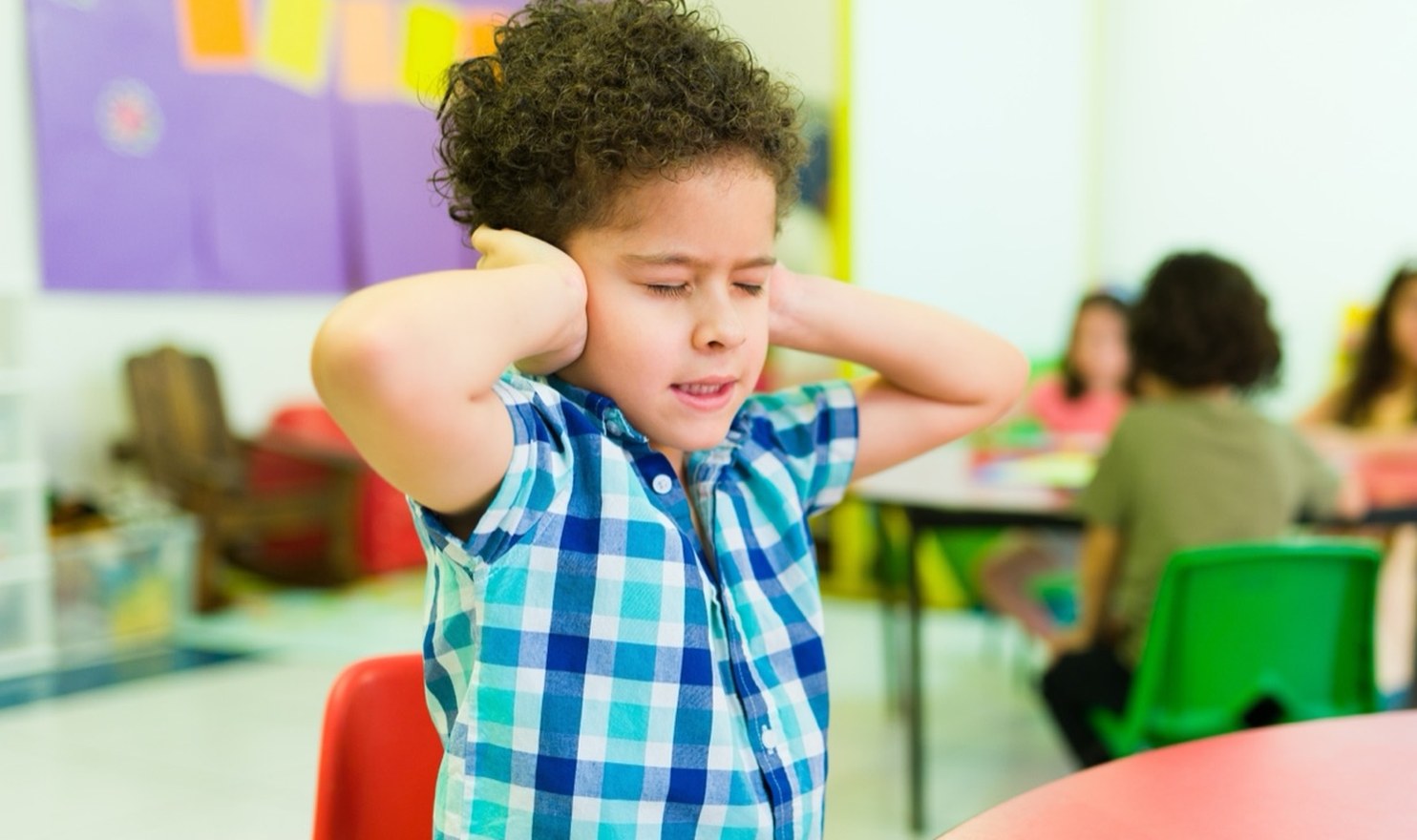
Noise sensitivity is one of the most commonly described sensory differences in autism, and since 2022 sensory processing differences have been part of the formal diagnostic criteria in the ICD-11. What autistic people describe is not simply that sounds are louder — it is that sounds others filter out automatically stay in the foreground, competing for attention. A hum, a distant conversation, and a scraping chair can all arrive with equal weight. That takes continuous effort to manage, the effort accumulates across a day, and it is invisible to everyone else. Which is why a child can appear to cope at school and fall apart the moment they get home: they have not had a bad evening, they have spent the day's capacity.
Why noise affects autistic people differently
Most people's brains suppress irrelevant sound automatically. The fridge hum stops registering within minutes, the traffic outside disappears, and the conversation at the next table fades into background.
That filtering appears to work differently in autism. Background noise does not recede — it stays present, and it competes with everything else for attention.
Sensory hypersensitivity is reported in 70–90% of autistic people, and a 2026 systematic review of 29 studies names reduced habituation — the nervous system failing to stop responding to a repeated sound — as one of the mechanisms under investigation.1
The honest caveat. A study that looked for exactly this did not find it. Thirty-three autistic adults and thirty-one typically developing adults heard repeated tones and sirens while skin conductance was recorded; there was no evidence of slower habituation and no difference in how quietly a sound could be detected. What did differ was that the autistic adults rated the same sounds as more arousing.2 So the experience is real and measurable at the level of how a sound feels; the physiological mechanism behind it is not settled.
What changed in 2022
The ICD-11 came into effect in January 2022, and its description of autism includes over- and under-responsiveness to sensory input. Sensory differences are now part of the formal criteria in the World Health Organization's system as well.
It is worth being precise about what is new, because this gets overstated: the DSM-5 has included hyper- and hyporeactivity to sensory input in the autism criteria since 2013. What 2022 changed is that both major diagnostic systems now say it. Sensory difference is not a secondary feature of autism that some autistic people happen to have — it is part of the definition.
It isn't only about volume
Three distinct things get flattened into "noise sensitivity," and they are managed differently.
This is not only a semantic distinction. A study of 60 autistic children aged 2 to 12 measured misophonia and hyperacusis separately, using a different questionnaire for each, and reported them as distinct with their own severity patterns.3
What is hyperacusis?
Hyperacusis is sounds registering as uncomfortably or painfully loud at levels other people find unremarkable. This is about intensity, and at the severe end it is genuinely painful rather than merely unpleasant.
What is misophonia?
Misophonia is a strong aversive reaction to specific sounds, and they are often quiet ones — chewing, breathing, tapping, sniffing, a pen clicking. The reaction is disproportionate to the volume, which is exactly why it is so frequently misread as rudeness, intolerance, or being deliberately difficult.
Why can they cope one day and not the next?
Because capacity is not fixed. Tiredness, illness, hunger, stress, and how much the day has already asked all change how much a person can absorb.
There is also the question of prediction. An expected sound is easier than an unexpected one at the same volume — which is why hand dryers, fire alarms, and balloons are so difficult. They arrive without warning.
What autism and noise sensitivity looks like
- Covering the ears, or pressing hands against the head
- Distress or refusal in specific places — assemblies, cafeterias, public toilets, parties
- Avoiding hand dryers, vacuum cleaners, or blenders, sometimes to the point of avoiding the whole room
- Asking people to stop making a sound that no one else has noticed
- Difficulty following speech in a noisy room while managing perfectly one to one
- Escalating agitation with no visible trigger, in an environment that is quietly noisy rather than loud
- Going quiet and still rather than becoming distressed
That last one is worth its own note. A shutdown — going quiet, still, and unresponsive — is frequently mistaken for coping well. It usually means the opposite, and because it is less visible than a meltdown it tends to get less support.
The cost of coping
Why does my child fall apart after school?
Because coping with noise is effortful, and the effort compounds across a day. A child who holds it together for six hours has spent something doing so, and there is nothing left when they get through the door.
The collapse at home is the bill for the day. It is not a reaction to home, and home being the place it happens is a sign of safety rather than a sign of a problem there.
What is masking, and what does it cost?
Masking is suppressing a natural response in order to appear unaffected, and it costs sensory capacity specifically. Holding still through a sound that is genuinely painful takes resources — and those resources are then not available for listening, learning, or managing anything else.
Sustained over months and years, that accumulation is one route into autistic burnout. → Autistic burnout · Sensory processing and autism
Do ear defenders help?
Yes, for specific loud situations — and that benefit should not be undersold. Ear defenders and noise-reducing headphones let many autistic people access environments they otherwise could not: assemblies, cafeterias, transport, fireworks, busy events.
There is also a genuine open question about all-day use. Audiologists and clinicians working with sound sensitivity commonly raise the concern that constant use in environments that are not loud may reduce tolerance over time — the reasoning being that the auditory system compensates for reduced input, so ordinary sound feels louder once the protection comes off.
The practical framing does not depend on resolving it. Reviews of specific sensory techniques and of Ayres Sensory Integration are the evidence base such recommendations rest on, and neither settles the all-day question either.4,5
- The person controls when they are used. Taking them off should be as available as putting them on.
- For specific environments, rather than continuously by default.
- Removing the noise source beats blocking it wherever that is possible.
- If your child wants them on constantly, treat that as information. It usually means the overall sensory load is too high, not that more protection is needed.
- Worth discussing with an occupational therapist rather than deciding from a blog. → Find an occupational therapist
What actually helps
Change the environment first
Softer surfaces, fewer competing sound sources, and a room that is not working against the person in it.
Give control
Being able to leave, choose a seat, or step out reduces distress independently of the noise itself — control is doing as much work here as the accommodation is.
Warn in advance
Fire drills, assemblies, hand dryers. Predictability changes the experience of the same sound.
Protect recovery
Low-demand time after a demanding environment is not indulgence. It is how capacity comes back.
Believe them
"It's not that loud" is a true statement about your experience and an irrelevant one about theirs.
At school
School is where most of the day's noise load is spent, and small changes move a great deal.
- A seat away from the door, the corridor, and the projector fan
- Warning before fire drills, and permission to leave before the alarm
- An agreed exit signal that does not require asking in front of the class
- A quiet place at break and lunch — the cafeteria is often the hardest room in the building
- Ear defenders available and permitted, without needing to justify them each time
- Recognition that a quiet child may be shutting down, not settling
Autistic adults and noise
Sensitivity does not reliably reduce with age. What changes is control over the environment — and the absence of anyone whose job it is to accommodate it.
Commonly described: avoiding venues, transport, or open-plan offices; exhaustion after days colleagues found unremarkable; and being read as difficult for what is a genuine need.
When to seek assessment
A hearing test first. Sound sensitivity should be assessed properly, and hearing differences can coexist with it rather than ruling it out.
Occupational therapy for a sensory profile and environmental strategies. → Find an occupational therapist
Raise it with your doctor if sensitivity is causing pain, if it is escalating, or if it is preventing school attendance or leaving the house.
Popular next reads
Frequently Asked Questions
Is noise sensitivity part of autism?
Yes. Sensory differences, including responses to sound, are part of the diagnostic criteria for autism in both the DSM-5 and the ICD-11, which came into effect in 2022.
Do ear defenders help autistic children?
For specific loud situations, yes — they let many autistic people access places they otherwise could not. There is a widely held clinical concern that wearing them all day in environments that are not loud may reduce tolerance over time, and the research does not settle that either way.
Why does my child fall apart after school?
Because holding it together for six hours costs something. Suppressing a response to sound uses resources that are then unavailable for anything else, and the effort accumulates. The collapse at home is the bill for the day, not a reaction to home.
Why can they cope one day and not the next?
Because capacity is not fixed. Tiredness, illness, hunger, stress, and how much the day has already demanded all change how much noise a person can tolerate. A child who managed the supermarket last week and cannot today is not being inconsistent.
Does noise sensitivity get better with age?
Sensitivity itself does not reliably reduce. What changes for autistic adults is control over their own environment — and the absence of anyone accommodating it for them.
Why does my autistic child cover their ears?
Because the sound genuinely registers differently, not because they are overreacting. In autism, background sound tends not to recede the way it does for other people, so it keeps competing for attention. Covering the ears is an effective, self-directed way to reduce input.
What is the difference between hyperacusis and misophonia?
Hyperacusis is sounds registering as uncomfortably or painfully loud at levels others find fine. Misophonia is a strong aversive reaction to specific sounds, often quiet ones such as chewing or tapping, where the reaction is out of proportion to the volume.
My child wants their ear defenders on all the time. Is that a problem?
Treat it as information rather than a problem. It usually means the overall sensory load is too high, not that more protection is needed. That is worth raising with an occupational therapist.
Sources
- Ríos Llamas C, Camacho Vega DO, Delgadillo Ramos MG. Light and sound hypersensitivity in autism spectrum disorder: a systematic review focusing on age and gender bias. Frontiers in Psychiatry. 2026;17. PMID 41799817. Checked August 25, 2026.
- Kuiper MWM, Verhoeven EWM, Geurts HM. Stop making noise! Auditory sensitivity in adults with an autism spectrum disorder diagnosis: physiological habituation and subjective detection thresholds. Journal of Autism and Developmental Disorders. 2019;49(5):2116–2128. PMID 30680585. Checked August 25, 2026.
- Katikar MS, Devi A, Prabhu P. Sensory processing in autism spectrum disorder: insights into misophonia and hyperacusis in a pediatric population. International Journal of Pediatric Otorhinolaryngology. 2025;189:112241. PMID 39903970. Checked August 25, 2026.
- Bodison SC, Parham LD. Specific sensory techniques and sensory environmental modifications for children and youth with sensory integration difficulties: a systematic review. American Journal of Occupational Therapy. 2018;72(1):7201190040. PMID 29280714. Checked August 25, 2026.
- Schoen SA, Lane SJ, Mailloux Z, May-Benson T, Parham LD, Smith Roley S, Schaaf RC. A systematic review of Ayres Sensory Integration intervention for children with autism. Autism Research. 2019;12(1):6–19. PMID 30548827. Checked August 25, 2026.
Disclaimer. This page is for general educational purposes and does not constitute medical advice, diagnosis, or treatment. Always consult a qualified professional about your own child.