
Therapy guides
Teletherapy for Children: Telehealth OT, Online Speech Therapy and PT
Occupational, speech and physical therapy by live video: what the research shows for each, who it suits, what you need at home, and what insurance, Medicaid and the licensing rules allow.
- Editorially Reviewed
- Evidence Based
- Patient Focused
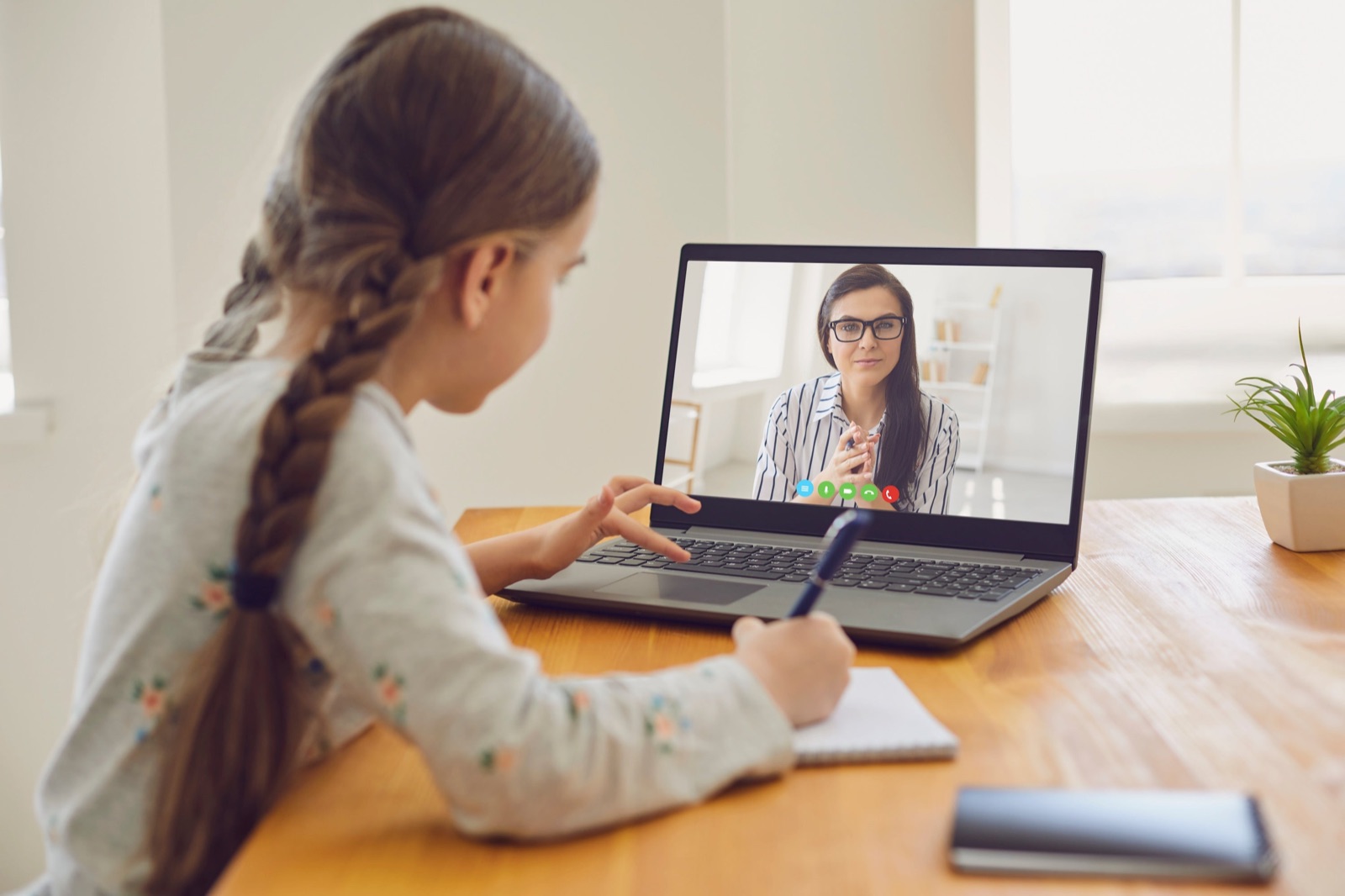
Teletherapy is occupational, speech-language or physical therapy delivered by live video: a licensed therapist assesses and treats in real time and, with young children, coaches the parent through the activities.1,2 For many goals children progress about as well as in person: a 2026 meta-analysis of speech-language trials in children under 12 found telepractice outcomes comparable or better, and a randomized trial of school-based occupational therapy found no difference between video and in-person sessions.3,4 Physical therapy evidence is mainly in adults, where video compares well for joint, back and neurological conditions.5 Swallow studies, hands-on cueing and equipment-based sensory therapy still need a room, and many families combine the two.1,6,7
Key takeaways
- Teletherapy is the same therapy by a different route: ASHA holds telepractice to the same quality as in-person care, and the Federation of State Boards of Physical Therapy calls telehealth a means of delivery, not a new treatment.1,8
- Speech-language therapy has the strongest evidence in children: comparable or better outcomes across seven studies in children under 12, and a webcam stuttering treatment as effective as the clinic version.3,9
- Telehealth occupational therapy matched in-person sessions in a school-based randomized trial, but reviews rate the evidence for children with developmental conditions as low to moderate.4,10,11
- Telehealth physical therapy compares well with in-person care for adult joint, back and neurological conditions; studies in children are few.5,12
- Under age three, teletherapy usually means the therapist coaches you through activities at home, and reviews call it a viable alternative to in-person early intervention.2,13
- Feeding and swallowing, tactile cueing, device fitting, hands-on exams and swing-based sensory integration often need an in-person visit, and you can ask for in-person services at any time.1,2,7
- The therapist must be licensed, or hold a compact privilege, for the state your child is in during the session, not only the state the therapist works from.1,14
- Coverage depends on the plan and the state: many insurers treat telehealth like in-person visits, Medicaid rules vary by state, and Medicare covers telehealth from home through December 31, 2027.15,16
What is teletherapy?
Teletherapy is therapy delivered at a distance by a licensed occupational therapist, speech-language pathologist or physical therapist, usually by live video. ASHA defines telepractice as the use of telecommunications and Internet technology to connect clinicians with clients and their family care partners for screening, assessment, intervention, consultation and education, either as the main way services are delivered or combined with in-person visits.1
The names differ by profession: speech-language pathologists usually say telepractice, occupational therapists telehealth, and physical therapists telehealth or telerehabilitation.1,5,10 The professional rules do not change. ASHA says telepractice should be of equal quality to in-person services, and the physical therapy licensing boards describe telehealth as a means to deliver care, not a new treatment or an expansion of scope.1,8 APTA calls telehealth a well-defined and established method of delivering health services that physical therapists use as part of their scope of practice.17
- Live video sessions
Real-time sessions in which the therapist and child see and hear each other. ASHA calls these synchronous services.1
- Shared between sessions
Recordings of practice, test results, home programs or remote monitoring sent for the therapist to review later: asynchronous services.1
- Hybrid care
A blend of live video, asynchronous review and in-person visits, planned around which goals need the room and which do not.1,18
A teletherapy session is therapy with a licensed clinician who sets goals, treats and measures progress. A speech app, game or subscription program with no clinician attached is not telepractice as ASHA defines it, however it is marketed.1
Does teletherapy work? The evidence by discipline
For many goals, yes, with the strength of the evidence depending on the discipline. Speech-language therapy has the most trials in children; occupational therapy has a growing but smaller body of work; physical therapy research is mainly in adults.3,5,10
| Discipline | What was compared | What the studies found | Evidence |
|---|---|---|---|
| Speech-language therapy, children under 12 | Seven studies comparing telepractice with in-person intervention | Outcomes comparable or better by video, for child-directed therapy and for caregiver-coached approaches.3 | Comparable in trials |
| Speech and language, school-age | Seven studies of primary school children | Similar improvement on five of six outcome measures; the authors call the evidence limited but promising.19 | Comparable, limited |
| Stuttering, ages 3 to 5 | A randomized trial of the Lidcombe Program by webcam against the clinic version | No evidence of a difference in stuttering after treatment; the webcam version appeared as effective.9 | Comparable in a trial |
| Occupational therapy, school-based | A randomized trial in 31 children with a specific learning disorder | Both video and in-person groups improved over the control group, with no significant difference between them.4 | One small trial |
| Occupational therapy, all ages | Two systematic reviews in AOTA’s journal, of 20 and 43 studies | Strong evidence for people with neurological and pain conditions; low to moderate for children with developmental disorders.10,11 | Low to moderate in children |
| Early intervention, birth to 3 | A systematic review of 18 studies of caregiver coaching by video | A viable alternative to in-person early intervention; only three of the 18 studies compared it with in-person or traditional care.13 | Promising |
| Physical therapy, adults | 53 systematic reviews; a meta-analysis of 13 musculoskeletal studies; a Cochrane review of stroke | Comparable to in-person care for osteoarthritis, low back pain, joint replacement and multiple sclerosis; no significant difference after stroke.5,20,21 | Comparable in adults |
| Physical therapy, children | Five studies of 152 children with cerebral palsy | Possible gains in gross motor function, but results varied and were not consistently better than the comparison.12 | Too few studies |
Two things are worth knowing about this research. Most studies are small, and reviewers repeatedly ask for larger, better-designed trials.12,19,21 And the strongest case is often not video against a clinic down the road but video against no therapy: the school-age review calls the evidence encouraging particularly for rural children, where in-person services are limited.19
A reasonable way to decide is to try it and review. ASHA notes that a trial period of telepractice can show whether it works and is sustainable for a child and family.1
Telehealth occupational therapy for children
Telehealth occupational therapy is an occupational therapist working with a child and family by video, often by coaching the parent through activities in the child’s own routines. HHS lists physical and occupational therapy by telehealth for children with developmental delays or special health care needs, including autism, with the therapist coaching activities you and your child can do at home.2 For the full scope of the profession, see occupational therapy.
What telehealth OT can work on
Goals tied to schoolwork and everyday routines have been tested by video. In the randomized trial of school-based occupational therapy, children with a specific learning disorder worked by video on goals parents set, such as academic skills, planning and responsibility, in 45-minute sessions twice a week for two months, and improved as much as children seen in person.4
In early intervention, video sessions mainly train and coach caregivers: across 18 studies of children up to about three years old, outcomes covered communication, physical and social development and the parent’s own use of the strategies.13 Occupational therapists who moved autistic children’s therapy to video during the pandemic adapted their interventions, and some of them and the parents they worked with came to advocate for keeping virtual delivery.22
Benefits of telehealth occupational therapy
- Therapy where the skill is used. Children are often in their natural environment during telepractice, which lets the therapist adapt in real time, see parts of the home and give practical tips on feeding, sleep, play and routines.1,2
- Access without travel. Families who live far from a therapist or lack transportation can be seen without the trip, and can keep a relationship with a therapist who is far away.18,23
- A parent who learns the strategies. Most early-intervention telehealth trains the caregiver to carry the activities into the week.13
- Guidance after each session. In the school trial, parents received guidance and counseling at the end of every video session so the work continued at home.4
What telehealth OT does less well
Some occupational therapy depends on the clinic itself. Ayres Sensory Integration, as its fidelity measure defines it, calls for space for vigorous activity and equipment including suspended swings, which a living room cannot supply.7 Hands-on exams also need an in-person visit.2 Researchers in pediatric telehealth add that it is not one-size-fits-all, and that which video strategies suit which children and goals is not yet clear.24
Online speech therapy for kids
Online speech therapy is speech-language therapy by live video with a licensed speech-language pathologist, who assesses, sets goals, treats and coaches the family as in a clinic.1 It has the strongest evidence of the three disciplines: across trials in children under 12, outcomes by video matched or exceeded in-person intervention.3 For what speech therapy treats, see speech therapy.
What online speech therapy can treat
| Goal | What the studies found |
|---|---|
| Speech sounds (articulation) | School-age children improved significantly by video and in person, with no significant difference in outcomes in a comparison of 1,759 cases.25,26 |
| Language: understanding and using words | Elementary-school children showed minimal differences between telepractice and in-person therapy on functional outcome measures.27 |
| Stuttering in preschoolers | The Lidcombe Program by webcam appeared as effective as the clinic program in a randomized trial of 49 children.9 |
| Young children’s language, through parent coaching | Caregiver-mediated approaches, where the SLP trains the parent to use the strategies at home, did as well by video.3 |
| Feeding and swallowing | ASHA lists feeding and swallowing among goals that may require in-person service; feeding therapy by video is feasible, with the evidence still emerging.1,6 |
Online speech therapy for toddlers
With toddlers the speech-language pathologist mostly works through you. The 2026 meta-analysis describes child-directed therapy as typical from about age four, and caregiver-mediated therapy, where caregivers are trained to use the strategies at home, as the approach for younger children; both did as well by video.3 Under three, your state’s early intervention program can evaluate your child at no cost, and parents can refer directly.28,29
Speech teletherapy in schools
Schools use telepractice to cover shortages of speech-language pathologists, cut travel between buildings and reach rural districts.1 In a crossover study, 34 school children made similar progress whether therapy came by video or in person, and students and parents overwhelmingly supported the video model.30 See the school section below for what the school must provide.
How much does online speech therapy cost?
There is no single price: what you pay depends on the practice and on your coverage. Payers may not cover telepractice, or may limit which services they include, so ask both the practice and your plan before the first session.1 Medicare lists speech therapy among the telehealth services it covers from home through December 31, 2027, usually at the same cost as in person.16
Ask the practice for its self-pay rate, whether the evaluation is billed separately, and whether it bills your plan; ask your plan whether telehealth speech-language pathology is covered and whether it needs a referral or prior authorization.
Telehealth physical therapy
Telehealth physical therapy is a physical therapist assessing movement, teaching exercises and adjusting a program by video. HHS lists child development issues, sports injuries, leg and hip injuries, lower back pain, balance and movement assessments and post-hospital visits among the problems it can help with, with the advantage that you learn exercises in the rooms where you spend your time.31 The therapist remains responsible for deciding whether the care can be delivered without in-person interaction.32 For what physical therapy treats, see physical therapy.
Telehealth physical therapy for babies and children
For babies and toddlers, telehealth PT usually means the therapist coaches you through movement activities at home; HHS lists it for children with developmental delays, and notes that a child may still need an in-person visit for screenings or a hands-on exam.2 Research in children is thin. The overview of 53 reviews found effectiveness data mainly in adults, with few studies on children or adolescents.5 A 2026 review of five studies in children with cerebral palsy found possible gains in gross motor function but inconsistent results.12
Telehealth physical therapy for adults and older adults
The adult evidence is stronger. Telerehabilitation could be comparable with in-person rehabilitation for osteoarthritis, low back pain, hip and knee replacement and multiple sclerosis, and in cardiac and pulmonary rehabilitation.5 For musculoskeletal conditions, treatment delivered only by video was equivalent to face-to-face treatment for physical function.20 A Cochrane review of stroke found no significant difference between telerehabilitation and in-person therapy, on low to moderate evidence.21
It does not work for everything that has been tested: a 2025 Cochrane review of telerehabilitation for neck pain found the evidence too uncertain to answer the question.33 For people who cannot easily leave home, video can remove the trip, and hybrid care lets the therapist decide which visits need to be in person.18
What needs an in-person PT visit
Anything that needs the therapist’s hands: a hands-on exam, tactile cueing, and some screenings.1,2 The physical therapist decides, visit by visit, whether the care can be given safely without being in the room.32
Teletherapy vs in-person therapy: pros and cons
For many goals the outcomes are comparable, so the choice usually comes down to the goal, the child and the household. Video brings therapy into the child’s own setting and removes travel; the clinic offers hands-on work and equipment.1,3,7,18
| Teletherapy | In-person | |
|---|---|---|
| Getting there | No travel; helps families far from a provider or without transportation.18 | Travel, time off work and time in waiting rooms.2 |
| Where skills are practiced | The child’s natural environment, where the therapist can adapt in real time.1 | A clinic room, with the therapist’s equipment.7 |
| Parent’s role | Often the therapist’s hands: video early intervention trains the caregiver.13 | The therapist works with the child in person. |
| Hands-on cueing and exams | Done through a trained facilitator, often the parent.1 | Direct, which is why tactile cueing and hands-on exams may need the room.1,2 |
| Standardized testing | Only tools validated for remote use give standard scores.1 | Tests given as they were designed. |
| Feeding and swallowing | Goals may require in-person service; the evidence for video feeding therapy is still emerging.1,6 | Direct observation of eating and drinking, and swallow studies in a medical setting.6 |
| Technology | Needs a device with camera and microphone and a reliable connection; about 1 in 5 homes lack good internet.34 | None needed at home. |
| Cost | Many insurers treat telehealth like an in-person visit; check your plan.15 | The same visit fee on many plans, plus travel, missed work and child care.15 |
Neither is a complete replacement for the other. The school-age speech review found that many studies saw telehealth as appropriate for combined practice rather than a full replacement for in-person services.19
Who is teletherapy a good fit for?
Fit depends on the goal, the child and the setup. ASHA asks therapists to weigh four things before choosing telepractice: physical and sensory factors such as sitting tolerance; attention and behavior; communication, such as how well the child is understood; and support at home, including reliable technology, a quiet, private space and an adult to help.1
Teletherapy is more likely to suit
- Speech sound, language and stuttering goals, which have the most trial evidence by video.3,9
- Babies and toddlers whose therapy is built on coaching a parent at home.2,13
- School-age children working on speech, language or school-based goals.4,19
- Families far from a therapist, without transportation, or juggling frequent appointments.18
In-person is more likely to suit
- Feeding and swallowing, tactile cueing, and fitting or programming a device.1
- Sensory integration therapy that uses suspended swings and space for vigorous play.7
- A first evaluation that needs standardized scores from a test not validated for video.1
- A child who needs a hands-on exam, or who cannot stay with the screen even with an adult beside them.1,2
If you are unsure, ask for a trial period: ASHA notes it can show whether telepractice works and is sustainable for your child and family.1
Can a child be evaluated by video?
Often, with limits. Standardized speech and language tests have matched in-person results when given by video, but only tests validated for remote use yield standard scores, and some evaluations still need the room.1,35
The largest study gave the Clinical Evaluation of Language Fundamentals to 100 children aged 3 to 12 both in person and by telehealth, in counterbalanced order. Scores showed no systematic difference between the two and behavior disruptions were similar, though parents still said they preferred in-person assessment.35 Earlier studies found strong agreement between telehealth and face-to-face scoring in school-aged children with language difficulties and in autistic children aged 9 to 12.36,37
ASHA asks clinicians to check whether a test has been validated for telepractice. When a test is given in a modified way, standard scores are not reported, and the report should say what was changed. Observation, caregiver report and functional tasks are also valuable by video because the child is often in their natural environment.1
For autism, a 2025 meta-analysis of 41 studies found video-based screening and diagnosis had good sensitivity and moderate specificity, and called the evidence preliminary.38 Feeding assessment by video is feasible but still being studied; an instrumental swallow study is done in a medical setting, and a hands-on exam needs an in-person visit.2,6
Teletherapy in early intervention (birth to 3)
Early intervention by video is mostly coaching: the therapist watches you and your baby or toddler and guides you through activities to use during the day. HHS lists physical and occupational therapy by telehealth for children with developmental delays on exactly that model.2 Federal rules ask that early intervention services happen, to the maximum extent appropriate, in natural environments such as the home.39
A 2025 review found 18 studies of telehealth early intervention for children aged 5 to 37 months, most of them small single-case designs. Nearly all used live video to train and coach caregivers, with outcomes in communication, physical, social and adaptive development and in how well caregivers used the strategies. The authors concluded telehealth can be a viable alternative to in-person early intervention, and named technological literacy as a challenge.13
Parents can refer a child under three to their state’s program directly, and the evaluation, service coordination and the family’s plan (the IFSP) are provided at no cost to parents.28,29 Ask whether your program offers video visits, home visits or both; in-home therapy covers the home-visit side.
Teletherapy for autistic children
Teletherapy can work for many autistic children and their families, most of all as coaching for parents. ASHA says telepractice may be a usable and versatile format for people with autism, and HHS lists telehealth physical and occupational therapy for autistic children.2,40
Caregiver training has the clearest evidence: a review of telehealth programs found caregiver training by video acceptable, feasible and associated with outcomes similar to live face-to-face training.41 More than half of the early-intervention telehealth studies in the 2025 review involved autistic children or children at risk of autism.13
Direct work has been studied less. Language assessments of autistic children aged 9 to 12 by telehealth agreed closely with face-to-face scoring, with no clear difference in behavior overall, though individual children varied.37 Occupational therapists who moved autistic children’s therapy to video adapted their sessions and found capabilities they had not expected.22
Sensory needs belong in the decision: ASHA asks therapists to weigh sensory and attention factors before choosing telepractice, and a trial period can show whether it suits your child.1 For what speech therapy does for autism, see speech therapy for autism.
What a teletherapy session looks like, by age
Every session starts with a few safety steps and ends with a plan for the week. In between, what happens depends on your child’s age.1,2
- Before the session
Test your camera, microphone, speaker and connection, and ask whether the team can do a quick test run first.2
- At the start
The therapist confirms where your child is and takes a local contact number in case of emergency, and confirms who is present at each end.1
- The work
Activities on a shared screen, digital materials in place of toys, and a parent or other adult doing the hands-on parts the therapist guides.1
- Before you hang up
Ask what to do next, when to follow up and what signs mean your child should be seen in person.2
Babies and toddlers, birth to 3
Expect coaching. The therapist watches you and your child during ordinary play and routines and coaches you through activities to repeat during the week; early intervention by video is covered above.2,13
Preschoolers, 3 to 5
Sessions mix coaching and direct work. The Lidcombe stuttering treatment for three- to five-year-olds, for example, is delivered by the parent with the speech-language pathologist’s guidance, and worked as well by webcam.9 Direct child-directed therapy becomes typical from about age four.3
School-age children and teens
Older children usually work with the therapist directly on screen, with shared materials and annotation tools.1,3 Practicing a video call beforehand and letting your child ask questions can make the first session easier.42
How to keep a child engaged in teletherapy
Plan for attention rather than hope for it. ASHA lists attention and sitting tolerance among the factors therapists weigh, and names strategies such as visual schedules and reinforcement systems for keeping students engaged.1
What helps, before and during a session
- Practice a video call with your child ahead of time, taking turns pretending to be the therapist.42
- Use a familiar room, and remove other people, pets and noisy toys or electronics from view.42
- Keep a small, quiet comfort item nearby.42
- Let your child join in their own way, even with a thumbs up or thumbs down.42
- Stay calm if your child cries, moves around or needs a break; it is part of the visit.2
On the therapist’s side, ASHA describes angling the camera to increase eye contact, exaggerating facial expressions and gestures, keeping the lighting good, speaking slowly with more pauses, and explaining materials as needed.1 If a child cannot engage after a fair trial, a hybrid plan or in-person sessions may serve better.1,18
What you need at home for teletherapy
The setup
- A computer, tablet or phone with a microphone, speaker and camera.31
- An internet connection with at least 3 to 5 Mbps upload and download speeds.1
- A quiet, private room with good light, and distractions such as other people, pets and noisy toys out of the way.2,42
- Loose, comfortable clothes for your child if the therapist needs to see how they move.2
- A toy or comfort item, and anything the therapist asked you to have ready.1,2
No good internet at home? About 1 in 5 homes lack a good connection. Ask whether a phone visit would work for your child’s goal, use a private spot with free internet such as a library, or look into Lifeline, which helps lower-income households pay for internet and devices.34
Your role during the session
For a young child you are part of the therapy. ASHA describes the person at the child’s end as a facilitator who may help with hands-on tasks, manage the equipment and watch the child’s participation and safety, after training from the therapist.1 Tell the therapist beforehand about behaviors, assistive devices or sensitive topics, so the session can be planned around them.42
If your family needs an interpreter, ask for a professional one: ASHA says it is not appropriate to require a family member to interpret.1
How to tell whether teletherapy is working
Judge it the way you would judge any therapy: against goals set at the start. In the school occupational therapy trial, goals came from an interview with parents using a standard goal-setting tool, and progress was rated against them.4 The large speech comparisons tracked change on ASHA’s functional communication measures, the same yardstick used for in-person therapy.26,27
Give video a fair trial, then review. ASHA notes that a trial period can show whether telepractice is effective and sustainable for a child and family, and that clients keep the right to request in-person services at any time.1 If goals are not moving, ask the therapist what to change: the format, the frequency, your role, or a move to hybrid care.1,18
When in-person therapy is necessary
Some goals and some children need the room. ASHA names tactile cueing, device programming and feeding and swallowing as goals that may require in-person service.1 Add to that:
- Hands-on exams and screenings, which HHS notes may still need an in-person visit.2
- Sensory integration therapy built on suspended equipment and space for vigorous activity.7
- Assessments that need standard scores from a test not validated for remote administration.1
- Any physical therapy the therapist judges cannot be delivered safely without in-person interaction.32
You can change your mind. ASHA says the informed consent for telepractice should include the client’s right to request in-person services at any time.1
Hybrid teletherapy: combining video and in-person sessions
Hybrid care uses both in-person visits and telehealth, with you and the therapist deciding together which visits happen where.18 ASHA lists the situations where it helps: when certain goals need in-person support, such as tactile cueing, while others can be met by video; when a team is coordinating complex services such as AAC training; and when a child’s needs fluctuate.1
One arrangement is an evaluation and periodic reviews in person with regular sessions by video, but the right split depends on the goals. The provider should explain what can be done by telehealth, what care needs to be given in person, and how you move between the two.18
Pediatric therapy researchers writing after the pandemic proposed folding telehealth into future hybrid service models, because it is not one-size-fits-all.24
School-based teletherapy and IEP services
If your child has an IEP, speech-language pathology, occupational therapy and physical therapy can be part of it as related services, provided at public expense and without charge.43,44 Some districts deliver those services by video, and the same trials apply: school children made similar speech progress by video and in person, and a school-based OT trial found no difference.4,30
ASHA spells out what the school, not the family, must handle:1
- Schools, not caregivers, provide the equipment and connectivity for telepractice.1
- The school offers in-person services when telepractice is not appropriate, and tells caregivers they have the right to decline telepractice.1
- Telepractice is documented in the IEP and discussed at IEP meetings.1
- The school provides a private space and a trained person to help the student during sessions as needed.1
Hybrid models work in schools too, for example when students in one group cannot all attend the same way, or when some goals need tactile cueing.1
Teletherapy for adults and older adults
The adult evidence is larger than the children’s. For aphasia after stroke, a meta-analysis of five studies found telerehabilitation and face-to-face speech and language treatment comparable on comprehension, naming and functional communication, on low-quality evidence.45 The Cochrane review of stroke telerehabilitation, which included communication therapy, found no significant difference between telerehabilitation and in-person therapy.21 Physical therapy for adults is covered above.5
For older adults, telehealth can help manage care without leaving home. Screen readers, touch screens, automatic transcription and closed captioning can help with vision or hearing loss, and the federal Lifeline program can help pay for a device and a connection.46 Medicare covers telehealth from home through December 31, 2027.16 For speech therapy after stroke or with Parkinson’s, see speech therapy for adults.
Can a therapist in another state treat my child? Licensure and compacts
Only if the therapist is licensed, or holds a compact privilege, for the state where your child is during the session. ASHA asks clinicians to check licensure in the state they work from and the state the client receives services in, including temporary moves such as vacations and college; the physical therapy boards say a provider must be legally authorized in the state where the patient is physically located.1,14 So a summer with grandparents in another state can interrupt sessions unless the therapist is authorized there too.1
Interstate compacts let a therapist licensed in one member state practice in other member states through a privilege. Each profession has its own, at a different stage:47,48,49
| Compact | Where it stands |
|---|---|
| Physical Therapy Licensure Compact | 38 member states, including the District of Columbia, actively issuing and accepting privileges; California, Florida and New York are not members.47 |
| Occupational Therapy Licensure Compact | Member states open applications one at a time; ten listed an opening date by October 5, 2026.48 Until an OT holds a privilege, they need a license in each state they serve.50 |
| Audiology and Speech-Language Pathology Interstate Compact | 37 jurisdictions have enacted it; registration for privileges was open in Louisiana, Ohio, Tennessee and West Virginia in 2026.49 |
Ask a new therapist which states they are licensed in, and check before a move or a long trip.
Does insurance cover teletherapy? Medicaid, Medicare and private plans
Usually some of it, depending on your plan and your state. Many insurers treat telehealth visits like in-person ones, but call your plan first to find out what it covers and what you will pay.15 ASHA warns that payers may not cover telepractice or may limit the services included.1 For how plans cover children’s therapy in general, see does insurance cover therapy for kids.
- Private insurance
State laws differ. Service parity requires a plan to cover the same services by telehealth as in person but does not guarantee the same payment; payment parity, which is less common, requires the same rate.51
- Medicaid and CHIP
Children under 21 on Medicaid are entitled to medically necessary services under EPSDT, but federal law leaves telehealth delivery largely to the states, so whether a visit can be by video depends on where you live.15,52,53
- Medicare
Through December 31, 2027, Medicare covers telehealth you get from home, with speech therapy among its examples, usually at the in-person cost; Congress extended these flexibilities in February 2026.16,54
- Early intervention and school
Under three, evaluation and service coordination are free; school therapy in an IEP is provided without charge.28,44
Before the first session, ask the plan whether teletherapy for your child’s discipline is covered, whether it needs a referral or prior authorization, and whether the therapist is in network; ask the practice whether it bills your plan for video visits.
Is teletherapy private? HIPAA and your child’s information
Yes, when it is done properly. HHS says telehealth visits are as private as meeting face-to-face, and HIPAA protects what you share during them as it protects your records.55 ASHA reminds therapists that federal and state privacy rules apply as they do in person, and that school-based services are also covered by the Family Educational Rights and Privacy Act.1
Which platform should a teletherapist use?
An encrypted video platform whose vendor signs a Business Associate Agreement, the contract HIPAA requires for a vendor that handles health information. ASHA does not recommend public video-call and social media apps, which often lack adequate security and privacy.1 During the COVID-19 emergency, HHS temporarily allowed everyday video apps such as FaceTime and Zoom; that flexibility expired on May 11, 2023, with the transition period for telehealth ending on August 9, 2023.56,57
On your side, use your own device on a private network rather than public Wi-Fi, choose a spot where no one can listen in, and do not record the session.55 At the start of each session the therapist should confirm who is present at both ends.1
How to choose a teletherapy provider
Start with the license, then ask how the therapist works by video. ASHA expects telepractitioners to be trained to deliver services this way and to choose assessments and treatments that work by telepractice.1
Questions to ask before you book
- Are you licensed, or do you hold a compact privilege, for the state my child will be in during sessions?1,14
- For a speech-language pathologist: do you hold ASHA’s Certificate of Clinical Competence (CCC-SLP)? It can be verified online.58,59
- Which platform do you use, is it encrypted, and will you sign a Business Associate Agreement?1
- Which goals will you work on by video, and which would need an in-person visit?1,18
- Which assessments will you use, and are they validated for remote administration?1
- What will you need from me during and between sessions?1
ASHA ProFind lists certified speech-language pathologists who are accepting referrals.59 The DrSensory directory lists speech, occupational and physical therapy practices by state; check each practice for video sessions.
Frequently asked questions
Is teletherapy as effective as in-person therapy for children?
For many goals the outcomes are comparable: speech-language trials in children under 12 found video comparable or better, and a school occupational therapy trial found no difference. Evidence for physical therapy in children is thin.3,4,5
What age can a child start teletherapy?
There is no minimum age. With babies and toddlers the therapist coaches the parent through activities at home; direct therapy on screen becomes typical from about age four.2,3
Do I need to sit with my child during online therapy?
With a young child, yes: you act as the therapist’s hands, helping with hands-on tasks and the equipment. Older children often work directly with the therapist; ask what support they will need.1,3
Can teletherapy help an autistic child?
Often. HHS lists telehealth occupational and physical therapy for children with autism, and more than half of the early-intervention telehealth studies in a 2025 review involved autistic children or children at risk of autism.2,13
Can feeding or swallowing problems be treated online?
Partly. Feeding assessment and treatment by video are feasible, though the evidence is still emerging; ASHA lists feeding and swallowing among goals that may need in-person service, and swallow studies are done in a medical setting.1,6
Is a speech therapy app the same as teletherapy?
No. Telepractice connects your child with a licensed speech-language pathologist who assesses, treats and measures progress; an app without a clinician is not that.1
Does Medicaid cover teletherapy for children?
It depends on your state. Federal Medicaid law leaves most telehealth decisions to the states, so ask your provider whether your state’s Medicaid pays for the visit.15,53
Can my child keep doing teletherapy while we travel to another state?
Only if the therapist is licensed or holds a compact privilege there. Licensure follows where your child is during the session, including vacations.1,14
What if my child will not stay in front of the screen?
Tell the therapist. Attention and behavior are part of deciding whether video suits a child, and a trial period, a parent beside the child or a hybrid plan can help.1
Can I record my child’s teletherapy session?
HHS advises that telehealth visits should not be recorded; the record is the therapist’s notes. Ask the therapist for a written home program instead.55
Can teletherapy be part of my child’s IEP?
Yes. ASHA says a school documents telepractice in the IEP, provides the equipment and tells parents they may decline it.1
Related guides on DrSensory
Sources
- American Speech-Language-Hearing Association, Practice Portal. Telepractice. Telepractice “is the use of telecommunications and Internet technology to connect audiologists and speech-language pathologists (SLPs) with clients, family care partners, and other professionals for screening, assessment, intervention, consultation, and education”; “It may be the primary mode of service delivery or can be used in combination with in-person services”; synchronous, asynchronous and hybrid services; “Use of telepractice should be of equal quality to in-person services”; client selection weighs physical and sensory, cognitive and behavioral, communication, and support and environmental factors, and “a trial period of telepractice may help determine whether this model is effective and sustainable”; licensure “in the state from which the clinician provides services as well as the state in which the client receives services”, including “temporary location changes such as vacations and college attendance”; the Audiology & Speech-Language Pathology Interstate Compact; “A stable Internet connection with at least 3- to 5-Mbps upload/download speeds”; public domain systems “often lack adequate security and privacy and are not recommended”; Business Associate Agreements; “Confirming who is present at both client and clinician sites at the start of each session”; informed consent including “the client’s right to request in-person services at any time”; “confirming the client’s physical location at the start of each session and obtaining a reliable local contact number in case of emergency”; some assessment tools “have not yet been validated for remote administration” and with a modified protocol “standard scores are not reported”; treatment modifications such as screen-shared materials and “leveraging facilitators for hands-on tasks”; in schools telepractice “can help address shortages of qualified clinicians, reduce travel time across multiple buildings, and increase access for rural or remote districts”, “Schools—not caregivers—are responsible for providing the equipment and connectivity required for telepractice”, the school “informs caregivers of their right to decline telepractice services” and “documents telepractice service delivery within the individualized education program (IEP)”, and clinicians consider “whether specific goals require in-person service (e.g., tactile cueing, device programming, feeding/swallowing)”; “It is not appropriate to require a family member or care partner to act as an interpreter”; “Coverage and payment of telepractice services varies widely across federal, state, and commercial payers”; hybrid models where “Certain goals require in-person support (e.g., tactile cueing) while others can be met through telepractice.” Checked October 7, 2026.
- U.S. Department of Health and Human Services, Health Resources and Services Administration (telehealth.hhs.gov). How can I use telehealth for infants and toddlers?. Physical and occupational therapy by telehealth “for children with developmental delays or special health care needs”, including autism spectrum disorder: “A therapist may coach you through activities you and your child can do at home”; “Your child may still need an in-person visit for screenings or a hands-on exam”; the provider sees “parts of your child’s home setting”; preparation: test the technology, “Dress your child in loose, comfortable clothes”, have a toy or comfort item, ask “what signs mean your child should be seen in person.” Checked October 7, 2026.
- Vanderauwera J, Vanden Bempt F, D’haenens W, Leysen H, Leclercq AL, Van Eerdenbrugh S. The effectiveness of telepractice for speech-language pathology intervention with children younger than 12 years: a meta-analysis. Journal of Telemedicine and Telecare. 2026; published online ahead of print. doi:10.1177/1357633x261426068 (PMID 41847737). Seven studies, 31 outcomes: “Telepractice intervention demonstrated outcomes comparable or better than in-person intervention across speech-language pathology subdomains”, for child-directed approaches (“typically for children ≥ 4 years”) and “caregiver-mediated approaches, where caregivers are trained to implement the strategies at home with their child.”
- Kheirollahzadeh M, Azad A, Saneii SH, Alizadeh Zarei M. Comparing telerehabilitation and in-person interventions in school-based occupational therapy for specific learning disorder: a randomized controlled trial. Iranian Journal of Child Neurology. 2024;18(2):83–101. doi:10.22037/ijcn.v18i2.43985 (PMID 38617396). 31 children with a specific learning disorder: telerehabilitation, in-person or control; parents’ goals set by interview, “each rated for performance and satisfaction”; sessions twice a week for two months, “lasting 45 minutes”, with parents receiving “guidance and counseling at the session’s conclusion”; “no significant differences emerged between the TR and in-person groups.”
- Seron P, Oliveros MJ, Gutierrez-Arias R, et al. Effectiveness of telerehabilitation in physical therapy: a rapid overview. Physical Therapy. 2021;101(6):pzab053. doi:10.1093/ptj/pzab053 (PMID 33561280). 53 systematic reviews: telerehabilitation “could be comparable with in-person rehabilitation or better than no rehabilitation for conditions such as osteoarthritis, low-back pain, hip and knee replacement, and multiple sclerosis and also in the context of cardiac and pulmonary rehabilitation”; “The population for which there is effectiveness data is mainly adult, with few studies on children or adolescents.”
- American Speech-Language-Hearing Association, Practice Portal. Pediatric Feeding and Swallowing. “Instrumental evaluation is completed in a medical setting”; “Supporting evidence for telepractice in pediatric feeding and swallowing is still emerging”; “Telepractice assessment and treatment models are feasible and can help families avoid travel.” Checked October 7, 2026.
- May-Benson TA, Roley SS, Mailloux Z, et al. Interrater reliability and discriminative validity of the structural elements of the Ayres Sensory Integration Fidelity Measure. American Journal of Occupational Therapy. 2014;68(5):506–513. doi:10.5014/ajot.2014.010652 (PMID 25184462). The measure’s structural elements include “physical environment and equipment, including space for vigorous as well as quiet activity”; equipment items, “especially those involving suspended equipment”, distinguished settings that provide the therapy.
- Federation of State Boards of Physical Therapy. Telehealth in Physical Therapy: Policy Recommendations for Appropriate Regulation. “Telehealth is not a new treatment, or an expansion of scope of practice, but a means to deliver physical therapy care to those in need. The physical therapist is still responsible for the care of the patient and for making determinations of the best means to deliver that care.” Checked October 7, 2026.
- Bridgman K, Onslow M, O’Brian S, Jones M, Block S. Lidcombe Program webcam treatment for early stuttering: a randomized controlled trial. Journal of Speech, Language, and Hearing Research. 2016;59(5):932–939. doi:10.1044/2016_jslhr-s-15-0011 (PMID 27617680). 49 children aged 3 to 5: “There was insufficient evidence of a posttreatment difference of the percentage of syllables stuttered between the standard and webcam Lidcombe Program treatments”; webcam treatment “appears to be as efficacious and economically viable as the standard, clinic Lidcombe Program treatment.”
- Feldhacker DR, Jewell VD, Jung LeSage S, Collins H, Lohman H, Russell M. Telehealth interventions within the scope of occupational therapy practice: a systematic review. American Journal of Occupational Therapy. 2022;76(6):7606205090. doi:10.5014/ajot.2022.049417 (PMID 36332197). 20 studies, 2009 to 2019: “Strong strength of evidence supports the use of telehealth approaches for occupational therapy interventions for people with neurological and pain conditions”; “Low strength of evidence was found for other outcomes for children with developmental disorders”; OT by telehealth is “similarly effective as those delivered face-to-face, especially for neurological and pain conditions.”
- Lucas Molitor W, Feldhacker DR, Li Z, Kuhl N, Jewell VD. Occupational therapy telehealth interventions across populations from 2019 to 2022: a systematic review. American Journal of Occupational Therapy. 2025;79(4):7904205160. doi:10.5014/ajot.2025.050939 (PMID 40489594). 43 studies: “Moderate strength of evidence supports telehealth interventions for various outcomes to address chronic conditions, developmental disorders, neurological conditions, and people affected by COVID-19 isolation.”
- Maia O, Moreira Gonçalves D, Vilarinho R. Effects of telerehabilitation on gross motor function in children with cerebral palsy: a systematic review. Healthcare (Basel). 2026;14(7):942. doi:10.3390/healthcare14070942 (PMID 41975944). Five studies, 152 children aged 2.5 to 17: “The included studies suggested potential benefits in GMF and related functional outcomes; however, findings were heterogeneous, and superiority over comparison conditions was not consistently demonstrated.”
- Shin Y, Park EJ, Lee A. Early intervention for children with developmental disabilities and their families via telehealth: systematic review. Journal of Medical Internet Research. 2025;27:e66442. doi:10.2196/66442 (PMID 39819975). 18 studies of children aged 5 to 37 months; “Six studies included control groups, three of which provided in-person or traditional care to the control groups”; “Synchronous videoconferencing was the primary modality for caregiver training and coaching”; “Telehealth can be a viable alternative to traditional in-person early interventions for young children who have developmental disabilities and their families.”
- Federation of State Boards of Physical Therapy. Telehealth in Physical Therapy: Executive Summary (PDF). Providers “must be legally authorized to provide physical therapy in the jurisdiction in which the patient/client is physically located during the provider/client interaction.” Checked October 7, 2026.
- U.S. Department of Health and Human Services, Health Resources and Services Administration (telehealth.hhs.gov). How do I pay for telehealth?. “Many insurances treat telehealth visits like in-person ones”; “Even if telehealth costs a little more, think about the money you will save on traveling, missing work, or paying for a babysitter”; “Medicaid’s coverage for telehealth visits can be different depending on where you live.” Checked October 7, 2026.
- Centers for Medicare & Medicaid Services. Telehealth (Medicare.gov). “Through December 31, 2027, Medicare covers telehealth services that you can get from anywhere in the U.S., including your home”; the examples include “Speech therapy”; “For most telehealth services, you’ll pay the same amount that you would if you got the services in person.” Checked October 7, 2026.
- American Physical Therapy Association. Telehealth, HOD P06-19-15-09 (position, last updated September 20, 2019). “Telehealth is a well-defined and established method of health services delivery. Physical therapists provide services using telehealth as part of their scope of practice.” Checked October 7, 2026.
- U.S. Department of Health and Human Services, Health Resources and Services Administration (telehealth.hhs.gov). How can I use hybrid care?. “Hybrid care uses both in-person visits and telehealth for your health care”; it helps if you live far from your provider or lack transportation; “you and your provider decide together when to use telehealth and when to have an in-person visit”; the provider should explain what can be done through telehealth, “What care needs to be given in person” and how to move between the two. Checked October 7, 2026.
- Wales D, Skinner L, Hayman M. The efficacy of telehealth-delivered speech and language intervention for primary school-age children: a systematic review. International Journal of Telerehabilitation. 2017;9(1):55–70. doi:10.5195/ijt.2017.6219 (PMID 28814995). Seven studies from 132 screened: “both telehealth and in-person participants made significant and similar improvements when treatment effects were measured through five of the six outcome measures”; “limited but promising evidence”, encouraging “particularly for rural children where in-person services are limited”; “telehealth was not a complete replacement for in-person services but may be appropriate for combined practices.”
- Cottrell MA, Galea OA, O’Leary SP, Hill AJ, Russell TG. Real-time telerehabilitation for the treatment of musculoskeletal conditions is effective and comparable to standard practice: a systematic review and meta-analysis. Clinical Rehabilitation. 2017;31(5):625–638. doi:10.1177/0269215516645148 (PMID 27141087). 13 studies, 1,520 people: “treatment delivered solely via telerehabilitation is equivalent to face-to-face intervention” for physical function, and pain improved comparably.
- Laver KE, Adey-Wakeling Z, Crotty M, Lannin NA, George S, Sherrington C. Telerehabilitation services for stroke. Cochrane Database of Systematic Reviews. 2020;1(1):CD010255. doi:10.1002/14651858.CD010255.pub3 (PMID 32002991). 22 trials, 1,937 participants: “Studies comparing telerehabilitation and in-person therapy have also not found significantly different outcomes between groups”; “there is only low or moderate-level evidence.”
- Angell AM, Taylor EE, Akrofi JNS, et al. “This is going to be different, but it’s not impossible”: adapting to telehealth occupational therapy for autistic children. International Journal of Telerehabilitation. 2024;16(1):e6608. doi:10.5195/ijt.2024.6608 (PMID 39022441). Interviews with administrators, occupational therapists and parents at three Los Angeles clinics: participants “adapted interventions; uncovered surprising capabilities; and challenged the occupational therapy status quo to advocate for ongoing virtual delivery.”
- U.S. Department of Health and Human Services, Health Resources and Services Administration (telehealth.hhs.gov). Can I use telehealth if I live in a rural community?. “Telehealth can reduce the need to travel to see your provider in person”; it can “help you maintain ongoing relationships with your health providers, even if they are located far away from you.” Checked October 7, 2026.
- Camden C, Silva M. Pediatric teleheath: opportunities created by the COVID-19 and suggestions to sustain its use to support families of children with disabilities. Physical & Occupational Therapy in Pediatrics. 2021;41(1):1–17. doi:10.1080/01942638.2020.1825032 (PMID 33023352). “which telehealth strategies are best for which children and families, and which intervention goals, are not yet clear”; telehealth “is not a one-size-fits-all intervention.”
- Grogan-Johnson S, Gabel RM, Taylor J, Rowan LE, Alvares R, Schenker J. A pilot exploration of speech sound disorder intervention delivered by telehealth to school-age children. International Journal of Telerehabilitation. 2011;3(1):31–42. doi:10.5195/ijt.2011.6064 (PMID 25945180). A rural Ohio school district: “Students in both service delivery models made significant improvements in speech sound production.”
- Coufal K, Parham D, Jakubowitz M, Howell C, Reyes J. Comparing traditional service delivery and telepractice for speech sound production using a functional outcome measure. American Journal of Speech-Language Pathology. 2018;27(1):82–90. doi:10.1044/2017_ajslp-16-0070 (PMID 29188278). 1,331 in-person and 428 telepractice cases, children aged 6 to 9.5: “There were no significant differences in the median change scores between the traditional group and the telepractice group.”
- Musaji I, Roth B, Coufal K, Parham DF, Self TL. Comparing in-person and telepractice service delivery for spoken language production and comprehension using the National Outcomes Measurement System. International Journal of Telerehabilitation. 2021;13(1):e6373. doi:10.5195/ijt.2021.6373 (PMID 34345347). Elementary-school children: “There were minimal significant differences in the median change scores between the traditional and telepractice interventions.”
- Electronic Code of Federal Regulations (IDEA regulations, U.S. Department of Education). 34 CFR 303.521, System of payments and fees. Evaluation and assessment, service coordination and the IFSP “must be carried out at public expense, and for which no fees may be charged to parents.” Checked October 7, 2026.
- Electronic Code of Federal Regulations (IDEA regulations, U.S. Department of Education). 34 CFR 303.303, Referral procedures. Primary referral sources include “Parents, including parents of infants and toddlers.” Checked October 7, 2026.
- Grogan-Johnson S, Alvares R, Rowan L, Creaghead N. A pilot study comparing the effectiveness of speech language therapy provided by telemedicine with conventional on-site therapy. Journal of Telemedicine and Telecare. 2010;16(3):134–139. doi:10.1258/jtt.2009.090608 (PMID 20197354). 34 school children, four months of each format in crossover: “the children made similar progress during the study whichever treatment method was used”; “students and parents overwhelmingly supported the telemedicine service delivery model.”
- U.S. Department of Health and Human Services, Health Resources and Services Administration (telehealth.hhs.gov). How can I use telehealth for physical therapy?. Telehealth physical therapy can help with “Child development issues”, sports injuries, leg and hip injuries, lower back pain, “Balance and movement assessments” and post-hospital visits; “You learn to do exercises in the rooms where you spend most of your time”; you need a device “that has a microphone, speaker, and camera.” Checked October 7, 2026.
- Federation of State Boards of Physical Therapy. FAQs from the Telehealth in Physical Therapy resource paper (PDF). “The physical therapy provider, whether virtual or in person, is responsible for making sure the appropriate care can be delivered without in-person interaction.” Checked October 7, 2026.
- Fandim JV, Almeida de Oliveira L, Yamato TP, et al. Telerehabilitation for neck pain. Cochrane Database of Systematic Reviews. 2025;8(8):CD014428. doi:10.1002/14651858.cd014428.pub2 (PMID 40792483). 13 trials in adults: “the question of the effectiveness of telerehabilitation interventions for non-specific neck pain remains unanswered.”
- U.S. Department of Health and Human Services, Health Resources and Services Administration (telehealth.hhs.gov). What do I need to use telehealth?. “About 1 in 5 homes do not have a good connection to the internet”; ask whether a phone visit is possible, use a private spot with free internet such as a library, and “Lifeline helps people with lower income pay for internet and devices.” Checked October 7, 2026.
- Campbell DR, Lawrence JE, Goldstein H. Reliability and feasibility of administering a child language assessment via telehealth. American Journal of Speech-Language Pathology. 2024;33(3):1373–1389. doi:10.1044/2024_ajslp-23-00182 (PMID 38483194). 100 children aged 3 to 12, the CELF in person and by telehealth in counterbalanced order: “In-person and telehealth mean scores on all three versions of the CELF revealed no systematic differences”; “The incidence of child behavior disruptions was similar for both test administration conditions”; parents “continued to prefer in-person assessments.”
- Sutherland R, Trembath D, Hodge A, et al. Telehealth language assessments using consumer grade equipment in rural and urban settings: feasible, reliable and well tolerated. Journal of Telemedicine and Telecare. 2017;23(1):106–115. doi:10.1177/1357633x15623921 (PMID 26768598). 23 children aged 8 to 12 with known or suspected language impairment: “There was strong inter-rater reliability in the telehealth and face-to-face conditions”; “Similar levels of attention, distractibility and anxiety were observed in the two conditions.”
- Sutherland R, Trembath D, Hodge MA, Rose V, Roberts J. Telehealth and autism: are telehealth language assessments reliable and feasible for children with autism? International Journal of Language & Communication Disorders. 2019;54(2):281–291. doi:10.1111/1460-6984.12440 (PMID 30565791). 13 autistic children aged 9 to 12: “There was strong interrater reliability between the telehealth and face-to-face conditions”; “no significant differences in children’s behaviour between the telehealth and face-to-face conditions, although variation between individuals was observed.”
- Wang L, Meng H, Meng Z, Wang Y, Wong PCM. A systematic review and meta-analysis of autism screening and diagnosis in children using video-assisted telehealth technology. Digital Health. 2025;11:20552076251386705. doi:10.1177/20552076251386705 (PMID 41181545). 41 studies: “the pooled sensitivity was 0.88” and “specificity was 0.76”, “indicating good sensitivity and moderate specificity for autism detection”; “existing evidence remains preliminary.”
- Electronic Code of Federal Regulations (IDEA regulations, U.S. Department of Education). 34 CFR 303.126, Early intervention services in natural environments. Early intervention services are provided “To the maximum extent appropriate, in natural environments.” Checked October 7, 2026.
- American Speech-Language-Hearing Association, Practice Portal. Autism and Autism Spectrum Disorder. “Telepractice may be a usable and versatile format for people with autism”; “Payer coverage for telepractice also varies widely, even when states allow telepractice.” Checked October 7, 2026.
- Pacione L. Telehealth-delivered caregiver training for autism: recent innovations. Frontiers in Psychiatry. 2022;13:916532. doi:10.3389/fpsyt.2022.916532 (PMID 36620655). “When provided by telehealth, data indicate that caregiver training is acceptable and feasible, and associated with similar positive outcomes as live face-to-face training.”
- U.S. Department of Health and Human Services, Health Resources and Services Administration (telehealth.hhs.gov). Can I use telehealth for my child with special health care needs?. “Practice ahead of time”; “Choose a comfortable place”; “Minimize distractions”; “Bring a comfort item”; before the visit, tell the provider “about any behaviors, special assistive devices, or sensitive topics.” Checked October 7, 2026.
- Electronic Code of Federal Regulations (IDEA regulations, U.S. Department of Education). 34 CFR 300.34, Related services. Related services include “speech-language pathology and audiology services” and “physical and occupational therapy.” Checked October 7, 2026.
- Electronic Code of Federal Regulations (IDEA regulations, U.S. Department of Education). 34 CFR 300.17, Free appropriate public education. Special education and related services that “Are provided at public expense, under public supervision and direction, and without charge.” Checked October 7, 2026.
- Cacciante L, Kiper P, Garzon M, et al. Telerehabilitation for people with aphasia: a systematic review and meta-analysis. Journal of Communication Disorders. 2021;92:106111. doi:10.1016/j.jcomdis.2021.106111 (PMID 34052617). Five studies, 132 people with aphasia after stroke: telerehabilitation and face-to-face treatment “are comparable” for auditory comprehension, naming, the Aphasia Quotient, generalization and functional communication; the evidence is “still insufficient to guide clinical decision making due to the relatively low quality of the evidence.”
- U.S. Department of Health and Human Services, Health Resources and Services Administration (telehealth.hhs.gov). What are telehealth considerations for older adults?. “Telehealth is a way to help you manage health care needs without having to leave your home”; “Screen readers, touch screens, automatic transcription, and closed captioning can help you better connect with your provider”; “Lifeline is a government program that can help you pay for a computer or phone and internet or cellular access.” Checked October 7, 2026.
- Physical Therapy Licensure Compact. PT Compact Map. 38 member states (the District of Columbia among them) “Actively Issuing and Accepting Compact Privileges”; 3 with enacted legislation, not yet issuing; 10 non-members, including California, Florida and New York. Checked October 7, 2026.
- Occupational Therapy Licensure Compact. Before You Apply for an OT Compact Privilege. Updated October 5, 2026: member states open applications one at a time; Arkansas, Indiana, Maryland, Minnesota, Mississippi, Ohio, Tennessee, Virginia, West Virginia and Wisconsin list an opening date, the rest “Not Yet”; “States not listed below are not a member of the Occupational Therapy Compact.” Checked October 7, 2026.
- Audiology and Speech-Language Pathology Interstate Compact. ASLP-IC. “At this time, 37 jurisdictions (36 states and 1 territory) have enacted ASLP-IC legislation”; update of May 28, 2026: registration for privileges is open for practitioners in Louisiana, Ohio, Tennessee and West Virginia; “Practice of audiology and speech-language pathology occurs in the state where the patient/client is located at the time of the patient/client encounter.” Checked October 7, 2026.
- Occupational Therapy Licensure Compact. Status of the OT Compact. “Until you receive your OTC privilege to practice, you need a license to practice in any state you wish to provide OT services.” Checked October 7, 2026.
- Center for Connected Health Policy. Parity Requirements for Private Payer Telehealth Services. “Service parity” requires the same services to be covered by telehealth as in person and “does not guarantee the same rate of payment”; payment parity, “which is less common among states”, requires the same payment. Checked October 7, 2026.
- Centers for Medicare & Medicaid Services. Early and Periodic Screening, Diagnostic, and Treatment (Medicaid.gov). EPSDT “provides comprehensive and preventive health care services for children under age 21 who are enrolled in Medicaid”; “States are required to furnish all 1905(a) Medicaid coverable, appropriate, and medically necessary services needed to correct and ameliorate health conditions.” Checked October 7, 2026.
- Centers for Medicare & Medicaid Services. Telehealth (Medicaid.gov). “For most Medicaid benefits, federal Medicaid law and regulations do not specifically address telehealth delivery methods”; “states have broad flexibility in designing the parameters of telehealth delivery methods to furnish services.” Checked October 7, 2026.
- American Physical Therapy Association. Medicare Telehealth Flexibilities Extended Through Dec. 31, 2027 (February 4, 2026). Congress passed “a two-year extension of Medicare telehealth flexibilities” on February 3, 2026. Checked October 7, 2026.
- U.S. Department of Health and Human Services, Health Resources and Services Administration (telehealth.hhs.gov). How do I protect my data and privacy?. “Telehealth visits are just as private as meeting with your provider face-to-face”; HIPAA rules keep records private, “including what you share during telehealth visits”; “Your telehealth visits should not be recorded”; “Do not use free or public internet when you are sharing health information.” Checked October 7, 2026.
- U.S. Department of Health and Human Services, Office for Civil Rights. Notification of Enforcement Discretion for Telehealth Remote Communications During the COVID-19 Nationwide Public Health Emergency. During the emergency, “covered health care providers may use popular applications that allow for video chats, including Apple FaceTime, Facebook Messenger video chat, Google Hangouts video, Zoom, or Skype, to provide telehealth without risk that OCR might seek to impose a penalty for noncompliance with the HIPAA Rules.” Checked October 7, 2026.
- U.S. Department of Health and Human Services, Office for Civil Rights (Federal Register, April 13, 2023). Notice of Expiration of Certain Notifications of Enforcement Discretion Issued in Response to the COVID-19 Nationwide Public Health Emergency. The notifications “expire at 11:59 p.m. on May 11, 2023. The 90-calendar day transition period with respect to telehealth will expire at 11:59 p.m. on August 9, 2023.” Checked October 7, 2026.
- American Speech-Language-Hearing Association. Certification. “Verify the status of an individual’s Certificate of Clinical Competence in Audiology (CCC-A) or Speech-Language Pathology (CCC-SLP).” Checked October 7, 2026.
- American Speech-Language-Hearing Association. ASHA ProFind. “ASHA ProFind is your connection to certified audiologists and speech-language pathologists who have indicated they are accepting referrals”; “Our online ASHA Certification Verification system can be used to verify the credentials of any provider.” Checked October 7, 2026.
Medical disclaimer. This page is for general educational purposes and does not constitute medical advice, diagnosis, or treatment. Coverage, licensing rules and compacts change and vary by state; confirm the details with your plan, the therapist and your state licensing board.