
Dental and oral development
Mouth Breathing and Your Child's Teeth: What It Actually Does
The dental effects are real and measurable. The facial-growth claims are argued. And the question underneath both is whether your child can breathe through their nose at night.
- Expert Reviewed
- Plain Language
- Patient Focused
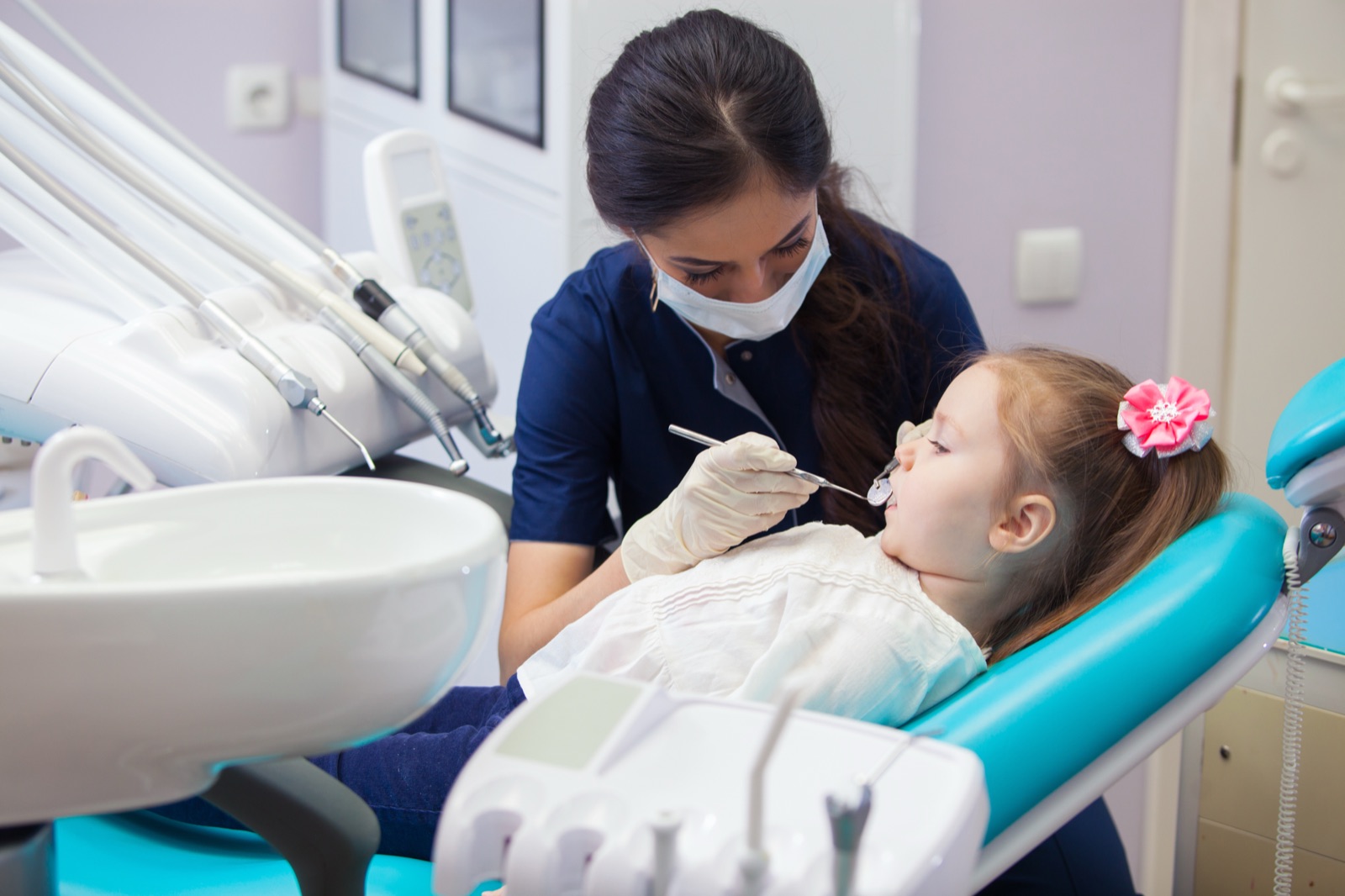
Chronic mouth breathing dries the mouth, and a dry mouth loses the saliva that buffers acid and washes the teeth. A 2026 systematic review of eleven studies found children who mouth-breathe had more gingival bleeding, more plaque, and more gingival change than children who do not.1 The effects on jaw and face shape are documented as an association but argued as a cause. The question worth answering first is not dental at all: a child who cannot breathe through their nose at night may have an airway problem, and the American Academy of Pediatrics asks that every child be screened for snoring.2 Treat the reason for the mouth breathing, not the mouth.
Key takeaways
- Dry mouth is the mechanism. Saliva buffers acid and clears debris, and a mouth held open overnight loses it for hours at a time.
- A 2026 systematic review of eleven studies found more gingival bleeding, plaque accumulation and gingival change in mouth-breathing children. For caries the evidence is more limited and confined to initial and advanced lesions.1
- The association between mouth breathing and a longer face shape is documented. Whether it causes that pattern is genuinely argued, and anyone selling you certainty is ahead of the evidence.
- The sleep question matters more than the dental one. Snoring, pauses, restless sleep or daytime tiredness needs assessing.
- The AAP asks that all children be screened for snoring, and recommends sleep study for a child who snores with other signs.2
- Do not use chin straps or anything that holds a child's mouth closed at night. If the airway is obstructed, mouth breathing is how they are getting air.
- Myofunctional therapy has reasonable evidence in adults and almost none in children: one pediatric trial, compliance under 50%, no improvement in apnea index, oxygen saturation or snoring.3
- Adenotonsillectomy is the AAP's first-line treatment where enlarged adenoids or tonsils are the cause.2
Does mouth breathing actually damage teeth?
The honest answer is that the gum evidence is stronger than the cavity evidence, and both are stronger than the face-shape evidence.
A 2026 systematic review searched five databases, screened 838 records and included eleven studies comparing children and adolescents who mouth-breathe with those who do not. Children who mouth-breathed had more gingival bleeding, more plaque accumulation and more gingival change. For dental caries, the association was narrower — limited evidence, confined to initial lesions and to the most advanced ones.1
So: gums first, cavities second, and the review's own conclusion is worded as might be associated rather than causes. All eleven studies were cross-sectional, which means they photograph a moment rather than follow children through time. That is the right level of confidence to hold this at — real enough to act on, not certain enough to be frightened by.
Dry mouth, cavities, and gums
The mechanism is simple enough to explain in a sentence: saliva protects teeth, and a mouth held open loses it.
Saliva buffers the acid that bacteria produce after eating, carries minerals back to the enamel surface, and physically washes food and plaque off the teeth. A child breathing through an open mouth for eight hours a night has air moving across the front teeth and the gums behind them for that whole stretch, and those are exactly the surfaces where the plaque and bleeding show up.
What it means practically is that the brushing matters more, not that the teeth are doomed. The last brush of the day is the one doing the work, because it is the one that has to hold overnight. If brushing is itself a battle, that is worth treating as its own problem — a child who resists having their mouth touched may be telling you something about texture rather than about cooperation.
Bite and jaw growth: what's established and what isn't
This is where a lot of what parents read online runs ahead of the evidence.
The association is not in dispute. A longer, narrower face with a high palate and a retruded chin has been described alongside long-term mouth breathing for more than a century, and it has a name in the older literature.
The causation is genuinely argued. Does open-mouth posture change how the face grows, or does a narrow airway produce both the mouth breathing and the face shape? Those two explanations predict the same photograph. Nobody is going to randomize children to years of mouth breathing to settle it, so the question stays open.
What that means for you: a longer face is a reason to have the airway looked at, not a prediction about how your child will look at twenty. Be wary of anyone who states the causal version as settled, particularly when they are also selling the treatment for it.
Where the jaw is concerned, where the tongue rests is part of the same picture — a tongue sitting low in the floor of the mouth is not pressing against the palate the way a tongue at rest normally does. Jaw symptoms themselves are a separate question, and jaw pain and clicking in children covers what needs an appointment. Oral development also runs alongside speech, which is why baby teeth and speech development keeps turning up in the same conversations.
The part that matters most: sleep
Of everything on this page, the consequence with the strongest evidence behind it is not dental at all. Chronic mouth breathing in a child is frequently a sign of obstructed breathing during sleep. Obstructive sleep apnea in children is common, treatable, and frequently missed — largely because it does not look like the adult version.
The American Academy of Pediatrics asks that all children be screened for snoring, and that a child who snores regularly and has any additional sign — laboring to breathe at night, pauses, restless sleep, daytime sleepiness, or behavior and attention problems — be evaluated further rather than watched. Where enlarged tonsils and adenoids are the cause in an otherwise healthy child, adenotonsillectomy is first-line treatment.2
The behavior point is the one that surprises parents, so it is worth saying plainly. A child sleeping badly through obstruction often presents as inattentive, irritable and hyperactive rather than tired — a picture easily attributed to temperament, to screens, or to something else entirely. Snoring most nights is worth mentioning to a pediatrician even when nothing else seems wrong.
Other night-time signs travel with it. Drooling on the pillow follows from a mouth that stays open. So does waking with a dry mouth or bad breath, sleeping in unusual positions with the neck extended, and sweating heavily at night. Sleep problems in children covers what else can be going on.
Why is my child mouth breathing?
Almost always because something is making nose breathing harder, not because of a habit that formed for no reason. That distinction matters, because it points the treatment at the obstruction rather than at the child.
Allergies and nasal congestion. The most common reason by a wide margin. Blocked passages from allergic rhinitis, a cold, or sinus inflammation leave the mouth as the only available route, and allergy in particular is easy to miss because it is constant rather than acute.
Enlarged tonsils or adenoids. The cause with the clearest treatment path, and the one most closely tied to sleep apnea. Adenoids sit behind the nose where you cannot see them, so a child can have substantially blocked nasal breathing with tonsils that look unremarkable.
Structural differences. A deviated septum, a narrow palate, or a restriction under the tongue. On the last one, keep the base rate in mind: tongue ties are diagnosed considerably more often than they need treating.
Chronic respiratory conditions. Asthma and chronic sinusitis both push breathing toward the mouth.
For what normal nasal breathing is supposed to look like as a child grows, how nasal breathing develops covers the timeline.
What to do first
In order, because the order is the useful part.
- Watch the nights for a week. Snoring, pauses, gasping, restlessness, unusual sleeping positions, sweating, and how they are in the morning. A short phone video of your child asleep is more use to a clinician than any description you can give.
- Take it to the pediatrician, and lead with the sleep. Not with the teeth. Snoring most nights is the sentence that starts the right conversation, and the AAP guideline gives your pediatrician a clear next step from there.2
- Treat the congestion if that is what it is. Allergic rhinitis has good treatments, and clearing the nose is what allows nose breathing to resume. This is your pediatrician's call, not a supplement aisle decision.
- Tighten up the brushing in the meantime. Particularly the last one of the day, and particularly along the gum line behind the upper front teeth, which is where the drying does its work.
- Mention it at the next dental visit. A pediatric dentist sees the consequences early and can flag a palate or bite developing in a way that is worth watching.
What not to do: do not use a chin strap, mouth tape, or anything else that holds a child's mouth closed at night. If your child is mouth breathing because their airway is partly obstructed, the open mouth is how they are getting air. Closing it does not treat the obstruction — it removes the compensation for it. There is no evidence supporting these devices in children, and the page you are reading has just told you that undiagnosed sleep apnea is the thing most worth ruling out. Find out why the nose is blocked first.
What a dentist can and can't fix
Can. Catch and treat the cavities and gum inflammation that dry mouth contributes to. Monitor how the palate and bite are developing over years, which is something only someone seeing your child repeatedly can do. Apply fluoride varnish and sealants where the caries risk is raised. Spot a restriction under the tongue. And refer onward — a pediatric dentist is often the first clinician to say the word adenoids to a parent.
Can't. Open a blocked nose. Orthodontic expansion changes the shape of the palate, and there are real orthodontic reasons to do it, but it is not a treatment for obstructed nasal breathing and should not be sold to you as one.
Myofunctional therapy is worth a specific paragraph, because it is offered frequently and the evidence is not what it is usually presented as. A 2024 systematic review and meta-analysis of orofacial myofunctional therapy for obstructive sleep apnea screened 1,244 abstracts and included seven randomized trials covering 310 patients. In adults, it produced a significant reduction in the apnea-hypopnea index. In children, there was a single pediatric randomized trial — compliance was under 50%, and those patients showed no improvement in apnea-hypopnea index, minimum oxygen saturation, or snoring frequency. The review's conclusion is that benefits appear limited in children, due to poor compliance.3
That is not a reason to refuse it. It is a reason to know what you are buying: an intervention with reasonable adult evidence, one negative pediatric trial, and a compliance problem that is the likeliest reason it failed. It is not a substitute for finding out why the nose is blocked.
When to see an ENT, and what they look for
Ask for an ENT referral when the nose stays blocked after allergy treatment, when snoring comes with pauses or with daytime behavior changes, when your child's speech sounds persistently nasal or blocked, or when a pediatrician or dentist has raised the tonsils or adenoids.
What happens there is less dramatic than parents expect. An ENT looks at the tonsils, examines the nasal passages, and where the adenoids need seeing uses a thin flexible scope through the nose, which takes seconds and is uncomfortable rather than painful. If sleep apnea is suspected, the next step is a sleep study rather than straight to surgery — the AAP guideline is explicit that a child who snores with other signs should be evaluated with polysomnography where it is available.2
Where adenotonsillar hypertrophy is confirmed as the cause, adenotonsillectomy is the recommended first-line treatment, and it is one of the more reliably effective operations in pediatrics.2 It is still surgery, and it is still a conversation to have properly — but the alternative on the table is untreated obstructed breathing every night, which is not a neutral option.
Frequently asked questions
Can mouth breathing damage my child's teeth?
The gum evidence is stronger than the cavity evidence. A 2026 systematic review of eleven studies found children who mouth-breathe had more gingival bleeding, more plaque and more gingival change. For cavities the association was more limited, confined to initial and advanced lesions.
Why does mouth breathing cause cavities?
Through dry mouth. Saliva buffers acid, returns minerals to the enamel and washes plaque off the teeth, and a mouth held open overnight loses it for hours at a stretch. The surfaces that dry out most are the front teeth and the gums behind them.
Can mouth breathing change my child's face shape?
A longer, narrower face is well documented alongside long-term mouth breathing. Whether the mouth breathing causes it, or a narrow airway produces both, is genuinely argued. Treat it as a reason to have the airway assessed rather than a prediction.
Should I use a chin strap or tape my child's mouth at night?
No. If a child mouth-breathes because the airway is partly obstructed, the open mouth is how they are getting air, and closing it removes the compensation rather than treating the cause. There is no evidence for these devices in children.
Is my child's mouth breathing a sign of sleep apnea?
It can be, and that is the possibility most worth ruling out. The American Academy of Pediatrics asks that all children be screened for snoring, and that a child who snores with any additional sign be evaluated further rather than watched.
What are the signs of sleep apnea in a child?
Snoring most nights, pauses or gasping, labored breathing, restless sleep, unusual sleeping positions, night sweats, and daytime sleepiness. Inattention, irritability and hyperactivity are also common presentations, which is why it is often missed.
Why is my child breathing through their mouth?
Usually because something makes nose breathing harder: allergies or nasal congestion, enlarged tonsils or adenoids, a structural difference like a deviated septum or narrow palate, or a chronic condition such as asthma.
Does myofunctional therapy work for children?
The evidence in children is thin. A 2024 meta-analysis of seven trials found significant benefit in adults, but the single pediatric trial had under 50% compliance and showed no improvement in apnea index, oxygen saturation or snoring.
Will braces or palate expansion fix mouth breathing?
No. There are real orthodontic reasons to expand a narrow palate, but it is not a treatment for obstructed nasal breathing and should not be offered to you as one. The blockage needs finding first.
When should I see an ENT about my child's mouth breathing?
When the nose stays blocked despite allergy treatment, when snoring comes with pauses or daytime behavior changes, when speech sounds persistently blocked, or when a pediatrician or dentist has raised the tonsils or adenoids.
Will my child grow out of mouth breathing?
Sometimes, if the cause resolves on its own — adenoids shrink through later childhood, and a seasonal allergy passes. But mouth breathing most nights for months is worth investigating rather than waiting out, because the common causes are treatable.
Does mouth breathing cause bad breath in children?
Frequently, yes. The same dryness that reduces the protective effect of saliva also allows the bacteria responsible for morning breath to build up overnight, which is why it is usually worst on waking.
Sources
- Kimura ACRS, de Arruda JAA, Drumond VZ, Martins-Júnior PA, Mesquita RA, Abreu LG. Dental Caries and Periodontal Outcomes in Mouth-Breathing Children and Adolescents: A Systematic Review. International Journal of Paediatric Dentistry. 2026;36(1):24–32. Five databases searched, 838 records screened, eleven cross-sectional studies included (PROSPERO CRD42024536891). Children who mouth-breathed showed increased gingival bleeding, plaque accumulation and gingival alterations; caries associations were limited and confined to initial lesions and ICDAS scores 5 and 6. doi:10.1111/ipd.70022 (PMID 40739849)
- Marcus CL, Brooks LJ, Draper KA, et al. Diagnosis and Management of Childhood Obstructive Sleep Apnea Syndrome. Pediatrics. 2012;130(3):576–584. The American Academy of Pediatrics clinical practice guideline: screen all children for snoring, evaluate further where snoring is accompanied by other signs, and adenotonsillectomy as first-line treatment in otherwise healthy children with adenotonsillar hypertrophy. doi:10.1542/peds.2012-1671 (PMID 22926173)
- Saba ES, Kim H, Huynh P, Jiang N. Orofacial Myofunctional Therapy for Obstructive Sleep Apnea: A Systematic Review and Meta-Analysis. The Laryngoscope. 2024;134(1):480–495. 1,244 abstracts screened, seven randomized trials covering 310 patients. Adults showed significant improvement in apnea-hypopnea index. Within the single trial featuring pediatric patients, compliance was under 50% and there was no improvement in apnea-hypopnea index, minimum oxygen saturation, or snoring frequency; the review concludes that benefits appear limited in children due to poor compliance. doi:10.1002/lary.30974 (PMID 37606313)
Medical disclaimer. This page is for general educational purposes and does not constitute medical advice, diagnosis, or treatment.