
Dental and oral development
TMJ in Children: Signs, What's Normal, and When to Act
Jaw problems do happen in children. Most of what parents notice needs nothing, and the treatments that cannot be undone are the ones to be slowest about.
- Expert Reviewed
- Plain Language
- Patient Focused
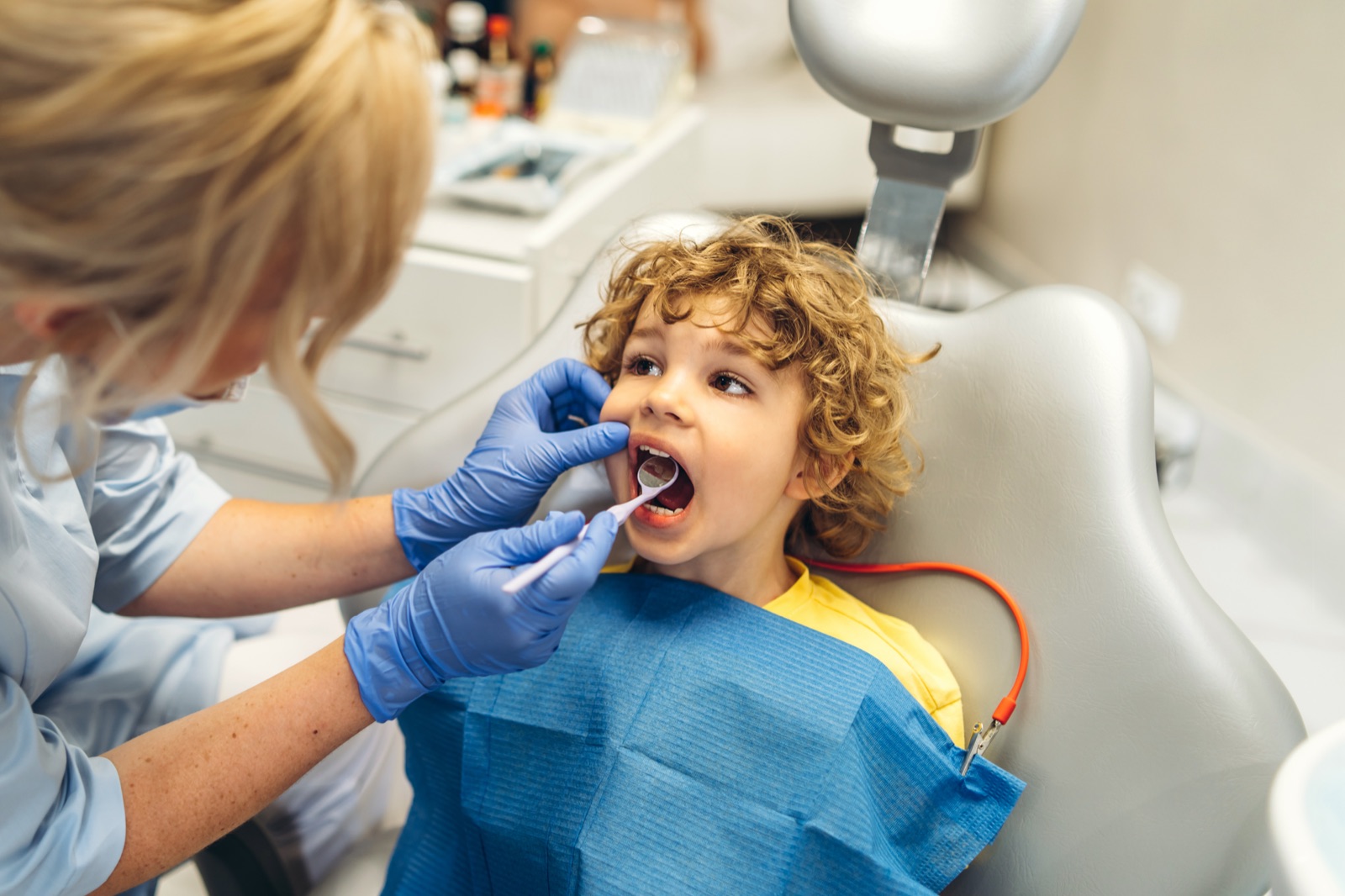
Yes, jaw joint problems occur in children, and more often than most parents expect — a systematic review found prevalence between ages 10 and 19 ranging from 7.3% to 30.4%.3 But most of what parents notice needs nothing. A painless click on its own is common and usually requires no treatment. What is worth an appointment is pain, restricted opening, a jaw that locks, or a change in how the teeth meet — particularly after a knock to the face. Most childhood jaw symptoms settle with simple, reversible measures, and irreversible treatment is not first-line in a growing child.
Key takeaways
- Jaw joint problems do occur in children. Reported prevalence between ages 10 and 19 ranges from 7.3% to 30.4%, depending on how it is measured.3
- A click with no pain and no restriction is common and usually needs nothing at all.
- Pain, a jaw that locks or will not open fully, or a change in how the teeth meet is worth an appointment.
- After a knock to the face, any new jaw symptom should be looked at rather than watched.
- Most childhood jaw symptoms settle with simple, reversible measures: softer food for a while, heat, rest, and reducing clenching.
- Irreversible treatment — adjusting the bite, orthodontics done to treat jaw symptoms, surgery — is not first-line in a growing child.
- The evidence base in this age group is thin enough that no treatment guidelines for adolescents can currently be drawn.3
Can TMJ problems start in childhood?
They can, and the numbers are higher than most parents assume. A systematic review of temporomandibular disorders in children and adolescents screened 2,293 articles and included eight. Across the six that measured prevalence, the figure between ages 10 and 19 ranged from 7.3% to 30.4%, with myofascial pain and anterior disc displacement with reduction the most common diagnoses.3
That range is wide because studies define and measure the condition differently, which is itself the point: this is a common thing that is hard to pin down, not a rare thing that is being over-diagnosed.
What follows from it is not alarm. Most children in those figures have symptoms that need no treatment.
What is the TMJ, and what goes wrong with it?
The temporomandibular joint is the hinge in front of each ear where the lower jaw meets the skull. It is unusual among joints: there are two of them, they have to move together, and between the bones sits a small disc that slides as the jaw opens.
Most problems are one of three things. The muscles that work the jaw become painful or tight. The disc slips forward and catches as the jaw opens, which is what produces a click. Or, less often, the joint surfaces themselves are affected.
The jaw is also still growing, and it grows in response to how it is used — which is why how the jaw grows sits behind several of the causes further down this page.
What does it look like in a child?
Children rarely announce jaw pain. They change what they eat, chew on one side, or become difficult at mealtimes, and the jaw is the last thing anyone thinks of.
What to watch for: clicking or popping when opening or chewing · rubbing the jaw or the side of the face · chewing consistently on one side · avoiding food that needs work — crusts, apples, chewy sweets · headaches around the temples · earache with no infection · a jaw that feels tired.
A child who will not say it hurts may show you instead, and a sudden change in what a child will eat is worth taking as information. Where the difficulty is with texture rather than effort, refusing chewy foods may be a sensory story rather than a jaw one, and the two are worth telling apart. Night-time signs matter too — drooling on the pillow can accompany an open-mouth posture that loads the jaw.
What's normal and needs nothing?
A click on its own, with no pain and no restriction, is common. It usually means the disc is moving slightly out of position and back again, and in a child with no other symptom it typically requires no treatment and often settles on its own.
Jaws are also noisy in general. A joint that clicks once on wide opening, or occasionally in the morning, is not the same as a joint that catches every time.
What needs an appointment?
| Common, usually nothing | Worth an appointment |
|---|---|
| A click with no pain and no restriction | Pain in the jaw, face or in front of the ear |
| An occasional noise on wide opening or first thing | A jaw that locks, catches, or will not open fully |
| Chewing on one side out of habit | Chewing on one side because the other hurts |
| Mild jaw tiredness after a long chewy meal | A change in how the teeth meet |
| Grinding noises at night in a child with no pain | Any new jaw symptom after a knock to the face |
| Symptoms that come and go over days | Symptoms that are getting worse over weeks, or waking them |
What causes jaw problems in children?
Usually more than one thing at once, which is why a single cause is rarely found and rarely needs to be.
Muscle overuse. Clenching and grinding load the jaw muscles, often at night and often in a child who has no idea they are doing it. Daytime clenching is easier to notice and easier to interrupt.
Breathing and posture. A child who breathes through the mouth holds the jaw open and the tongue low, and over years that changes how the jaw is loaded. Mouth breathing and jaw posture covers the mechanism.
Structure. A restriction under the tongue can limit movement and change how the jaw works — hidden oral restrictions are frequently missed. And how the teeth meet influences the load through the joint, although the relationship is weaker than it is often presented as.
Injury. A knock to the chin transmits force straight into both joints, and the symptom can appear later than the incident.
Stress. Clenching rises with it, in children as in adults.
What helps at home?
Most childhood jaw symptoms settle with simple, reversible measures, and these are the ones to try first because none of them can make anything worse. That is also the National Institute of Dental and Craniofacial Research's position for temporomandibular disorders generally: most people's symptoms improve with simple, reversible care.1
Soften the diet for a week or two — not forever, just while it settles. Cut the things that make the jaw work hardest: gum, chewy sweets, hard crusts, big bites. Warmth over the muscle for ten minutes helps most children more than cold. And notice when the teeth are touching during the day: lips together, teeth apart is the resting position, and simply catching yourself is most of the treatment for daytime clenching.
If pain relief is needed, use what you would use for any other ache, at the usual dose for your child's weight, and stop when it settles.
What will a dentist or specialist do?
Listen first. Most of the diagnosis is the history: what it does, when, for how long, and what makes it worse.
The examination is hands and ears rather than machinery: feeling the joints and muscles, measuring how far the jaw opens, listening to the joint through the movement, and checking how the teeth come together. Imaging is not routine and is used when something specific needs answering. The internationally used diagnostic criteria are built around exactly this kind of structured examination.2
If your child finds appointments difficult, preparing for a dental visit is worth doing before the one where something needs looking at — and the routine visits that start in the first years are where a jaw problem is usually picked up first. Jaw development sits alongside the rest of oral development, and a dentist will often be looking at more than the joint.
For the treatment options in full, the jaw clicking and TMJ guide goes further than this page does.
Why irreversible treatment isn't first-line
There are no evidence-based treatment guidelines for children and adolescents with TMD, and that is a finding rather than an omission. The systematic review that produced the prevalence figures above screened 2,293 articles and found only two concerned with treatment in adolescents aged 12 to 18. Its conclusion is that the general absence of standardized studies means it is not possible to arrive at evidence-based treatment strategies or guidelines for this age group.3
What those two studies did find is worth knowing if you have just been offered a splint: a stabilizing occlusal appliance produced better outcomes than relaxation therapy or brief information.3 So the evidence is not that nothing works. It is that there is very little of it, and what exists points toward the reversible option.
That is the argument for being slow about anything that cannot be undone. Adjusting the bite by grinding tooth surfaces, orthodontics undertaken specifically to treat jaw symptoms, and surgery all change a jaw that is still growing, on the strength of an evidence base that cannot yet support guidelines.
Reversible measures come first, are given time, and are reviewed. If a clinician proposes something permanent for jaw symptoms in a child, it is entirely reasonable to ask what will happen if you wait, and what the evidence is for doing it now.
Frequently asked questions
Can kids get TMJ?
Yes. A systematic review found prevalence between ages 10 and 19 ranging from 7.3% to 30.4%, with myofascial pain and disc displacement the most common diagnoses. Most of it needs no treatment.
Is jaw clicking normal in children?
A click on its own, with no pain and no restriction, is common and usually needs nothing. It often settles by itself. A click that comes with pain, locking, or a jaw that will not open fully is different.
When should I worry about my child's jaw clicking?
When there is pain, when the jaw locks or will not open fully, when the teeth meet differently, or when it follows a knock to the face. Also when it is getting worse over weeks rather than coming and going.
Can chewing gum make TMJ worse?
Heavy gum chewing loads the jaw muscles and is worth cutting back during a flare-up. There is no good evidence that it causes a jaw problem in a child who does not already have one.
Is teeth grinding always a sign of TMJ?
No. Grinding is common in children and often outgrown. A dentist decides whether a guard is warranted after examining your child — a guard is a device fitted for a reason, not a default response to a noise at night.
Why does my child chew on one side?
Often habit, and nothing. It is worth asking about if it is new, if they avoid the other side, or if it comes with any pain — chewing on one side to avoid the other is a symptom rather than a preference.
Can TMJ cause headaches in children?
It can. Jaw muscle pain frequently refers to the temples, and a headache pattern that tracks with chewing, waking, or a stressful week is worth mentioning to a dentist.
Does my child need braces for TMJ?
Orthodontics undertaken specifically to treat jaw symptoms is not first-line in a growing child. The evidence in this age group cannot currently support treatment guidelines, which is an argument for reversible measures first.
What does a pediatric dentist do for TMJ?
Takes a history, feels the joints and muscles, measures how far the jaw opens, listens through the movement, and checks how the teeth meet. Imaging is not routine. Most children are given reversible measures and reviewed.
Can TMJ cause ear pain with no infection?
Yes. The joint sits directly in front of the ear canal, and jaw problems are a recognized cause of ear pain in a child whose ears examine normally.
Should my child stop eating chewy foods?
For a week or two during a flare-up, yes — then back to normal. A permanently soft diet is not the goal, and a jaw that is never used does not get stronger.
When should I worry after a knock to the jaw?
Any new jaw symptom after a blow to the face should be looked at rather than watched, including one that appears days later. Force through the chin transmits into both joints.
Sources
- National Institute of Dental and Craniofacial Research. TMD (Temporomandibular Disorders). Describes the joint, the three broad categories of disorder, and the position that most people's symptoms improve with simple, reversible care. nidcr.nih.gov. Re-checked September 13, 2026.
- Schiffman E, Ohrbach R, Truelove E, et al. Diagnostic Criteria for Temporomandibular Disorders (DC/TMD) for Clinical and Research Applications. Journal of Oral & Facial Pain and Headache. 2014;28(1):6–27. The internationally used criteria, built on a structured clinical examination rather than imaging. doi:10.11607/jop.1151
- Christidis N, Lindström Ndanshau E, Sandberg A, Tsilingaridis G. Prevalence and treatment strategies regarding temporomandibular disorders in children and adolescents — a systematic review. Journal of Oral Rehabilitation. 2019;46(3):291–301. 2,293 articles screened, eight included — six on prevalence, two on treatment. Prevalence ages 10–19 7.3% to 30.4%; most common diagnoses myofascial pain and anterior disc displacement with reduction. Only two articles addressed treatment in adolescents, in which a stabilizing occlusal appliance outperformed relaxation therapy or brief information. Concludes that “it is not possible to achieve any evidence-based treatment strategies or guidelines for children and adolescents with TMD.” doi:10.1111/joor.12759 (PMID 30586192)
Medical disclaimer. This page is for general educational purposes and does not constitute medical advice, diagnosis, or treatment.