
Behavior and emotions
Does Mindfulness Help Children? What the Evidence Actually Shows
Small, real effects for some things. None for others. And a preschooler who says “I’m a bad kid” needs something before a breathing exercise.
- Plain Language
- Patient Focused
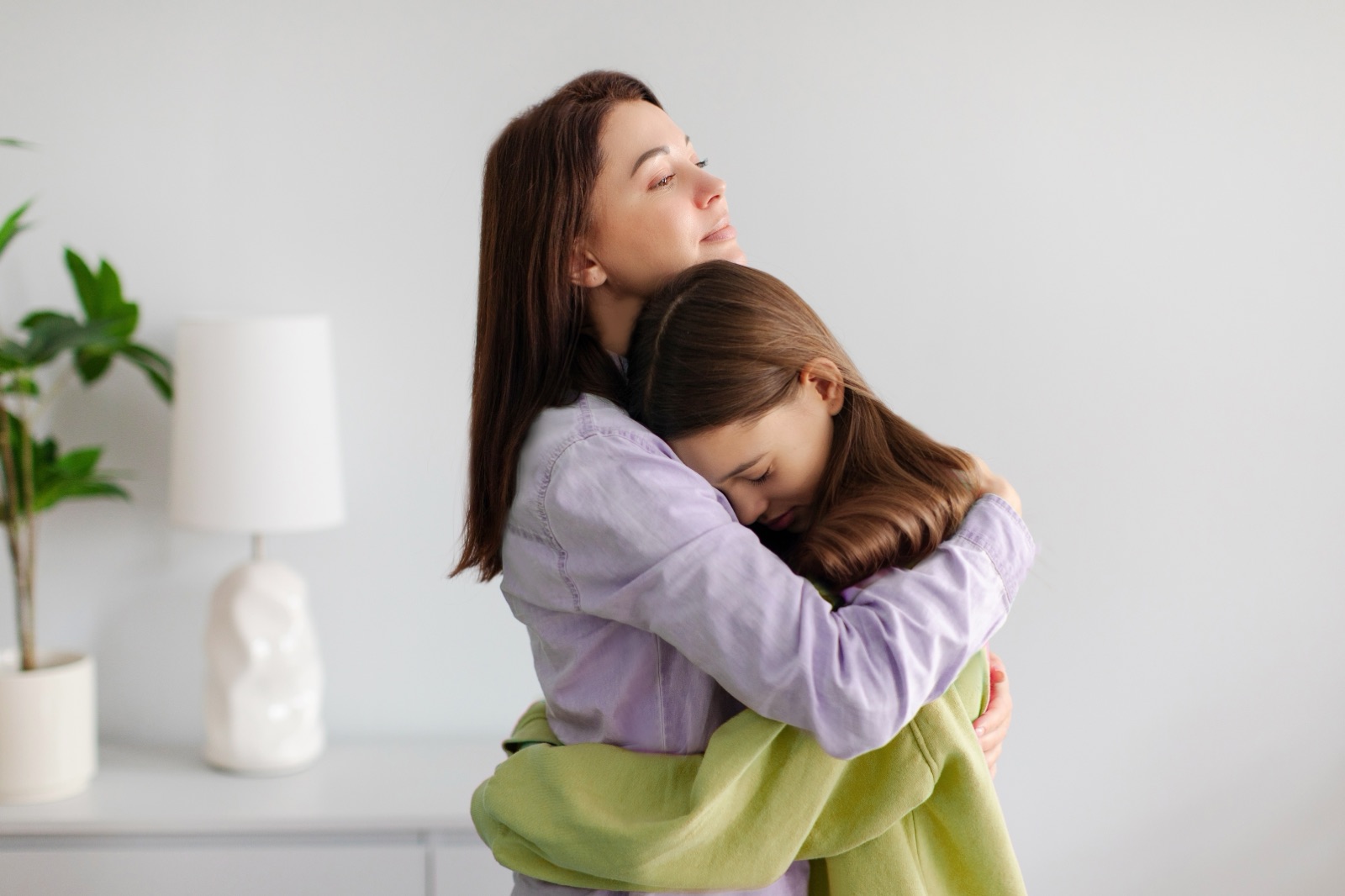
Mindfulness-based programs produce small but measurable improvements in children’s anxiety, depression, and attention — effect sizes around 0.2 to 0.3 in a meta-analysis of randomized trials — and the effects on anxiety and depression hold up even against active comparison groups.1 The largest school-based trial, however, found no benefit on average, and the students who were already struggling were the ones least drawn to it.2,3 The honest reading: mindfulness is a reasonable, low-cost addition for a child who is occasionally overwhelmed, done with a parent, in short doses. It is not a treatment for a child who is regularly overwhelmed, and it isn’t what helps a young child stop calling themselves bad. That comes from the adult naming the feeling and separating it from the child.
Key takeaways
- A preschooler who says “I hate myself” after a hard day usually means “I hate how I feel.” Young children haven’t yet separated feelings from identity; that separation is something adults teach.
- Mindfulness has small, real effects on children’s anxiety, depression, and attention in randomized trials.
- Delivered as a universal school program by trained teachers, it did not improve mental health on average — and the students at highest risk were the least responsive to it.
- What helps a regularly overwhelmed child more: fewer triggers, a place to recover, and an adult who coaches the feeling rather than the behavior.
- With a preschooler, mindfulness means a few breaths, a body check, or naming three good things — two minutes, with you, at a calm moment. Not an app at bedtime.
- No app, device, or book has evidence of its own. The evidence is for the practice; a product is a delivery method.
- A child who says they hate themselves persistently, or talks about not wanting to be here, needs a professional, not a meditation.
Why does a young child say “I’m a bad kid”?
Because they’ve had a bad feeling and don’t yet have a way to hold the two apart. A four-year-old who melted down at preschool, was told off, and came home in tears has a strong internal state — overwhelmed, ashamed, exhausted — and a very simple model of the self. “I feel bad” becomes “I am bad.” The words are alarming to hear; what they usually describe is a child who hates the feeling and hasn’t been taught that feelings pass and people stay.
The separating sentence is the intervention, and it is short: You’re not bad. You had a hard afternoon, that feeling is awful, and it passes. Said calmly, said often, said without arguing the child out of the feeling first. A child who hears it enough starts saying it to themselves, which is the point.
Does mindfulness help children?
Modestly, and more so for some things than others — which is worth knowing before spending anything on it.
A meta-analysis of 33 randomized trials covering 3,666 children and adolescents found significant benefits for mindfulness, executive function, attention, depression, anxiety and stress, and negative behaviors, with small effect sizes in the range of 0.16 to 0.30. When the comparison was restricted to the 17 trials with an active control — children doing something else structured rather than nothing — the benefits held only for mindfulness itself, depression, and anxiety and stress.1
| Outcome | All trials | Active-control trials only |
|---|---|---|
| Mindfulness | Small, significant | Held |
| Depression | Small, significant | Held |
| Anxiety and stress | Small, significant | Held |
| Attention | Small, significant | Not significant |
| Executive function | Small, significant | Not significant |
| Negative behavior | Small, significant | Not significant |
Read the right-hand column first. Where an effect survives comparison with children who were given something else to do, the practice is doing the work. Where it doesn’t, the benefit may be the attention, the novelty, or the break — which are worth having, and are not specific to mindfulness.
Small and real is a reasonable thing to add to a child’s week. It is not a reason to expect a program to change a child’s day, and it is a good argument for the free version.
What happened when schools tried it?
The largest trial to date is instructive. A UK cluster-randomized trial, MYRIAD, delivered a school-based mindfulness curriculum to 8,376 students aged 11 to 14 across 85 schools through trained classroom teachers, compared with the schools’ usual social and emotional teaching. At one year there was no difference in the primary outcomes — risk of depression, social-emotional-behavioral functioning, wellbeing. No harms were recorded: the trial reports that no intervention-related adverse events were observed.2
What went wrong is visible in the companion analysis of how students actually engaged with it. Across the whole intervention, students practiced outside class an average of once. Their own ratings of how interested they were landed in the middle of the scale. And the students at high risk of mental health problems — the ones a prevention program is aimed at — were less responsive to it than their classmates, not more.3
What that means for a parent: a mindfulness program imposed on a group, delivered by non-specialists, that the child doesn’t choose and doesn’t practice, doesn’t do much — and the child who most needs help is the least likely to take it up. That is a different thing from a parent and a young child doing two minutes of breathing together because the child likes it.
What helps more than mindfulness alone?
For a child who is regularly overwhelmed, in rough order:
- Fewer triggers. If preschool is the problem — a loud room, unwanted touch, an inexperienced teacher — the fix is a conversation with the school about the environment, not a coping skill for the child. Preferential seating, a quieter space, and a teacher who knows what’s happening are the first intervention.
- A place to recover. A calm-down corner at home and, if the school will allow it, at school. A child who can leave the overwhelm before it peaks needs fewer tools for after.
- An adult who coaches the feeling. Emotion coaching — noticing the feeling, naming it, accepting it, then helping with what to do — is teachable to parents. In a randomized trial of 216 parents of four- and five-year-olds, a six-session group program improved parents’ emotion coaching, improved children’s emotional knowledge, and reduced child behavior problems.4 “You’re frustrated. That’s okay. Let’s figure out what to do” is the whole method.
- The evening ritual. Naming three good things from the day, at bedtime, with a parent. Costs nothing.
- Then mindfulness. As a skill the child learns when calm, for use when not.
If none of that is enough, the in-the-moment guide and an occupational therapist who can assess the sensory side are next.
How do I do mindfulness with a preschooler?
Short, physical, and together. A preschooler can’t follow a ten-minute guided meditation and shouldn’t be expected to.
- Three breaths with a hand on the belly. Yours and theirs. Feel it go up and down. That’s the whole exercise.
- The body check. “Where in your body is the wiggly feeling?” Point to it. Squeeze it, then let it go.
- Five senses. One thing you can see, hear, touch, smell, taste. Turns attention outward, which is what an overwhelmed child needs.
- Three good things. At bedtime. Yours too.
- The child holds the timer. A one-minute sand timer the child turns over gives them control of when it starts and ends, which matters more than the technique.
Do it when the child is calm, so the skill exists before it’s needed. Practicing mid-meltdown teaches nothing. And keep it optional: a child who is told to breathe learns that breathing is a punishment.
Do meditation apps, devices, and books help?
There’s no evidence for any specific product. The trials are of practices — breathing, body awareness, attention exercises — delivered by people. An app, a screen-free audio device, or a picture book is a way to deliver a practice, and some children take to a particular one. That’s fine, and it’s worth knowing that a device’s testimonials aren’t evidence and that the practice works as well without the device as with it.
Two practical cautions. Screens at bedtime work against sleep, which undermines everything else, so a screen-free format is preferable for evening use. And “self-affirmation” tracks that tell a child they’re good are not a substitute for a parent saying it, which is the version children believe.
An earlier version of this page named specific products. They have been removed, because there is no evidence for them individually and this is not the part of the site where products belong.
When is “I hate myself” a reason to get help?
Occasional self-critical statements after a hard day are common in young children and respond to the coaching above. Get help when:
- The statements are frequent, persist for weeks, or appear on ordinary days.
- The child says they want to disappear, not be here, or hurt themselves. In that case, at any age, call or text 988 and talk to your pediatrician the same day.
- The child is withdrawing from play, friends, or food.
- Overwhelm is daily and the environment fixes haven’t helped — that is an occupational therapy evaluation for the sensory side and a conversation with the pediatrician about the emotional side.
A child psychologist or licensed counselor can work with a young child on emotion regulation, and with the parents on coaching. That is treatment. Mindfulness is a skill. The rest of what sits underneath a hard year — anxiety, low mood, the behavior that follows both — is covered across behavior and emotions.
Frequently asked questions
Does mindfulness help kids with anxiety?
Yes, modestly. A meta-analysis of randomized trials shows small effects on anxiety and depression that hold up against active comparison groups — children doing something else structured rather than nothing. It is an addition, not a treatment.
Does mindfulness help kids with ADHD or attention?
The attention and executive-function effects found in some trials disappear when the comparison is an active control. Don’t count on mindfulness for attention.
Is mindfulness safe for children?
Yes, in short, voluntary, parent-led doses. The largest school trial recorded no intervention-related adverse events. It also found the students at highest risk of mental health problems were the least responsive to it, so it is not a substitute for treatment in a struggling child.
Why does my preschooler say “I’m a bad kid”?
They’ve had a bad feeling and can’t yet separate it from who they are. Say the separating sentence for them, calmly and often: “You’re not bad. You had a hard afternoon and that feeling is awful and it passes.”
How long should mindfulness be for a 4-year-old?
One to three minutes, together, at a calm time. A few breaths with a hand on the belly, a body check, or three good things at bedtime.
Do meditation apps work for kids?
No specific app has evidence of its own. The practices do; an app is a delivery method. Use a screen-free format at bedtime, since screens work against sleep.
Should my child do mindfulness at school?
If they choose to and enjoy it, fine. The largest school program trial found no average benefit at one year, so don’t expect a school program to do the work.
What’s better than mindfulness for an overwhelmed child?
Fewer triggers, a place to recover, and an adult who coaches feelings. Mindfulness comes after those three, not instead of them.
When should I worry about a child saying they hate themselves?
When it is frequent, persists for weeks, appears without a trigger, or includes wanting to disappear or be hurt. Then it is a call to your pediatrician and, if there is any mention of self-harm, 988.
Can mindfulness replace therapy?
No. It is a skill with small effects. A child who is regularly overwhelmed or persistently self-critical needs an evaluation.
Sources
- Dunning DL, Griffiths K, Kuyken W, et al. Research Review: The effects of mindfulness-based interventions on cognition and mental health in children and adolescents — a meta-analysis of randomized controlled trials. Journal of Child Psychology and Psychiatry. 2019;60(3):244–258. 33 studies, 3,666 participants; small effect sizes of 0.16 to 0.30 across outcomes. Against active controls (17 studies, 1,762 participants), benefits were restricted to mindfulness, depression, and anxiety and stress. doi:10.1111/jcpp.12980
- Kuyken W, Ball S, Crane C, et al. Effectiveness and cost-effectiveness of universal school-based mindfulness training compared with normal school provision in reducing risk of mental health problems and improving wellbeing in adolescence: the MYRIAD cluster randomised controlled trial. Evidence-Based Mental Health. 2022;25(3):99–109. 85 schools, 8,376 students aged 11 to 14; no evidence that school-based mindfulness training was superior to teaching as usual at one year, and no intervention-related adverse events observed. doi:10.1136/ebmental-2021-300396
- Montero-Marin J, Hinze V, Crane C, et al. Do Adolescents Like School-Based Mindfulness Training? Predictors of Mindfulness Practice and Responsiveness in the MYRIAD Trial. Journal of the American Academy of Child and Adolescent Psychiatry. 2023;62(11):1256–1269. Across 4,232 students, out-of-school practice averaged 1.16 sessions over the whole intervention, and high risk of mental health problems was associated with lower responsiveness. doi:10.1016/j.jaac.2023.02.016
- Havighurst SS, Wilson KR, Harley AE, Prior MR, Kehoe C. Tuning in to Kids: improving emotion socialization practices in parents of preschool children — findings from a community trial. Journal of Child Psychology and Psychiatry. 2010;51(12):1342–1350. 216 parents of children aged 4.0 to 5.11 randomized to a six-session group program or waitlist; increases in parents’ emotion coaching, improved child emotional knowledge, and reductions in child behavior problems. doi:10.1111/j.1469-7610.2010.02303.x
Medical disclaimer. This page is for general educational purposes and does not constitute medical advice, diagnosis, or treatment. If your child talks about not wanting to be alive or about hurting themselves, call or text 988.