
Dental and oral development
The Importance of Brushing Teeth Starting at a Very Young Age
Discover why starting dental hygiene early is crucial for your child's oral health and development. Learn tips for building a brushing routine from a young age.
- Expert Reviewed
- Plain Language
- Patient Focused
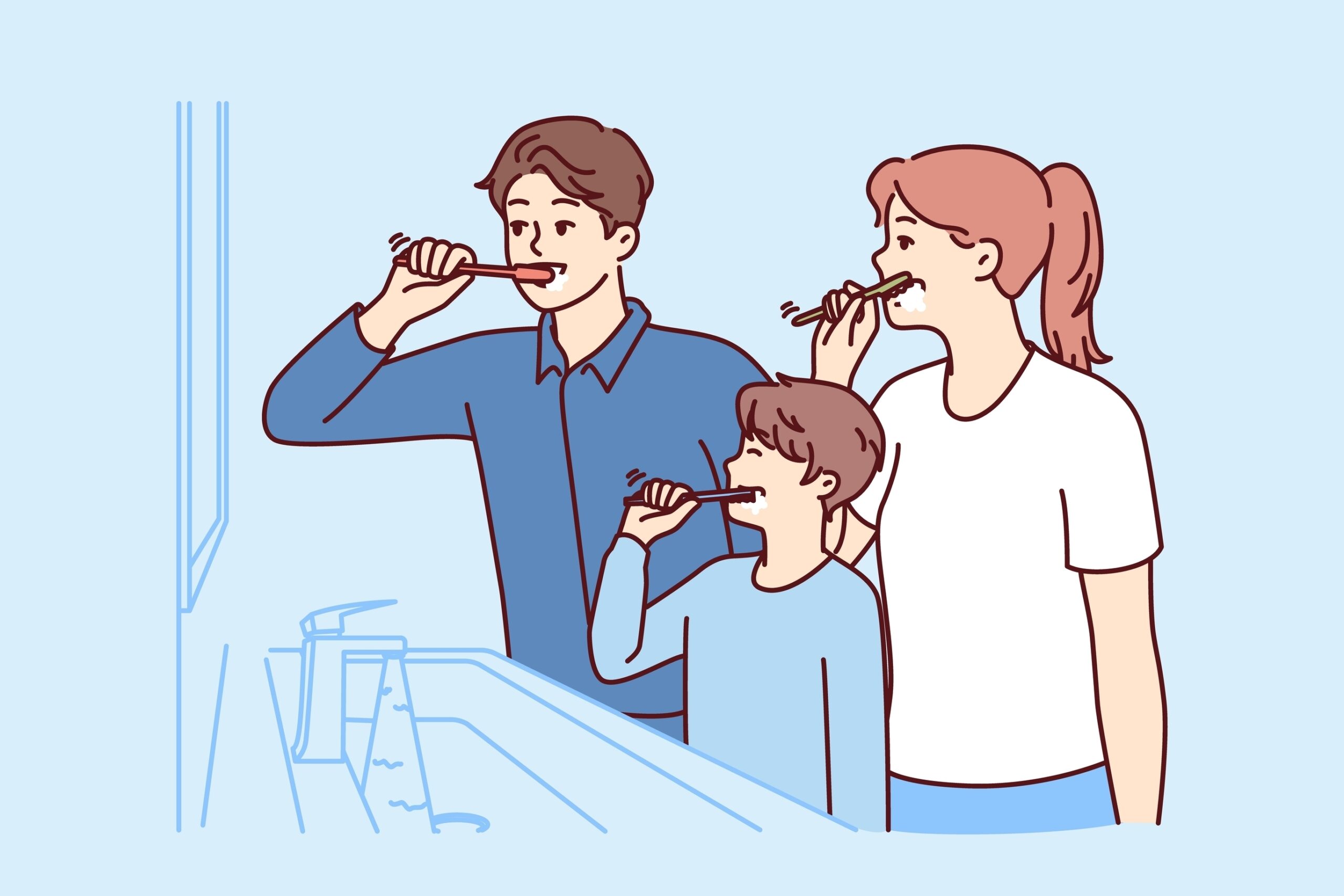
Dental health is an important part of overall health, and establishing good oral hygiene habits from an early age is essential. As parents and caregivers, we are responsible for teaching our children the importance of brushing teeth, setting the foundation for a lifetime of healthy smiles. Experts agree that good dental care can prevent a host of issues, from cavities to gum disease, reducing the risk of systemic health problems associated with poor oral hygiene.

What the Dental Guidelines Actually Say About Brushing, Fluoride, and First Visits
Four things on this page come from published guidance rather than custom, and they are worth stating exactly, because each of them is commonly repeated in a slightly wrong form.
- Start before there are teeth. Wipe the gums with a soft cloth or infant brush and water from birth. Brushing proper begins with the first tooth.
- Fluoride toothpaste from the first tooth, in the right amount.2 A tiny smear, about the size of a grain of rice, twice a day for infants and toddlers; a pea-sized amount from about age three. The amount is the part people get wrong in both directions.
- The first dental visit is at the first tooth, or the first birthday, whichever comes first. Not at six months, which is simply when many children get their first tooth.
- Fluoride varnish is recommended in primary care.3 The US Preventive Services Task Force recommends applying it to the primary teeth of all infants and children from the eruption of the first tooth — which means a pediatrician can do it, and it does not have to wait for a dental appointment.
If brushing is a daily fight rather than a routine, it is worth asking why before pushing harder. A child who gags on the brush, cannot tolerate the taste of toothpaste, or reacts to the texture may be dealing with oral sensitivity rather than being difficult, and the fix is different. The dental and oral development section covers what else changes in these years, and how bottle use affects oral development is the other half of the early-years picture.
Popular next reads
Frequently Asked Questions
At what age should I start brushing my child's teeth?
Begin brushing as soon as the first tooth appears, usually around six months old. Use a soft-bristled toothbrush and a tiny smear of toothpaste.
How much toothpaste should I use for my child?
For children under three, use a smear about the size of a grain of rice. For children aged three to six, a pea-sized amount is recommended.
How can I get my child to brush their teeth?
Make brushing fun with games, timers, or favorite songs, set a good example by brushing alongside them, and use positive reinforcement like praise or a sticker reward system. Creating a consistent routine and letting your child pick their own toothbrush and toothpaste flavor also helps.
How often should my child visit the dentist?
The American Academy of Pediatric Dentistry is specific: a child should see a dentist when the first tooth appears, or no later than the first birthday, whichever comes first. That can feel early, but it is the point of it: the first visit is largely about showing a parent how to care for the teeth and what prevents cavities. After that, check-ups every six months.1
What should I do if I see white spots on my child's teeth?
White spots or white lines, called white spot lesions, can be the early stage of a cavity, so it is very important to make a dental appointment right away. A dentist can spot these early changes and recommend ways to remineralize the affected tooth structure, and X-rays may be needed to check for cavities between teeth.
Is mouthwash safe for young children?
Mouthwash is generally not recommended for children under six. If you choose to use it when they are older, pick an age-appropriate, fluoride-free version and make sure they can spit it out instead of swallowing.
Should I supervise my child while brushing?
Yes. Until around the age of seven or eight, children should be supervised to make sure they are brushing correctly and using the right amount of toothpaste.
What brushing technique should I teach my child?
Teach gentle circular motions with the bristles angled toward the gums, covering every tooth surface, for two minutes at least twice a day. A song or a timer makes the two minutes easier to sit through.
What if my child is afraid of the dentist?
Build the positive association before the appointment rather than during it: use positive language, read books or watch videos about dental visits, and consider a pediatric dentist who specializes in working with young children.
Sources
- American Academy of Pediatric Dentistry. Frequently Asked Questions: first visit “when the first tooth appears, or no later than his/her first birthday”; a tiny smear of fluoride toothpaste twice daily as soon as teeth erupt, increased to a pea-size amount at ages three to six; gums cleaned from birth.
- Clark MB, Keels MA, Slayton RL. Fluoride Use in Caries Prevention in the Primary Care Setting. Pediatrics. 2020;146(6):e2020034637. The AAP clinical report on fluoride toothpaste amounts and varnish.
- US Preventive Services Task Force. Screening and Interventions to Prevent Dental Caries in Children Younger Than 5 Years. JAMA. 2021;326(21):2172–2183. The recommendation that fluoride varnish be applied in primary care from the eruption of the first tooth.
- Thornton-Evans G, Junger ML, Lin M, Wei L, Espinoza L, Beltran-Aguilar E. Use of Toothpaste and Toothbrushing Patterns Among Children and Adolescents — United States, 2013–2016. MMWR Morbidity and Mortality Weekly Report. 2019;68(4):87–90. The source of the quotation above, and of the finding that more than 38 percent of children aged three to six used more toothpaste than recommended.
- American Academy of Pediatrics. Teething and dental hygiene. HealthyChildren.org. Itasca, IL: American Academy of Pediatrics. Wiping the gums from birth, and brushing from the first tooth.
- American Dental Association Council on Scientific Affairs. Fluoride toothpaste use for young children. Journal of the American Dental Association. 2014;145(2):190–191. The ADA recommendation of fluoride toothpaste twice daily from the first tooth.
- Lally P, van Jaarsveld CHM, Potts HWW, Wardle J. How are habits formed: modelling habit formation in the real world. European Journal of Social Psychology. 2010;40(6):998–1009. The study behind the “two months” figure: a median of 66 days to automaticity, with a range of 18 to 254 days. It measured adults forming their own daily habits, not parents brushing a child’s teeth, so read it as the shape of habit formation rather than a figure for this task.
Disclaimer. This page is for general educational purposes and does not constitute medical advice, diagnosis, or treatment.