
Sensory processing
Water Safety for Autistic and Neurodivergent Children
Drowning is a leading cause of injury death in young children, and the risk is higher for autistic children. Here is what actually reduces it.
- Expert Reviewed
- Plain Language
- Patient Focused
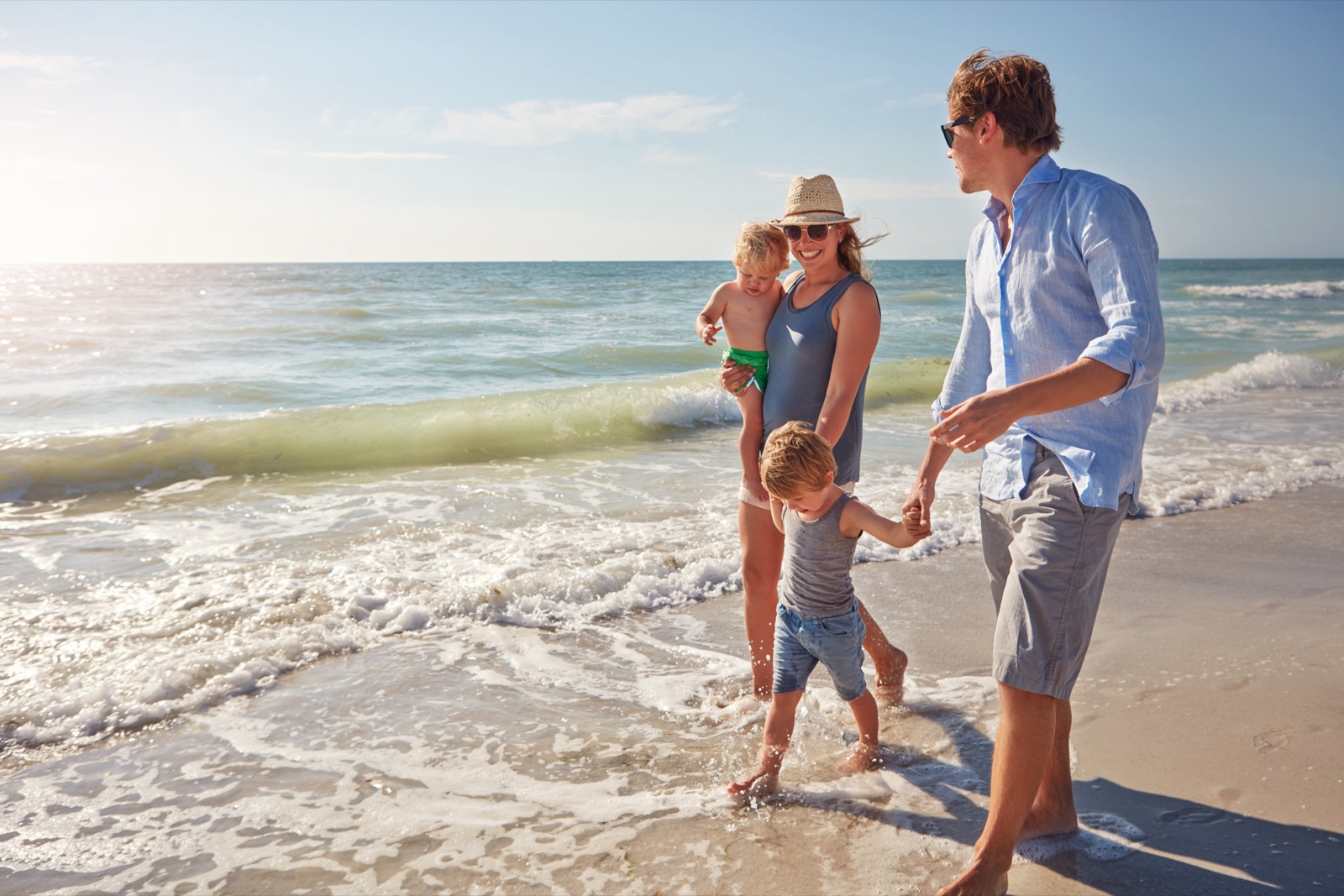
Drowning is a leading cause of unintentional injury death in children, and autistic children are at higher risk — the American Academy of Pediatrics names autism among the conditions that raise it.3 The usual route is wandering: about half of autistic children attempt to leave a safe setting, and of those who went missing in one large survey, 24% were in danger of drowning.2 Swim lessons are one of several layers that reduce risk, and the AAP supports them after a child’s first birthday. No lesson makes a child drown-proof, including self-rescue programs such as ISR. The layers that matter are competent supervision within arm’s reach, four-sided isolation fencing around a home pool, lessons, correctly fitted life jackets, and an adult who knows CPR.3 For a neurodivergent child, add: lock and alarm the doors, tell neighbors with pools, and practice the skill in more than one body of water.
Key takeaways
- Drowning is a leading cause of unintentional injury death in children, and the AAP names autism among the conditions that raise the risk.
- Among people with autism who died between 1999 and 2014, drowning had a proportionate mortality ratio of 39.89 — roughly forty times its share of deaths in the general population.
- About half of autistic children attempt to wander from a safe setting after age 4. Of those who went missing, 24% were in danger of drowning.
- The AAP supports swim lessons after the first birthday, and says there is no evidence that infant swim lessons reduce drowning.
- No program makes a child drown-proof. Any that claims to is overstating.
- Four-sided isolation fencing that separates the pool from the house cuts risk far more than fencing that uses the house as one side.
- Supervision means an adult within arm’s reach, watching the water — not watching from a chair.
- For neurodivergent children: secure the doors, tell the neighbors, and practice the skill in different bodies of water, because a skill learned in one pool does not automatically transfer.
- Swimming is excellent movement and sensory input. That is a reason to swim, not a substitute for a therapy plan.
Why is drowning risk higher for autistic children?
Because of how autistic children interact with water and with leaving. The AAP’s 2026 drowning-prevention policy statement names autism among the medical conditions associated with higher drowning risk.3 The mechanism usually isn’t mysterious — it is wandering.
A survey of 1,218 autistic children and 1,076 of their siblings found that 49% of the autistic children had attempted to elope from a safe setting at least once after age 4, at rates significantly higher than their siblings at every age. Twenty-six percent went missing long enough to cause concern, and of those, 24% were in danger of drowning and 65% were in danger of traffic injury.2
The mortality data points the same way. Among 1,367 people with an autism diagnosis who died in the US between 1999 and 2014, 27.9% of deaths were attributed to injury, and drowning carried a proportionate mortality ratio of 39.89 (95% CI 31.34 to 50.06) — the highest of any injury cause in that analysis, and roughly forty times the share drowning represents in the general population.1
| Factor | What it means at your house |
|---|---|
| Elopement | A child who leaves the house quietly, often toward something they like. Doors and gates matter more than they would for another child. |
| Attraction to water | Water is sensory-rich: the sound, the light, the feel. A child drawn to it will go toward it, not away. |
| Communication in an emergency | A child who can’t call for help, or who doesn’t recognize distress as something to report. |
| Generalizing a skill | A child who floats well in a warm indoor pool may not do it in a cold lake, in clothes, unexpectedly. |
| Danger awareness | Not every child registers a pool edge, a current, or depth as a threat. |
None of this means restriction is the answer. It means the layers below have to be deliberate rather than assumed.
At what age should a child start swim lessons?
The American Academy of Pediatrics supports beginning swim lessons after a child’s first birthday, on the reasoning that increasing mobility at that age raises the risk of unintended water access.3
Below one year, the AAP is explicit: there is no evidence that infant swim lessons reduce the incidence of drowning.3 Infants can enjoy water with a parent, and that is its own good thing — but it is not a drowning-prevention measure, and an infant cannot reliably learn or apply a self-rescue skill. This is worth knowing because some programs, ISR among them, accept children from around six months.
For a neurodivergent child, readiness is less about age than about tolerance. Can the child stay in the water, follow a simple instruction, and tolerate the sensory experience of a pool for the length of a lesson? A child who can’t yet may do better with parent-and-child water play first and formal lessons later.
Do swim lessons prevent drowning?
They reduce risk, and they do not eliminate it.
A case-control study compared 88 children and adolescents who died of unintentional drowning with 213 matched controls. In the 1-to-4 age group, 2 of 61 cases had taken formal swim lessons against 35 of 134 controls — an adjusted odds ratio of 0.12 (95% CI 0.01 to 0.97), which the authors describe as an 88% reduction in risk. Read the interval as well as the estimate: it runs almost to 1, and it rests on two exposed cases, so the direction is clear and the size is not. In the 5-to-19 group the association was not statistically significant (OR 0.36, 95% CI 0.09 to 1.51).4
What lessons cannot do is make a child safe near water unsupervised. A child who can swim can still drown — from exhaustion, from a cold-water response, from being trapped, from a seizure, from being face-down after a fall. The phrase “drown-proof” does not describe anything that exists.
What are ISR and self-rescue lessons?
Infant Swimming Resource is a survival-swim program that teaches infants and young children a self-rescue sequence: roll onto the back, float, breathe, and — for older children — swim, float, swim to the edge. Lessons are one-on-one, about ten minutes, five days a week for several weeks. The program accepts children from around six months.
Similar self-rescue programs exist under other names. The common structure is short, frequent, individual lessons focused on a survival sequence rather than on stroke technique.
What the lessons are designed to produce, and what parents report, is a child who can get from an unexpected entry into the water to a floating position. Families who have been through it often describe that as the thing that let them breathe again around water.
What does the evidence say about ISR specifically?
Honestly: there isn’t much independent evidence, in either direction.
There is no randomized trial of ISR, and no peer-reviewed study comparing self-rescue programs with conventional swim lessons for drowning outcomes. The case-control study above did not separate program types.4 The AAP recommends lessons generally and does not endorse any specific program or curriculum.3
So the accurate statement is this: children in these programs do learn the sequence, families report confidence, and the effect on actual drowning outcomes relative to other lesson formats has not been measured. That is a reasonable basis for choosing a program you like. It is not a basis for treating it as protection.
Two things to be clear about, because they are sometimes claimed:
- ISR does not make a child drown-proof. Supervision and barriers still apply, every time.
- The water’s resistance does not “regulate sensory needs.” An earlier version of this page said it did. Water is rich proprioceptive and tactile input and many children find it organizing — that is a real observation, not a measured effect, and it is not a reason to choose one swim program over another.
What are the layers of protection?
No single measure prevents drowning. The AAP frames prevention as layers, because none of them works alone.3
Supervision — an adult within arm’s reach
Barriers — four-sided isolation fencing, locks, alarms
Lessons — after the first birthday
Life jackets — Coast Guard–approved, on open water
CPR — at least one adult trained and current
No single layer prevents drowning. Each one catches what the layer above missed.
Drowning is silent and fast.
It does not look like the splashing and shouting in films. A drowning child is usually vertical, quiet, and under in well under a minute.
Watch the water, not a phone. With several adults present, name one designated watcher and hand the role over explicitly.
Supervision. An adult within arm’s reach for any child who cannot swim competently. The AAP lists close, constant, attentive and capable adult supervision first among proven strategies.3
Barriers. For a home pool, four-sided isolation fencing that separates the pool from the house, at least four feet high, with a self-closing, self-latching gate.3 The comparison is stark: a systematic review found the odds of drowning in a fenced pool were 0.27 (95% CI 0.16 to 0.47) against an unfenced one, and isolation fencing against three-sided fencing gave odds of 0.17 (95% CI 0.07 to 0.44) — because fencing that uses the house as one side still lets a child through a door.5 Add door locks above a child’s reach, door and pool alarms, and remove anything climbable near the fence.
Lessons. After the first birthday, as above.
Life jackets. US Coast Guard–approved, correctly fitted, on open water and boats, every time. Not water wings, not floaties, not puddle jumpers — those are toys, and they hold a child vertical, which works against learning to float.
CPR. At least one adult in the household trained and current. Early rescue and resuscitation is among the strategies the AAP lists as proven.3
Extra layers for a neurodivergent child. Tell neighbors with pools that your child may head their way, and ask them to fence and latch. Consider a wearable ID or GPS device if your child elopes. Give the school and any care setting a written note about water attraction. Keep bathroom and back doors locked — a child can drown in very little water. And practice the same skill in different water: a different pool, a lake, with clothes on, entering from a different edge. Generalization is the gap.
How do I choose a swim program for a neurodivergent child?
Ask these, in this order.
Before you book
- Has the instructor taught autistic or neurodivergent children before? Ask for specifics, not reassurance.
- Can I watch a lesson first? A program that won’t let you observe is telling you something.
- How do they handle distress? Some programs work through crying on the principle that the skill matters more. Some parents accept that; others don’t. You are allowed to decide a crying lesson isn’t for your child, and you are allowed to stop.
- What is the sensory environment? Water temperature, echo, lights, crowding, changing rooms. For an over-responsive child these decide whether the lesson is learnable at all.
- Are lessons one-on-one? Usually better for a child who needs processing time or is overwhelmed by a group.
- Will they work with my child’s other supports? A good instructor takes input from an occupational or physical therapist about how your child processes instruction.
- What is their certification, CPR currency, ratio, and emergency procedure?
The right program is the one your child will attend, in a setting they can tolerate, taught by someone who has worked with children like yours.
What if my child hates the water — or loves it too much?
The child who is afraid. Forcing the lesson usually produces a child who is afraid of water and of lessons. Back up: parent-and-child water play, feet in first, a warm shallow pool, no instruction. The goal is tolerance before skill, then a gradual, agreed set of steps — the same approach used for any sensory-driven fear. Our page on sensory over-responsivity explains the wider pattern.
The child who cannot stay out. More common than people expect, and more dangerous. A child who runs toward water needs the barrier layer taken seriously — locks, alarms, fencing, neighbors informed — and needs enough supervised water time that the pull is not constantly unmet. Restriction alone tends to increase the drive, which is the same pattern described on our page about sensory seeking.
Is swimming good for sensory needs?
It is excellent movement, and many children with sensory differences love it. Water provides whole-body pressure and resistance, which is the input most seekers find organizing, and it is one of the few activities delivering heavy work, vestibular input and tactile input at once. For a child who needs a lot of movement, regular swimming is a good thing to have in the week.
What it isn’t is a therapy. There is no evidence that a particular swim program improves sensory processing, attention or regulation beyond what the exercise and the enjoyment supply. Choose a swim program for water safety and for the child’s enjoyment; build the sensory plan separately, with the approaches that have support — what actually helps covers those, and the sensory processing hub has the rest.
Frequently asked questions
Are autistic children at higher risk of drowning?
Yes. The AAP names autism among the conditions associated with higher drowning risk, and wandering from a safe setting — which about half of autistic children attempt after age 4 — is the usual route. Of the children who went missing in one large survey, 24% were in danger of drowning.
At what age should swim lessons start?
The AAP supports lessons after a child’s first birthday, because increasing mobility raises the risk of unintended water access. Below one year, it says there is no evidence that infant swim lessons reduce drowning.
Do swim lessons prevent drowning?
They reduce risk and are recommended, but they do not eliminate it. In a case-control study of 1-to-4 year olds the adjusted odds ratio was 0.12, though on only two exposed cases and with a confidence interval running almost to 1. Lessons never replace supervision and barriers.
What are ISR swim lessons?
Infant Swimming Resource teaches a self-rescue sequence — roll, float, breathe, and for older children swim-float-swim — in short one-on-one lessons, usually five days a week for several weeks, from about six months.
Is there evidence that ISR works?
There is no randomized trial of ISR and no peer-reviewed comparison with conventional lessons for drowning outcomes. Formal lessons in general are associated with reduced risk in 1-to-4 year olds. Choose a program you like; don’t treat any program as protection on its own.
Can a child be drown-proofed?
No. No program produces a child who is safe near water unsupervised, and the AAP endorses no specific program or curriculum.
What’s the most effective thing I can do about a home pool?
Four-sided isolation fencing that separates the pool from the house, at least four feet, with a self-closing self-latching gate. Against three-sided fencing the odds of drowning were 0.17 — because fencing that uses the house as one side still lets a child through a door. Add door locks and alarms if your child elopes.
Are floaties and puddle jumpers safe?
They are toys, not safety devices, and they hold a child vertical, which works against learning to float. Use a Coast Guard–approved life jacket on open water.
My autistic child is terrified of the pool. What do I do?
Stop the lessons and back up to tolerance: warm shallow water, no instruction, parent-led, short. Build up in agreed steps. A program that works through distress is not the only option.
Does swimming help sensory processing?
It is great movement and many children find water organizing. There is no evidence it improves sensory processing as a treatment. Swim for safety and enjoyment; build the sensory plan separately.
What should I ask a swim instructor about my neurodivergent child?
Whether they have taught neurodivergent children, whether you can observe a lesson, how they handle distress, the sensory environment, whether lessons are one-on-one, and their certification and emergency procedures.
Sources
- Guan J, Li G. Injury Mortality in Individuals With Autism. American Journal of Public Health. 2017;107(5):791–793. 1,367 deaths recorded in individuals with an autism diagnosis in US multiple cause-of-death files, 1999–2014. Mean age at death 36.2 years against 72.0 in the general population; 381 deaths (27.9%) attributed to injury (PMR 2.93). Drowning: n = 74, PMR 39.89 (95% CI 31.34–50.06). doi:10.2105/AJPH.2017.303696
- Anderson C, Law JK, Daniels A, et al. Occurrence and family impact of elopement in children with autism spectrum disorders. Pediatrics. 2012;130(5):870–877. 1,218 children with ASD and 1,076 siblings without. “Forty-nine percent… reported their child with an ASD had attempted to elope at least once after age 4 years; 26%… were missing long enough to cause concern. Of those who went missing, 24% were in danger of drowning and 65% were in danger of traffic injury.” doi:10.1542/peds.2012-0762
- Shenoi RP, McCallin T, Farrell C, Yusuf S, et al; American Academy of Pediatrics. Prevention of Drowning: Policy Statement. Pediatrics. 2026;158(1):e2026077410. “Multiple layers of prevention are necessary, because no single method is effective in preventing drowning.” Proven strategies include four-sided isolation pool fencing with functioning self-closing and self-latching gates; close, constant, attentive and competent supervision; swimming competency; life jacket use; and early rescue and resuscitation. Lessons are supported after a child’s first birthday; “there is also no evidence that infant swim lessons reduce the incidence of drowning.” Children with medical conditions “such as autism and epilepsy” are named as at higher risk. No specific program or curriculum is endorsed. doi:10.1542/peds.2026-077410 — supersedes the 2021 statement (doi:10.1542/peds.2021-052227)
- Brenner RA, Taneja GS, Haynie DL, et al. Association between swimming lessons and drowning in childhood: a case-control study. Archives of Pediatrics & Adolescent Medicine. 2009;163(3):203–210. 88 drowning deaths and 213 matched controls, ages 1 to 19. Ages 1–4: 2 of 61 cases had taken formal lessons against 35 of 134 controls, adjusted OR 0.12 (95% CI 0.01–0.97), reported by the authors as an 88% reduction. Ages 5–19: adjusted OR 0.36 (95% CI 0.09–1.51), not statistically significant. doi:10.1001/archpediatrics.2008.563
- Thompson DC, Rivara FP. Pool fencing for preventing drowning in children. Cochrane Database of Systematic Reviews. 2000;(2):CD001047. Three case-control studies. Odds of drowning or near-drowning in a fenced pool against an unfenced pool 0.27 (95% CI 0.16–0.47). Isolation fencing against three-sided fencing: 0.17 (95% CI 0.07–0.44), because perimeter fencing “allows access to the pool area through the house.” doi:10.1002/14651858.CD001047
Medical disclaimer. This page is for general educational purposes and does not constitute medical advice, diagnosis, or treatment. Always consult a qualified healthcare provider about your child.