
Learning differences
Is Montessori Good for an Autistic or ADHD Child?
The research on Montessori is better than most parents expect. It still cannot tell you whether this school suits this child, and that is the question you actually have.
- Plain Language
- Patient Focused
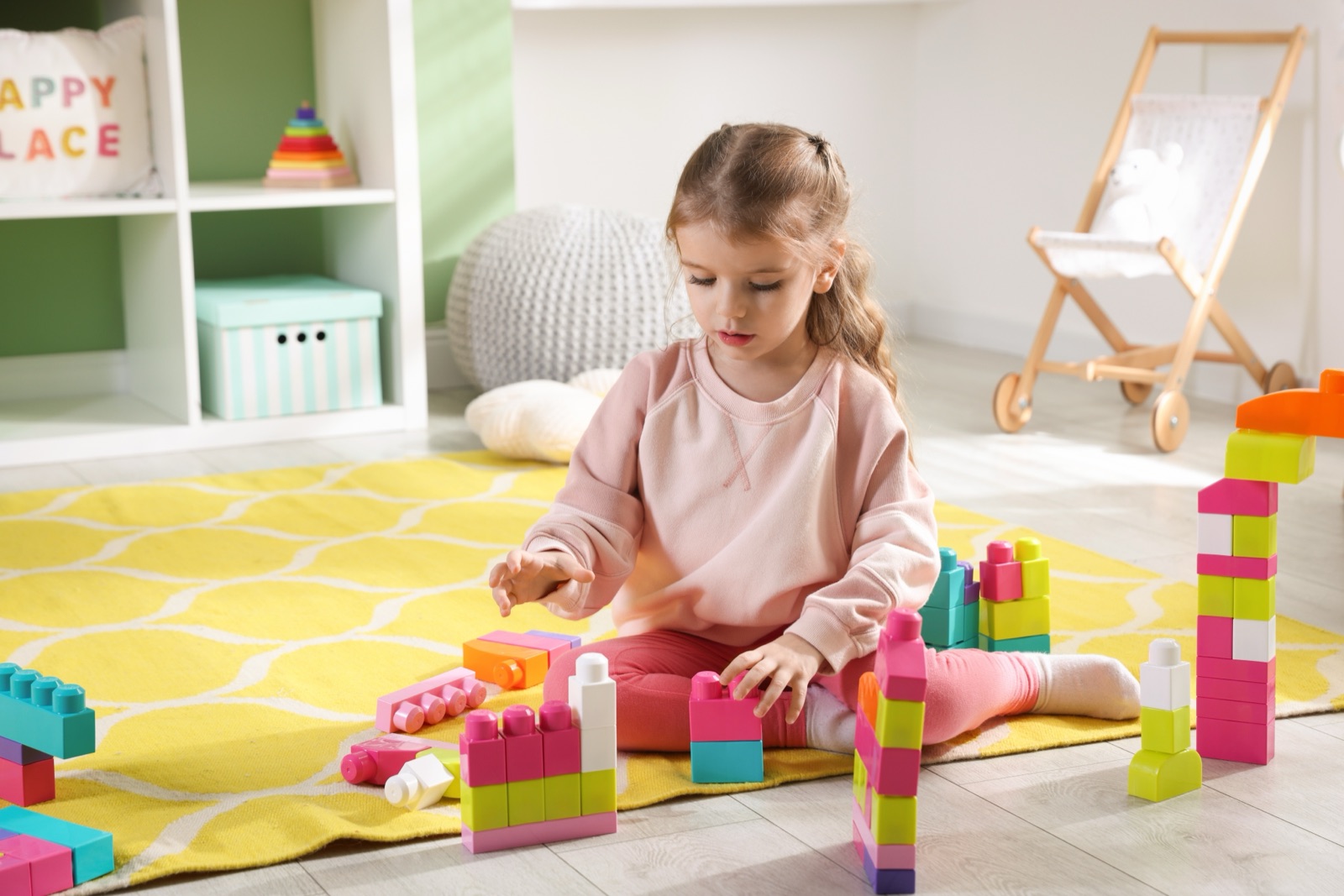
Montessori has better evidence behind it than most educational philosophies. A 2023 Campbell systematic review of 32 studies found it outperformed conventional schooling across academic and non-academic outcomes, and a lottery-based study in Science removed the usual objection that Montessori families are simply different families.12 None of that answers your question. Whether a Montessori classroom suits a particular child with sensory or attention differences depends on which parts of it you are looking at: uninterrupted work periods, freedom to move, hands-on materials and a quiet room suit many such children very well, while free choice, minimal direct instruction and the expectation that a child directs their own day are hard for a child who needs the day mapped out. And because the name is not trademarked, the classroom in front of you matters more than the philosophy behind it.
Key takeaways
- The evidence is genuinely positive, and unusually good for an educational philosophy — 32 studies, 204 effect sizes, favoring Montessori on both academic and non-academic outcomes.1
- It does not tell you whether this school suits this child. That is a different question, and no study answers it.
- The name is not protected. Any school can call itself Montessori, so fidelity varies enormously and the classroom in front of you matters more than the label.
- Uninterrupted work periods, freedom to move, and hands-on materials suit many sensory and attention profiles well.
- Free choice is an executive function demand, not a relief. A child who struggles to start a task does not benefit from more freedom to not start it.
- Mixed-age classrooms help some children socially and leave others more exposed.
- A quiet, low-stimulation room is a real and underrated advantage for a child who is over-responsive to noise.
- Most Montessori schools are private, and under federal regulation a parentally-placed private school child has no individual right to the services they would receive in a public school.3
What is a Montessori classroom actually like?
Six things distinguish it, and each one of them is a variable your child will respond to.
A long uninterrupted work period, often three hours, in which children are not moved from activity to activity on a timetable. Free choice of activity from what is available on the shelves. Mixed-age groups, usually spanning three years. Hands-on materials designed to be self-correcting, so the child sees the error rather than being told. Minimal whole-class instruction — teaching happens in small groups or one to one. And a quiet, low-stimulation room, with muted colors and children moving freely rather than sitting in rows.
Most of this begins in the preschool years, which is also where the research finds the largest effects.1 It is worth holding the model against what you already know about where your child is developmentally rather than against their age, since a three-year age span in one room makes the second number much less useful than the first.
Does the research support it?
More than you might expect, and with a caveat that matters for this page.
A 2023 Campbell Collaboration systematic review searched 19 databases, screened 2,012 articles, and included 32 that met minimum standards for baseline equivalence — yielding 204 effect sizes across 132,249 data points. Montessori outperformed conventional education on a wide range of outcomes. The composite effect was g = 0.24 for academic outcomes and g = 0.33 for non-academic ones, with executive function at 0.36 and creativity at 0.26.1
The usual objection to any such finding is selection: families who choose Montessori differ from families who do not. A 2006 study in Science addressed it directly by comparing children who won a place in an oversubscribed public Montessori lottery with children who entered the same lottery and lost — the same families, different schools.2
The caveat. The review's moderator analyses found larger effects for private Montessori than public, and for preschool and elementary settings than middle or high school.1 And none of these studies asks the question this page is about. They compare groups of children; they do not tell you whether a classroom run this way suits a child who processes sound differently or cannot start a task without help.
What suits a child with sensory or attention differences
Several features of the model are, more or less by accident, things an occupational therapist would recommend.
Freedom to move. A child is not required to stay in a chair for a lesson. For a child who needs movement while working, removing the requirement to sit still removes a daily source of conflict that has nothing to do with learning.
Uninterrupted time. A three-hour work period suits a child who takes a long time to settle into something and finds transitions expensive. For a child who goes deep on one interest, being allowed to stay there is the difference between a good day and a series of interruptions.
A quiet room. Muted colors, no bell every forty minutes, no thirty children reciting at once. This is an underrated advantage and often the first thing a parent notices on a tour.
Hands-on, self-correcting materials. A child who finds verbal instruction hard to hold onto gets information through their hands instead, and finds out they were wrong without anyone telling them.
Small-group teaching. Instruction given to three children is easier to attend to than instruction given to thirty.
For many autistic children, that combination is a considerably better fit than a conventional classroom. It is worth being clear about why: the fit comes from specific features, not from the philosophy as a whole.
What doesn't, and for which children
Free choice is an executive function demand, not a relief from one. Choosing among twenty available activities, every morning, and then sequencing your own day, is precisely the task that is hardest for a child with executive function difficulties. A child who cannot start a task does not benefit from more freedom to not start it.
That is the single most important thing on this page for parents of children with ADHD, and it is the opposite of how Montessori is usually sold to them. Choosing what to do next is an executive function task, and a classroom built on it will ask a child to perform that task dozens of times a day.
Minimal explicit instruction disadvantages a child who needs to be taught directly rather than to discover. Discovery learning assumes a child who will try things; some children need to be shown, and shown again.
Mixed-age grouping helps some children socially — a younger child with a patient older one, an older child with something to teach — and leaves others more exposed. A socially vulnerable eight-year-old in a room with eleven-year-olds is in a different position than in a room of eight-year-olds.
The quiet room cuts both ways. It is a genuine advantage for a child over-responsive to noise and movement, and can be under-stimulating for a child who seeks input and will generate it themselves if the room does not provide it.
And "follow the child" can become a reason not to intervene. This is the failure mode to watch for. A philosophy built on not pushing can be used to justify waiting when a child genuinely needs help — which for a child who avoids demands may look like a perfect match and may be leaving real difficulty unaddressed.
How do I tell which my child is?
Mostly by watching what already happens, rather than by guessing.
Signs the model may suit: your child settles into an activity and resents being pulled out of it — they do better when allowed to move — they learn by handling things — they find noisy, busy rooms difficult — they have an interest they will go a long way into.
Signs it may not: your child needs to be told what to do next and freezes without it — unstructured time at home ends in distress rather than play — they need to be taught directly and do not find things out by trying — they seek input and get louder in a quiet room — transitions are fine but starting anything is the problem.
Most children are some of both, which is why a tour matters more than a decision made in advance. Knowing which sensory pattern your child has makes the list above much easier to apply, and learning differences covers the profiles that change what "suits" means.
What to ask on a school visit
Ask to observe during a work period rather than before or after one. What you see in three hours tells you more than any answer.
About the classroom
- How long is the uninterrupted work period, in practice rather than on paper?
- What happens when a child chooses nothing for an hour?
- How much whole-class instruction actually happens in a week?
- What is the noise level like at the busiest point of the day?
About your child specifically
- My child struggles to choose and to start. What would that look like here, and what would you do?
- How do you handle a child who needs to be taught something directly?
- What does a hard day look like in this room, and who handles it?
- Has a child like mine been here before, and what happened?
About support and staffing
- Are the guides trained by AMI, AMS, or another body — and for which age range?
- What is the adult-to-child ratio during the work period?
- Do you have children here with IEPs or services plans, and how does that work?
- What would make you tell a family this is not the right school?
The last question is the most useful one. A school that cannot answer it is telling you something. Much of this overlaps with what to ask any school.
The fidelity problem: anyone can use the name
“Montessori” is not a protected term in the United States. Any school can use it, whatever it does inside. There is no single body that licenses schools, and the two best-known training organizations — the Association Montessori Internationale and the American Montessori Society — train and accredit, but cannot stop a school that has done neither from using the word on its sign.
This is the single most useful practical fact on this page, and it reverses the usual order of questions. What matters is not whether Montessori works. It is what happens in the room you are standing in.
It also complicates the research. The 2023 review found larger effects for private Montessori than public, which could reflect implementation, or resources, or the children enrolled — the study design cannot separate them.1
Practical version: ask what training the guides hold and for which age range, ask whether the school is accredited and by whom, and then go and watch. A school doing this well will be glad to be watched.
What about an IEP or 504 in a Montessori school?
This is the practical fact most parents miss, and it turns on a single distinction: public or private.
Most Montessori schools are private. Federal special education regulation is explicit about what that means. Under 34 CFR § 300.137(a): “No parentally-placed private school child with a disability has an individual right to receive some or all of the special education and related services that the child would receive if enrolled in a public school.”3
That is worth reading twice, because it is stronger than most parents assume. Choosing a private school is choosing out of that entitlement.
What does still apply. The school district retains an obligation to find and assess your child: under § 300.131(a), each local education agency “must locate, identify, and evaluate all children with disabilities who are enrolled by their parents in private, including religious, elementary schools and secondary schools located in the school district.”3 So an evaluation is available to you. What may follow is a services plan rather than an IEP, covering whatever services the district has decided to provide to private school children as a group, which is typically a good deal less.
Section 504 applies to programs receiving federal financial assistance, which most private schools do not, so it usually does not reach them either.
Public Montessori exists — charters and magnets — and is an entirely different proposition, because the full entitlement applies. If your child has or may need an IEP, that distinction may matter more than anything else on this page. IEPs and 504 plans covers how they work, and the conversation with a teacher is worth preparing for either way.
What transfers to home
Most of what is valuable here does not require a school at all.
Low open shelves with a limited number of things on them, so choosing is possible rather than overwhelming. Real tools sized for a child, because a child who can pour their own water will. Letting a task be finished badly rather than taking over. And protecting long stretches of uninterrupted time, which is the single most transferable idea in the whole model and costs nothing.
The environment side overlaps considerably with making a home sensory-friendly, and the room-by-room checklist is a practical place to start. Where sensory responses are driving the difficulty, how a child modulates sensory input explains more of it than any classroom philosophy will.
One caution, in the spirit of the rest of this page: the shelf is not the point. A room arranged this way and a child who is still being interrupted every fifteen minutes has the furniture and not the idea.
Frequently asked questions
Is Montessori good for autistic children?
Several features suit many autistic children well — freedom to move, uninterrupted work periods, a quiet room, hands-on materials and small-group teaching. The fit comes from those specific features rather than from the philosophy, so the individual classroom matters more than the label.
Is Montessori good for a child with ADHD?
It depends on which difficulty dominates. Freedom to move and long work periods help. Free choice does not: choosing among twenty activities and sequencing your own day is an executive function task, and a child who struggles to start does not benefit from more freedom to not start.
Does Montessori education actually work?
The evidence is unusually good for an educational philosophy. A 2023 systematic review of 32 studies found Montessori outperformed conventional schooling, with composite effect sizes of 0.24 for academic and 0.33 for non-academic outcomes.
What's the difference between Montessori and traditional school?
Long uninterrupted work periods instead of a timetable, free choice of activity, mixed-age classes, hands-on self-correcting materials, very little whole-class teaching, and a quieter room with children moving freely rather than seated in rows.
Is Montessori bad for kids who need structure?
Montessori has structure, but it is environmental rather than directive — the room and the materials are ordered, while the child's day is not sequenced for them. A child who needs to be told what to do next may find that harder, not easier.
Can a Montessori school refuse to take my child?
A private school can decline admission in ways a public school cannot, and is not required to provide the services a public school would. Ask directly what would make them say a child is not a good fit, and what support they can actually provide.
Does my child get an IEP at a Montessori school?
Not at a private one. Federal regulation states plainly that a parentally-placed private school child has no individual right to the services they would receive in a public school. The district must still evaluate your child, and may offer a services plan instead.
How do I know if a school is really Montessori?
You cannot tell from the name, which is not a protected term in the US. Ask what training the guides hold and for which age range, whether the school is accredited and by whom, then observe during a work period rather than around one.
Is Montessori good for a child who can't sit still?
Often yes, because sitting still is not required. Removing that expectation removes a daily source of conflict that has nothing to do with learning, which is one of the clearest advantages of the model for a child who needs to move.
What age does Montessori start?
Programs commonly begin in the preschool years, and some start with toddlers. The research finds the largest effects at preschool and elementary level rather than at middle or high school.
What should I ask on a Montessori tour?
Ask to observe during a work period. Ask what happens when a child chooses nothing for an hour, how a child who needs direct teaching is handled, what a hard day looks like and who handles it, and what would make them say a school is not right for a family.
Sources
- Randolph JJ, Bryson A, Menon L, et al. Montessori education's impact on academic and nonacademic outcomes: A systematic review. Campbell Systematic Reviews. 2023;19(3):e1330. 19 databases searched, 2,012 articles screened, 32 studies included meeting minimum standards for baseline equivalence, yielding 204 effect sizes across 132,249 data points. Composite Hedges' g 0.24 for academic and 0.33 for non-academic outcomes; executive function 0.36, creativity 0.26, general academic ability 0.26. Moderator analyses found larger effects for randomized than non-randomized studies, for preschool and elementary than middle or high school, and for private than public Montessori. doi:10.1002/cl2.1330 (PMID 37554998)
- Lillard A, Else-Quest N. Evaluating Montessori Education. Science. 2006;313(5795):1893–1894. Compared children who won places in an oversubscribed public Montessori lottery with children whose families entered the same lottery and lost — a design that controls for the family characteristics that otherwise confound comparisons between Montessori and conventional schooling. doi:10.1126/science.1132362
- U.S. Department of Education. Assistance to States for the Education of Children with Disabilities, 34 CFR Part 300, Subpart D — Children with Disabilities Enrolled by Their Parents in Private Schools. § 300.137(a): “No parentally-placed private school child with a disability has an individual right to receive some or all of the special education and related services that the child would receive if enrolled in a public school.” § 300.131(a) requires each LEA to “locate, identify, and evaluate all children with disabilities who are enrolled by their parents in private… schools located in the school district served by the LEA.” § 300.132(b) provides for a services plan. Text as published in the 2024 annual edition of the Code of Federal Regulations. govinfo.gov. Checked September 13, 2026.
Medical disclaimer. This page is for general educational purposes and does not constitute medical advice, diagnosis, or treatment.