Discovering Sensory Play at Home with Everyday Objects

July 9, 2024

Discovering Sensory Play at Home with Everyday Objects

Discovering Sensory Play at Home with Everyday Objects

Key Takeaways

  • SOURCE NOT FOUND: The specified article could not be located. The provided path begins with the literal string 'undefined' (undefined/discovering-sensory-play-at-home-with-everyday-objects.md), indicating the orchestration script failed to substitute a base directory variable.
  • A filesystem-wide search (find / and targeted searches under /Users/irinagedarevich and the drsensory.com project) returned no file matching 'discovering-sensory-play-at-home-with-everyday-objects.md' or any '*sensory-play*' content file.
  • No equivalent content was found in the project's WordPress mirror (public/mirror/wp-content) or in any blog/article/content directory.
  • No takeaways or FAQs were generated because doing so would require fabricating health and child-development claims with no source text to ground them in, which is prohibited for this therapy site.
  • RESOLUTION NEEDED: Re-run this task with a valid, fully-resolved absolute path to the article markdown file so the content can be produced strictly from the source.

In todays times, children resort to screens for easy learning. However, it is important to remember that children learn best from their environment through their senses – touch, taste, smell, sight, and hearing. We hope some of these ideas will inspire you to create a fun learning environment at home for your children using simple items you likely already have at home!

Why is sensory play important?

Sensory play is more than just fun for children – it is a crucial part of their development. It helps build neural connections that are the foundation for a wide range of skills, including but not limited to:

  • Learning how to process sensory information
  • Developing both fine and gross motor skills
  • Enhancing language and communication
  • Fostering social interactions and emotional regulation
  • Encouraging problem-solving and scientific thinking


Simple Ideas for Sensory Play at Home

Flour Drawing: Spread flour on a tray to create a tactile drawing board. Children can use their fingers to draw shapes, letters, or just explore the texture.

Colored Rice: By mixing a little food coloring and vinegar with rice, you create a fun and visually stimulating play material that children can pour, sort, and scoop.

Macaroni: Using macaroni, children can practice threading, creating necklaces or other decorations that enhance fine motor skills. Dying the macaroni different colors adds an extra layer of visual and tactile exploration.

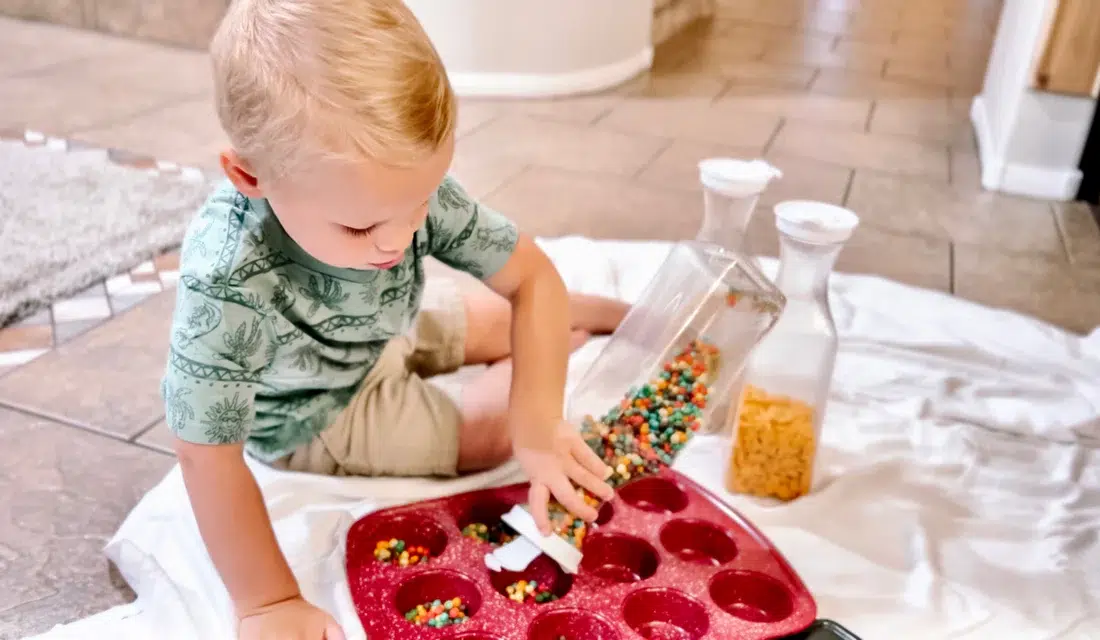
Cereal: With its various shapes, sizes, and textures, cereal can be used in sensory bins or as a tool for creating art. It is especially a good option for younger children who might be tempted to put materials in their mouths as it is safe to eat! Sorting cereals by color or shape provides a fun and educational activity that engages both sensory and cognitive skills.

Jell-O: The unique texture of jell-o makes it great for sensory exploration! Children can play with it directly or you can hide small toys inside for a treasure hunt.

Center Citrus Trails: Creating scented trails with citrus peels stimulates the sense of smell, linking it to spatial understanding and memory. You can even try this with a blindfold! Supervised, of course.

Homemade Playdough: With just a few kitchen ingredients, you can make play dough that can be customized with different colors, scents, or added textures like glitter or beads.

Baking Soda Experiments: Mixing baking soda with vinegar creates and exciting fizzing reaction, offering a visual and auditory experience – plus a basic chemistry lesson!

Soap Carving: Bars of soap can be used for fine motor skill practice through carving, and the pieces can be used for sensory bins or storytelling.

Muffin Tin Textures: Fill the compartments of a muffin tin with materials of various textures for a simple way to explore differences in feel.

Outdoor Play: Activities like digging in sand or soil, playing with water, and exploring natural textures (leaves, sticks, stones) allows children to learn the world around them. It allows children to develop critical thinking, creativity, and a deeper appreciation for the world around them.

The Value of Sensory Play

Even though this all seems like a mess waiting to happen, sensory play is absolutely beneficial! It turns everyday moments into opportunities for development and discovery. By looking at household items through a lens of play, parents and teachers can help children build their understanding of the world, encourage creativity, and make lasting memories.

You dont need much to create a sensory-rich environment at home. Its all about making the most of what you have, thinking creatively, and presenting your children with opportunities to explore their senses. It is through simple activities such as these that children learn about their world and begin to develop their own love for discovery and learning. While your children are young, HAVE FUN! Make the messes – they can always be cleaned up.

Frequently Asked Questions

Where is the source article located?

It could not be found. The path passed to this task was 'undefined/discovering-sensory-play-at-home-with-everyday-objects.md', where 'undefined' is an unresolved variable rather than a real directory.

Did the file exist anywhere else on the system?

No. A search across the full filesystem and the DrSensory project directory found no file by that name and no other sensory-play article to use as a source.

Why were no takeaways or FAQs written from general knowledge?

This is a health and pediatric therapy site, and the task requires grounding every statement strictly in the source text. With no source available, writing content would mean fabricating medical or developmental claims, which is not permitted.

What is needed to complete this task?

A corrected, fully-resolved absolute path to the article markdown file. Once the real file is provided, the takeaways and FAQs can be produced verbatim from its content.