

Prices are the maker’s own list prices, checked October 5, 2026, and may have changed since.
Quick answer. Our top pick is Dr. Brown’s Natural Flow Anti-Colic Options+ ($8.99), whose internal vent can be taken out as your baby’s feeding develops, so you do not have to change bottles.1 For a breastfed baby, try the soft silicone Comotomo ($12.99).2 Buy one or two before a set: babies have preferences, and a full set of a bottle your baby refuses is the most common wasted purchase.
Whether you bottle-feed from the start, combine bottle and breast, or offer the occasional pumped bottle, the bottle decides how the milk flows. This guide covers what matters (material, venting, the nipple’s flow, and how many parts you will wash), reviews four bottles against their makers’ own specifications, and ends with the CDC’s rules for feeding from a bottle safely.
Key takeaways
- Expect trial and error. Babies have preferences and there is no way to know one in advance.
- Nipple flow, not bottle brand, is the first thing to change when feeding is not going well; start slow.
- Anti-colic venting is a real design difference, but claims that a bottle reduces colic are the maker’s own.1
- Every vent, valve and tube is another part to wash, lose and replace.
- Hold the bottle at an angle, let your baby take breaks, and stop when they show they are full.3
- Never prop a bottle or put a baby to bed with one.3
What to Look for in a Great Baby Bottle
Bottle Material: Glass, Plastic, or Silicone?
- Plastic is light, cheap and will not shatter. BPA-based polycarbonate is no longer allowed in baby bottles in the US.4
- Glass is heavier and can break, but does not hold smells or stains; Evenflo’s is made to resist temperature shock.5
- Silicone is soft and squeezable, closer to the feel of skin, which some breastfed babies take to more easily.2
Do anti-colic bottles work?
They are designed to stop your baby swallowing air: a vent tube inside the bottle (Dr. Brown’s), vents built into the nipple (Comotomo, Evenflo) or a valve in the nipple (Philips).1,2,5,6 Dr. Brown’s says its vent is clinically proven to reduce colic; that is the maker’s claim.1 More parts usually means more venting, and more washing.
Which nipple flow should you start with?
Slow. Every bottle here comes with a slow or newborn nipple in its smallest size, and you move up as your baby feeds faster.1,2,5,7 If your baby gulps, sputters or leaks milk, the flow may be too fast; if they work hard and tire, it may be too slow.
Ease of Cleaning
You will wash bottles several times a day. Wide necks clean by hand more easily (Comotomo says no brush is needed), and fewer parts are quicker: Evenflo’s Balance + has four.2,5 Check what is dishwasher-safe, and clean every part, including valves and membranes.3
Best Baby Bottles: Top-Rated Reviews
Each pick was checked against its maker’s own product page on October 5, 2026.
| Bottle | Material | Venting | Nipple in the box | Price |
|---|---|---|---|---|
| Dr. Brown’s Options+ (4 oz) | Plastic; glass sold too | Removable internal vent | Level 1 slow flow | $8.99 |
| Comotomo Gen 2 | Silicone | Dual vents in the nipple | Slow (5 oz) or medium (8 oz) | $12.99 (5 oz) |
| Philips Avent Natural Response | Plastic; glass sold too | Anti-colic valve in the nipple | Medium in the 9 oz pack | $29.95 for four 9 oz |
| Evenflo Balance + Glass | Glass | 1-piece vent in the nipple | Slow (0–3 months) | $29.99 for three 6 oz |
Specifications are the makers’ own.1,2,5,6,7
1. Best Overall: Dr. Brown’s Natural Flow® Anti-Colic Options+™
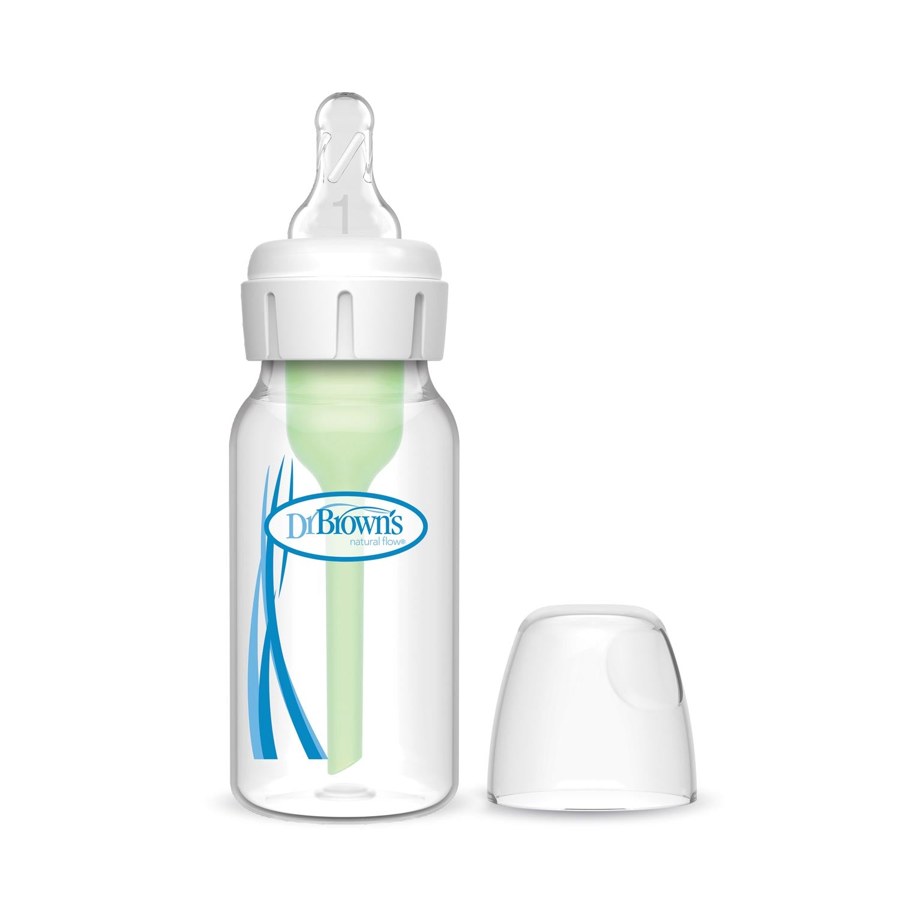
Who it is for: Babies who are gassy or fussy with feeds, and parents who want one bottle that can change as feeding develops.
A vent insert and reservoir tube inside the bottle carry air away from the milk, for what Dr. Brown’s calls vacuum-free feeding. The “Options+” part is that the vent comes out as your baby’s feeding develops, so you keep the same bottle. Dr. Brown’s says the vent is clinically proven to reduce colic and helps preserve nutrients in breast milk; those are the maker’s claims.1
The 4 oz narrow bottle comes with a Level 1 slow-flow nipple, is BPA free, and goes in the top rack of the dishwasher or a sterilizer.1
What it does well
What it does not
- More parts to wash: vent insert and reservoir tube as well as nipple, collar and bottle.1
- A narrow neck is harder to clean by hand; a bottle brush helps, sold separately.
The spec that decides it: the vent. If air and gas are the problem, the internal vent is the reason to choose it; if not, a simpler bottle washes faster.1
2. Best for Breastfed Babies: Comotomo Baby Bottle
Who it is for: Breastfed babies who refuse hard bottles.
The body is soft, food-contact-grade silicone you can squeeze, with a wide, breast-like nipple and two vents built into it. The 5 oz bottle comes with a slow-flow nipple for 0–3 months, the 8 oz with medium flow for 3–6 months.2
The neck is wide enough to clean by hand without a brush, and it is safe in the top rack of the dishwasher, a sterilizer or the microwave.2
What it does well
What it does not
- $12.99 for one 5 oz bottle.2
- A soft body is harder to read volume on than a rigid bottle.
The spec that decides it: the silicone body. If your baby refuses hard bottles, the soft squeeze is the reason to try this one.2
3. Easiest to Clean: Philips Avent Natural Response
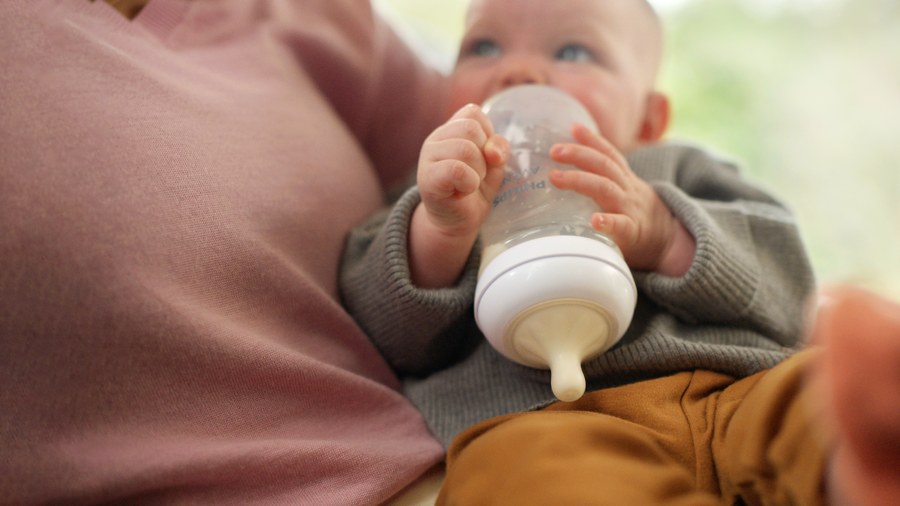
Who it is for: Families combining breast and bottle who want few parts to wash.
Philips’s Natural Response nipple releases milk only when your baby actively drinks, so when they pause to swallow and breathe, the milk pauses too; it is breast-shaped for a natural latch.7 An anti-colic valve in the soft silicone nipple keeps air away from your baby’s tummy.6
Philips sells it in sizes from 4 to 11 oz; the four-pack of 9 oz bottles, with medium-flow nipples for 3–6 months, is $29.95. The bottles are 0% BPA.7
What it does well
What it does not
- The 9 oz pack has medium-flow nipples; a newborn needs the slower one, sold with the smaller bottles.7
- Sold in packs at Philips rather than singly.
The spec that decides it: the nipple. The Natural Response flow is the reason to pick it for combination feeding; match the flow to your baby’s age.7
4. Best Glass Bottle: Evenflo Feeding Balance + Glass Bottle
Who it is for: Parents who want glass, at about $10 a bottle.
Evenflo says it developed the Balance + with pediatric feeding specialists, to support bottle feeding without interfering with breastfeeding. The nipple slopes gradually to encourage a wide latch, a 1-piece vent is built into it, and each bottle has four parts. It comes with a slow-flow nipple (0–3 months).5
The glass bottles are made to resist temperature shock and come as a three-pack of 6 oz wide-neck bottles for $29.99.5
What it does well
What it does not
- Heavier than plastic, and glass can break.
- Only one glass size: 6 oz.5
The spec that decides it: the glass. If you want glass and a simple vent, this is the one; it comes only in 6 oz.5
How to Bottle-Feed Safely
The CDC’s rules for feeding from a bottle:3
- Hold the bottle at an angle, not straight up and down, so milk comes out only when your baby sucks.
- Let your baby take breaks, watch for signs they are full, and stop even if the bottle is not empty.
- Hold your baby close. Never prop a bottle or leave it in your baby’s mouth: it raises the risk of choking, ear infections and tooth decay.
- Do not put your baby to bed with a bottle, and do not put cereal or other food in one.
- Keep every part clean: bottles, nipples, rings, caps, valves and membranes.
If you are feeding expressed breast milk, follow the CDC’s storage and preparation guidance for how long it keeps and how to warm it.8
Making Your Final Choice
The best baby bottle is the one your baby accepts. Buy a single bottle from two or three brands, offer each when your baby is calm and not too hungry, and only then buy a set.3
Frequently asked questions
What are the best baby bottles?
Our top pick is Dr. Brown’s Natural Flow Anti-Colic Options+ ($8.99), with a vent you can remove as feeding develops.1 For a breastfed baby, the Comotomo; for few parts, the Philips Avent Natural Response; for glass, the Evenflo Balance +.2,5,7
What is the best bottle for a breastfed baby?
One that lets your baby set the pace: the soft silicone Comotomo, or the Philips Avent Natural Response, whose nipple releases milk only when your baby actively drinks.2,7 Offer it when your baby is calm, and someone other than the breastfeeding parent may have more luck.3
Which baby bottles do pediatricians recommend?
There is no single bottle pediatricians recommend. What the CDC recommends is how to use one: hold it at an angle, let your baby take breaks, stop at signs of fullness, and never prop it.3
Do anti-colic bottles work?
They are designed to reduce the air a baby swallows, and Dr. Brown’s says its vent is clinically proven to reduce colic; that is the maker’s own claim.1 If gas is the problem, a vented bottle is worth trying, along with a slower nipple.
Are glass baby bottles better than plastic?
Neither is safer for your baby: BPA is no longer used in US baby bottles.4 Glass does not hold smells and lasts, but is heavier and can break; plastic is light and will not shatter.
How many baby bottles do I need?
Start with one or two of a bottle your baby takes, then buy more. How many depends on how often you bottle-feed and how often you wash.
When to ask a professional: If your baby coughs, chokes or leaks milk at most feeds, tires quickly, or cannot keep a seal on the nipple, talk to your pediatrician; a feeding therapist can help. Read about tongue-tie in infants, how bottle use affects oral development and feeding therapy.
Need more than an article?
Gear can only do so much. If something about how your child eats, moves, or talks has been on your mind, a pediatric therapist is the person who assesses it — and most families do not need a referral to ask.
Find a therapist near you →Related DrParenting guides
All DrParenting guides →More from DrSensory
DrParenting covers the gear. DrSensory covers the development behind it, written and reviewed by clinicians.
Sources
- Dr. Brown’s. Natural Flow® Anti-Colic Options+™ Narrow Baby Bottle with Level 1 Slow Flow Nipple, 4 oz. drbrownsbaby.com. Price, removable internal vent, the maker’s colic and nutrient claims, dishwasher (top rack) and sterilizer safe, BPA free. Checked October 5, 2026.
- Comotomo. Baby Bottle Gen 2. comotomo.com. Price, food-contact silicone body, dual vents in the nipple, flow by size, wide neck to clean by hand without a brush. Checked October 5, 2026.
- Centers for Disease Control and Prevention. About Feeding From a Bottle. Infant and Toddler Nutrition, March 11, 2026. cdc.gov. Checked October 5, 2026.
- U.S. Food and Drug Administration. Bisphenol A (BPA): Use in Food Contact Application. fda.gov. BPA-based polycarbonate resins are no longer provided for in baby bottles. Checked October 5, 2026.
- Evenflo Feeding. Balance + Bottles for Breastfed Babies (glass, wide neck). evenflofeeding.com. Price for three 6 oz glass bottles, thermal-shock resistant, 1-piece integrated vent, four parts, slow-flow nipple included, developed with pediatric feeding specialists. Checked October 5, 2026.
- Philips. Natural Response Baby Bottle Nipples. usa.philips.com. The anti-colic valve; soft silicone. Checked October 5, 2026.
- Philips. Avent Natural Response Baby Bottle SCY903/04. usa.philips.com. Price for four 9 oz bottles, the Natural Response nipple, 0% BPA. Checked October 5, 2026.
- Centers for Disease Control and Prevention. Breast Milk Storage and Preparation. cdc.gov. Checked October 5, 2026.
Medical disclaimer. This page is for general educational purposes and does not constitute medical advice, diagnosis, or treatment. Always consult a qualified healthcare provider about your child. Product information is checked against the manufacturer at the date shown and can change without notice — confirm weight and age limits on the product itself before you rely on them. Talk to your pediatrician about your own child.