
Prices are the maker’s own list prices, checked October 5, 2026, and may have changed since.
Quick answer. Our top swaddle is the Happiest Baby Sleepea 5-Second Swaddle ($34.95): an inner band holds it snug, a quiet fastener closes it, and a two-way zipper opens for diaper changes.1 Stop swaddling as soon as your baby shows any sign of trying to roll, and move to a sleep sack that lets the arms and body move freely, such as the HALO SleepSack ($34.99).2,3
Swaddling wraps a newborn snugly, which can calm the startle reflex that jolts a baby awake. It is for the newborn weeks only: the AAP says to stop as soon as your baby shows any sign of trying to roll, which some babies start working on at 2 months.2 After that, a sleep sack keeps your baby warm without loose blankets in the crib. This guide covers how to swaddle safely, three swaddles and two sleep sacks checked against their makers’ own specifications, and why there is no weighted product on this page.
Key takeaways
- Stop swaddling as soon as your baby shows any sign of trying to roll. Some babies start at 2 months.2
- A swaddled baby always sleeps on their back, on a firm, flat surface.2
- Snug at the chest, loose at the hips: you should fit two or three fingers between chest and swaddle, and the legs should bend up and out.2
- Watch for overheating: sweating, damp hair, flushed cheeks, heat rash and fast breathing.2
- TOG is the warmth rating, and it is the specification that matters on a sleep sack.3,4
- No weighted swaddles, sleep sacks or blankets for a baby.5
Swaddling 101: For the Newborn Phase
A swaddle is a blanket or pouch that wraps a newborn snugly. Done right it can help a baby settle; done wrong it raises real risks, and the AAP’s rules are short.2
How do you swaddle safely?
- Back to sleep, every time. Some studies have found a higher risk of SIDS and suffocation when swaddled babies are put on their stomach or roll onto it.2
- Loose at the hips. Wrapping a baby’s legs straight and tight can lead to hip dysplasia; hip-healthy swaddling lets the legs bend up and out.2,6
- Snug, not tight, at the chest: two or three fingers between chest and swaddle.2
- Not too warm. Swaddling can make a baby overheat.2
What should you look for in an easy-to-use swaddle?
A zip or hook-and-loop design you can get right at 3 a.m., a two-way zipper or open bottom for diaper changes, breathable fabric, and a size that matches your baby’s weight rather than age.1,7
When to Stop Swaddling
As soon as your baby shows any sign of trying to roll over; the AAP notes some babies start working on it as early as 2 months.2 The same applies to sleep sacks that compress the arms, chest and body, including swaddles worn with the arms out; a sleep sack that does not swaddle and lets your baby move freely can be used as long as you like.2 The AAP also says there is no evidence on SIDS risk with arms swaddled in or out.2
Best Swaddles: A Review
Each pick was checked against its maker’s own product page on October 5, 2026.
| Swaddle | Fabric | Sizes (maker) | Diaper changes | Price |
|---|---|---|---|---|
| Happiest Baby Sleepea | 95% organic cotton, 5% elastane | 4 to 25 lb in five sizes | Two-way zipper | $34.95 |
| The Ollie Swaddle | 86% polyester, 14% spandex | One size, 0–4 months | Open bottom | $69.79 |
| Love to Dream Swaddle UP | Cotton (1.0 TOG) | 5 to 19 lb in sizes | Two-way zip | $34.95 |
Specifications are the makers’ own.1,7,8
1. Best Overall Swaddle: Happiest Baby Sleepea 5-Second Swaddle
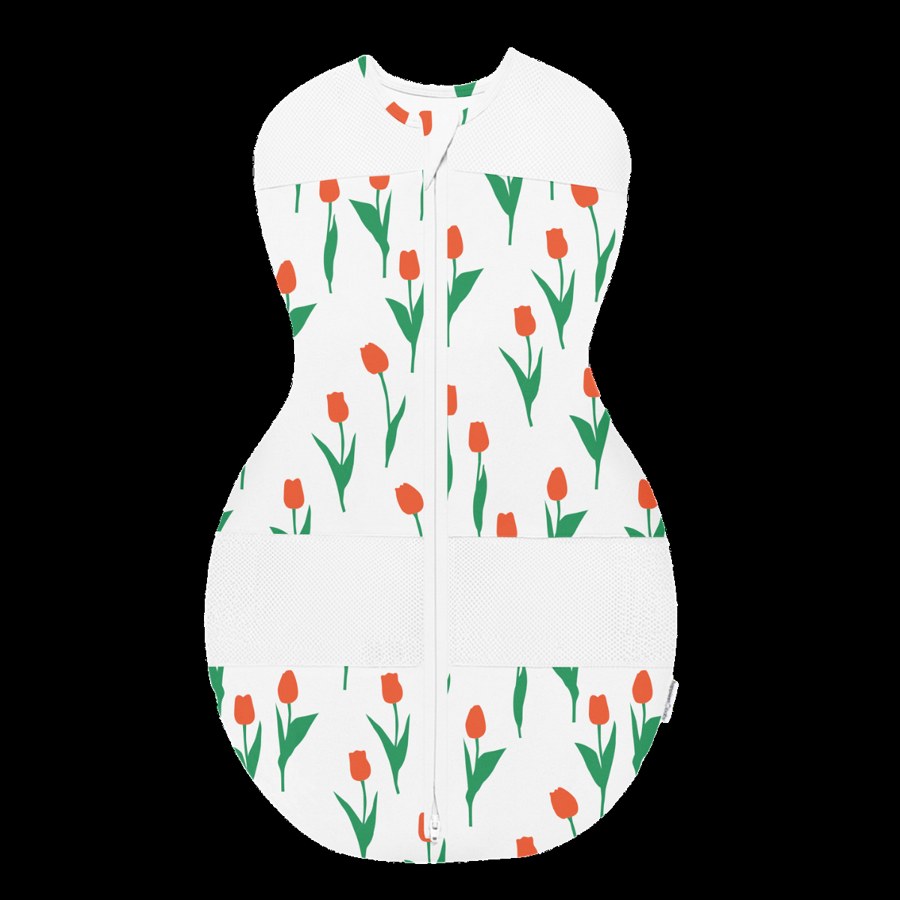
Who it is for: Parents who want a secure swaddle they can get right quickly, in the dark.
An inner band holds your baby’s arms, an extra-quiet adjustable fastener closes the wrap, and a two-way zipper opens from the top or the bottom, so a diaper change does not mean unwrapping. It is 95% organic cotton and 5% elastane with mesh panels, rated 0.5 TOG.1
It comes in five sizes by weight, from X-Small (4–8 lb) to X-Large. Above X-Small, snaps at the shoulders let one or both arms out;1 an arms-out swaddle still compresses the chest and body, so it also stops at the first signs of rolling.2
What it does well
The spec that decides it: the size. Sleepea is sold by weight, so buy for the weight your baby is now, not the age.1
2. Easiest to Use: The Ollie Swaddle
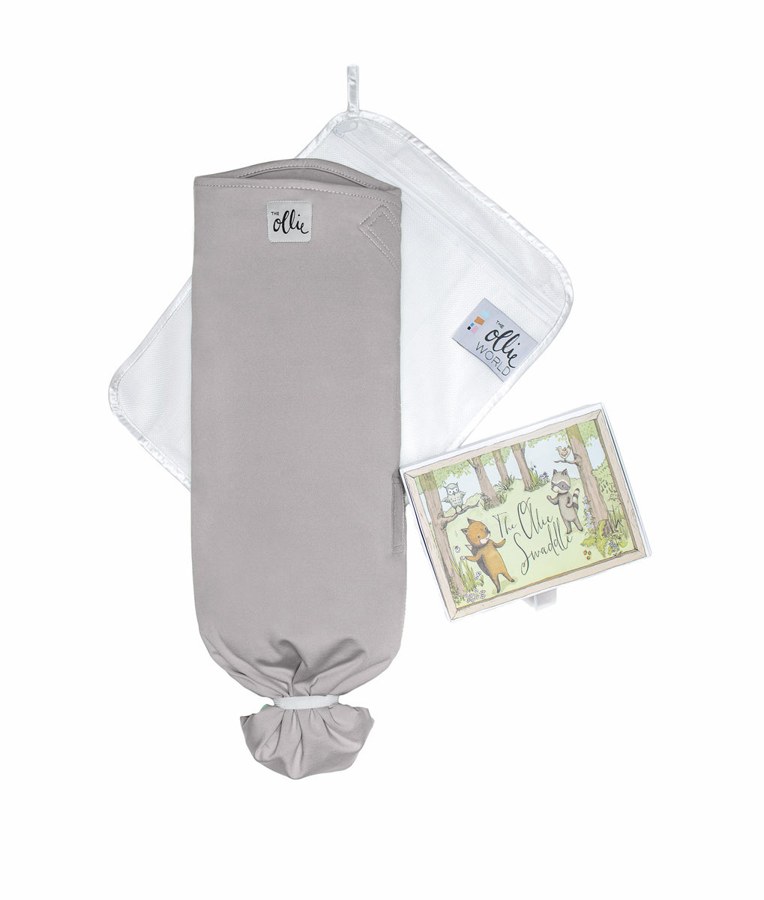
Who it is for: Parents who want one adjustable swaddle for the whole newborn stretch.
A single piece of stretch fabric that closes with large hook-and-loop panels, so you set the snugness yourself. It is one size, for 0 to 4 months or until your baby shows signs of trying to roll, whichever comes first. The fabric is 86% polyester and 14% spandex with a patented moisture-wicking fiber, rated 0.8 TOG and OEKO-TEX certified; an open bottom lets you change a diaper without unwrapping.7
What it does well
The spec that decides it: the price for one size. $69.79 buys the whole newborn stretch in one swaddle, where weight-sized swaddles mean buying again.7
3. Best Transitional Swaddle: Love to Dream Swaddle UP
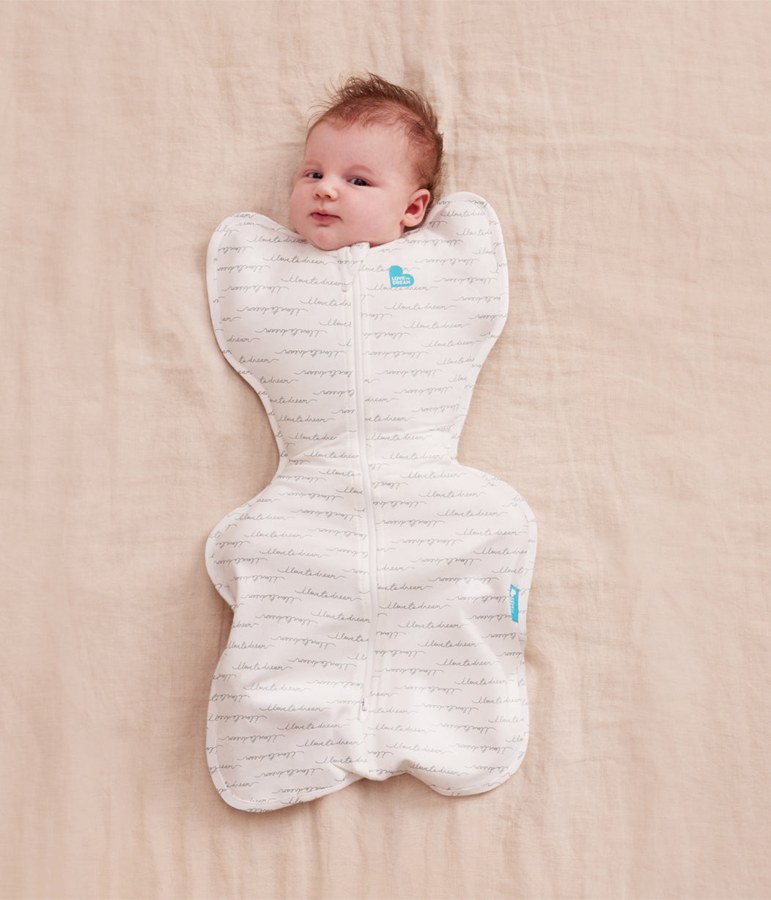
Who it is for: Babies who fight having their arms pinned down and like their hands near their face.
The Swaddle Up holds the arms up by the face, so a baby can soothe with their hands. It comes in sizes from 5 to 19 lb, for newborns to about 3 months or until your baby starts to show signs of rolling, with a two-way zip, and in warmths from 0.2 to 3.5 TOG.8
When rolling starts, Love to Dream’s separate Transition Bag has wings that zip off one arm at a time.9 While the wings are on it still swaddles, so the AAP’s rule to stop at signs of rolling applies to it too.2
What it does well
What it does not
- Sized by weight, so you may need more than one.8
- Not for a baby who settles best with arms down.
The spec that decides it: your baby’s arms. If they fight arms-down swaddles, this is the one to try.8
Sleep Sacks: The Safe Sleep Solution for Older Babies
A sleep sack, or wearable blanket, is a zippered blanket your baby wears. The AAP prefers sleep clothing or a wearable blanket over loose blankets, and a sleep sack that does not swaddle and lets your baby move freely can be used for as long as you like.2
Key Features of a Great Sleep Sack:
- TOG rating: the warmth of the fabric. HALO’s guide puts its 0.5 TOG at 75–77°F rooms; Kyte recommends a heavier TOG in cooler months and a lighter one in warmer months.3,4
- Room for the hips, so the legs can bend up and out.2
- A two-way or inverted zipper for night changes.3,4
Best Sleep Sacks: A Review
| Sleep sack | Fabric | TOG | Sizes (maker) | Price |
|---|---|---|---|---|
| Kyte Baby Sleep Bag | 97% rayon from bamboo, 3% spandex | 0.5, 1.0, 2.5 | XS to XL, 7 to 50 lb | $55–$65 (1.0 TOG) |
| HALO SleepSack | 100% cotton | 0.5 | Small to XL | $34.99 |
4. Best Overall Sleep Sack: Kyte Baby Sleep Bag
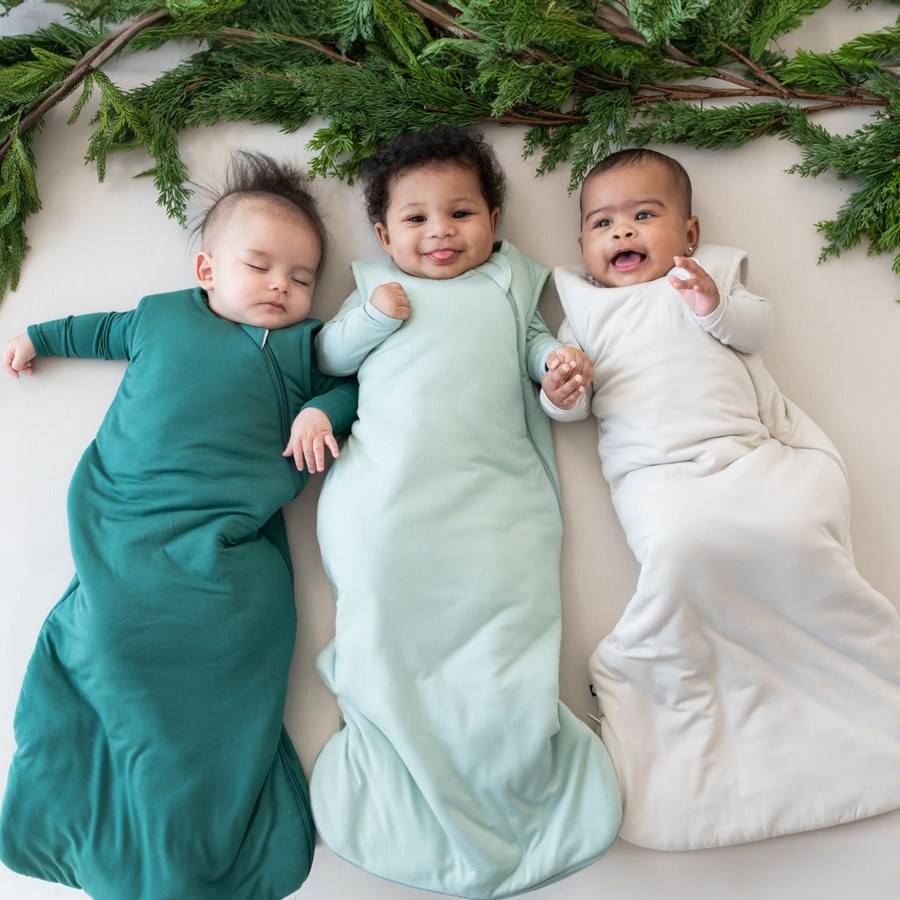
Who it is for: Families who want one sleep sack line from infancy into the toddler years, in a warmth for every season.
Kyte’s Sleep Bag is 97% rayon made from bamboo and 3% spandex, in three warmths (0.5, 1.0 and 2.5 TOG) and five sizes from XS to XL, covering 7 to 50 lb. A J-shaped double zipper opens from either end, with a fabric garage at the top, and the fabric is OEKO-TEX Standard 100 certified.4
Kyte lists the 1.0 TOG at $55 to $65 by size, and asks for a gentle cycle with fragrance-free detergent, laid flat or hung to dry.4
What it does well
The spec that decides it: the TOG. Buy for your nursery’s temperature: a lighter TOG for a warm room, a heavier one for a cool room.4
5. Best Value Sleep Sack: HALO SleepSack Wearable Blanket
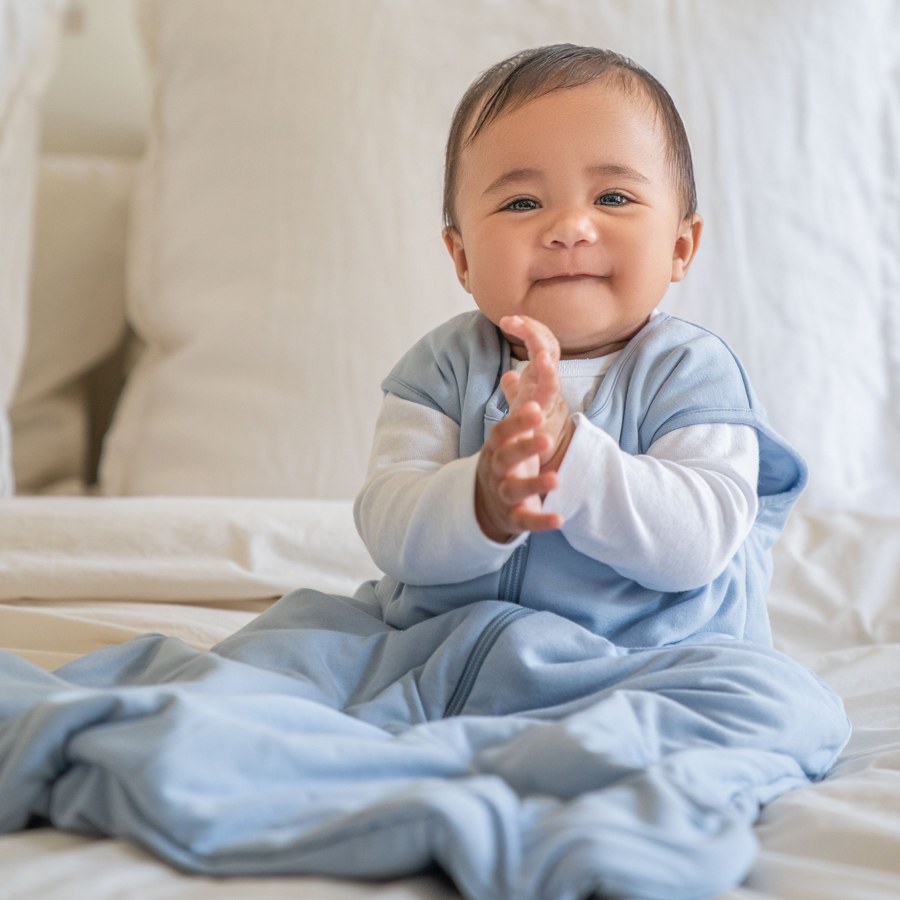
Who it is for: Families who want a simple, inexpensive cotton sleep sack for warm rooms.
The SleepSack, now sold as the Wearable Blanket 100% Cotton TOG 0.5, is 100% cotton with an inverted zipper that opens from the bottom for changes. HALO’s own guide puts 0.5 TOG at 75–77°F. HALO says its design is hip healthy and approved by the International Hip Dysplasia Institute, and that since 2024 SleepSacks are no longer embroidered.3
What it does well
The spec that decides it: the room temperature. At 0.5 TOG it is a warm-room sack, 75–77°F by HALO’s guide.3
A Note on Weighted Sleep Sacks
A weighted sleep sack used to sit in this spot, and we have taken it out. The AAP says not to use weighted blankets, sleepers, swaddles or other weighted objects on or near your baby.5,10 The CPSC’s own safe-sleep advice is “don’t use weighted blankets or weighted swaddles”, and a CPSC commissioner asked retailers to stop selling weighted infant products;11 Target, Walmart, Nordstrom and Babylist said they would.12 The worry is weight on the chest of a baby whose rib cage is still soft.11
If your baby settles better with pressure, the safe version of it is your own arms: a firm, calm hold until they are drowsy, then down on their back, on a firm flat surface, with nothing else in the crib. Our full write-up is here: Are weighted blankets safe for infants?
Final Thoughts on Safe Sleep
Buy one or two to start: babies have opinions about arms up or down, and sizes are by weight. Swaddle only until the first sign of rolling, keep the hips loose, and move to a sleep sack in the right TOG for the room.2
Frequently asked questions
What is the best swaddle for a newborn?
Our top pick is the Happiest Baby Sleepea ($34.95): an inner band, a quiet fastener and a two-way zipper make it quick to get right, and it is sized by weight from 4 lb.1 If your baby fights having their arms down, try the Love to Dream Swaddle UP.8
When should I stop swaddling?
As soon as your baby shows any sign of trying to roll over; some babies start at 2 months.2 Then move to a sleep sack that does not swaddle and lets the arms and body move freely.
Is a swaddle or a sleep sack better for a newborn?
Either is safe for a newborn on their back. A swaddle can calm the startle reflex but must stop at the first signs of rolling; a sleep sack that does not swaddle can be used as long as you like.2
What is the best sleep sack for a rolling baby?
One that does not swaddle, with the arms free and room to move, such as the Kyte Baby Sleep Bag or the HALO SleepSack.3,4 Sleep sacks that compress the arms, chest and body stop at the first signs of rolling.2
What TOG sleep sack does my baby need?
It depends on the room: a lower TOG for a warm room and a higher one for a cool room. HALO puts its 0.5 TOG at 75–77°F.3,4 Check for overheating: sweating, damp hair, flushed cheeks or fast breathing.2
Are weighted sleep sacks safe?
No. The AAP says not to use weighted blankets, sleepers or swaddles on or near a baby.5
When to ask a professional: If your baby’s hips click, their legs look uneven, or they always turn their head one way, ask your pediatrician; torticollis explains the head-turning one. For broken sleep that goes on for weeks, sleep regressions is a good place to start.
Need more than an article?
Connect with a pediatric OT, PT, or speech therapist near you.
Find a Therapist →Related DrParenting guides
All DrParenting guides →More from DrSensory
DrParenting covers the gear. DrSensory covers the development behind it, written and reviewed by clinicians.
Sources
- Happiest Baby. Sleepea Swaddle. happiestbaby.com. Price, sizes by weight, 95% organic cotton and 5% elastane, two-way zipper, extra-quiet fastener, shoulder snaps for arms out (not on X-Small), 0.5 TOG. Checked October 5, 2026.
- American Academy of Pediatrics. Swaddling: Is it Safe for Your Baby? HealthyChildren.org, last updated July 15, 2022. healthychildren.org. Checked October 5, 2026.
- HALO. Wearable Blanket 100% Cotton TOG 0.5 (SleepSack). halosleep.com. Price, 100% cotton, inverted zipper, 0.5 TOG for 75–77°F, HALO’s hip-healthy statement, and the end of the embroidery in 2024. Checked October 5, 2026.
- Kyte Baby. Sleep Bag in Sage 1.0 TOG | Bamboo Sleep Sack. kytebaby.com. Price, 97% rayon from bamboo and 3% spandex, 0.5/1.0/2.5 TOG, XS–XL for 7–50 lb, J-shaped double zipper, OEKO-TEX Standard 100, care. Checked October 5, 2026.
- American Academy of Pediatrics. How to Keep Your Sleeping Baby Safe: AAP Policy Explained. HealthyChildren.org, last updated September 11, 2026. healthychildren.org. Checked October 5, 2026.
- International Hip Dysplasia Institute. Hip-Healthy Swaddling. hipdysplasia.org. Checked October 5, 2026.
- The Ollie World. The Ollie® Swaddle. theollieworld.com. Price, one size for 0–4 months or until attempting to roll, 86% polyester and 14% spandex, 0.8 TOG, open-bottom design. Checked October 5, 2026.
- Love to Dream. Swaddle Up Original Gray (1.0 TOG cotton). lovetodream.com. Price, 5–19 lb in sizes, newborn to about 3 months or signs of rolling, arms-up design, two-way zip; also sold in 0.2 to 3.5 TOG. Checked October 5, 2026.
- Love to Dream. Transition Swaddle — Baby Transition Bags & Suits. lovetodream.com. Zip-off wings, one arm at a time. Checked October 5, 2026.
- Moon RY, et al. Sleep-Related Infant Deaths: Updated 2022 Recommendations for Reducing Infant Deaths in the Sleep Environment. Pediatrics. 2022; 150(1). doi:10.1542/peds.2022-057990
- U.S. Consumer Product Safety Commission, Statement of Commissioner Richard Trumka. Beware: Weighted Infant Swaddles and Blankets Are Unsafe for Sleep; Retailers Should Consider Stopping Sales. cpsc.gov. Checked October 5, 2026.
- U.S. Consumer Product Safety Commission, Statement of Commissioner Richard Trumka. Target, Walmart, Nordstrom, and Babylist Commit to Stop Selling Weighted Infant Products. cpsc.gov. Checked October 5, 2026.
Medical disclaimer. This page is for general educational purposes and does not constitute medical advice, diagnosis, or treatment. Always consult a qualified healthcare provider about your child. Product information is checked against the manufacturer at the date shown and can change without notice — confirm weight and age limits on the product itself before you rely on them. Talk to your pediatrician about your own child.