

Quick answer. Start before your baby crawls: anchor furniture and TVs to the wall, put gates that screw to the wall at the top of stairs, cover outlets, lock cabinets and the toilet, go cordless on window blinds, and set the water heater to 120°F.1,4,8 Then do it again at your child's height every few months, because a crawler becomes a climber; our picks cover gates, cabinet locks, outlets, anchors and corners.
The best time to start baby-proofing is before you think you need to. Many parents begin during the third trimester, tackling the big tasks before the baby arrives. A good approach is to get down on your hands and knees and see the world from a crawler’s perspective. What looks tempting? What is within reach? This simple exercise will reveal hazards you never noticed before.
Baby-proofing is an ongoing process. As your child grows from a crawler to a climber, new challenges will emerge. Re-evaluate your home’s safety every few months to stay ahead of their developing skills.
Use this detailed checklist to methodically secure every area of your home.
Key takeaways
- Anchor every heavy piece of furniture and every TV to the wall. Tip-overs are the hazard that does not announce itself.1,7
- Use gates that screw to the wall at the top of stairs; a pressure gate at the top can be pushed out.1
- Window guards or stops should keep windows from opening more than 4 inches, and only cordless window coverings remove the strangulation hazard; shortened cords only reduce it.1,4
- Set the water heater to 120°F (49°C) or lower to prevent scalding.1
- A toilet lock is a drowning precaution, not a tidiness one.8
- Cover unused outlets with covers a child cannot remove and cannot choke on, or use tamper-resistant outlets, and shorten or hide every cord.1
- Do the checklist at your child's height. Kneel down and look at the room from where they will be.
Throughout the House (General Safety)
These are the foundational tasks that apply to every room.
- Cover all electrical outlets. Use outlet covers a child cannot easily remove and that are too large to choke on, or sliding plates; if you are replacing outlets, use tamper-resistant ones.1
- Secure cords and cables. Tie up and hide all electrical cords from lamps, TVs, and chargers. Use cord shorteners or covers.
- Install safety gates. At the top of stairs, use only gates that screw to the wall; pressure-mounted gates are for the bottom of stairs and doorways. Pet gates are not child safety gates.1
- Soften sharp corners. Add corner protectors to coffee tables, media consoles, and any other sharp-edged furniture.
- Anchor heavy furniture. Secure dressers, bookshelves, and TVs to the wall using furniture anchors or straps to prevent tipping.1,7
- Install window guards and go cordless. Window guards or stops should keep windows from opening more than 4 inches, with at least one window in each room that adults can open in a fire. Cordless window coverings are the only way to remove the strangulation hazard from blind cords; shortening cords only reduces it.1,4
- Check smoke and carbon monoxide detectors. Smoke alarms on every level, inside each bedroom and outside sleeping areas, and CO alarms outside bedrooms; test them monthly.1
The Nursery
This is your baby's primary space, so it needs to be a sleep-safe sanctuary.
- Follow safe sleep guidelines. The crib should have a firm, flat mattress with a fitted sheet and nothing else—no blankets, pillows, bumpers, or stuffed animals.9
- Position the crib safely. Place the crib away from windows, blinds, cords, and wall decor that the baby could pull down.
- Secure the changing table. Use a changing pad with a safety strap and never leave your baby alone on it, even for a moment and even if strapped. Keep diapers and creams within your reach but out of the baby's.10
The Kitchen
The kitchen is full of potential dangers, from hot surfaces to sharp objects.
- Lock cabinets and drawers. Install safety latches on all lower cabinets and drawers, especially those containing cleaning supplies, chemicals, knives, or heavy pots.
- Secure appliances. Use appliance locks on the oven, refrigerator, dishwasher, and microwave.
- Install stove knob covers. These prevent little hands from turning on the stove. Use back burners whenever possible.
- Keep small magnets off the fridge. If a child swallows two or more high-powered magnets, they can pull together inside the body.5
- Secure the trash can. Use a can with a locking lid to keep hazardous waste out of reach.
The Bathroom
Bathrooms present water and chemical hazards.
- Install a toilet lock. A latch or lock on the toilet lid is one of the AAP's drowning precautions for curious toddlers.8
- Secure cabinets. Lock up all medications, toiletries, and cleaning supplies, and save Poison Help, 1-800-222-1222, in your phone.2
- Use a non-slip bath mat. Place one inside the tub to prevent slips.
- Add a faucet cover. A soft cover protects against bumps and burns.
- Set your water heater temperature. To prevent scalding, set your water heater to 120°F (49°C) or lower.1
Living and Family Rooms
This is where your baby will do most of their playing and exploring.
- Secure the fireplace. Use a fireplace screen or gate to block access.
- Manage house plants. Move potentially toxic plants out of reach or out of the house entirely.
- Check batteries in remotes. Make sure battery compartments on remotes and other small electronics are securely closed: a swallowed button battery can burn through a child's throat in as little as two hours.6
- Remove choking hazards. Regularly scan the floor for small items like coins, buttons, or small toy parts.
What should you do if your child swallows something?
For anything poisonous, call Poison Help at 1-800-222-1222.2 A swallowed button battery or high-powered magnets need emergency care at once: a button battery can burn through a child's throat in as little as two hours, and swallowed magnets can pull together inside the body.6,5 To know what your child will reach next, DrSensory's developmental milestones by age show when babies usually start to crawl, pull up and climb.
Best Baby-Proofing Products: Our Top Picks
With the right products, baby-proofing can be simple and effective. Here are our top-rated recommendations.
| Product | Best for | Price |
|---|---|---|
| Regalo Easy Step Safety Gate | Safety Gates | $44.98 |
| Safety 1st Secure-to-Explore Magnetic Locks | Cabinet Locks | $59.99 |
| Tamper-Resistant Outlets or Sliding Plates | Outlet Covers | — |
| Quakehold! 4163 Furniture Safety Straps | Furniture Anchors | $12.99 |
| Roving Cove Corner Guards | Corner Protectors | $30 |
Prices checked on the makers' sites on October 5, 2026 and may have changed since.
1. Best Safety Gates: Regalo Easy Step Safety Gate
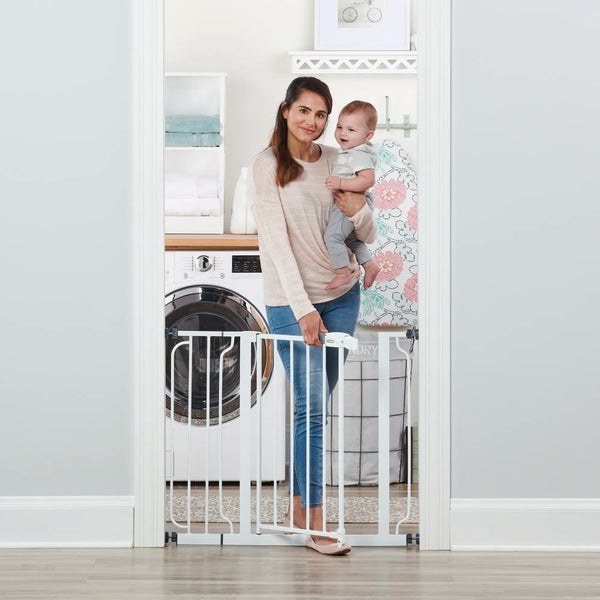
The Regalo Easy Step is a pressure-mounted walk-through gate with an all-metal frame and a one-touch release lock, so it installs in doorways and hallways without drilling, fitting openings from 29 to 38.5 inches with the included extension.11 Regalo is clear that it is never for the top of stairs.11
Pros
- Easy to install
- All-metal frame
- One-touch release, walk-through door
Cons
- Not safe for the top of stairs (requires a hardware-mounted gate)
2. Best Cabinet Locks: Safety 1st Secure-to-Explore Magnetic Locks
These locks are hidden from the outside, keeping your kitchen looking clean and uncluttered. They attach inside cabinets and drawers with strong adhesive, open with a magnetic key, and show red or green so you can see whether each one is locked.12
Pros
- Invisible from the outside
- Strong and reliable
- Red/green lock indicator
Cons
- Installation can be tricky to get perfectly aligned
3. Best Outlet Covers: Tamper-Resistant Outlets or Sliding Plates
Whichever brand you buy, the CPSC's test is the one that matters: a cover your child cannot easily remove and that is too large to choke on. If you are replacing outlets anyway, tamper-resistant receptacles do the job built in, and sliding plates close themselves when a plug comes out.1
Pros
- Nothing to lose or put back
- Close themselves when unplugged
Cons
- Tamper-resistant outlets mean replacing the receptacle
4. Best Furniture Anchors: Quakehold! 4163 Furniture Safety Straps
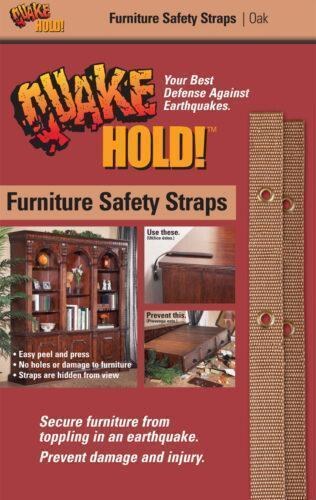
Don't take any chances with tipping furniture. These nylon straps from QuakeHOLD! peel and press onto the furniture and screw into a wall stud, two 15-inch straps to a kit, at $12.99.13 They provide peace of mind for parents of climbers.
Pros
- No drilling into the furniture
- Two straps per kit
- Inexpensive
Cons
- Needs a screw into a wall stud
5. Best Corner Protectors: Roving Cove Corner Guards
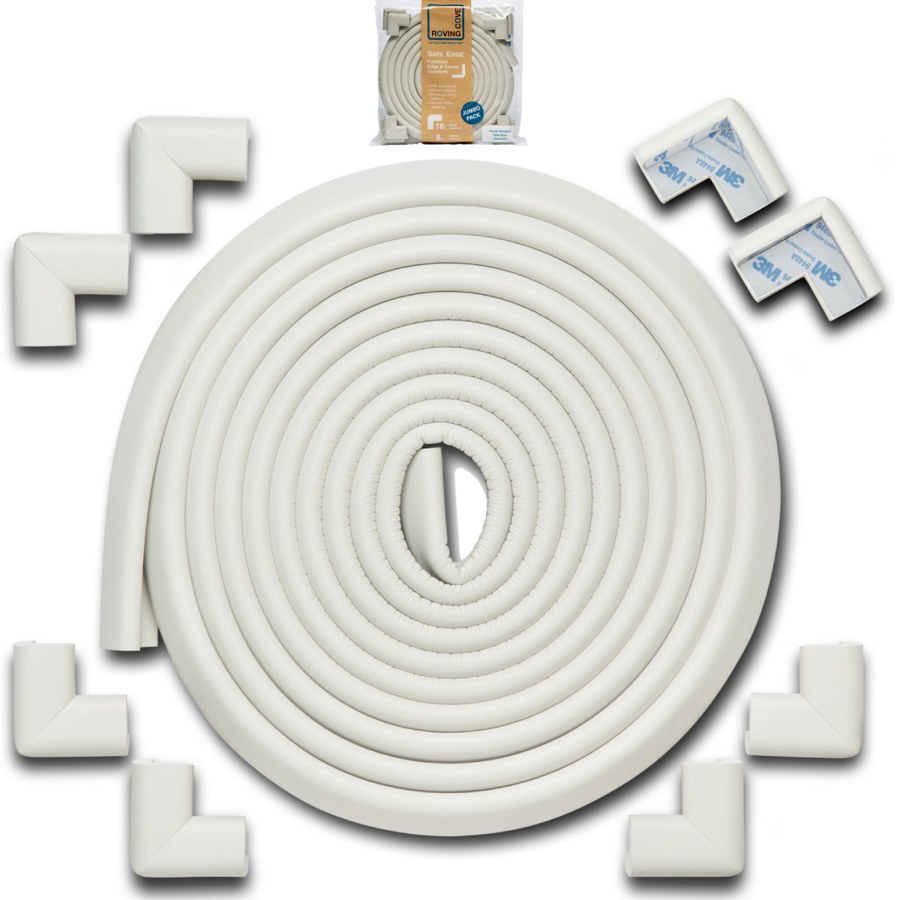
These soft, dense foam corner and edge protectors cushion sharp furniture edges. The corner pieces come pre-taped, the edge strip goes on with the included 3M double-sided tape, and they come in three colors; 18 feet of edge and 8 corners cost $30.14
Pros
- High-density foam
- Easy to install
- Three colors
Cons
- Adhesive may damage some delicate furniture finishes upon removal
A Safe Space for Curious Minds
Baby-proofing your home is one of the most important things you can do to protect your child. By taking a proactive, room-by-room approach and investing in high-quality safety products, you create a secure environment where your little one can safely explore their world. Remember that supervision is the most effective safety tool of all, but a well-proofed home provides a crucial layer of defense for those moments when you can’t be everywhere at once.
Frequently asked questions
When should you start baby-proofing?
Before you think you need to: many parents start in the third trimester, and the rest gets done before the baby crawls. Get down to a crawler's height to see what is in reach, and redo it every few months as your child learns to climb.
What baby-proofing products do you actually need?
Furniture and TV anchors, gates that screw to the wall for the top of stairs, outlet covers or tamper-resistant outlets, cabinet and toilet locks, cordless window coverings, and working smoke and carbon monoxide alarms.1,4,8
Can you use a pressure-mounted gate at the top of the stairs?
No. The CPSC says to use only gates that screw to the wall at the top of stairs, and Regalo says the pressure-mounted Easy Step must never be used there.1,11
Are cord stops enough for window blinds?
No. The CPSC says cordless window coverings are the only option that removes the strangulation hazard; shortening or stopping cords only reduces it.4
What temperature should a water heater be set to for a baby?
120°F (49°C) or lower, to prevent scalding.1
Need more than an article?
Gear can only do so much. If something about how your child eats, moves, or talks has been on your mind, a pediatric therapist is the person who assesses it — and most families do not need a referral to ask.
Find a therapist near you →Related DrParenting guides
All DrParenting guides →More from DrSensory
DrParenting covers the gear. DrSensory covers the development behind it, written and reviewed by clinicians.
Sources
- U.S. Consumer Product Safety Commission. Childproofing Your Home - Several Safety Devices to Help Protect Your Children from Home Hazards. cpsc.gov. Checked August 21, 2026.
- American Academy of Pediatrics. Childproofing Your Home for Poisons. healthychildren.org. Checked August 21, 2026.
- U.S. Consumer Product Safety Commission. Recalls & Product Safety Warnings. cpsc.gov. Checked August 21, 2026.
- U.S. Consumer Product Safety Commission. Window Covering Cords. cpsc.gov. Checked October 5, 2026.
- U.S. Consumer Product Safety Commission. Magnets. cpsc.gov. Checked October 5, 2026.
- U.S. Consumer Product Safety Commission. Button Cell and Coin Batteries. cpsc.gov. Checked October 5, 2026.
- U.S. Consumer Product Safety Commission. Anchor It! About Us. anchorit.gov. Checked October 5, 2026.
- American Academy of Pediatrics. Drowning Prevention for Curious Toddlers: What Parents Need to Know. healthychildren.org. Checked October 5, 2026.
- American Academy of Pediatrics. How to Keep Your Sleeping Baby Safe: AAP Policy Explained. healthychildren.org. Checked October 5, 2026.
- American Academy of Pediatrics. Changing Table Safety. healthychildren.org. Checked October 5, 2026.
- Regalo. Easy Step® Safety Gate. regalo-baby.com. Checked October 5, 2026.
- Safety 1st. Secure-to-Explore Adhesive Magnetic Locks. safety1st.com. Checked October 5, 2026.
- QuakeHOLD!. Furniture Strap. quakehold.com. Checked October 5, 2026.
- Roving Cove. Hefty Fit Edge and Corner Protectors. rovingcove.com. Checked October 5, 2026.
Medical disclaimer. This page is for general educational purposes and does not constitute medical advice, diagnosis, or treatment. Always consult a qualified healthcare provider about your child. Product information is checked against the manufacturer at the date shown and can change without notice — confirm weight and age limits on the product itself before you rely on them. Talk to your pediatrician about your own child.