
DrParenting
Our Experience With ISR Swim Lessons
He went from cautious observer to an excited participant. This is what that actually looked like.
- Plain Language
- Patient Focused
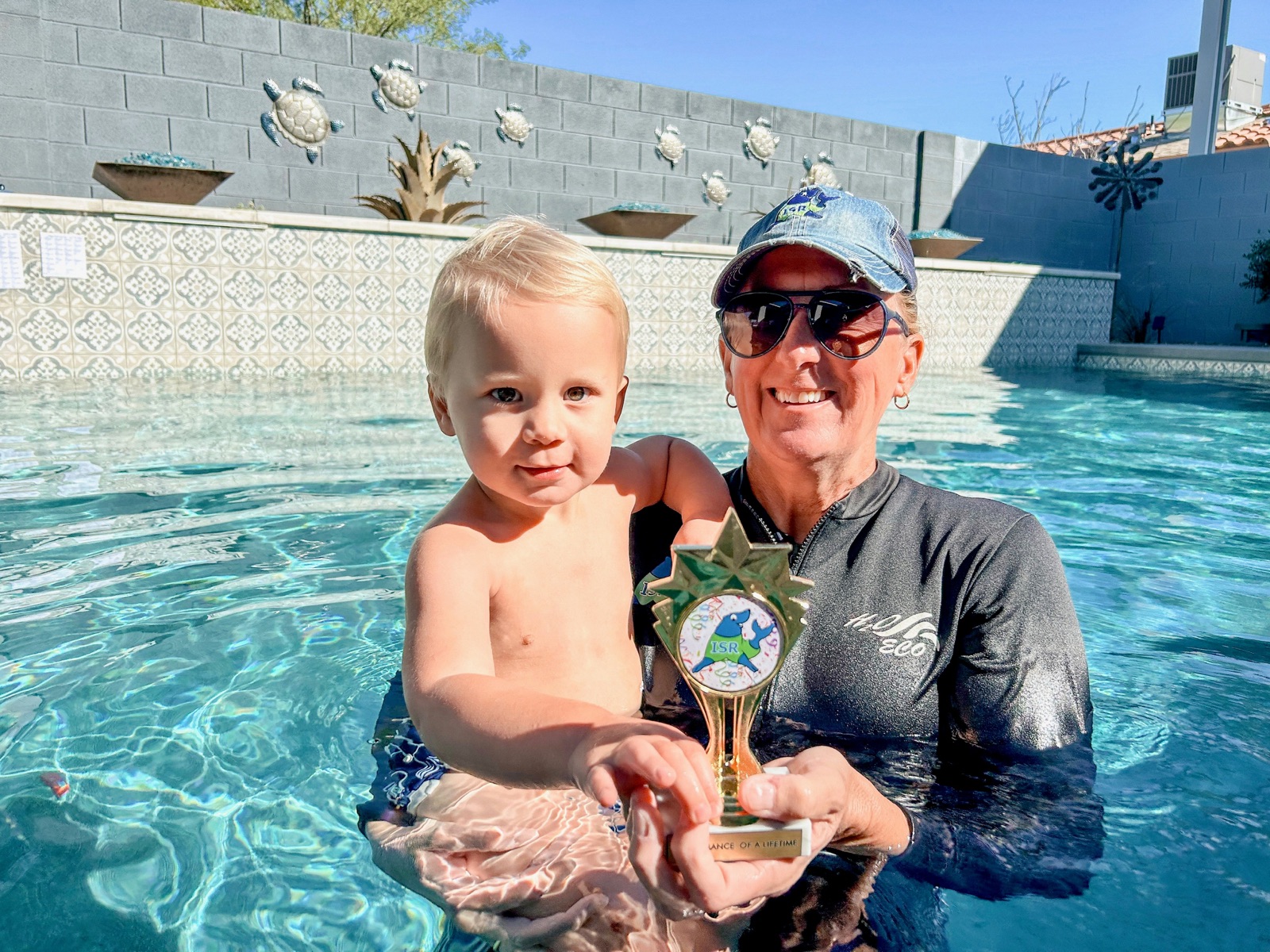
Disclosure. This is a personal account, not a clinical recommendation. Our son took ISR lessons with Gail Robinson in Henderson, Nevada. She is our son’s instructor and we have no financial relationship with her or with Infant Swimming Resource — nobody paid for this piece and nothing was exchanged for the mention. For what the evidence says about swim lessons and drowning risk, see water safety for autistic and neurodivergent children.
Key takeaways
- This is a personal account, not a clinical recommendation, and nobody was paid for it.
- ISR is a survival-swim program taught from about six months, aimed at a self-rescue sequence rather than a stroke.
- Lessons are short and frequent: about ten minutes, five days a week, for several weeks. The frequency is the hard part, not the lessons.
- The format suited a child who does better with one adult, a predictable routine, and the same thing happening in the same order.
- What changed most was not the swimming but that he was solving a problem and pleased to be doing it.
- It is a layer, not a solution. He is safer than he was, and he is not safe alone near water, and both are true.
- For what the evidence says about swim lessons and drowning risk, see the water safety page rather than this one.
What ISR is, and how it’s structured
Infant Swimming Resource is a survival-swim program. It takes children from about six months, and the aim is a self-rescue sequence rather than a stroke: get into a safe floating position, breathe, and — once they are old enough — decide whether to float again or swim to the edge.
The format is short and frequent. Lessons are one-on-one, about ten minutes, five days a week for several weeks. That sounds relentless written down, and it is the part I would have talked myself out of if I had thought about it too long. Ten minutes is not long, and the frequency is the point: each session builds on the last one while it is still fresh.
Why we chose it
We live where there are pools. That is the whole reason. The fear of water with a small child who moves fast is not abstract in Nevada, and I wanted him to have something in his body that would work if I was not fast enough one day.
I also liked that the lessons were individual. My son does better with one adult, a predictable routine, and the same thing happening in the same order — and that is exactly what this is.
What the lessons were actually like
Structured, repetitive, and short. Each session was carefully built on the one before, reinforcing what he had learned while adding something new. The consistency is what made it work for him: he knew what was coming, which meant he could spend his attention on the skill instead of on the situation.
There was play in it too, which I had not expected from something framed around survival. The lessons are designed so a child is engaged rather than enduring it, and he was.
Over the weeks he learned to jump in, turn onto his back, get into a safe floating position, look around, work out how far he was from the wall, and then decide what to do next — float again, or swim for the edge.
What changed
He went from cautious observer to an excited participant. Watching him confidently jump into the water, get himself into a safe float, assess his distance from the wall, and then choose his next move is genuinely something to see.
What struck me most was not the swimming. It was that he was solving a problem — and that he was pleased to be doing it. I am hoping that carries over into other things.
The rest was social. He can now join in around a pool with other children instead of being the one held at the edge, and the confidence that came with that showed up outside the water too. For me it was the difference between dreading summer and looking forward to it.
What I’d tell another parent
That it is a layer, not a solution. He is safer than he was, and he is not safe alone near water, and those are both true. I still watch him the way I watched him before.
That the frequency is the hard part, not the lessons. Five days a week for several weeks is a real commitment, and the short sessions are what makes it survivable.
And that the right instructor matters more than the brand on the program. Ask whether they have worked with a child like yours, ask to watch a lesson before you book, and know that you are allowed to stop.
Water safety, whatever lessons you choose
Swim lessons are one layer of protection. The American Academy of Pediatrics recommends lessons for many children from age 1, and says there is no evidence that infant swim programs for babies under 1 lower drowning risk; lessons, at any age, do not make a child "drown proof".1,2 The other layers matter as much:
- Supervision: close, constant and attentive, within arm's reach for young children, every time they are in or near water.1,3
- A fence on all four sides of a pool, separating it from the house and the rest of the yard.3
- Life jackets that are Coast Guard-approved, with adults wearing theirs too.1
- CPR: caregivers who know it, and know how to make a safe rescue.1
More children aged 1 to 4 die from drowning than from any other cause.4
Where we went
We did our lessons with Gail Robinson at Swimming Kids LV in Henderson, Nevada. She is the reason this went as well as it did.
Frequently asked questions
What are ISR swim lessons?
Infant Swimming Resource is a survival-swim program for children from about six months. The aim is a self-rescue sequence rather than a stroke: get into a safe floating position, breathe, and, once old enough, decide whether to float again or swim to the edge.5
How often are ISR lessons?
One-on-one, about ten minutes, five days a week for several weeks. The frequency is the hard part, and the short sessions are what make it manageable.5
Do ISR lessons make a child safe in the water?
No. In this family's words, it is a layer, not a solution: their son is safer than he was, and he is not safe alone near water. They still watch him the way they did before.
How do you choose an ISR instructor?
Ask whether they have worked with a child like yours, ask to watch a lesson before you book, and know that you are allowed to stop. The right instructor matters more than the brand on the program.
Sources
- Shenoi RP, McCallin T, Farrell C, et al. Prevention of Drowning: Policy Statement. Pediatrics. 2026;158(1):e2026077410. doi:10.1542/peds.2026-077410
- American Academy of Pediatrics. Swim Lessons for Children: When to Start & What to Consider. healthychildren.org. Checked October 5, 2026.
- American Academy of Pediatrics. Drowning Prevention for Curious Toddlers: What Parents Need to Know. healthychildren.org. Checked October 5, 2026.
- Centers for Disease Control and Prevention. Drowning Facts. cdc.gov. Checked October 5, 2026.
- Infant Swimming Resource. Infant Swimming Resource. infantswim.com. Checked October 5, 2026.
Medical disclaimer. This page is for general educational purposes and does not constitute medical advice, diagnosis, or treatment. Always consult a qualified healthcare provider about your child.