
Dental and oral development
When Is Thumb Sucking a Problem? Ages, Teeth, and What Actually Helps
It’s normal until the permanent front teeth arrive. Here is how to tell where your child is, and what to do if it’s time.
- Expert Reviewed
- Plain Language
- Patient Focused
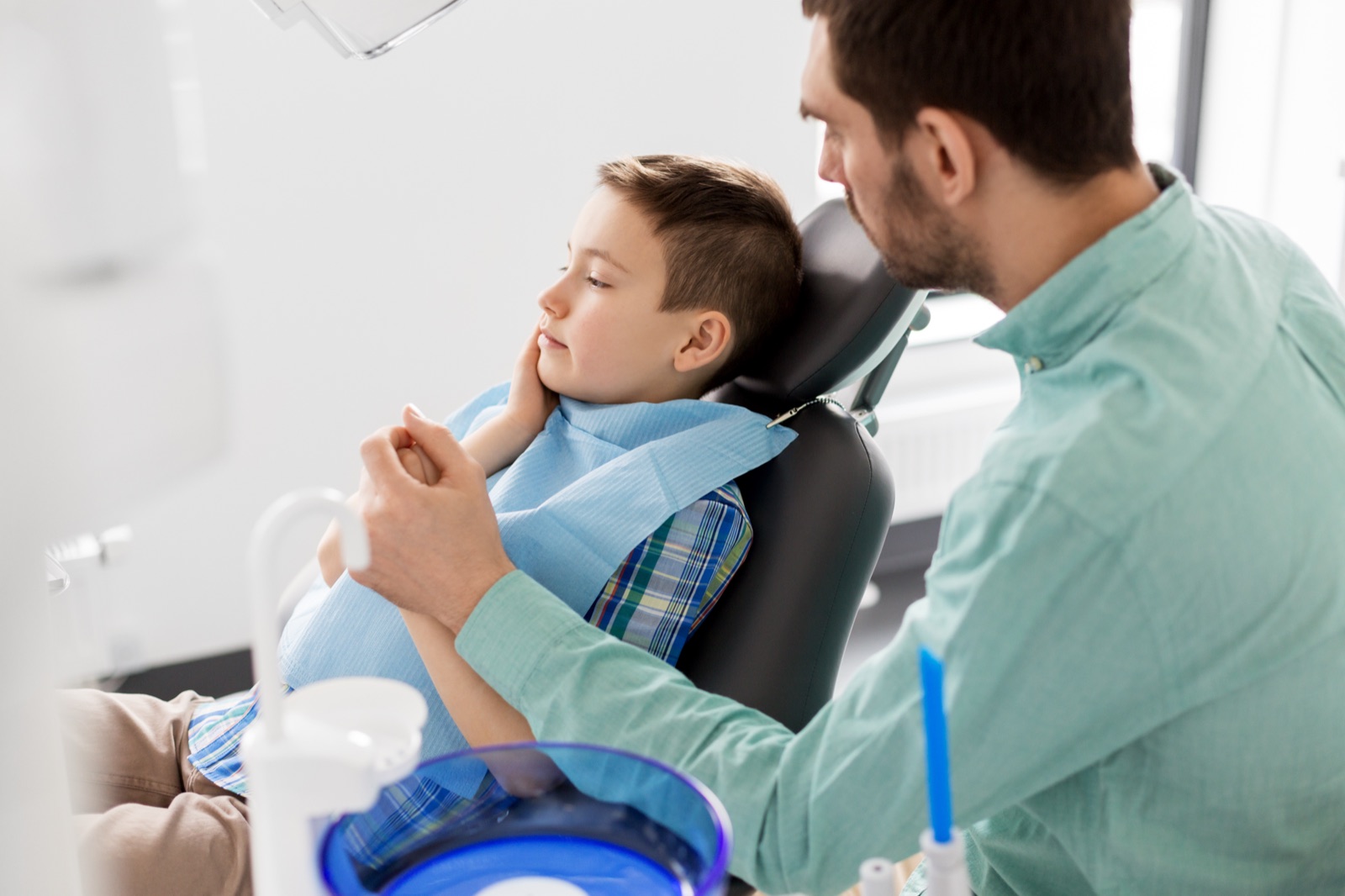
Thumb sucking is normal self-soothing in babies and toddlers, and the American Dental Association says children usually stop between two and four, or by the time the permanent front teeth are ready to erupt.1 The risk to teeth is tied to that eruption rather than to a birthday, and to how vigorously a child sucks rather than simply whether. Prolonged sucking is associated with an anterior open bite and a posterior crossbite.2 To help a child stop, the two approaches with trial evidence are positive reinforcement and a dental habit appliance.4 Scolding and shaming are not among them. See a pediatric dentist if the habit continues past five, if the front teeth are being pushed forward, or if speech has changed.
Key takeaways
- Sucking is a reflex with a purpose: it soothes. It is expected in infants and toddlers, and it is not a habit to break at that age.
- The ADA says most children stop between two and four, or by the time the permanent front teeth are ready to erupt.
- Intensity matters as much as age. A thumb rested passively in the mouth is, in the ADA’s words, less likely to cause difficulty than vigorous sucking.
- Prolonged sucking is associated with anterior open bite and posterior crossbite. Some of it corrects when the habit stops; a study that followed 372 children found some arch and bite changes persisted well beyond it.
- Thumb and pacifier habits are not interchangeable: the same study found prolonged pacifier use produced changes different from those of digit sucking.
- Speech effects, mainly on s and z, can follow an open bite and usually settle as the bite closes.
- What has trial evidence: positive reinforcement, and a habit appliance from a dentist. Both rest on low-quality evidence, which is still more than anything else has.
- A pediatric dentist should look if the habit persists past five, if teeth are moving, or if speech has changed.
When should thumb sucking stop?
Sucking is a reflex present from before birth and a reliable way for a baby or toddler to settle. At that age it isn’t a habit to break; it’s a skill. The American Dental Association puts it plainly: children usually stop sucking between the ages of two and four, or by the time the permanent front teeth are ready to erupt.1
That second clause is the one that matters. The risk to dental development is tied to an event — the arrival of the permanent front teeth, typically around six — not to a birthday. The ADA also notes that children who rest their thumbs passively in their mouths are less likely to have difficulty than those who suck vigorously.1 The American Academy of Pediatric Dentistry treats non-nutritive sucking as normal in infants and young children and associates persistent habits with anterior open bite and posterior crossbite.2
| Age | What’s typical | Risk to teeth | What to do |
|---|---|---|---|
| Under 2 | Frequent sucking for comfort and sleep | None worth acting on | Nothing |
| 2–4 | Sucking narrowing to sleep and stress; many children stop | Low | Gentle encouragement if the child is ready; no pressure |
| 4–6 | A minority still suck, mostly at night | Rising with intensity and hours per day | Positive reinforcement; mention it to the dentist |
| 6+, permanent front teeth erupting | Persistent habit | Real: open bite, crossbite, flared incisors | Dentist evaluation; habit appliance if needed |
A dentist sees the effects before a parent does, which is one argument for the first dental visit by age one and regular visits after. Starting oral care early makes those visits ordinary rather than an event.
How does thumb sucking affect teeth and bite?
Two ways, both from pressure applied over time. The thumb pushes the upper front teeth forward and holds the lower ones back, and the cheeks squeeze inward during sucking, narrowing the upper arch.
- Anterior open bite. The front teeth don’t meet when the back teeth are closed — a gap the thumb has been holding open.
- Posterior crossbite. The upper back teeth bite inside the lower ones, from the narrowed upper arch.
- Flared upper incisors and increased overjet. The upper front teeth sit further forward than they should.
A study that followed 372 children from birth, taking dental models at four and five, found open bite, crossbite and increased overjet all tracked the duration of the sucking habit.3 Two findings from it are worth carrying. First, prolonged pacifier habits produced changes to the arches and the bite that were different from the effects of digit sucking — the two are not interchangeable, so advice written for one doesn’t transfer cleanly to the other. Second, some of the arch and occlusal changes persisted well beyond the point the habit stopped.3
That second point tempers a common reassurance. It is true that an open bite in the baby teeth often closes once the habit ends, and the earlier it ends the better the odds. It is not true that stopping reliably undoes everything. How the bite sits also shapes chewing and swallowing, and it interacts with tongue posture and jaw development.
What an earlier version of this page called an “imbalanced facial structure” is an over-statement. A narrowed arch and an open bite are real and documented. A changed face is not something the evidence supports attributing to thumb sucking.
Does thumb sucking affect speech?
It can, indirectly. When the bite is open at the front, the tongue tends to sit forward and push between the teeth, which affects the sounds made there — s and z, sometimes sh and th. That is the frontal lisp some thumb-sucking children have. The tongue posture usually normalizes as the bite closes, and a speech-language pathologist can help if it doesn’t. We were not able to find a peer-reviewed study isolating that link in children, so treat it as the clinical explanation it is rather than a measured finding.
Thumb sucking does not cause a language delay. A child with few words at two has a different question, and the speech and language milestones, delayed speech, and apraxia of speech pages are where that starts. The separate question of how the teeth themselves shape early sounds is covered on baby teeth and speech development.
Is thumb sucking a sensory need?
For some children it is part of a wider pattern. A child who sucks a thumb, chews collars and sleeves, mouths objects past the usual age, and seeks deep pressure may be getting oral input they need. Taking the thumb away without replacing that input tends to move the habit somewhere else — the collar, the pencil, the nails.
For those children the substitution matters: crunchy and chewy foods, a chewable pencil topper or necklace for the school day, a straw cup. Our page on oral motor development covers the skill side, and an occupational therapist can assess whether the sucking sits inside a broader sensory-seeking pattern. Where a child also drools past the usual age or seems unaware of the mouth, nighttime drooling is worth reading alongside this.
For most children it is not a sensory issue. It is a comfort habit, and it responds to the approaches below.
How do I help my child stop? What the evidence supports
A Cochrane review searched for randomized trials of every approach used to stop these habits — advice, removing the object, orthodontic appliances, aversive taste, and behavior modification. It found six trials covering 252 children aged two and a half to eighteen, all at high risk of bias. Two things came out of it: orthodontic appliances and psychological interventions including positive reinforcement were both more likely to stop digit sucking than no treatment, on low-quality evidence.4
| Method | Evidence | Notes |
|---|---|---|
| Positive reinforcement — sticker chart, praise, small rewards | Supported, low-quality evidence4 | Reward a thumb-free stretch, not a thumb-free day. Start with short windows. The ADA’s own first tip is to praise a child for not sucking.1 |
| Habit appliance — palatal crib, fitted by a dentist | Supported, low-quality evidence4 | For a child over about five whose habit persists and whose teeth are affected. One small trial favored a crib over a palatal arch, on very low-quality evidence. |
| Gentle reminders and a replacement | Not separately trialed | “Hands busy” — something to hold at bedtime, a fidget in the car. |
| Bitter-tasting nail preparation | No trial evidence. The Cochrane review searched for it and found none.4 The ADA lists it among things a dentist may suggest1 | Only with the child’s agreement, never as a punishment, and alongside reinforcement rather than instead of it. |
| Thumb guards, gloves, a sock at night | No trial evidence; the ADA lists bandaging or a sock as a reminder1 | A reminder for a willing child. Not a restraint for an unwilling one. |
| Talking it through with the child | Necessary for all of the above | A child who wants to stop, stops. One who is being made to, doesn’t. |
One claim worth not making: the review’s estimate for an appliance combined with a psychological intervention had a confidence interval running from 0.97 to 41.96 — it crosses no effect, so combining them is not something the evidence establishes, whatever it may do in practice.4
A practical sequence: wait until the child is old enough to want to stop, usually four or five, and has a reason they understand. The ADA suggests addressing what the sucking is soothing rather than only the sucking, and involving an older child in choosing the method.1 Pick one time of day — car rides, television — and reward thumb-free time there. Expand. Handle bedtime last; it is the hardest. If the habit continues past six and the dentist sees the bite changing, ask about an appliance.
What doesn’t work, or makes it worse?
- Scolding, shaming, or teasing. Stress increases the urge to suck, and it teaches a child to hide it rather than stop.
- Pulling the thumb out. Attention reinforces. The habit returns the moment you are not looking.
- Restraint without the child’s agreement. The ADA suggests a sock or a bandage as a reminder for a child who wants to stop; a child who simply cannot reach the thumb will find another comfort, and the need that drove it is still there.
- Starting before the child is ready. A two-year-old cannot decide to stop sucking. Waiting is not doing nothing.
- Doing nothing past six when the bite is visibly changing. That is the window where self-correction becomes less likely.
When should a dentist look?
- The habit continues past five.
- The upper front teeth are moving forward, or a gap opens between the front teeth when the back teeth close.
- Speech has changed — a new lisp.
- Calluses, cracked skin, or infection on the thumb.
- You have tried reinforcement for two to three months without change.
A pediatric dentist can assess the bite and the arch, say whether the changes are likely to self-correct, fit a habit appliance if one is warranted, and refer to an orthodontist or a speech-language pathologist. They will also rule out the things that look similar: a persistent open mouth posture can come from an oral restriction rather than from sucking. Our dental and oral development hub covers what to expect at a pediatric dental visit.
Frequently asked questions
At what age should a child stop sucking their thumb?
The ADA says children usually stop between two and four, or by the time the permanent front teeth are ready to erupt — typically around six. The eruption is the event that matters, not the birthday.
Is thumb sucking harmful before age 4?
No. It is developmentally normal self-soothing, and most children give it up without any intervention.
Does thumb sucking cause an overbite?
It is associated with an anterior open bite, where the front teeth don’t meet, with posterior crossbite, and with the upper front teeth flaring forward and increased overjet. Duration and intensity of the habit are what drive it.
Will the teeth fix themselves if my child stops?
Often partly. An open bite in the baby teeth frequently closes once the habit ends, and the earlier it ends the better. But in a study that followed 372 children, some arch and bite changes persisted well beyond the point the habit stopped, so stopping is not a guarantee that everything resolves.
Does thumb sucking cause a lisp?
It can, indirectly: an open bite lets the tongue sit forward, which affects s and z. This usually settles as the bite closes, and a speech-language pathologist can help if it doesn’t. We were not able to find a study isolating the link in children.
What’s the best way to stop thumb sucking?
Positive reinforcement — rewarding thumb-free time in short windows and expanding them — and, when that isn’t enough, a habit appliance fitted by a dentist. Those are the two approaches a Cochrane review found more effective than no treatment, on low-quality evidence.
Does bitter nail polish work?
The Cochrane review looked for trials of aversive-taste preparations and did not find evidence for them. The ADA lists bitter medication among things a dentist may suggest. If used at all, use it with the child’s agreement and alongside reinforcement, never as a punishment.
What is a palatal crib?
A small dental appliance fitted behind the upper front teeth that makes thumb sucking unrewarding. A dentist fits it, usually for a child over five whose habit persists and whose teeth are affected.
Is thumb sucking worse than a pacifier?
They are not the same. A study following 372 children found prolonged pacifier habits produced changes to the arches and bite that differed from the effects of digit sucking. A pacifier can be removed and a thumb cannot, which cuts the other way. Neither is harmful in infancy.
Is thumb sucking a sensory issue?
For some children it is part of a wider oral-seeking pattern, and replacing the input matters or the habit simply moves. For most it is a comfort habit.
Can thumb sucking affect adult teeth?
Yes, if it continues past the eruption of the permanent front teeth. That is why around six is the point at which a dentist should be involved.
Sources
- American Dental Association. Thumbsucking. MouthHealthy. States that children “usually stop sucking between the ages of two and four years old” or “by the time the permanent front teeth are ready to erupt,” and that “if children rest their thumbs passively in their mouths, they are less likely to have difficulty than those who vigorously suck their thumbs.” Its suggestions include praising a child for not sucking, addressing the cause of any anxiety, involving older children in choosing the approach, bandaging the thumb or a sock at night as a reminder, and a dentist-prescribed bitter medication or mouth appliance. mouthhealthy.org
- American Academy of Pediatric Dentistry. Management of the Developing Dentition and Occlusion in Pediatric Dentistry. AAPD Best Practices. Describes non-nutritive sucking as normal in infants and young children and associates prolonged habits with anterior open bite and posterior crossbite. aapd.org
- Warren JJ, Bishara SE. Duration of nutritive and nonnutritive sucking behaviors and their effects on the dental arches in the primary dentition. American Journal of Orthodontics and Dentofacial Orthopedics. 2002;121(4):347–356. 372 children followed longitudinally from birth, with study models at four to five years assessed for posterior crossbite, anterior open bite and overjet. “Prolonged pacifier habits resulted in changes to the dental arches and the occlusal parameters that were different from the effects of digit sucking,” and some changes “persisted well beyond the cessation” of the habit. doi:10.1067/mod.2002.121445
- Borrie FRP, Bearn DR, Innes NPT, Iheozor-Ejiofor Z. Interventions for the cessation of non-nutritive sucking habits in children. Cochrane Database of Systematic Reviews. 2015;(3):CD008694. Six trials, 252 children aged two and a half to eighteen, all at high risk of bias. “Low quality evidence that orthodontic appliances (palatal arch and palatal crib) and psychological interventions (including positive and negative reinforcement) are effective at improving sucking cessation in children,” and very low quality evidence that a palatal crib is more effective than a palatal arch. The estimate for an appliance combined with a psychological intervention was RR 6.36, 95% CI 0.97 to 41.96. doi:10.1002/14651858.CD008694.pub2
Medical disclaimer. This page is for general educational purposes and does not constitute medical advice, diagnosis, or treatment.