
Adaptive sports and play for kids, with a state-by-state table
The national programs that open sports, riding, cycling and play to children with disabilities, who each one serves in its own words, and what each state has listed.
- Plain Language
- Patient Focused

Quick answer
Quick answer. Adaptive sports for children run through a few national networks: Special Olympics, Miracle League baseball and Move United’s chapters and clubs. Adaptive riding, AMBUCS adaptive tricycles and accessible public playgrounds add more ways to play. Most programs are run locally, so the table below shows what each state lists.
Key takeaways
7 points
- Special Olympics athletes are 8 or older with an intellectual disability, with no upper age limit; its Young Athletes play program serves children ages 2 to 7, with and without intellectual disabilities.1,2
- In Miracle League baseball, every player bats once each inning, every player scores a run, and each team and each player wins every game.3
- Move United says its 247 member organizations in 45 states serve over 131,000 youth and adults each year.4
- Adaptive riding is riding lessons; hippotherapy is a tool an occupational, physical or speech therapist uses inside therapy, and the child does not control the horse.5,6,7
- Local AMBUCS chapters help families with forms, a therapist fitting and fundraising for an Amtryke adaptive tricycle; where there is no chapter, the National Wish List helps riders with limited financial resources pay for one. A physical or occupational therapist evaluates every rider.8,9
- Federal play-area rules require at least one of each type of ground-level play component, and at least half of the elevated ones, to be on an accessible route.10
- Youth ages 6 through 17 need at least 60 minutes of moderate-to-vigorous activity a day, and youth with disabilities should be as active as they can.11,12
Which national programs offer sports and play for children with disabilities?
Most adaptive sports for children come through a handful of national organizations, each with local programs. The table sets them side by side, in each organization’s own words, as read on November 23, 2026.
| Program | Who it serves, as it says | What a child does | How to find one |
|---|---|---|---|
| Special Olympics | People 8 and older with an intellectual disability; Young Athletes for ages 2 to 71,2 | 30-plus Olympic-style individual and team sports13 | The state program office (state table below) |
| Miracle League | Children and adults with disabilities3 | Baseball on a flat, cushioned, rubberized field, with buddies to help3 | The league’s corporate office14 |
| Move United | Youth and adults, through community adaptive sports4 | Programs run by member chapters and clubs15 | Its locations list (state table below) |
| Adaptive riding | Riders with special needs, taught by specially trained instructors5 | Riding lessons for recreation, competition, socialization or fitness5 | Adaptive riding vs hippotherapy |
| AMBUCS Amtryke | Children and adults8 | Rides a hand, foot, or hand-and-foot adaptive tricycle8 | Adaptive bikes and Amtryke funding |
| Accessible playgrounds | Play areas for children ages 2 and older10 | Swings, slides, climbers and panels reached by an accessible route10 | Inclusive playgrounds |
Who can join Special Olympics, and what is Young Athletes?
Special Olympics says an athlete must be at least 8 years old and identified by an agency or professional as having an intellectual disability, a cognitive delay measured by formal assessment, or significant learning or vocational problems from a cognitive delay that need specially designed instruction. There is no upper age limit, and all sports are coached by certified volunteer coaches.16,1
Competitions are grouped so athletes compete against others of similar gender, age and ability. For athletes with profound disabilities, the Motor Activities Training Program emphasizes training and taking part rather than competing.16
Young Athletes is an early childhood play program for children ages 2 to 7, with and without intellectual disabilities. It introduces running, kicking and throwing, and families can do it at home, at school or in the community with the program’s activity guide and basic equipment. Special Olympics reports that, in its studies, children with intellectual disabilities gained seven months in motor skills after two months in the program.2 To start, Special Olympics asks families to get in touch with the office nearest them; each state’s program is named in the table below.1,17
How does a Miracle League baseball game work for players?
The first Miracle League field was built with a cushioned rubberized surface to help prevent injuries, wheelchair accessible dugouts and a completely flat surface, so players using wheelchairs or walkers, or players with low vision, meet no barriers.3 The league’s rules keep everyone in the game:
- Every player bats once each inning.
- Every player scores a run before the inning ends, and the last one up gets a home run.
- Community children and volunteers serve as buddies to help players.
- Each team and each player wins every game.3
The league says there are over 350 Miracle League organizations, including in Puerto Rico, Canada and Mexico. It does not publish a map or list of leagues; its find page asks families to contact the corporate office for the closest one.3,14
What does Move United offer, and where are its programs?
Move United calls itself the national leader in community adaptive sports, with 247 member organizations in 45 states and over 131,000 youth and adults taking part each year in recreation, competition and education programs.4 Its locations list showed 262 entries with a city and state, most marked as a chapter, an adaptive club, an inclusive club, an affiliate or an event partner. The state table below counts the entries marked Chapter, Adaptive Club or Inclusive Club, plus one California entry, in Irvine, that the list shows without a type; the 15 affiliates (some local groups, some national sport bodies) and the 4 event partners are left out.15 Ask a program directly which sports, ages and costs it offers.
Is adaptive riding the same thing as hippotherapy?
No. The American Hippotherapy Association, Inc. (AHA, Inc.) describes adaptive riding as horseback riding lessons for people with special needs, taught by instructors with specialized training, and treats "therapeutic riding" as another name for it.5 Hippotherapy is different: it is how licensed occupational therapists, physical therapists and speech-language pathologists use the horse’s movement as a therapy tool. AHA, Inc. says it is not a separate service or program, and that the patient does not control the horse.6,7 The riding and hippotherapy guide explains who provides each and how to ask about costs.
How can a family get an adaptive tricycle through AMBUCS?
National AMBUCS says it has provided more than 40,000 Amtrykes. Families can go through a local chapter, which helps with forms, a therapist fitting and fundraising; join the National Wish List if no chapter is near; or buy an Amtryke directly.9,8 AMBUCS has more than 150 chapters in over 35 states, and the National Wish List can take up to two years.18 The adaptive bikes guide walks through each route.
What makes a public playground accessible to children who use wheelchairs?
The U.S. Access Board’s play-area rules cover newly designed or built play areas for children ages 2 and older, and were adopted into the 2010 ADA Standards without changes. At least one of each type of ground-level play component, such as one swing and one spring rider, must be on an accessible route, along with at least 50 percent of the elevated play components.10 The Board adds that the standards are only minimums. The inclusive playgrounds guide shows what to look for at a park.
How much active play do children with disabilities need?
The federal Physical Activity Guidelines say youth ages 6 through 17 need at least 60 minutes of moderate-to-vigorous activity each day, and that adults caring for children ages 3 through 5 should aim for at least 3 hours of active play a day.11 The guidelines note that children and adolescents with disabilities are more likely to be inactive. They advise youth with disabilities to work with a health care professional or physical activity specialist, and to be as active as possible when they cannot meet the guidelines.12 The benefits guide covers what organized sports and play can add.
Which adaptive sports programs does each state list?
The table lists, for each state and the District of Columbia, the Special Olympics program named on Special Olympics North America’s list of United States Programs, and the number of Move United chapters and clubs on Move United’s locations list. Both lists were read on November 23, 2026.17,15 Miracle League has no online list, so contact its corporate office for the nearest league.14 The last column links DrSensory’s physical therapy and occupational therapy listings for the state.
| State | Special Olympics program | Move United chapters and clubs listed | DrSensory directory |
|---|---|---|---|
| Alabama | Special Olympics Alabama | 4 | PT clinics, OT clinics |
| Alaska | Special Olympics Alaska | 2 | PT clinics, OT clinics |
| Arizona | Special Olympics Arizona | 6 | PT clinics, OT clinics |
| Arkansas | Special Olympics Arkansas | None listed | PT clinics, OT clinics |
| California | Special Olympics Northern California; Special Olympics Southern California | 16 | PT clinics, OT clinics |
| Colorado | Special Olympics Colorado | 21 | PT clinics, OT clinics |
| Connecticut | Special Olympics Connecticut | 3 | PT clinics, OT clinics |
| Delaware | Special Olympics Delaware | None listed | PT clinics, OT clinics |
| District of Columbia | Special Olympics District of Columbia | None listed | PT clinics, OT clinics |
| Florida | Special Olympics Florida | 7 | PT clinics, OT clinics |
| Georgia | Special Olympics Georgia | 3 | PT clinics, OT clinics |
| Hawaii | Special Olympics Hawaii | 1 | PT clinics, OT clinics |
| Idaho | Special Olympics Idaho | 4 | PT clinics, OT clinics |
| Illinois | Special Olympics Illinois | 7 | PT clinics, OT clinics |
| Indiana | Special Olympics Indiana | 4 | PT clinics, OT clinics |
| Iowa | Special Olympics Iowa | 1 | PT clinics, OT clinics |
| Kansas | Special Olympics Kansas | 1 | PT clinics, OT clinics |
| Kentucky | Special Olympics Kentucky | 3 | PT clinics, OT clinics |
| Louisiana | Special Olympics Louisiana | 2 | PT clinics, OT clinics |
| Maine | Special Olympics Maine | 3 | PT clinics, OT clinics |
| Maryland | Special Olympics Maryland | 5 | PT clinics, OT clinics |
| Massachusetts | Special Olympics Massachusetts | 8 | PT clinics, OT clinics |
| Michigan | Special Olympics Michigan | 12 | PT clinics, OT clinics |
| Minnesota | Special Olympics Minnesota | 4 | PT clinics, OT clinics |
| Mississippi | Special Olympics Mississippi | None listed | PT clinics, OT clinics |
| Missouri | Special Olympics Missouri | 4 | PT clinics, OT clinics |
| Montana | Special Olympics Montana | 6 | PT clinics, OT clinics |
| Nebraska | Special Olympics Nebraska | 1 | PT clinics, OT clinics |
| Nevada | Special Olympics Nevada | 2 | PT clinics, OT clinics |
| New Hampshire | Special Olympics New Hampshire | 9 | PT clinics, OT clinics |
| New Jersey | Special Olympics New Jersey | 3 | PT clinics, OT clinics |
| New Mexico | Special Olympics New Mexico | 3 | PT clinics, OT clinics |
| New York | Special Olympics New York | 13 | PT clinics, OT clinics |
| North Carolina | Special Olympics North Carolina | 9 | PT clinics, OT clinics |
| North Dakota | Special Olympics North Dakota | 2 | PT clinics, OT clinics |
| Ohio | Special Olympics Ohio | 7 | PT clinics, OT clinics |
| Oklahoma | Special Olympics Oklahoma | 4 | PT clinics, OT clinics |
| Oregon | Special Olympics Oregon | 4 | PT clinics, OT clinics |
| Pennsylvania | Special Olympics Pennsylvania | 6 | PT clinics, OT clinics |
| Rhode Island | Special Olympics Rhode Island | None listed | PT clinics, OT clinics |
| South Carolina | Special Olympics South Carolina | 5 | PT clinics, OT clinics |
| South Dakota | Special Olympics South Dakota | None listed | PT clinics, OT clinics |
| Tennessee | Special Olympics Tennessee | 5 | PT clinics, OT clinics |
| Texas | Special Olympics Texas | 9 | PT clinics, OT clinics |
| Utah | Special Olympics Utah | 3 | PT clinics, OT clinics |
| Vermont | Special Olympics Vermont | 8 | PT clinics, OT clinics |
| Virginia | Special Olympics Virginia | 10 | PT clinics, OT clinics |
| Washington | Special Olympics Washington | 4 | PT clinics, OT clinics |
| West Virginia | Special Olympics West Virginia | 1 | PT clinics, OT clinics |
| Wisconsin | Special Olympics Wisconsin | 7 | PT clinics, OT clinics |
| Wyoming | Special Olympics Wyoming | 1 | PT clinics, OT clinics |
"None listed" means Move United’s list showed no chapter or club with that state on November 23, 2026. A program in a neighboring state may still be close, and lists change.
Which guides in the adaptive sports hub go a step further?
Each guide takes one question further: choosing a program (with swim and gymnastics), getting an adaptive tricycle, riding and hippotherapy, what sport and play can do for a child, and accessible playgrounds.
How to choose an adaptive sports program for your child
Adaptive bikes for kids: how families get an Amtryke
Therapeutic riding vs hippotherapy: what each one is
What adaptive sports and play can do for a child
Inclusive playgrounds: what the federal rules require
Which DrSensory guides cover motor skills and therapy?
- Physical therapy for cerebral palsy and physical therapy for Down syndrome
- Occupational therapy for dyspraxia
- Delayed motor milestones
- Motor planning in sensory disorders
- Water safety for neurodivergent children
One family’s account of swim lessons, on DrParenting:
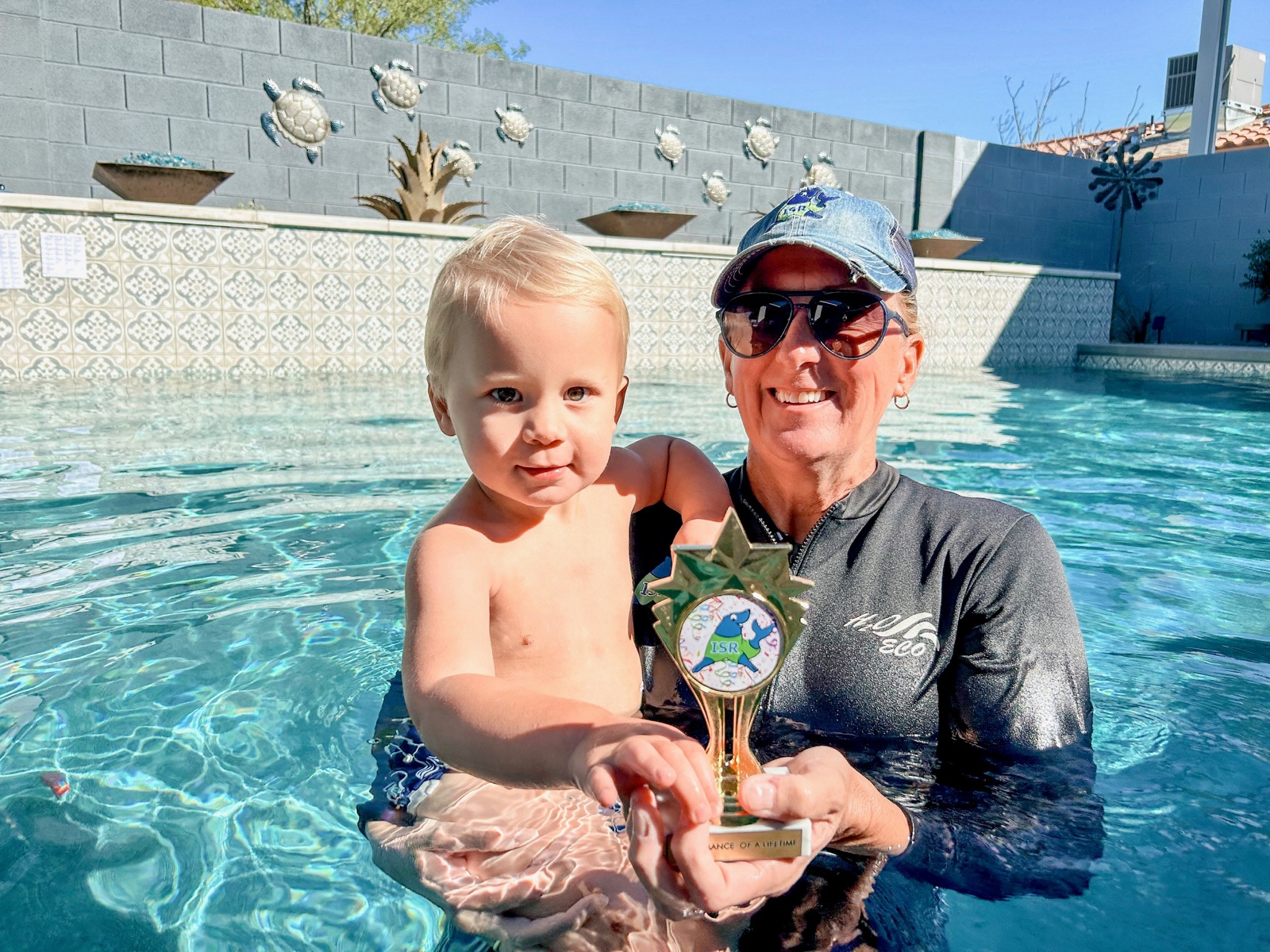 Perspective · Water safety
Our Experience With ISR Swim Lessons
When should a therapist help choose a sport or activity?
When balance, strength, coordination or sensory reactions make a sport hard or unsafe, or when a program asks for a therapist’s assessment, as AMBUCS does for every Amtryke rider.9 The federal guidelines advise youth with disabilities to work with a health care professional or physical activity specialist on the types and amounts of activity that suit them.12 A pediatric physical or occupational therapist is one such professional, and your child’s doctor can say whether a referral fits.
Find a pediatric physical or occupational therapist
DrSensory’s directory lists physical therapy and occupational therapy clinics by state and city, so you can find one close to home.
Frequently asked questions
Does a child need a formal diagnosis to join Special Olympics?
Special Olympics asks that an athlete be identified by an agency or professional as having an intellectual disability, a cognitive delay measured by formal assessment, or significant learning or vocational problems from a cognitive delay that need specially designed instruction. Its Young Athletes play program welcomes children with and without intellectual disabilities.16,2
Can children younger than 8 take part in Special Olympics?
Yes, through Young Athletes, which serves children ages 2 to 7. Young Athletes can be done at home, at school or in the community, and Special Olympics athletes must be at least 8.2,16
How do I find the nearest Miracle League field?
The Miracle League does not post a list or map of its leagues. Its find page asks families to contact the corporate office, which can name the closest league.14
Do Miracle League games keep score or pick a winner?
The league’s rules say each team and each player wins every game, and every player scores a run before the inning ends.3
Does insurance cover hippotherapy?
AHA, Inc. says hippotherapy is part of standard occupational, physical or speech therapy, so the cost should match similar therapy services, and that cost depends on where you live, your insurance coverage and whether you pay privately. Ask the clinic and your insurer.6,7
How long is the wait on the AMBUCS National Wish List?
AMBUCS says everyone on the National Wish List receives an Amtryke, but it can take up to two years, and fundraising and a rider photo can help speed it up. A local chapter, where there is one, is usually quicker.18
Does a child need a therapist’s evaluation to get an Amtryke?
Through a chapter or the Wish List, yes: AMBUCS says every rider must be evaluated by a physical or occupational therapist. Families who buy directly are still advised to have a therapist fitting.9,8
Do the federal playground rules apply to older playgrounds?
They apply to newly designed or built play areas, and to changes to existing play areas that affect, or could affect, how usable the play area is; normal maintenance does not count, and broken or older pieces can be replaced without changing the ground surface.10
Sources
- Special Olympics. Become a Special Olympics Athlete (who can take part and how to start). Checked November 23, 2026.
Show the passageHide the passage
“Special Olympics athletes are people who are 8 years old or older and who have an intellectual disability. There is no upper age limit”; “All sports are coached by certified volunteer coaches.”; “Start the process of becoming a Special Olympics athlete by getting in touch with the Special Olympics office nearest you”. - Special Olympics. Young Athletes (program page). Checked November 23, 2026.
Show the passageHide the passage
“Special Olympics Young Athletes is an early childhood play program for children with and without intellectual disabilities, ages 2 to 7 years old.”; “Young Athletes introduces basic sport skills, like running, kicking and throwing.”; “It can be done at home, in schools or in the community using the Young Athletes Activity Guide and basic equipment.”; “Studies show that after two months of participation in Young Athletes, children with intellectual disabilities experienced a seven month gain in motor skills, representing an improvement at twice the rate of children with intellectual disabilities who have not participated in the program.”; “Children with intellectual disabilities participating in Young Athletes exhibited greater increases in communication, social, and daily living skills, compared to children with ID not participating in Young Athletes.”; “Inclusive play helps children without a disability to better understand and accept others.”; “Young Athletes helps children get ready to take part in sports when they are older.”. - The Miracle League. History (league history and rules). Checked November 23, 2026.
Show the passageHide the passage
“Every player bats once each inning”; “Every player scores a run before the inning is over (last one up gets a home run)”; “Each team and each player wins every game”; “Community children and volunteers serve as ‘buddies’ to assist the players”; “a custom-designed field with a cushioned rubberized surface to help prevent injuries, wheelchair accessible dugouts, and a completely flat surface to eliminate any barriers to wheelchair-bound or visually impaired players”; “Presently there are over 350 Miracle League Organizations across the country including Puerto Rico, Canada and our newest member in Mexico.”; “The Miracle League is proud to serve over 450,000 children and adults with disabilities.”. - Move United. Move United (home page). “Move United is the national leader in community adaptive sports. Our 247 member organizations in 45 states are united by a single mission”; “Each year, we empower over 131,000 youth and adults to redefine disability, build confidence, and grow stronger through participation in sports, including recreation, competition & education programs.”. Checked November 23, 2026.
- American Hippotherapy Association, Inc.. AHA, Inc. Terminology for Healthcare (PDF, recommended and not recommended terms). Checked November 23, 2026.
Show the passageHide the passage
“ADAPTIVE RIDING (AR): Horseback riding lessons for individuals with special needs. Taught by experienced instructors who have received specialized training and are often certified to work with students with disabilities.”; “Opportunities are available to participate in competitive equestrian events, recreation and leisure, education, socialization, and/or fitness.”; “Certification in teaching riding lessons for individuals with special needs may be obtained through organizations such as PATH Intl., Certified Horsemanship Association (CHA), the Canadian Therapeutic Riding Association (CANTRA) or Riding for the Disabled (RDA).”; “‘Adaptive Riding’ is synonymous with ‘Therapeutic Riding’.”; “Do not use the term Equine Therapy/Horse Therapy when the recipient of the intervention or service is a human.”; “These instructors adapt their teaching style, the environment and/or equipment to facilitate acquisition of riding skills and participation in an enjoyable activity.”; “Tools/strategies do not have their own CPT billing codes.”; “Such procedures are billed for using existing Current Procedural Terminology (CPT) codes such as Therapeutic Exercise (97110), Therapeutic Activities (97530), or Treatment of speech, language, voice, communication and/or auditory processing disorder (92507).”; “AHCB is an independent Board made up of Hippotherapy Clinical Specialists® who oversee the certification, re-certification and record keeping for AHCB Certified professionals and Hippotherapy Clinical Specialists®.”. - American Hippotherapy Association, Inc.. What is Hippotherapy? (definition page). Checked November 23, 2026.
Show the passageHide the passage
“The term hippotherapy refers to how licensed/credentialed occupational therapy, physical therapy, and speech-language pathology professionals use evidence-based practice and clinical reasoning in the purposeful manipulation of equine movement as a therapy tool to engage sensory, neuromotor, and cognitive systems to promote functional outcomes.”; “hippotherapy is provided within standard occupational therapy, physical therapy, and/or speech-language therapy services. Hippotherapy is not a separate service or a program. Further, there is no such service as “equine therapy” or “horse therapy,” and the use of these terms is incorrect”. - American Hippotherapy Association, Inc.. FAQs (frequently asked questions). Checked November 23, 2026.
Show the passageHide the passage
“The patient is not in control of the horse, rather the horse professional on the team controls the movement under the therapist’s direction.”; “Horseback riding, in contrast, is the rider controlling the horse to the best of their ability. It is a horsemanship discipline and may have social, recreational, or healthful benefits while the individual is learning how to ride.”; “The cost for therapy should be consistent whether hippotherapy is included or not and should be in line with other similar OT, PT or SLP services.”; “Cost greatly depends on geographic location, your insurance coverage, or if services are private pay.”; “The treating therapist will determine at what age the inclusion of hippotherapy may be appropriate for the patient.”; “The therapist will consider many factors such as patient allergies, behaviors, medical conditions (uncontrolled seizures, unstable joints, recent surgeries, skin conditions, etc), the size of the patient, sensory sensitivities, painful conditions aggravated by movement, along with other variables.”; “There are occasionally patients for whom the horse/equine movement creates too much fear or anxiety. Hippotherapy may not be the tool of choice for that individual.”; “The term “hippotherapist” is not used in the United States. Individuals are identified by their profession of licensure: OT, PT, SLP.”; “the therapist may have referrals to adaptive riding or other equestrian facilities to transition from a therapy focus to a recreational focus.”; “Therapists mitigate those risks by working with horses that have been thoroughly screened and trained for this discipline. The therapy team is trained in safety protocols and appropriate safety equipment is used during treatment such as helmets or belts.”; “AHA, Inc. recommends that the therapist working with children under 3 years old have their HPCS certification and significant experience in Early Intervention.”; “Some clinics offer financial aid or scholarships depending on specific financial situations.”; “There are more than 100 articles in peer reviewed publications investigating hippotherapy across many patient populations.”; “Doing activities around a horse but not on a horse is one option to help introduce equine interaction.”; “It is unlikely that the horse will be incorporated into every treatment.”; “Additionally there may be circumstances which preclude safe access to the horses such as inclement weather/temperature, a sick or lame horse or limited team members.”; “Physical therapists, occupational therapists, speech-language pathologists, physical therapy assistants, occupational therapy assistants, and speech-language pathology assistants who have received specialized post graduate continuing education training through taking the AHA, Inc. Part I and Part II (foundation courses) would be the best at providing these services in the USA.”; “Voluntary certification in the inclusion of hippotherapy as a treatment tool/strategy within occupational therapy, physical therapy or speech language pathology services is available from the American Hippotherapy Certification Board (AHCB).”; “Constant supervision, monitoring, and communication are key to providing a safe and beneficial treatment.”; “The therapist and physician familiar with the application of equine movement in treatment are the best ones to weigh the benefits and risks of this tool.”; “Yes, the American Occupational Association (AOTA), American Physical Therapy Association (APTA), and the American Speech-Language-Hearing (ASHA) have all stated that hippotherapy/skilled equine movement is within the scope of practice for OT, PT, and SLP practitioners.”. - National AMBUCS, Inc.. Three ways to get your own Amtryke adaptive tricycle (riders page (ambucs.org/amtryke/ redirects here)). Checked November 23, 2026.
Show the passageHide the passage
“Amtrykes come in hand, foot, and hand-and-foot models for children and adults.”; “Most riders start with a local chapter. If there isn’t one near you, the National Wish List can help, or you can buy an Amtryke directly.”; “A nearby AMBUCS chapter helps with forms, a therapist fitting, and fundraising for your tryke.”; “A licensed physical or occupational therapist completes the assessment form to find the best tryke fit. This can be the rider’s own therapist or a chapter therapist.”; “Join the chapter’s wish list. Once the forms are complete, the rider is added to the local wish list and funding options are worked out.”; “Families may contribute toward the tryke and are encouraged to share a photo to help the chapter raise funds.”; “Families, schools, and clinics can buy an Amtryke directly from Amtryke LLC, along with helmets, adaptive accessories, and parts. A therapist fitting is still recommended so the tryke suits the rider.”; “Need help finding a therapist? Call the AMBUCS National Office at (800) 838-1845 ext. 1.”; “No AMBUCS chapter near you? The National Wish List gives riders with limited financial resources a way to get help paying for an Amtryke, wherever they live.”. - National AMBUCS, Inc.. Assess, fit, and refer riders for adaptive cycling (therapists page). Checked November 23, 2026.
Show the passageHide the passage
“National AMBUCS has provided more than 40,000 Amtrykes to riders across America. Local chapters fundraise for riders with financial need, and the National Wish List helps where there’s no chapter. Every rider must be evaluated by a physical or occupational therapist.”; “Amtryke® was inspired by a physical therapist in the early 1990s”; “PTs and OTs perform personalized assessments to select the right tryke”; “National AMBUCS trains therapists to improve safety and access in adaptive cycling”. - U.S. Access Board. Guide to the ADA Accessibility Standards, Chapter 10: Play Areas (technical guide with frequently asked questions). Checked November 23, 2026.
Show the passageHide the passage
“The play area guidelines in this guide apply to all newly designed or constructed play areas for children ages 2 and older.”; “The recreational provisions of these guidelines were adopted into the 2010 ADA Standards without changes”; “The play area guidelines apply to alterations made to existing play areas that affect, or could affect, the usability of the play area.”; “Examples include removing a climbing play component and replacing it with a spring rocker, or changing the ground surfacing.”; “Swings, spring riders (below), water tables, playhouses, slides, and climbers (right) are among the many different play components.”; “Ground-level play components may include items such as swings, spring riders, and panels.”; “At least one of each type of ground-level play component that is present in the play area must be on an accessible route.”; “an accessible route must connect to at least one spring rider and one swing for one of each type of ground-level play experiences that is present in the play area.”; “At least 50 percent of the elevated play components must be on an accessible route.”; “Play areas with 20 or more elevated components must use ramps to connect a minimum of 25 percent of those components.”; “Ramps are the preferred method since not all children who use wheelchairs or other mobility devices may be able to use - or may choose not to use - transfer systems.”; “Remember, the standards are only minimums.”; “The play area guidelines do not apply to:”; “Family childcare facilities where the proprietor resides”; “Amusement attractions”; “Religious entities”; “60 inches (1525 mm) minimum clear width”; “The maximum allowable slope for a ground-level accessible route is 1:16.”; “The required 60 inch width enables two wheelchairs to pass each other or to change direction”; “Ground surfaces along accessible routes, clear floor or ground spaces, and maneuvering spaces, must comply with the American Society for Testing and Materials (ASTM) F 1951-99”; “Engineered wood fiber surfaces will require frequent maintenance to comply with the ASTM F 1951-99 standard because of surface displacement due to user activity or other factors.”; “Accessible surfaces can include impact-attenuating tiles made of recycled rubber and engineered wood fiber that meet the ASTM requirements for accessibility and safety.”; “A transfer platform is a platform or landing that an individual who uses a wheelchair or mobility device can use to lift or transfer onto the play structure and leave the wheelchair or mobility device behind at ground level.”; “11 inches (280 mm) to 18 inches (455 mm) height of top surface”; “The seat of at least one spring rocker is between 11 inches (280 mm) and 24 inches (610 mm) maximum”; “Play areas with less than 20 elevated play components may use a transfer system instead of ramps to connect at least 50 percent of the elevated components.”; “Freestanding slides are considered ground-level components for the purpose of these guidelines.”; “Operators or owners of play areas are subject to all the other requirements of the ADA, including the obligation to provide individuals with disabilities an equal opportunity to enjoy the play area provided by that facility.”; “Different types include, but are not limited to, experiences such as rocking, swinging, climbing, spinning, and sliding.”; “An “elevated play component” is a play component reached from above or below grade, and is part of a composite play structure.”; “8 plus 1 for each additional 3 over 25, or fraction thereof”; “This standard assesses the accessibility of a surface by measuring the work an individual must exert to propel a wheelchair across the surface.”; “An accessible route must connect to the ladder or steps, and to the exit of the slide.”; “Clear floor or ground space - used for parking wheelchair or mobility devices (commonly called “wheelchair parking”) - is required at the transfer platform.”; “Transfer steps are level surfaces in a composite structure that can be used for transferring from different levels to access play components.”; “There are additional designs and features that can be added to further enhance accessibility.”; “ADAAG Section 4.3 addresses accessible routes that connect the play area to the school, parking lot, or facility that it serves.”; “The route may narrow down to 36 inches (915 mm) for a distance of 60 inches (1525 mm).”; “This permits flexibility to work around site design features like existing equipment or trees”; “Smaller play areas - those that are less than 1,000 square feet (93 square meters) - may have ground-level accessible routes that are 44 inches (1120 mm) clear width.”; “If ramps provide access to at least 50 percent of the elevated play components – which must include at least three different play types – then additional ground-level components are not required.”; “Any facility, or portion of a facility, located within an amusement park or theme park, that provides amusement without the use of an amusement device.”; “Examples include, but are not limited to, fun houses, barrels, and other attractions without seats.”; “Normal maintenance activities such as replacing worn ropes or topping off ground surfaces are not considered alterations.”; “Where play components are altered and the ground surface is not, the ground surface does not have to comply with the ASTM F 1951-99 standard for accessible surfaces unless the cost of providing an accessible surface is less than 20 percent of the cost of the alterations to the play components.”; “If the entire ground surface of an existing play area is replaced, the new ground surface must provide an accessible route to connect the required number and types of play components.”; “Section 240.1 Exception 4 permits broken or older play components to be replaced without requiring changes to the play surface.”; “When selecting ground surfaces, operators should request information about compliance with the ASTM F 1951-99 standard.”; “The fact that a specific product meets the ASTM 1951-99 standard does not necessarily mean that all other similar products will meet the standard.”; “At the time of this publication, rubber surfacing and some engineered wood fiber products meet the ASTM F 1951-99 standard.”; “Ground surfaces must be inspected and maintained regularly and frequently to ensure continued compliance with the ASTM F 1951-99 standard.”. - Office of Disease Prevention and Health Promotion. Top 10 Things to Know About the Second Edition of the Physical Activity Guidelines for Americans (summary page). Checked November 23, 2026.
Show the passageHide the passage
“Each day, youth ages 6 through 17 need at least 60 minutes of moderate-to-vigorous activity to attain the most health benefits from physical activity.”; “Adults caring for children this age should encourage active play (light, moderate, or vigorous intensity) and aim for at least 3 hours per day.”; “They also need activities that make their muscles and bones strong, like climbing on playground equipment, playing basketball, and jumping rope.”; “bone health, fitness, and heart health. It can also reduce the risk of depression.”. - U.S. Department of Health and Human Services. Physical Activity Guidelines for Americans, 2nd edition (PDF, Chapter 3, Children and Adolescents With Disabilities, page 53). Checked November 23, 2026.
Show the passageHide the passage
“Children and adolescents with disabilities are more likely to be inactive than those without disabilities.”; “Youth with disabilities should work with a health care professional or physical activity specialist to understand the types and amounts of physical activity appropriate for them.”; “When young people are not able to participate in the appropriate types or amounts of physical activities needed to meet the key guidelines, they should be as active as possible and avoid being inactive.”. - Special Olympics. Sports (sports overview). “Special Olympics offers 30-plus Olympic-style individual and team sports that provide meaningful training and competition opportunities for persons with intellectual disabilities.”. Checked November 23, 2026.
- The Miracle League. Find a Miracle League (the page has no map or list of leagues). “To find the closest Miracle League to you please contact The Miracle League Corporate office;”. Checked November 23, 2026.
- Move United. Locations (member list of 262 results, each marked Chapter, Adaptive Club, Inclusive Club, Affiliate or Event Partner with a city and state; counted by state for this page). “of 262 results”. Checked November 23, 2026.
- Special Olympics. Frequently Asked Questions (eligibility, Motor Activities Training Program and divisioning answers). Checked November 23, 2026.
Show the passageHide the passage
“To be eligible to participate in Special Olympics, you must be at least 8 years old and identified by an agency or professional as having one of the following conditions: intellectual disabilities, cognitive delays as measured by formal assessment, or significant learning or vocational problems due to cognitive delay that require or have required specially designed instruction.”; “The Special Olympics Young Athletes ™ program was created for children with intellectual disabilities ages 2 through 7.”; “Yes, through Special Olympics Motor Activities Training Program (MATP), developed by physical educators, physical therapists and recreation therapists. MATP emphasizes training and participation rather than competition.”; “Special Olympics competitions are structured so that athletes compete with other athletes of similar gender, age and ability in equitable divisions.”. - Special Olympics. North America (regional page; the United States Programs list names 52 programs, with California split into Northern and Southern California). “United States Programs”; “In Northern California, Special Olympics serves more than 31,000 participants”. Checked November 23, 2026.
- National AMBUCS, Inc.. An Amtryke for riders who don’t live near a chapter (National Wish List page). Checked November 23, 2026.
Show the passageHide the passage
“AMBUCS has more than 150 chapters in over 35 states, but many places don’t have one yet.”; “Everyone on the National Wish List receives an Amtryke, but it can take up to two years. Fundraising and a rider photo can help speed things up.”; “The rider’s physical or occupational therapist fills out the Assessment Form and the Tryke Selection Form.”; “If there’s a chapter near you, start there. It’s usually the quickest route.”; “Email the completed forms to wishlist@ambucs.org , or fax them to 336-852-6830.”; “Include a picture of the soon-to-be rider with your forms.”; “Don’t have a therapist? Email wishlist@ambucs.org and we’ll help.”; “Give $1 a day, $365 a year, to buy Amtrykes for riders on the National Wish List.”.
Medical disclaimer. This page is for general educational purposes and does not constitute medical advice, diagnosis, or treatment. Programs and eligibility rules change; confirm with the local program, and ask your child’s doctor or therapist whether a sport suits your child.
