
Sensory processing
Sensory Putty for Kids: Therapy vs Thinking Putty
What therapy putty and Thinking Putty actually are, what the colors mean, and what the evidence does and does not support.
- Expert Reviewed
- Plain Language
- Patient Focused
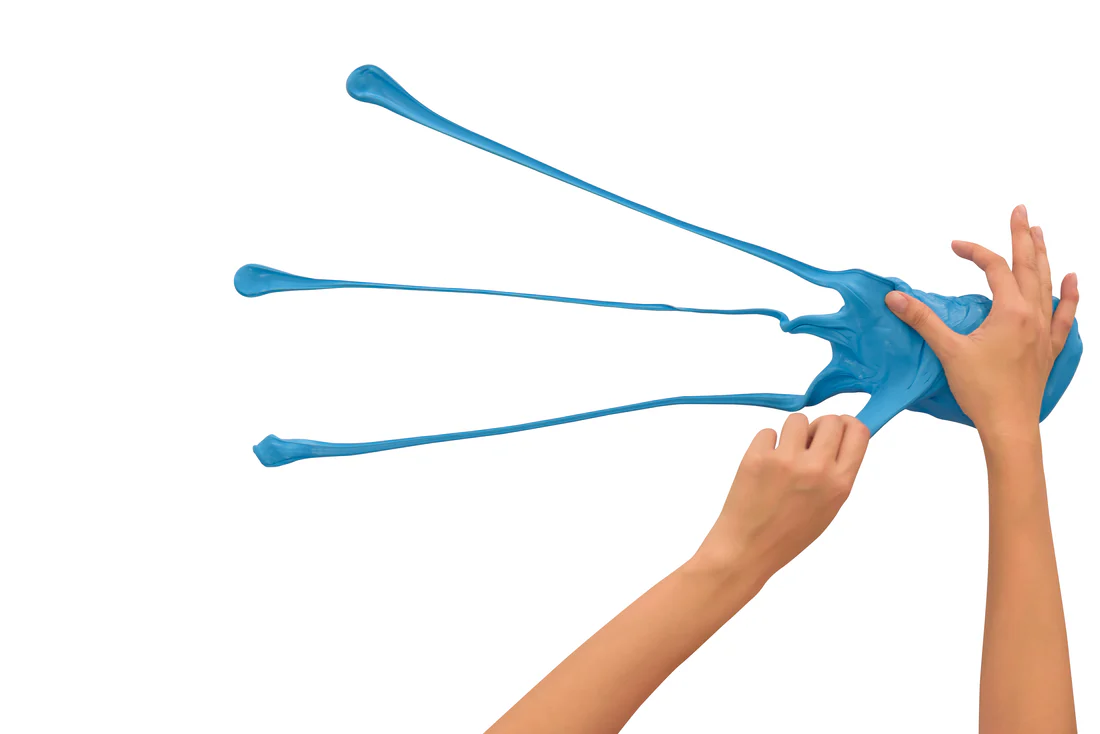
Putty is cheap, low-risk, and many children plainly enjoy it — reason enough to try one. It gives genuine resistive input for the hands, and graded therapy putty is a real clinical tool with a real purpose. What it does not do, on current evidence, is improve attention: the best classroom study found fidget use associated with poorer attention,2 and a review of the wider literature concluded there is not sufficient support for using fidget toys in classrooms.3 Treat putty as something your child may find calming, and as hand-strength work — not as a focus aid.
Key takeaways
- “Therapy putty” and “Thinking Putty” are different products. One is a graded clinical tool sold in measured resistance levels; the other is a novelty toy. Not interchangeable, and the price difference is large.
- The hand-strength use is the most defensible one. Resistive putty is standard occupational therapy practice for grip and pinch strength, used with prescribed exercises rather than free play.
- The calming claim is personal rather than proven — low risk, worth trying, entirely reasonable if your child finds it soothing.
- The focus claim does not hold. In 60 children with ADHD, fidget use was associated with poorer attention across both study phases, and the authors concluded that spinners negatively influence attentional functioning even inside an evidence-based classroom intervention.2
- A 2023 review found fidget toys have been marketed as universal educational supports in the absence of a scientific evidence base, with insufficient support for classroom implementation.3
- You can make it for about a dollar. The homemade version does the same job for hand strength and tactile input.
- There are real safety limits — not for children who still mouth objects, and it will destroy hair and carpet.
Therapy putty vs. Thinking Putty: what’s the difference?
This distinction is the most useful thing on this page, and almost no parent-facing article makes it.
| Therapy putty (clinical) | Thinking or novelty putty (toy) | |
|---|---|---|
| What it is | Silicone-based resistive putty in graded, color-coded resistance levels | A novelty toy — magnetic, color-changing, glow-in-the-dark, scented, glittery |
| Resistance | Measured and consistent, extra soft through extra firm | Not graded; soft and variable |
| What it is for | Prescribed hand and finger strengthening exercises | Fidgeting, tactile play, entertainment |
| Who recommends it | Occupational and hand therapists, usually with a specific exercise program and a progression plan | Marketed direct to parents |
| Typical cost | Modest, sold by the tub and often in sets | Frequently several times more per ounce |
Both are fine things to own. But if a therapist said “use putty for hand strength,” they almost certainly meant graded therapy putty with specific exercises, not a novelty tin. And if your child simply enjoys squishing something, the novelty version is a toy — which is a perfectly good thing for it to be.
What do therapy putty colors mean? Resistance levels explained
Therapy putty is color-coded, and while brands vary slightly, the convention is broadly consistent.
| Color | Resistance | Typical use |
|---|---|---|
| Tan or beige | Extra soft | Very weak hands; a starting point after injury; young children |
| Yellow | Soft | Early strengthening. Most young children start here |
| Red | Medium-soft | The common general-purpose level for school-age children |
| Green | Medium | Progression once red is easy |
| Blue | Firm | Older children and teens with good baseline strength |
| Black or gray | Extra firm | Advanced, and adult rehabilitation |
How progression normally works: a child works at one level until the exercises are comfortable, then moves up. A common approach builds from ten repetitions of an exercise toward three sets of ten before changing level.
The mistake to avoid is starting too firm
Putty that is too resistant produces compensation — the child recruits the wrist and forearm instead of the small hand muscles you were trying to work — and it is discouraging. If your child cannot easily deform it, go softer.
What the evidence shows
The honest picture differs by claim, so it is worth taking them one at a time.
| Claim | Evidence | What that means in practice |
|---|---|---|
| Hand strength | Practice-supported | Standard occupational and hand therapy practice with a coherent mechanism. Prescribed exercises, not free-form squishing |
| Calming | Reasonable, personal | Low risk and worth trying. Deep pressure tactile input has strong review support as a category1 |
| Improves attention | Evidence points the other way | No study shows putty improves focus, and the tested tools in this category have underperformed2,3 |
Hand strength — the most defensible use
Resistive putty is long-standing occupational and hand therapy practice for grip, pinch and finger strength, and the rationale is straightforward: graded resistance training for small muscles. It is used across pediatric therapy, hand rehabilitation and post-injury recovery.
The honest caveat is that much of the pediatric evidence is practice-based rather than trial-based. What is reasonable to say: this is standard clinical practice with a coherent mechanism, and if a therapist has prescribed putty exercises for hand strength, that is a sound recommendation. Free-form squishing is not the same as the prescribed exercises.
If handwriting is the underlying concern, hand strength is only one contributor — consider an occupational therapy assessment.
Calming — personal, low risk, worth trying
Many children and adults find repetitive tactile manipulation soothing, and there is no reason to talk anyone out of something that helps them. It is cheap and it is safe.
What can be said with more support: a systematic review searching six databases for level I and II studies of children and young people aged 0 to 21 with sensory processing challenges, published between May 2015 and January 2024, included 21 studies and found strong strength of evidence supporting deep pressure tactile input, and strong evidence for caregiver training in the use of sensory strategies.1 Squeezing putty is a form of deep pressure input to the hands, so the mechanism is not fanciful — though that finding concerns deep pressure broadly rather than putty specifically.
Does putty help with focus? What the research shows
This is the claim attached to fidget tools most often, and it is the one the evidence handles worst, so precision matters more than usual here.
The classroom study. Sixty children with ADHD, mean age 4.86 years, in an A-B-A-B design with accelerometers and five minutes of classroom video coded for attention. During the initial phase of treatment, but not the final phase, fidget spinner use was associated with a decrease in activity levels — but children’s use of fidget spinners was associated with poorer attention across both phases. The authors’ conclusion: fidget spinners negatively influence young children with ADHD’s attentional functioning, even in the context of an evidence-based classroom intervention.2
The wider review. A 2023 review in Intervention in School and Clinic examined the literature on fidget toy use and student attention, behavior and learning against two competing theoretical frameworks, and concluded that fidget toys have been marketed as universal educational supports in the absence of a scientific evidence base, and that there is not sufficient support for the implementation of fidget toys in the classroom.3
The broader picture for sensory tools. A systematic review of 30 studies covering 856 children with a range of diagnoses found the research limited by insubstantial treatment outcomes, weak experimental designs and high risk of bias, and concluded that insufficient evidence exists to support the use of sensory-based treatments.4 The 2025 review above found moderate strength of evidence that alternative seating did not improve attention1 — a neighboring classroom tool sold on the same promise.
- Putty is not a spinner
It is quieter, less visually interesting and does not invite an audience, so the specific mechanism by which spinners appear to hurt attention may not apply to it.
- Insufficient evidence is not evidence of no effect
Nobody has run the putty version of the spinner study. What can be said is that the tools tested in this category have generally underperformed their marketing.
The honest position: no study shows putty improves focus. If your child finds it calming, that is a real benefit worth having. Do not buy it expecting better schoolwork.
Should putty go to school?
- Ask the teacher first rather than sending it in. The evidence does not support a blanket entitlement, and teachers have reasonable grounds for skepticism.3
- If it is an accommodation, put it in the plan. A tool named in a 504 plan or an IEP is protected; one that is not gets confiscated.
- Watch for the audience effect. The moment a fidget becomes interesting to other children it is a distraction rather than a support, which is much of why spinners tested badly.
- Notice honestly whether it helps. Two weeks of observation from you and the teacher beats any general claim about the category, including the ones on this page. Your child is a sample of one.
- The alternatives with better support for a dysregulated child in class are proactively scheduled movement breaks, seating changes and reduced sensory load — see our resources for teachers and supporting children with ADHD at home and school.
Therapy putty exercises for kids
Free-form squishing is fine as play. If the goal is hand strength, these are the standard exercises, done with graded therapy putty and ideally as set out by a therapist.
| Exercise | How it goes | What it works |
|---|---|---|
| Full grip squeeze | Putty in the palm, squeeze with the whole hand | Gross grip strength |
| Finger hook | Hook the fingers into a ball and press deeply | Hook grasp, the grip used for carrying |
| Thumb press | Ball at the base of the thumb, press the thumb through toward the palm | Thumb strength, which handwriting depends on |
| Pinch and roll | Pinch a snake flat between the thumb and each finger in turn | Pinch strength, finger by finger |
| Finger spread | A putty ring around the fingers, spread against the resistance | The extensors, which strengthening usually neglects |
| Hidden treasure | Bury coins, beads or small toys and have the child dig them out | In-hand manipulation, and reliably the most popular version |
| Pull and stretch | Two hands pulling apart | Both sides at once, and shoulder stability |
How to make therapy putty at home
You do not need to buy anything. The homemade versions give the same tactile input and the same hand work.
- Two-ingredient stretchy putty
Cornstarch and dish soap, roughly two to one, kneaded until it comes together. More cornstarch if it is sticky, more soap if it crumbles. Keeps a couple of weeks in an airtight container.
- Classic school-glue putty
Equal parts white school glue and liquid starch, kneaded until smooth. Firmer and longer-lasting. A drop of food coloring if you want it.
- Cornstarch and conditioner
Soft, pleasant-smelling and very forgiving. A good first version for a child who is unsure about the texture.
- Your own resistance grading
To make any of them firmer, knead in more cornstarch. That is the homemade equivalent of moving up a color.
On scented and glittery versions: for a child who is over-responsive, a strong scent can make the whole thing intolerable, and glitter gets everywhere. Plain and unscented is the safer default.
Looking for product recommendations?
We keep product links off our clinical pages. DrParenting is where we review products, with disclosed affiliate links and the same evidence standard.
Matching putty to your child’s sensory profile
Putty is not universally appealing, and forcing it defeats the point.
| If your child | What you will see | What to do |
|---|---|---|
| seeks input | Wants firmer resistance and more of it | Give the harder grades and expect vigorous use |
| is over-responsive | May find putty genuinely unpleasant — the residue, the smell, the stretchiness | That is a legitimate no. Offer a tool instead of hands, or skip it entirely; there are plenty of other options |
| is under-responsive | May need firmer putty before it registers as interesting at all | Start firmer than you would expect, and check they notice it |
| chews or mouths things | Puts it near the mouth | Putty is not suitable. See the safety section, and consider a proper chew tool instead |
If your child’s response is inconsistent, that is usually load rather than preference — see living with sensory processing differences on why tolerance depletes through the day.
Is Thinking Putty safe for toddlers?
- Not for children who still mouth objects. Putty is a choking and ingestion risk, which is the main reason it is unsuitable for toddlers
- Supervise under 3, and generally choose a different tool for that age group
- It destroys hair, carpet, upholstery and car seats. Set a rule about where it is allowed. Ice hardens it for removal; rubbing alcohol or vinegar helps on fabric
- Some novelty putties contain small, powerful magnets. Swallowed magnets are a surgical emergency, particularly when more than one is swallowed. Keep magnetic putty away from any child who mouths things, and away from younger siblings
- Wash hands after use, particularly before eating
- Check for latex if your child has a latex allergy — read the label rather than assuming
- Store it sealed. It picks up hair and grit, and once it does it is finished
When putty is not the answer
If you are here because your child struggles to sit still, cannot settle, or is falling apart in class, the useful move is an assessment rather than a tool.
Consider an occupational therapy assessment if sensory responses are interfering with school, sleep, self-care or family life. If attention is the primary concern, that is a conversation with your pediatrician — our comparison of ADHD and sensory processing differences covers how the two are distinguished and how often they overlap.
If a child loses skills they previously had, contact their doctor
Regression is a medical question rather than a sensory one, and it warrants evaluation regardless of anything else on this page.
Find a pediatric occupational therapist · Browse providers by state · Cost and insurance guides
Frequently Asked Questions
What is the difference between therapy putty and Thinking Putty?
Therapy putty is a clinical tool sold in graded, color-coded resistance levels and used with specific prescribed hand exercises. Thinking Putty and similar products are novelty toys — magnetic, color-changing, scented, glittery — that are not resistance-graded. Both are fine to own, but if a therapist recommended putty for hand strength, they meant the graded kind used with the exercises.
What do therapy putty colors mean?
They indicate resistance, from softest to firmest. The usual convention runs tan for extra soft, yellow for soft, red for medium-soft, green for medium, blue for firm, then black or gray for extra firm. Most school-age children start around yellow or red. Starting too firm causes compensation with the wrist and forearm instead of working the small hand muscles.
Does Thinking Putty help with focus and concentration?
No study shows that it does. In a classroom study of 60 children with ADHD, fidget spinner use was associated with poorer attention across both study phases, and the authors concluded that fidget spinners negatively influence attentional functioning even within an evidence-based classroom intervention. A 2023 review found fidget toys have been marketed as universal educational supports in the absence of a scientific evidence base, with insufficient support for classroom implementation. Putty is quieter and less visually distracting than a spinner, so the findings may not transfer directly, but it should not be bought expecting improved schoolwork.2,3
Can putty help calm an anxious or overstimulated child?
It may, and it is low-risk enough to try. Many people find repetitive tactile manipulation soothing, and a systematic review of 21 level I and II studies found strong evidence supporting deep pressure tactile input as a sensory strategy, of which squeezing putty is one form. Watch whether it helps your child specifically rather than assuming it will.1
Does putty strengthen hand muscles?
This is its most defensible use. Graded resistive putty is standard occupational and hand therapy practice for grip, pinch and finger strength, with a straightforward mechanism of resistance training for small muscles. Much of the pediatric evidence is practice-based rather than trial-based, and prescribed exercises matter more than free-form squishing.
Is Thinking Putty safe for toddlers?
Generally no. Putty is a choking and ingestion risk, so it is unsuitable for children who still mouth objects, and any use under age 3 needs close supervision. Some novelty putties also contain small powerful magnets, and swallowed magnets are a surgical emergency, particularly if more than one is swallowed. A proper chew tool is a better option for a child who mouths things.
How do I get putty out of hair or carpet?
Harden it first with ice, then work it out in pieces rather than pulling. Rubbing alcohol or vinegar helps break down what remains in fabric. Setting a rule about where putty is allowed prevents most incidents.
How do I make therapy putty at home?
Cornstarch and dish soap at roughly two to one, kneaded until smooth, is the simplest version. Equal parts white school glue and liquid starch makes a firmer, longer-lasting putty. Cornstarch and conditioner gives a softer version. Kneading in extra cornstarch makes any of them firmer, which is a homemade form of resistance grading.
Should my child use putty in class?
Ask the teacher first, and if it is intended as an accommodation, get it written into the 504 plan or IEP. Watch for the audience effect, since a fidget that becomes interesting to other children is a distraction rather than a support. Movement breaks, seating changes and reduced sensory load have better support for classroom regulation.
My child hates the feel of putty. Should I persist?
No. For a child who is over-responsive, the residue, the smell and the stretchiness can all be genuinely unpleasant, and that is a legitimate refusal. Offer a tool instead of hands if you want to keep the hand-strength work, or use something else entirely.
Sources
- Piller A, McHugh Conlin J, Glennon TJ, et al. Systematic review of sensory-based interventions for children and youth. Frontiers in Pediatrics. 2025;13:1720179. PMID 41321460. Searches of Medline (OVID), CINAHL Complete, PsycINFO, OTSeeker, Cochrane Reviews and ERIC; studies published in English between May 2015 and January 2024; participants aged 0 to 21 with sensory integration or processing challenges; level I and II studies by the Johns Hopkins Nursing Evidence-Based Practice Model; PRISMA-guided. Twenty-one studies included. Strong strength of evidence supported use of deep pressure tactile input and caregiver training on the use of sensory strategies. Moderate strength of evidence supported that alternative seating did not improve attention, and that targeting a variety of sensory systems is more effective than targeting only one.
- Graziano PA, Garcia AM, Landis TD. To fidget or not to fidget, that is the question: a systematic classroom evaluation of fidget spinners among young children with ADHD. Journal of Attention Disorders. 2020;24(1):163–171. PMID 29676193. A-B-A-B design; 60 children (mean age 4.86 years, 83% Hispanic) diagnosed with ADHD, wearing accelerometers and videotaped for five minutes during class with attentional data coded. During the initial phase of treatment, but not the final phase, use of fidget spinners was associated with a decrease in activity levels. “Children’s use of fidget spinners was associated with poorer attention across both phases of treatment.” Conclusion: “Fidget spinners negatively influence young children with ADHD’s attentional functioning, even in the context of an evidence-based classroom intervention.”
- Kriescher SL, Hulac DM, Ryan AM, King BL. Evaluating the evidence for fidget toys in the classroom. Intervention in School and Clinic. 2023;59(1):66–74. “Fidget toys have been marketed as universal educational supports in the absence of a scientific evidence base.” Reviews the existing literature on the effect of fidget toy use on student attention, behavior and learning, alongside two competing theoretical approaches, sensory processing theory and cognitive load theory. “Currently, there is not sufficient support for the implementation of fidget toys in the classroom.”
- Barton EE, Reichow B, Schnitz A, Smith IC, Sherlock D. A systematic review of sensory-based treatments for children with disabilities. Research in Developmental Disabilities. 2015;37:64–80. PMID 25460221. Registered with PROSPERO. Thirty studies involving 856 participants met the inclusion criteria. Considerable heterogeneity was noted across studies in implementation, measurement and study rigor. “The research on sensory-based treatments is limited due to insubstantial treatment outcomes, weak experimental designs, or high risk of bias… insufficient evidence exists to support their use.”
- Bodison SC, Parham LD. Specific sensory techniques and sensory environmental modifications for children and youth with sensory integration difficulties: a systematic review. American Journal of Occupational Therapy. 2018;72(1):7201190040. PMID 29280714. Separates the evidence for individual sensory techniques, which is what a fidget tool is, from the evidence for a full therapist-delivered intervention.
Medical disclaimer. This page is for general educational purposes and does not constitute medical advice, diagnosis, or treatment.