

Quick answer. For autism, ADHD or neither, the best sensory toy is the one that fits what your child seeks or avoids. A seeker usually wants something to chew, squeeze, lean into or move on; an avoider needs ear defenders and a quiet corner. Our picks cost $11.25 to $39.99; the best-supported tool, a parent who knows the child’s profile, costs nothing.1
Sensory toys are sold with confidence and bought with hope. The market runs from a two-dollar squeeze ball to a four-hundred-dollar swing, and most of it is described as if it were treatment. Very little of it has been tested that way, and some of what has been tested did not do what the box says.1,2
That is not a reason to buy nothing. It is a reason to buy differently: match the tool to what your child is actually looking for, spend less than you were about to, and judge the result yourself over a couple of weeks. This guide covers what the evidence supports, what to look for in each category, what to avoid, and one pick per category.
If you want the clinical case in full, the DrSensory side of this site has it: what the evidence actually says about sensory toys and tools. This page is the shopping half. If your child is under two, the developmental toys for baby's first year guide is the better starting point.
Key takeaways
- Buy the thing your child likes, at the price of a thing your child likes. The problem is not preference; it is spending limited money and hope on a product sold as a fix.
- A 2015 review of 30 studies covering 856 children concluded that insufficient evidence exists to support sensory-based treatments. That means the research is weak, not that every tool is useless.3
- Weighted blankets did not change sleep in a trial of 73 autistic children; in a 2024 trial of 94 children with ADHD they added about eight minutes of sleep a night.2,4
- Fidgets do not have the evidence their marketing implies. In a classroom study of fidget spinners in 60 young children with ADHD, attention was worse while the spinner was in use.5
- Try the cheapest version first. A tin of putty tells you whether tactile input helps before a forty-dollar kit does.
- Check the CPSC recall database before buying any weighted or wearable product. Children’s weighted blankets have been recalled twice for the same entrapment hazard.6,7
- Choose a hand-held chew over a necklace. The FDA has warned against necklaces and bracelets used for sensory stimulation in children with autism or ADHD.8
- Leave water beads off every list. They are sold as sensory tools, and CPSC urges parents to remove them from any environment with children.23
What are sensory toys?
Sensory toys are toys and tools chosen for the input they give the body rather than for play alone: something to chew (oral input), squeeze or knead (touch), lean into or lie under (deep pressure), bounce, swing or spin on (movement), or something that takes input away, such as ear defenders. Occupational therapists group them by that input type, and so does this guide. The same toy can calm one child and wind up another, which is why the input matters more than the label on the box.
Do sensory toys actually work?
Some do something. Most have not been tested, and the ones that have are humbling.
Deep pressure is the exception. A 2025 systematic review of 21 controlled studies found strong evidence for deep pressure tactile input, from two studies of weighted items and two of massage, and strong evidence for training caregivers to use sensory strategies.1 That is the best news in this field: some of the input with the strongest support comes from hands, not a product, and a parent who understands the child’s profile is itself one of the best-supported tools. The same review found moderate evidence that alternative seating (stability balls, cube chairs and T-stools) did not improve attention, and too few studies on changing the environment to rate it either way.1
Fidgets do not have the evidence their marketing implies. A review of classroom fidget research concluded there is not sufficient support for using them as a universal aid.9 In a classroom study of fidget spinners in 60 young children with ADHD, attention was worse while the spinner was in use, even inside an otherwise effective classroom program.5 Two smaller studies, of three children each, point both ways: on-task behavior rose for three second graders with ADHD who were given spinners, and a Fidget Cube did not improve the engagement or math seatwork of three third graders referred for attention difficulties.24,25
Weighted blankets are liked, and their effect on sleep is small at best. In 73 autistic children with severe sleep problems, a real weighted blanket against an identical-looking light one made no difference to how long they slept, how fast they fell asleep, or how often they woke; children and parents preferred the weighted one anyway.2 In 94 children with ADHD and sleep problems, a 2024 trial found a small gain, about 7.7 more minutes of sleep a night, and no change in how fast they fell asleep.4 Weighted vests have been reviewed more than once and the evidence does not support them.10,11
Across the category, a 2015 review of 30 studies covering 856 children concluded that insufficient evidence exists to support sensory-based treatments. Note what that does and does not say: the review found the research limited by weak designs and high risk of bias, not that the tools were proven useless.3
None of this means a child’s preference is wrong. A child who reaches for the lap pad is telling you something true. Buy the thing your child likes, at the price of a thing your child likes.
How do I choose a sensory toy for my child?
Match to profile, not to age or diagnosis. Two children with the same diagnosis can need opposite things from the same shelf.
If your child seeks input
- Crashes into furniture, chews collars, cannot sit still, loves being squeezed.
- Start with the chew, weighted and movement sections.
- See sensory seeking and under-responsivity.
If your child avoids input
- Covers ears, hates tags and seams, melts down in busy rooms, gags at textures.
- Start with the noise and light section: the best tool may be removing something, not adding it.
- See sensory over-responsivity.
Most children are a mix, and the mix changes with tiredness, hunger and the day. If you are not sure which pattern fits, types of sensory processing differences walks through it, and an occupational therapist can usually tell you in a session or two, and will usually suggest things you already own before things you have to buy.
Specialist retailers that stock sensory toys for children tend to group products by input type (oral, tactile, proprioceptive, vestibular, auditory), which is a more useful way to browse than by age or condition. That is how the rest of this guide is organized.
Three rules before you buy anything:
- One thing at a time. Introduce a single tool, decide in advance what you expect to see, and give it two weeks. If you cannot say what changed, it did not.
- Cheapest version first. A tin of putty tells you whether tactile input helps before a forty-dollar kit does.
- Check the recall list. Children’s weighted blankets have been recalled twice for the same entrapment hazard.6,7 Search the CPSC recall database for any weighted or wearable product before it goes in the cart.
| Pick | Input | Maker’s age guidance | Check before you buy | Price |
|---|---|---|---|---|
| ARK Grabber | Chewing (oral) | 3 years and up, supervised | Toughness level: Standard, XT or XXT | $11.25 |
| Thinking Putty, Liquid Glass | Touch | 3 years and up | Not for a child who still mouths things | $15.00 |
| Harkla Weighted Lap Pad | Deep pressure | 3 years and up; never under 2 | Your child can lift 5 lb off alone | $39.99 |
| Alpine Muffy Kids | Less noise | 5 to 16 years | Fit; Muffy Baby Comfort is the smaller size | $29.95 |
Ages, weights and prices in the table are the makers’ own.12,13,14,15
What are the best sensory toys for autism, by what the child seeks?
The best sensory toys for an autistic child are the ones that match what that child seeks or avoids, and two autistic children can need opposite things. Reactions to sensory input are one of the criteria used to diagnose autism,26 and in a meta-analysis of 55 studies, autistic children scored well above typically developing children for over-responsivity, under-responsivity and sensory seeking alike.27 Start with what your child does, find the row that fits, and buy one thing at a time.
| If your child | They may be | Start with | Check first |
|---|---|---|---|
| Chews collars, pencils, hands | Seeking oral input | ARK Grabber chew tool | The toughness level; a hand-held chew, never a necklace |
| Fiddles with everything | Seeking touch | Thinking Putty | Not for a child who still mouths things |
| Crashes, burrows, asks to be squeezed | Seeking deep pressure | Harkla lap pad, or firm hugs | Your child can lift 5 lb off alone |
| Spins, rocks, climbs everything | Seeking movement | The playground, and a movement break before seated tasks | No home trampoline (why) |
| Covers ears at hand dryers and in stores | Avoiding sound | Alpine Muffy Kids, ages 5 to 16 | For loud places, not every room |
| Squints at light, hides in small spaces | Avoiding light or busy spaces | A brimmed hat; a calm-down corner | Let your child choose when to come out |
| Hates tags, seams and messy hands | Avoiding touch | Tagless clothes, and new textures on your child’s terms | Do not force messy play |
Ages and weights in this table are the makers’ own.12,13,14,15
Which sensory toys suit an autistic child who seeks input?
A child who chews, crashes and climbs is looking for more input, and the useful toys give it safely. Start with one tool from the input your child seeks most: the ARK Grabber for a chewer, a tin of putty for busy hands, the Harkla lap pad for a child who wants weight, and more movement in the day for all of them. In a study of 239 children aged 3 to 14, autistic children showed the most differences in oral processing, more than children with ADHD or typically developing children,28 so if your autistic child chews everything, the chew section is the place to start. Sensory seeking in children covers the pattern in full.
Which sensory toys suit an autistic child who avoids input?
For a child overwhelmed by sound, light or touch, the most useful tool usually takes input away: ear defenders for known-loud places, a hat with a brim, tagless clothes, and somewhere quiet to retreat to. Over-responsivity was the one pattern that still set autistic children apart when they were compared with children who had other clinical conditions.27 For ear defenders there is a little direct evidence: in a pilot study of 21 autistic children aged 4 to 16, ratings of sound-related goals improved while the children wore standard earmuffs, noise-canceling headphones made no significant difference, and four children refused to wear either.29 Our pick, Alpine Muffy Kids, is a passive earmuff sized for ages 5 to 16; Alpine makes Muffy Baby Comfort for younger children.15,21 Autism and noise sensitivity covers when ear defenders help and what else does.
Should a sensory toy be used to stop stimming?
No. A toy can give a stim an easier outlet, such as putty in a pocket instead of picking at skin, but it is not a tool for stopping one. In interviews and focus groups with 32 autistic adults, stimming came through as a way to regulate and to soothe or express intense feelings, and the adults objected to treatment that aims to eliminate it.30 If a stim is causing injury, that is a question for your child’s doctor or occupational therapist rather than for a toy. The clinical side explains how sensory tools help autistic children, and how that differs from ADHD.
What are the best chew toys and oral sensory tools?
Who it is for: children who chew on collars, sleeves, pencils or their own hands, usually seekers, sometimes children managing anxiety through the jaw.
What the evidence says: sensory-based treatments as a group lack good evidence.3 What a chew tool reliably does is redirect chewing away from things that should not be chewed. That is a practical benefit, and it is the honest claim.
What to look for:
- A firmness matched to the child: light chewers need soft, heavy chewers need a firm tool or it shreds in a week.
- A hand-held shape the child can hold and reach the back teeth with, and will actually use in public.
- Dishwasher-safe, and replaceable: any chew tool that starts to tear gets replaced, not watched.
What to avoid:
- Chew necklaces and bracelets. The FDA has warned that necklaces and bracelets should not be used to provide sensory stimulation to people with autism or ADHD, because they can lead to strangulation, choking and serious injury, and it tells clinicians to discourage them.8 The AAP recommends no jewelry on infants at all.16
- Beaded designs, which can shed pieces.
- Anything a child chews unsupervised once it shows wear.
1. What is the best chew tool? ARK’s Grabber Oral Motor Chew Tool
Who it is for: a child who chews on clothes, pencils or fingers and needs something safe to chew instead, with no cord involved.
The Grabber is a P-shaped chew: a loop to hold and a long stem that reaches the back molars. It is 5 inches long and half an inch thick, molded from medical-grade elastomer, and goes in the top rack of the dishwasher. ARK sells it in three color-coded toughness levels, Standard for light chewing, XT for moderate and XXT for avid chewers, and rates it for ages 3 and up with direct supervision.12
If your child already has ARK’s Krypto-Bite necklace, the pendant works the same way held in the hand; ARK sells it on a 30-inch breakaway cord and says it needs direct supervision.17 Given the FDA’s warning, we would use it without the cord.8
What it does well
What it does not
- Easier to lose than something worn: keep a spare.
- Ages 3 and up, and only with an adult around.12
The spec that decides it: the toughness level. Start one level firmer than you think if your child destroys things; ARK recommends XXT as the longest-lasting for avid chewers.12
What are the best fidget toys and tactile tools?
Who it is for: children who need something in their hands to stay in a chair, and children who process by touching. Read the evidence section first: this is the category with the weakest case.
What the evidence says: not sufficient support for classroom use,9 and a classroom study in which fidget spinners made attention worse.5 If a fidget is going to school, the test is whether the teacher notices less disruption, not whether your child likes it.
What to look for:
- Silent. Clicking, spinning and light-up fidgets are toys, not tools, and they pull attention rather than absorb it.
- Small enough to use under a desk without looking.
- No small parts for a child who mouths objects. Federal rules test toys for children under three for small parts; buy items made for that age if your child still mouths things, whatever their age.18
What to avoid:
- Fidget spinners. In a classroom study of 60 young children with ADHD, attention got worse while they were in use.5
- Anything with magnets a child could swallow.
- Fidget “kits” of twenty items: one tool a child returns to beats twenty they rotate through.
If putty is the tactile tool that fits, the clinical side has a full page on it: thinking putty for sensory input.
2. What is the best fidget? Crazy Aaron’s Thinking Putty — Liquid Glass
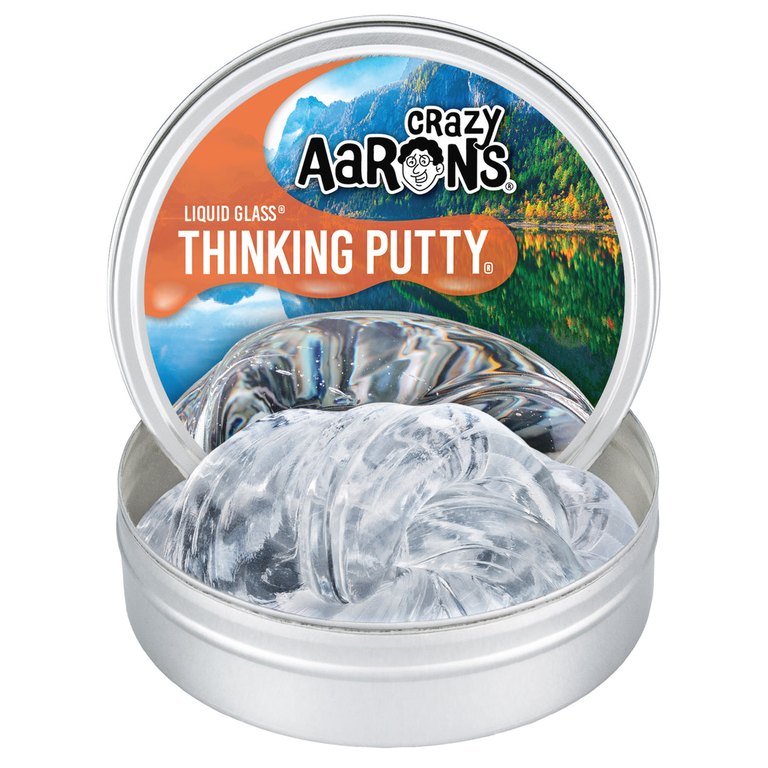
Who it is for: a child who needs to keep their hands busy at a desk or in the car, where noise or anything that rolls away is a problem.
Putty is the fidget worth trying first: it is silent, needs no batteries and cannot roll off a desk. The tin holds 1/5 lb (3.2 oz) of non-toxic silicone putty that does not dry out and leaves nothing on the hands. We picked the clear Liquid Glass because it is the plainest thing Crazy Aaron’s makes: no magnets, no glow, nothing that turns a tool back into a toy.13
What it does well
The spec that decides it: the age grading. Crazy Aaron’s rates it 3 and up with a small-parts warning, so it is the wrong pick for a child who still puts things in their mouth.13
What are the best weighted and deep-pressure products?
Who it is for: children who love tight hugs, burrow under couch cushions, ask to be squeezed and settle when held firmly, typically seekers and some children with anxiety.
What the evidence says: deep pressure tactile input has strong evidence, from studies of weighted items and of massage.1 Weighted blankets did not change sleep in autistic children and made a small difference in children with ADHD;2,4 weighted vests are not supported.10,11 Firm hugs and being rolled in a blanket while awake and watched give the same kind of input for nothing, so buy the product for the preference, not as a treatment.
What to look for:
- A lap pad before a blanket: cheaper, portable, used while awake and supervised, and it tells you whether your child wants the input at all.
- No zippered or removable cover a child can climb inside. That design is what killed two children in 2022.6
- A weight the child can lift off alone, every time, without help.
What to avoid:
- Any weighted product for a child under two, and never in a crib or for sleep in infancy. The DrParenting page on weighted blankets for infants covers why.
- Weighted vests for behavior or attention. Reviewed repeatedly; not supported.10,11
- Buying a heavier blanket when the first one does not fix sleep.
- Any weighted product for a child who cannot reposition themselves or call out.
3. What is the best weighted product? Harkla Weighted Lap Pad (5 lbs)
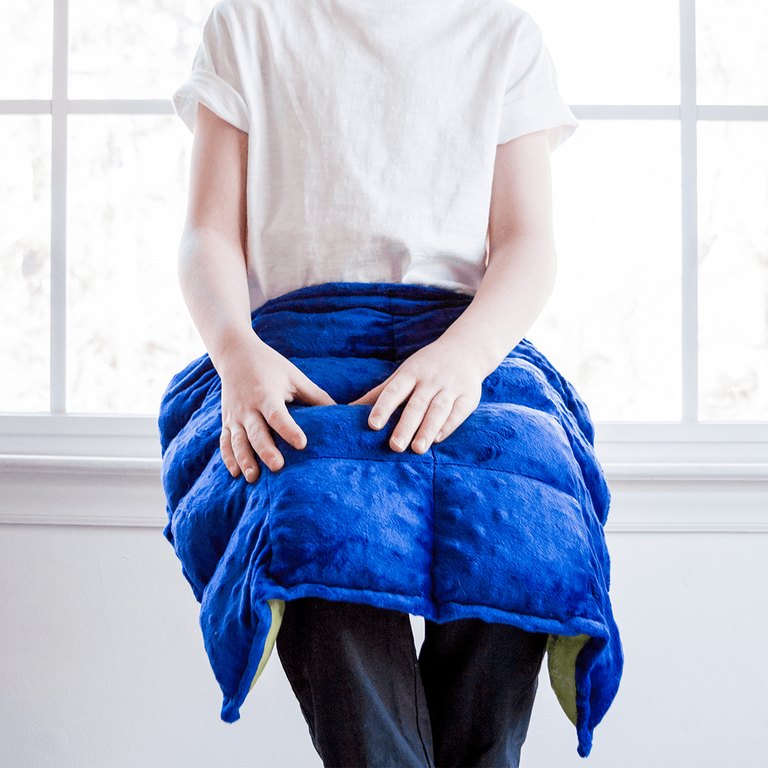
Who it is for: a child of three or older who settles with pressure, for sitting at a table, in the car or on the couch.
It is the pick because it is a lap pad, not a blanket: the smallest, cheapest way to find out whether your child wants weight at all. It is 21 by 19 inches, with 5 lb of glass beads in a non-woven bag inside a soft minky cover, and the whole pad is machine washable on cold. Harkla rates it for ages 3 and up and says not to use it with children under 2.14 Our advice is to use it across the lap while your child is awake and sitting, not over the body for sleep, and to buy it because your child likes the pressure: the trial evidence says it will not fix sleep.2
What it does well
What it does not
- Ages 3 and up, never under 2, and never for a child who cannot lift it off without help.14
- One weight only: 5 lb is a lot for a small three-year-old.
The spec that decides it: the weight against your child. There is only one, 5 lb, so if your child cannot lift it off alone it is the wrong product.14
What are the best movement and seating tools?
Who it is for: children who spin, rock, hang upside down and cannot sit through a meal: vestibular seekers.
What the evidence says: alternative seating (stability balls, cube chairs and T-stools) has moderate evidence that it does not improve attention.1 A movement break of running, climbing, animal walks or carrying something heavy is free and gives more input than any seat. If your child needs to move, the tool is the playground.
Why there is no trampoline here. Mini trampolines are sold for exactly this child, many of them for toddlers. The American Academy of Pediatrics says children under 6 should never jump on a trampoline and recommends that children of all ages avoid them,19 and its policy statement strongly discourages trampolines at home.20 We follow that, so this category has no product pick.
What to look for:
- For a swing: a mounting kit rated for the load, into a joist or a stand, installed by someone who has done it before.
- For a seat: only if a teacher or therapist has asked for one, and treat it as a trial.
- Anything that gets your child moving more, outdoors or at the playground, before anything that keeps them in a chair.
What to avoid:
- Swings hung from a doorway bar or a ceiling hook without a joist.
- Buying a therapy ball or wobbly seat expecting better attention. The evidence on alternative seating says it will not.1
- Home trampolines, including mini ones, for the reasons above.20
- Movement equipment for a child who is over-responsive to movement: it can escalate rather than settle.
What are the best tools for noise and light sensitivity?
Who it is for: children who cover their ears at hand dryers, flinch at fluorescent light and melt down in stores: over-responsive children. This is the one category where the tool removes input rather than adding it.
What the evidence says: the 2025 review found too few studies to rate environmental changes either way,1 and an earlier review rated them moderate in clinical settings.11 That is thin, but the mechanism is not in doubt (less noise reaching the ear is less noise) and the risk is close to zero. The caution is different here: a child who never hears a hand dryer never gets used to one. Ear defenders are for surviving the store, not for every room.
What to look for:
- Passive ear defenders (over-ear, no electronics) for young children.
- Comfortable enough to wear for twenty minutes without complaint, which usually means a padded band and cups that do not clamp.
- For older children, low-profile earplugs designed to reduce rather than block, so speech is still audible.
- A cap with a brim, or sunglasses, for light: cheaper than any specialist product.
What to avoid:
- Noise-canceling electronics for young children: expensive, fragile and unnecessary for the problem.
- Ear defenders as a default rather than a rescue. Use them for the known-bad situations and take them off when the situation ends.
- Tinted lenses marketed for specific conditions. A hat works.
4. What are the best ear defenders for kids? Alpine Muffy Kids
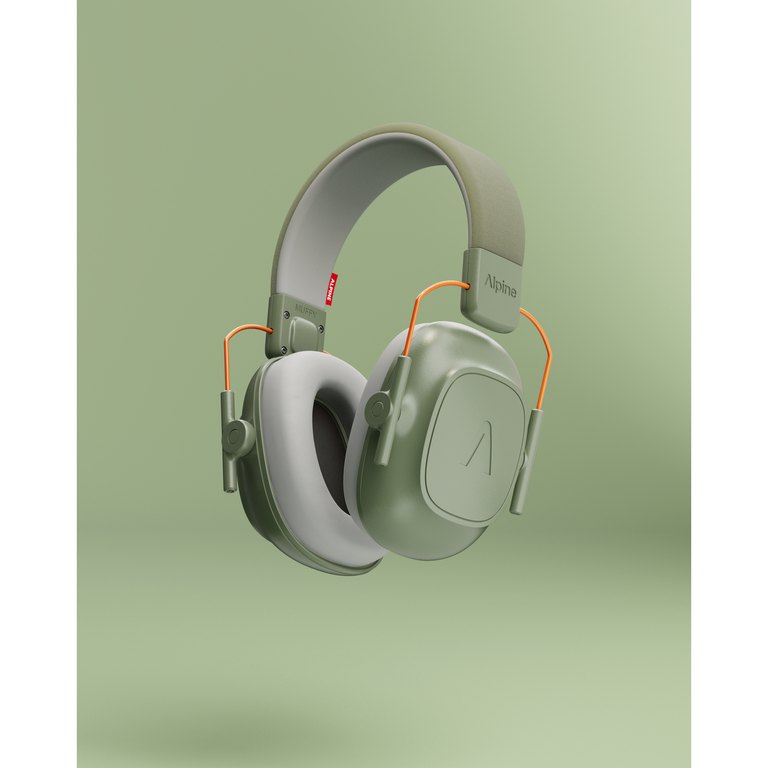
Who it is for: a child of five or older who needs the edge taken off loud places: hand dryers, fireworks, the supermarket, a school assembly.
Passive, over-ear, no electronics and no battery. Alpine gives 25 dB of noise reduction and states the earmuffs are CE certified and ANSI tested, with an adjustable soft-lined headband and a storage bag.15 That figure is an SNR rating, the European measure; US products are usually labeled NRR, and the two numbers are not directly comparable. Alpine rates these for ages 5 to 16; for a younger child, Muffy Baby Comfort is the one made for a smaller head.15,21
What it does well
What it does not
- Ages 5 to 16: under five the fit is wrong.15
- A rescue tool, not a default: worn in every room, it removes the ordinary exposure a child needs.
The spec that decides it: the age range. Alpine sizes Muffy Kids for 5 to 16, so measure the choice against your child’s age before the rating.15
What are the best toys for sensory seekers, by age?
The best toys for a sensory seeker change with age mostly because the safety rules do: under three, the first test is small parts; from three, three of our four picks are rated for use; from five, all four are. By the pre-teen years, the best tool is one your child will use in front of friends. Seeking also tends to ease as children grow: in a study of 239 children aged 3 to 14, older children scored lower for sensory seeking than younger ones, whatever their diagnosis.28 What sensory seeking looks like at different ages covers the pattern.
| Age | Picks rated for this age | Free first | Watch for |
|---|---|---|---|
| Under 3 | None of our four; for noise, Alpine makes Muffy Baby Comfort for babies and toddlers | Climbing, pushing a laundry basket, water play | Small parts: buy toys made for under-threes |
| 3 to 5 | ARK Grabber (with an adult), Thinking Putty, Harkla lap pad; Muffy Kids from 5 | The playground, animal walks, rough-and-tumble play | Putty is not for a child who still mouths things; 5 lb is heavy for a small child |
| 6 to 8 | All four | A bike, a scooter, swimming, climbing | Ask the teacher before a fidget goes to school |
| 9 to 12 | All four; Muffy Kids is sized up to 16 | Sports, carrying, chores that use the big muscles | Let your child choose what they will use in front of friends |
Age ratings in this table are the makers’ own.12,13,14,15,21
What sensory toys suit a toddler under 3?
None of the four picks on this page is rated under three, and that is deliberate. Federal rules test toys made for children under three for small parts,18 and the tools that suit older seekers, a chew, putty and a weighted pad, each carry an age floor of three.12,13,14 For a toddler who seeks input, the best “toys” are movement and play: climbing, pushing a laundry basket of books across the floor, splashing in water play, and being swung and squeezed by an adult. For a toddler who is easily overwhelmed, see what overstimulation looks like; for noise, Alpine makes Muffy Baby Comfort for babies and toddlers.21
Wondering about ADHD toys for a toddler or a three-year-old? One fact helps: the American Academy of Pediatrics finds too little evidence to diagnose or treat ADHD before age four, apart from parent training in behavior management, which does not need a diagnosis.32 Before four, choose by what your child seeks, not by a label.
What are good sensory toys for 3- to 5-year-olds?
From three, the chew tool, the putty and the lap pad are all rated for use, each with a condition attached. ARK rates the Grabber for ages 3 and up with direct supervision;12 Crazy Aaron’s putty is rated 3 and up with a choking-hazard warning, so it waits until your child has stopped mouthing things;13 and the Harkla lap pad weighs 5 lb, which a small three-year-old may not be able to lift off alone.14 For noise, Muffy Kids starts at five; below that, Muffy Baby Comfort is the smaller size.15,21 For a gift at this age, one chew tool or one tin of putty, introduced on its own, tells you more than a twenty-piece kit.
For a preschooler with ADHD, the AAP’s first-line treatment is parent training in behavior management, behavioral classroom interventions, or both, and no sensory product is among its recommendations.32 ADHD treatment in children walks through the guideline by age.
What are good sensory toys for 6- to 8-year-olds?
School changes the question from what helps at home to what the teacher will allow. A silent tool that stays in one hand, such as the putty, is the one most likely to be welcome in a classroom, and all four picks are rated for this age, including Muffy Kids for assemblies, the cafeteria and the gym.12,13,14,15 The lap pad suits homework and the car; Harkla itself suggests both.14
Shopping for ADHD toys for a 7- or 8-year-old? The more useful purchase may be a bike, a scooter or a swim class. In children with ADHD, exercise programs improved executive function and motor skills in a meta-analysis of ten studies, with longer programs doing better,33 and the classroom research on fidgets has nothing comparable.9 A movement break before homework is the version that costs nothing.
What sensory toys suit 9- to 12-year-olds?
Pre-teens need tools they will use in front of friends, so let your child choose. Putty fits in a pocket and draws no attention; Crazy Aaron’s rates its magnetic putty for ages 8 and up, which is one reason the plain Liquid Glass is our pick for younger children.31 A heavy chewer may need ARK’s firmest level, XXT, which ARK recommends as the longest-lasting for avid chewers.12 Muffy Kids is sized for children up to 16.15 Sport, climbing and carrying heavy loads can take over from toys at this age, and they give the same kind of input.
What makes a good gift for a sensory-seeking child?
Ask the parents what the child seeks before you buy, because a gift that suits one sensory seeker can overwhelm another. Then choose one good tool over a kit of twenty, check the maker’s age rating, and skip anything with a cord, small magnets or water beads. Gifts of movement are a natural fit for a seeker: a scooter with a helmet, a climbing-gym pass, swimming lessons. If you want a sensory tool under $40, each of our four picks qualifies, as long as the age rating fits.12,13,14,15
Which sensory toys are best for a classroom or a waiting room?
For a classroom, the best sensory tool is silent, fits in one hand, and has the teacher’s agreement before it arrives. For a waiting room, it is a small kit your child already knows. Both settings are hard on anything that rolls, clicks, lights up or has to be shared.
What sensory tools work in a classroom?
Start with the teacher, not the shop. A tin of putty under the desk is the fidget most likely to be allowed, because it is silent and stays put. The research on classroom fidgets is thin and points both ways: in a classroom study of 60 young children with ADHD, attention was worse while fidget spinners were in use;5 three second graders with ADHD spent more time on task with spinners;24 and a Fidget Cube did not improve engagement or math seatwork for three third graders referred for attention difficulties.25 A 2023 review found not enough support to recommend fidgets for classroom use.9 So agree with the teacher what “working” looks like, and drop the tool if it does not.
Beyond the fidget: ear defenders for assemblies, the cafeteria and the gym; a chew tool only where an adult can supervise it, as ARK requires;12 and movement breaks rather than special seating, which a 2025 review found did not improve attention.1 If your child has ADHD, the AAP counts school supports, often written into an IEP or a 504 plan, as a necessary part of treatment,32 so a tool that matters can go into the plan instead of being renegotiated with every new teacher. IEPs and 504 plans explains what support can look like, and supporting a child with SPD and ADHD at school covers the rest of the day. CPSC urges schools to avoid water beads entirely.23
What should a waiting-room sensory kit hold?
Pack a small bag your child knows from home: the putty tin, a chew tool if your child chews (their own, washed, and never shared), ear defenders for a loud lobby, and one familiar comfort object. Check the chew tool before each trip; ARK says to replace it at the first sign of wear.12
If you run a clinic or an office with a play corner, choose toys that wipe clean, keep anything that goes in a mouth out of the shared box, keep small parts away from children under three,18 and leave water beads out of the room altogether.23 A quiet corner away from the door and the television gives the children who find the room too much somewhere to go.
Which sensory toys are unsafe?
Most of what is on this page carries no real risk. Three things do.
Weighted products a child can get inside. In December 2022 the CPSC recalled about 204,000 children’s weighted blankets after a 4-year-old and a 6-year-old became entrapped inside the removable cover and died of asphyxia; four entrapment reports were received in total.6 A second brand was recalled for the same zippered-cover hazard in October 2023, before any child was hurt.7 No cover a child can enter; nothing weighted for a child who cannot get out alone.
Cords around the neck. Chew necklaces, chew bracelets, lanyard fidgets, anything worn. The FDA’s 2018 warning is not only about infants: it is addressed to the parents of children with autism or ADHD who use necklaces and bracelets for sensory input or to redirect chewing, and says such use could lead to strangulation, choking, serious injury or death.8 A breakaway clasp reduces the risk; it does not remove it. Choose a hand-held chew.
Small parts and magnets. Federal rules set a test for small parts in toys for children under three.18 Sensory kits sold online are often assembled from parts that were never tested as a set. If your child mouths objects, buy items made for under-threes, whatever your child’s age. Magnetic desk toys, the small ball sets, are not for any child who might swallow one.
Water beads, which are not on this page on purpose. They are sold as toys and as sensory tools for children with developmental disabilities, they can grow to 100 times their size in water, and CPSC links them to thousands of emergency-department visits and to the death of a 10-month-old girl in 2023. CPSC urges parents and caregivers to remove them from any environment with children.23
How do I know if a sensory toy is working?
Decide what “working” means before it arrives. Pick one thing you can see (fewer collar bites, a whole dinner in the chair, a car ride without a meltdown) and count it for a week before and two weeks after. If the number moved, keep the tool. If it did not, the tool did not work, however much the child likes it. Liking it is a fine reason to keep a cheap thing; it is not a reason to buy the next one up.
Two patterns mean stop and rethink. If the tool becomes the only way the child can settle, you have built a dependency rather than a skill, and the plan needs a therapist. And if the tool escalates (the swing that winds a child up instead of down, the fidget that becomes the thing they fight about), that is the profile telling you it needs the opposite input.
Which sensory tools suit which child? A checklist by profile
For a seeker (crashes, chews, cannot sit): a hand-held chew tool · putty or a stress ball · a lap pad · climbing and running at the playground · a movement break before any seated task.
For an avoider (covers ears, hates textures, overwhelmed in crowds): ear defenders for known-bad places · a hat · tagless clothing · a quiet corner with a door · advance warning before transitions. Most of this is not a toy.
For a mixed profile (most children): start with the cheapest item from each list, one at a time, and let the child’s choices tell you which list they are really on.
For any child: a parent trained in the child’s sensory strategies has stronger evidence behind them than any product on this page.1 Sensory diet strategies is where to start building that.
More from DrSensory
DrParenting covers the gear. DrSensory covers the development behind it, written and reviewed by clinicians.
Frequently asked questions
What are sensory toys?
Toys and tools chosen for the input they give the body: something to chew, squeeze, lean into or move on, or something that takes input away, such as ear defenders. The same toy can calm one child and wind up another, so choose by the input your child seeks or avoids.
Do sensory toys help with ADHD?
Not in the way they are sold. Fidget toys do not have enough evidence for classroom use, and in a classroom study of fidget spinners in 60 young children with ADHD, attention got worse while the spinner was in use.5,9 What has strong evidence is deep pressure input and a parent trained in the child’s sensory strategies.1 Buy a tool your child likes, cheaply, and judge it yourself.
What are the best toys for kids with attention issues?
No toy has been shown to improve attention. A movement break before seated work, a silent fidget such as putty if the teacher agrees, and fewer distractions in the room are the practical options; avoid fidget spinners, which made attention worse in a classroom study of 60 young children with ADHD.5
What is the best sensory toy for a child with autism?
There is not one, because autistic children have opposite sensory profiles as often as similar ones. A child who seeks input needs chew, pressure and movement; a child who avoids it needs ear defenders and a quiet corner. Match the tool to what your child does, not to the diagnosis.
Are weighted blankets good for kids?
Children often like them, which is a fair reason to buy one, but they are not a sleep treatment: in a trial of autistic children they made no difference to sleep, and in a trial of children with ADHD they added about eight minutes a night.2,4 Never use one on a child under two, never with a cover a child can climb inside, and never for a child who cannot remove it alone.6
Are chewable necklaces safe?
The FDA warned in 2018 that necklaces and bracelets should not be used to provide sensory stimulation to people with autism or ADHD, because of the risk of strangulation and choking.8 A breakaway clasp lowers the risk but does not remove it, so choose a hand-held chew tool instead, and never put jewelry on an infant.16
Do fidget spinners help kids focus?
A classroom study of 60 young children with ADHD found the opposite: attention was worse with the spinner in use.5 A smaller study of three second graders found more time on task,24 so the evidence is thin and mixed. Silent putty or a stress ball is a better bet if your child needs something in their hands.
What sensory toys are good for a sensory seeker?
A hand-held chew tool, putty, a lap pad, and plenty of running and climbing. Movement breaks before seated tasks help more than any cushion; skip the home trampoline, which the AAP advises against.19
How do I compare calming toys against stimulating ones for a child with autism?
By what your child does, not by the label. A child who seeks input (crashes, chews, cannot sit still) usually settles with more input, such as a chew tool, weight or movement, so a “stimulating” toy is the calming one for them. A child who avoids input settles with less, so the calming tool is ear defenders or a quiet corner, not a toy at all. Try the cheapest item from the matching list first and watch for two weeks.
What sensory tools help a child who is overwhelmed by noise?
Passive over-ear defenders, worn for the known-bad situations and taken off afterward; our pick, Alpine Muffy Kids, gives 25 dB SNR and is sized for ages 5 to 16.15 For older children, reducing earplugs that leave speech audible. A brimmed hat handles most light sensitivity.
How do I know if a sensory toy is working?
Pick one visible thing and count it for a week before and two weeks after. If the number moved, keep the tool. If it becomes the only way your child can settle, or it escalates rather than calms, talk to an occupational therapist.
Are sensory toys only for autistic children?
No. Sensory toys are chosen for the input a child seeks or avoids, and those patterns turn up in autistic children, in children with ADHD and in children with neither. In a study of 239 children, autistic children and children with ADHD did not differ in their overall sensory processing patterns, and both differed from typically developing children.28
How much should I spend on a sensory toy?
Less than you might expect. Our four picks cost $11.25 to $39.99 at the makers’ list prices,12,13,14,15 and the cheapest version of a tool tells you whether the input helps before an expensive one does. The best-supported help, a parent who understands the child’s sensory profile, costs nothing.1
Can a sensory toy replace occupational therapy?
No. The strongest evidence in this field is for deep pressure input and for training parents in sensory strategies, which is the work of an occupational therapist rather than a product.1 A toy can be one tool in that plan. Find a pediatric occupational therapist.
What sensory toys are safe for a child who still mouths everything?
Toys made for children under three, which federal rules test for small parts, whatever your child’s age.18 For chewing, a hand-held chew tool rather than a necklace,8 used with an adult nearby and replaced at the first sign of wear, as ARK advises.12 Keep putty, small magnets and water beads out of reach.13,23
Are sensory toys good for anxiety?
Not as a treatment. A familiar tool can be part of a calming routine, and ear defenders take the edge off a loud place, but anxiety that gets in the way of school, sleep or friendships is a reason to see a pediatrician or a mental health professional. Anxiety and sensory processing explains how the two overlap and how to tell them apart.
When to ask a professional: If your child’s reactions to sound, touch or movement get in the way of eating, sleeping, dressing or school, an occupational therapist can assess the pattern and build a plan around it. Find a pediatric occupational therapist, or read what the evidence says about sensory toys and tools.
Need more than an article?
A product can only do so much. If something about how your child eats, moves, plays, or copes with noise has been on your mind, a pediatric therapist is the person who assesses it. Every state lets families go to a physical therapist without a referral, though some limit treatment without one;22 the rules for occupational and speech therapy vary by state, and some insurance plans ask for a referral before they pay, so check with yours when you call.
Find a therapist near you →Related DrParenting guides
All DrParenting guides →Sources
- Piller A, McHugh Conlin J, Glennon TJ, Andelin L, Auld-Wright K, Teng K, Tarver T. Systematic review of sensory-based interventions for children and youth (2015–2024). Frontiers in Pediatrics. 2025;13:1720179. Twenty-one level I and II studies. Strong evidence for deep pressure tactile input (four studies: two of weighted items, two of massage) and for caregiver training in sensory strategies; moderate evidence that alternative seating (stability balls, cube chairs, T-stools) did not improve attention; too few studies to rate sensory environmental modifications. doi:10.3389/fped.2025.1720179 · PMID 41321460
- Gringras P, Green D, Wright B, Rush C, Sparrowhawk M, Pratt K, et al. Weighted Blankets and Sleep in Autistic Children — A Randomized Controlled Trial. Pediatrics. 2014;134(2):298–306. Placebo-controlled crossover in 73 children aged 5–16 with ASD and severe sleep problems, measured by actigraphy; no difference in total sleep time, sleep onset, or night waking; preferred by children and parents, and well tolerated. doi:10.1542/peds.2013-4285
- Barton EE, Reichow B, Schnitz A, Smith IC, Sherlock D. A systematic review of sensory-based treatments for children with disabilities. Research in Developmental Disabilities. 2015;37:64–80. Thirty studies, 856 participants; “insufficient evidence exists to support their use”, the research limited by insubstantial treatment outcomes, weak experimental designs, or high risk of bias. PMID 25460221. doi:10.1016/j.ridd.2014.11.006
- Lönn M, Svedberg P, Nygren J, Jarbin H, Aili K, Larsson I. The efficacy of weighted blankets for sleep in children with attention-deficit/hyperactivity disorder — a randomized controlled crossover trial. Journal of Sleep Research. 2024;33(2):e13990. 94 children with ADHD and sleep problems, 4 + 4 weeks, actigraphy; total sleep time up by a mean 7.72 minutes, no effect on time to fall asleep. PMID 37452697. doi:10.1111/jsr.13990
- Graziano PA, Garcia AM, Landis TD. To Fidget or Not to Fidget, That Is the Question: A Systematic Classroom Evaluation of Fidget Spinners Among Young Children With ADHD. Journal of Attention Disorders. 2020;24(1):163–171. A-B-A-B single-case design in a classroom program, 60 children, mean age 4.86; spinner use associated with poorer attention. doi:10.1177/1087054718770009
- U.S. Consumer Product Safety Commission. Recall 23078, December 22, 2022. About 204,000 Target Pillowfort children’s weighted blankets; a 4-year-old and a 6-year-old became entrapped in the removable cover and died of asphyxia; four entrapment reports in total. cpsc.gov. Checked September 2, 2026.
- U.S. Consumer Product Safety Commission. Recall 24702, October 12, 2023. YourHealthToolkit children’s weighted blankets recalled for an entrapment and asphyxiation hazard from the zippered cover; no incidents or injuries reported. cpsc.gov. Checked October 5, 2026.
- U.S. Food and Drug Administration. FDA Warns Against Use of Teething Necklaces, Bracelets, and Other Jewelry Marketed for Relieving Teething Pain or Providing Sensory Stimulation: FDA Safety Communication. Issued December 20, 2018. fda.gov, archived copy. Checked October 5, 2026.
- Kriescher SL, Hulac DM, Ryan AM, King BL. Evaluating the Evidence for Fidget Toys in the Classroom. Intervention in School and Clinic. 2023;59(1):66–69. Concludes there is not sufficient support for implementing fidget toys in the classroom. doi:10.1177/10534512221130070
- Stephenson J, Carter M. The use of weighted vests with children with autism spectrum disorders and other disabilities. Journal of Autism and Developmental Disorders. 2009;39(1):105–114. Evidence does not support use. doi:10.1007/s10803-008-0605-3
- Bodison SC, Parham LD. Specific Sensory Techniques and Sensory Environmental Modifications for Children and Youth With Sensory Integration Difficulties: A Systematic Review. American Journal of Occupational Therapy. 2018;72(1):42–53. Moderate evidence for sensory modifications to a clinical setting; limited evidence for weighted vests. doi:10.5014/ajot.2018.029413
- ARK Therapeutic. ARK’s Grabber Oral Motor Chew Tool. arktherapeutic.com. Price, the three toughness levels, medical-grade elastomer, the 5-inch P shape, and the ages 3+ and supervision caution. Checked October 8, 2026.
- Crazy Aaron’s. Crystal Clear | Liquid Glass® Thinking Putty®. crazyaarons.com. Price, the 1/5 lb (3.2 oz) tin, non-toxic silicone, does not dry out, ages 3+ and the choking-hazard warning. Checked October 8, 2026.
- Harkla. Weighted Lap Pad. harkla.co. Price, 21 × 19 inches, 5 lb of glass beads in a non-woven bag inside a polyester minky cover, machine washable, ages 3+ and not under 2. Checked October 8, 2026.
- Alpine Hearing Protection. Muffy Kids. alpinehearingprotection.com. Price, 25 dB SNR, ages 5 to 16, CE certified and ANSI tested, adjustable soft-lined headband, storage bag. Checked October 8, 2026.
- American Academy of Pediatrics. Teething Necklaces and Beads: A Caution for Parents. healthychildren.org. Checked October 5, 2026.
- ARK Therapeutic. ARK’s Krypto-Bite® Chewable Gem Pendant Necklace. arktherapeutic.com. The 30-inch adjustable breakaway cord, and “Direct supervision required”. Checked October 8, 2026.
- Office of the Federal Register. 16 CFR Part 1501 — Method for Identifying Toys and Other Articles Intended for Use by Children Under 3 Years of Age Which Present Choking, Aspiration, or Ingestion Hazards Because of Small Parts. ecfr.gov. Checked October 5, 2026.
- American Academy of Pediatrics. Are Trampolines Safe for Kids? HealthyChildren.org, last updated September 3, 2024. healthychildren.org. Checked October 5, 2026.
- American Academy of Pediatrics Council on Sports Medicine and Fitness. Trampoline Safety in Childhood and Adolescence. Pediatrics. 2012;130(4):774–779. “The home use of trampolines is strongly discouraged.” PMID 23008455. doi:10.1542/peds.2012-2082
- Alpine Hearing Protection. Muffy Baby Comfort Baby Ear Protection. alpinehearingprotection.com. Checked October 8, 2026.
- American Physical Therapy Association. Direct Access Advocacy. All 50 states, the District of Columbia and the U.S. Virgin Islands “have either provisional or unrestricted direct access to physical therapist services for evaluation and treatment,” though some states still attach provisions to treatment without a referral. Checked October 6, 2026.
- U.S. Consumer Product Safety Commission. Water Beads: A Danger to Young Children & Can Be Deadly if Swallowed. Water beads are sold as toys, in craft kits and as sensory tools for children with developmental disabilities, and can grow to 100 times their size in water; nearly 7,000 ingestion injuries were treated in U.S. emergency departments from 2018 through 2022, and a 10-month-old girl died in 2023. CPSC urges parents and caregivers to remove them from any environment with children, and childcare centers, camps and schools to avoid them entirely. cpsc.gov. Checked October 8, 2026.
- Aspiranti KB, Hulac DM. Using Fidget Spinners to Improve On-Task Classroom Behavior for Students With ADHD. Behavior Analysis in Practice. 2022;15(2):454–465. Multiple-baseline design, three second-grade students with ADHD in language arts; large, sustained increases in on-task behavior while using spinners. PMID 35692528. doi:10.1007/s40617-021-00588-2
- Croley KE, Drevon DD, Decker DM, Hixson MD, Radley KC. The Effect of the Fidget Cube on Classroom Behavior among Students with Perceived Attention Difficulties. Behavior Analysis in Practice. 2023;16(2):547–557. ABAB withdrawal design, three third graders referred for attention difficulties; access to a Fidget Cube during independent seatwork did not improve engagement, off-task behavior or math work. PMID 35999944. doi:10.1007/s40617-022-00734-4
- Centers for Disease Control and Prevention. Clinical Testing and Diagnosis for Autism Spectrum Disorder. Reviewed May 8, 2025. DSM-5 criterion B.4: “Hyper- or hyporeactivity to sensory input or unusual interest in sensory aspects of the environment.” cdc.gov. Checked October 8, 2026.
- Ben-Sasson A, Gal E, Fluss R, Katz-Zetler N, Cermak SA. Update of a Meta-analysis of Sensory Symptoms in ASD: A New Decade of Research. Journal of Autism and Developmental Disorders. 2019;49(12):4974–4996. Fifty-five questionnaire studies, 4,606 autistic participants; large effects against typical controls for over-responsivity, under-responsivity and seeking; against other clinical groups, only over-responsivity remained significant. PMID 31501953. doi:10.1007/s10803-019-04180-0
- Little LM, Dean E, Tomchek S, Dunn W. Sensory Processing Patterns in Autism, Attention Deficit Hyperactivity Disorder, and Typical Development. Physical & Occupational Therapy in Pediatrics. 2018;38(3):243–254. 239 children aged 3 to 14 (77 autistic, 78 with ADHD, 84 typically developing), Sensory Profile 2; the autism and ADHD groups did not differ in sensory processing patterns and both were elevated against the typical group; autistic children showed the most oral processing differences; older children scored lower for seeking. PMID 29240517. doi:10.1080/01942638.2017.1390809
- Ikuta N, Iwanaga R, Tokunaga A, Nakane H, Tanaka K, Tanaka G. Effectiveness of Earmuffs and Noise-cancelling Headphones for Coping with Hyper-reactivity to Auditory Stimuli in Children with Autism Spectrum Disorder: A Preliminary Study. Hong Kong Journal of Occupational Therapy. 2016;28(1):24–32. Pilot study, 21 autistic children aged 4 to 16, two weeks with each device after a two-week baseline; goal attainment improved with standard earmuffs against baseline; noise-canceling headphones did not differ significantly from baseline; four children refused both. PMID 30186064. doi:10.1016/j.hkjot.2016.09.001
- Kapp SK, Steward R, Crane L, Elliott D, Elphick C, Pellicano E, et al. ‘People should be allowed to do what they like’: Autistic adults’ views and experiences of stimming. Autism. 2019;23(7):1782–1792. Interviews and focus groups with 32 autistic adults; stimming described as self-regulation and as a way to soothe or express intense emotions; participants objected to treatment aimed at eliminating it. PMID 30818970. doi:10.1177/1362361319829628
- Crazy Aaron’s. FAQ. crazyaarons.com. Thinking Putty is not for children under 3; Magnetic Thinking Putty and Mixed by Me kits are rated 8 and up; putty can pick up fibers and dust over time, and the page explains removing it from clothes, fabric, carpet and hair. Checked October 8, 2026.
- Wolraich ML, Hagan JF Jr, Allan C, Chan E, Davison D, Earls M, et al.; Subcommittee on Children and Adolescents With Attention-Deficit/Hyperactive Disorder. Clinical Practice Guideline for the Diagnosis, Evaluation, and Treatment of Attention-Deficit/Hyperactivity Disorder in Children and Adolescents. Pediatrics. 2019;144(4):e20192528. The American Academy of Pediatrics guideline for ages 4 to 18: parent training in behavior management and/or behavioral classroom interventions first for ages 4 and 5; FDA-approved medication with those behavioral treatments for ages 6 to 11; medication with the adolescent’s assent for ages 12 to 17, with behavioral or training interventions encouraged; school supports often written into an IEP or a 504 plan; insufficient evidence to diagnose or treat before age 4, apart from parent training. PMID 31570648. doi:10.1542/peds.2019-2528
- Vysniauske R, Verburgh L, Oosterlaan J, Molendijk ML. The Effects of Physical Exercise on Functional Outcomes in the Treatment of ADHD: A Meta-Analysis. Journal of Attention Disorders. 2020;24(5):644–654. Ten publications; a significant effect of exercise on executive functions and motor skills in children with ADHD, larger with longer programs. PMID 26861158. doi:10.1177/1087054715627489
Affiliate disclosure. Some links on this page are affiliate links. If you buy through one, DrSensory may earn a commission at no extra cost to you. As an Amazon Associate, DrSensory earns from qualifying purchases.
Sponsored link. Alphabet Trains & Toys paid for one link in this article. Advertising terms
Medical disclaimer. This page is for general educational purposes and does not constitute medical advice, diagnosis, or treatment. Always consult a qualified healthcare provider about your child. Product information is checked against the manufacturer at the date shown and can change without notice — confirm weight and age limits on the product itself before you rely on them. Talk to your pediatrician about your own child.